Quick answer: Why is my cat having diarrhea? Diarrhea in cats can come from a diet change, an infection, parasites, something the cat ate, or a more serious disease. VCA Animal Hospitals says to see a veterinarian if frequent liquid or semi-liquid stools last more than two days, if there is no improvement within two days of home care, or sooner if the diarrhea is severe or bloody or your cat seems unwell. Cats can become dehydrated quickly, so do not wait too long. You can use our Pet Symptom Checker to organize what you notice before you call.

What Counts as Diarrhea?
Diarrhea means stools that are looser and more frequent than normal. A single soft stool may not mean much. What matters is how long it lasts, how often it happens, and whether your cat acts sick. VCA’s guide to diarrhea in cats says cats with diarrhea can dehydrate quickly, and that dehydration is a generalized sign of illness.

Why Is My Cat Having Diarrhea? Common Causes
VCA groups the causes into these types. Only a vet can sort out which applies.
- Infections from bacteria, viruses, coccidia, or parasites such as hookworms and roundworms
- Irritants: chemical toxins or poisonous plants
- Diet changes or food intolerance. If you changed your cat’s food recently, see our guides on wet versus dry cat food and ingredients to avoid, and our list of safe human foods for cats.
- Serious underlying disorders, such as food allergies, panleukopenia, inflammatory bowel disease, organ dysfunction or cancer
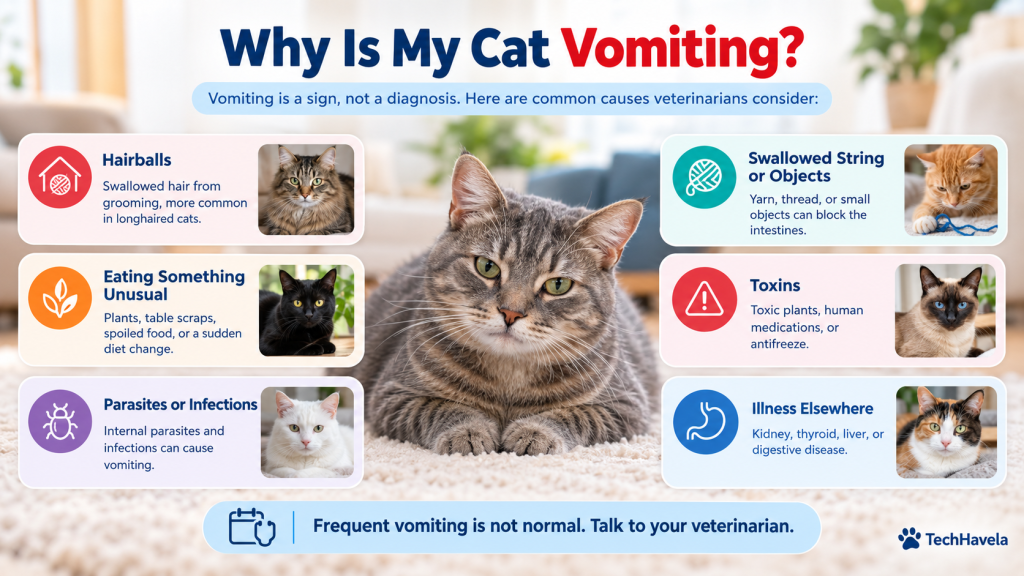
If your cat is also vomiting, read why a cat may be vomiting.

When to Call the Vet Right Away
VCA lists these as reasons to see your veterinarian:
- Frequent liquid or semi-liquid stools lasting more than two days
- Severe or bloody diarrhea
- Signs of wider illness: weakness, fever, vomiting, abdominal pain, appetite loss or weight loss
- No improvement within two days of home care
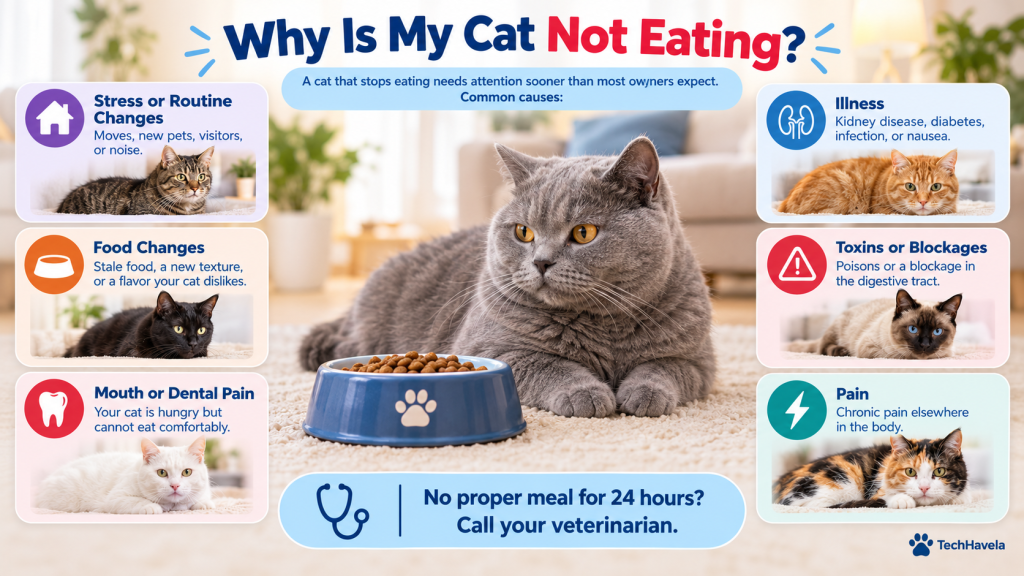
Also act quickly if your cat has not eaten properly for 24 hours. VCA’s guide to recognizing signs of illness advises immediate veterinary attention, and notes that diarrhea and constipation can both indicate possible disease. See also why a cat may not be eating. Chemical toxins and poisonous plants are listed among the causes, so go to a vet or emergency clinic if you think your cat swallowed something harmful.
What You Can Do at Home
- Always provide easy access to water, as VCA advises.
- Ask your vet about food. VCA says a vet may advise withholding food briefly or feeding small amounts of a veterinary gastrointestinal diet. Do not decide this on your own, especially if your cat is small, old or not eating.
- Check with your vet before giving probiotics or other supplements, as VCA advises. Do not give human anti-diarrhea medication.
- Keep notes: how often, what it looks like, what your cat ate.
- Transition back slowly. As stools normalize, VCA says to transition back to the regular diet over seven to ten days.
- Keep the litter box clean so you can monitor stools.

What to Tell Your Veterinarian
VCA suggests telling the vet:
- When the diarrhea started and how often it occurs
- The stool’s color, consistency and smell
- Recent changes in diet or environment
- Whether more than one cat in the home may be affected
- Bring a fresh fecal sample if asked

How the Pet Symptom Checker Can Help
The Pet Symptom Checker covers cats and dogs. Select cat, add the signs you see and read general information. It does not replace a veterinary exam. For dogs, see why a dog may have diarrhea; cats and dogs differ, so follow your own vet’s advice for your cat.

Frequently Asked Questions
How long is too long for cat diarrhea?
VCA says to see a vet if frequent liquid or semi-liquid stools last more than two days, or sooner if severe or bloody.
Should I stop feeding my cat?
Ask your vet. VCA says a vet may advise withholding food briefly, but this should not be a guess.
Can a diet change cause diarrhea?
Yes, VCA lists diet changes and food intolerance among causes.
Can I give my cat probiotics?
Check with your vet first, as VCA advises.
The Bottom Line
Mild, short diarrhea may settle, but cats can dehydrate fast. Keep water available, keep notes and call your veterinarian if it lasts more than two days or comes with other signs of illness.
This content is educational and does not replace the advice of a veterinarian.

Sidnir Vieira is the founder of TechHavela. A lifelong pet owner who had a dog for many years and now lives with a cat, he writes educational guides that help owners understand symptoms and know when to call the vet. TechHavela’s articles are based on veterinary sources and are not reviewed by a veterinarian.