Why Does My Dog Have Diarrhea? Common Causes to Watch
If you are asking, “Why does my dog have diarrhea?”, you are dealing with one of the most common digestive problems in dogs.
Sometimes diarrhea appears suddenly after a change in food, eating something unusual, or a stressful event. In other cases, it may occur together with vomiting, loss of appetite, lethargy, or other changes that deserve closer attention.
Diarrhea is not a disease by itself. It is a sign that something is affecting your dog’s digestive system or, in some cases, another part of the body.
Many mild cases improve on their own, but persistent or severe diarrhea can lead to dehydration and may require veterinary care.
If your dog has other symptoms along with diarrhea, you can also use our Pet Symptom Checker to explore common symptoms and learn which warning signs may need veterinary attention.
What Is Diarrhea in Dogs?
A healthy dog’s stool is usually formed and relatively easy to pick up. Diarrhea occurs when stool contains more water than normal and becomes loose or watery.
It may happen once, several times during the day, or continue over a longer period.
The appearance can also vary. Some dogs produce very soft stool, while others develop watery diarrhea. There may also be mucus, changes in color, increased frequency, or urgency.
According to the Merck Veterinary Manual, digestive disorders can interfere with the normal digestion and absorption of nutrients and fluids.
That disruption can have many possible causes, which is why the rest of your dog’s symptoms matter.
1. Eating Something Unusual
One of the first questions to consider is whether your dog ate something different.
Dogs investigate the world with their noses and mouths, which means they may occasionally eat food scraps or other things they find.
A sudden digestive upset after eating something unusual may result in loose stools or diarrhea.
Think about what happened before the symptoms began.
Did your dog get into the trash? Receive unfamiliar treats? Eat table scraps? Find something outside?
This information can be useful if you need to speak with your veterinarian.
However, suspected ingestion of a toxic substance or foreign object should not be treated as ordinary stomach upset. Contact a veterinarian promptly if you think your dog swallowed something potentially dangerous.
2. A Sudden Change in Food
Changing dog food too quickly is another common reason for temporary diarrhea.
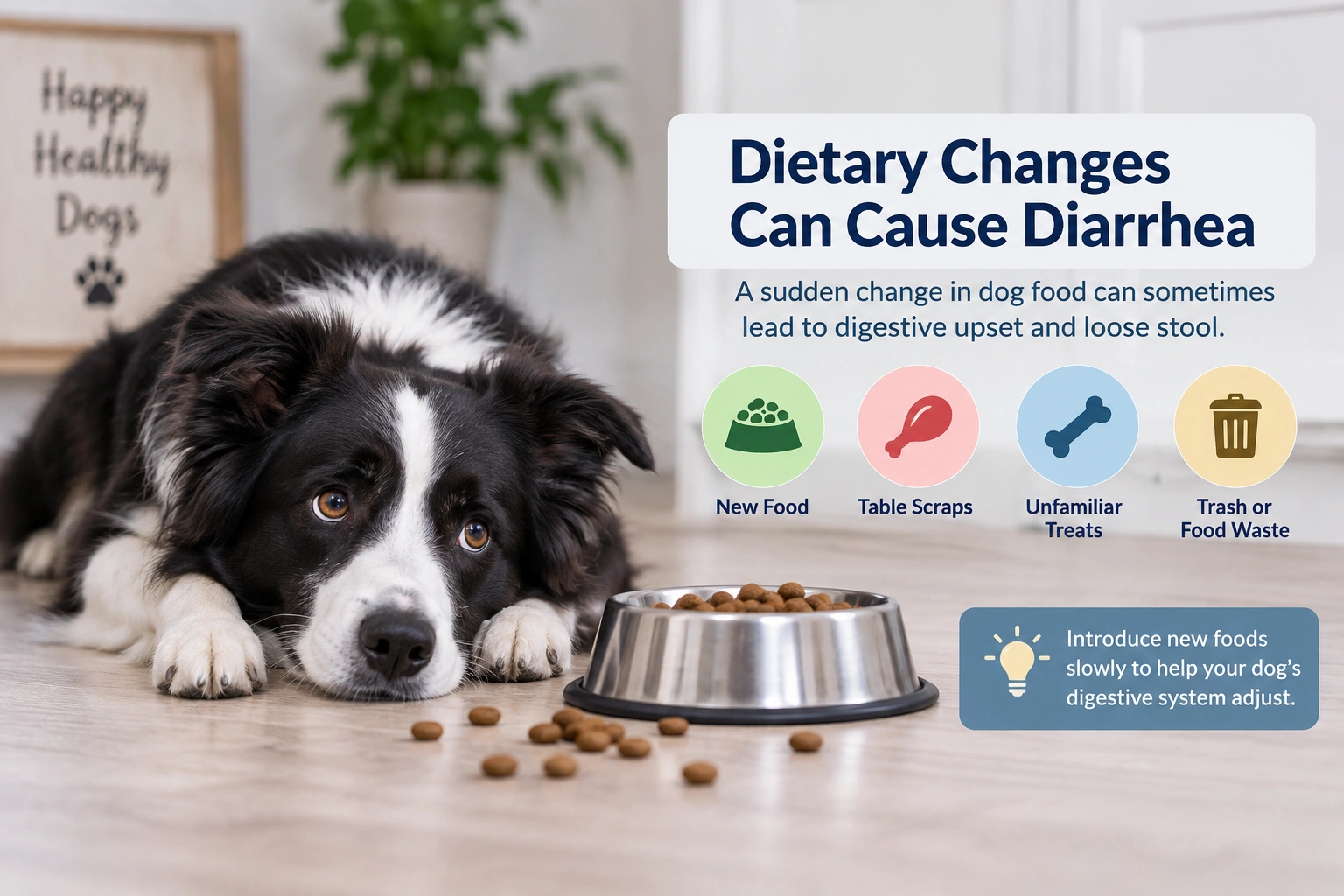
A dog’s digestive system may need time to adjust to a new diet. An abrupt switch can sometimes lead to loose stool, gas, or other gastrointestinal changes.
Cornell University notes that switching foods too quickly is among the transient causes of diarrhea in dogs.
If you recently changed your dog’s food, tell your veterinarian when the change occurred and whether the diarrhea started soon afterward.
When changing a dog’s regular diet, gradual transitions are often easier on the digestive system than abrupt changes.
3. Stress Can Affect Digestion
Not every case of diarrhea begins with food.
Stress can affect a dog’s gastrointestinal system too.
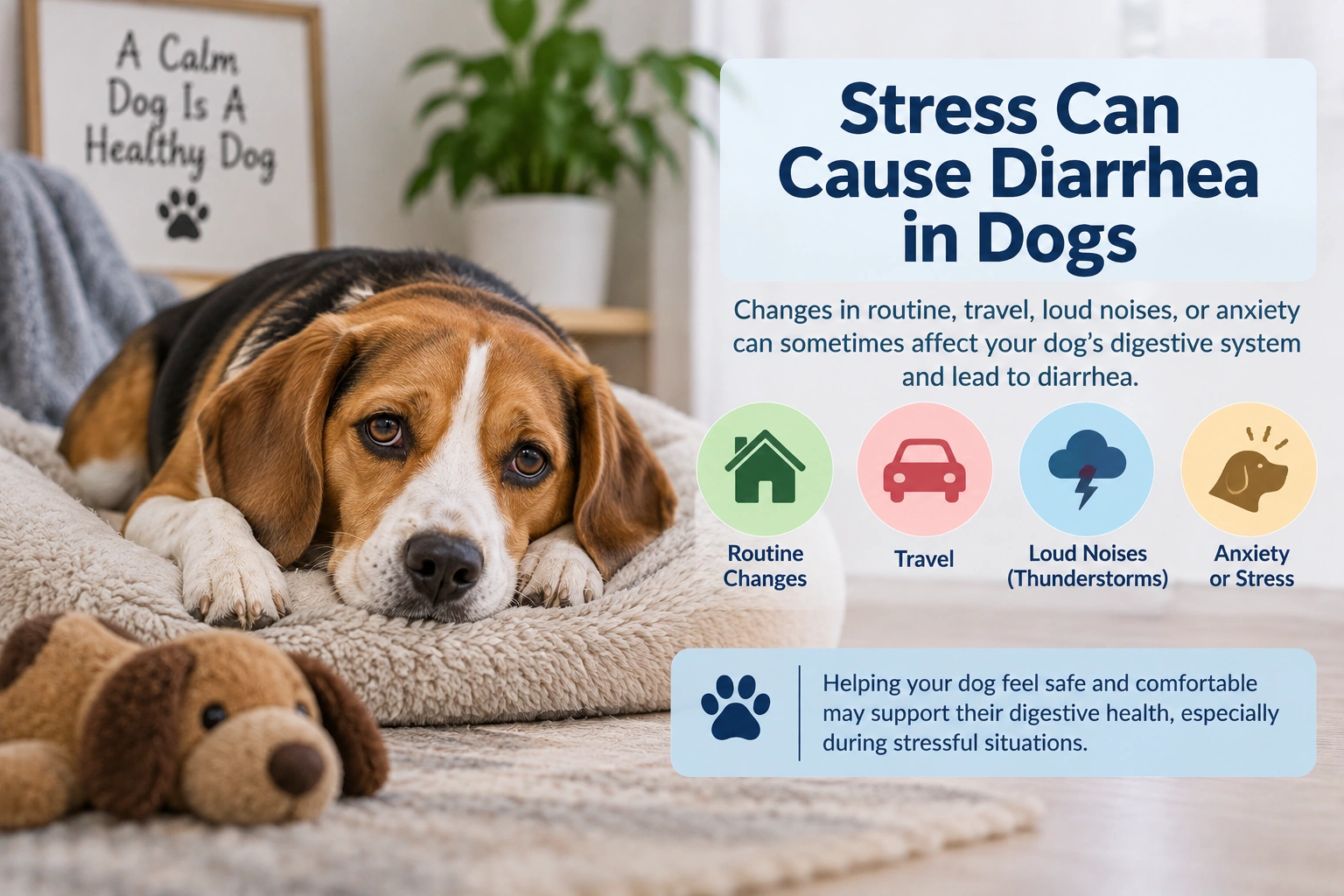
Changes in routine, boarding, travel, unfamiliar surroundings, veterinary visits, or other stressful events may sometimes be associated with temporary diarrhea.
This is why timing matters.
If your dog develops diarrhea shortly after a significant change or stressful experience, make a note of it.
Stress should not automatically be assumed to be the cause, especially when diarrhea is persistent or accompanied by other symptoms.
4. Parasites Can Cause Diarrhea
Intestinal parasites are another possible cause veterinarians may investigate.
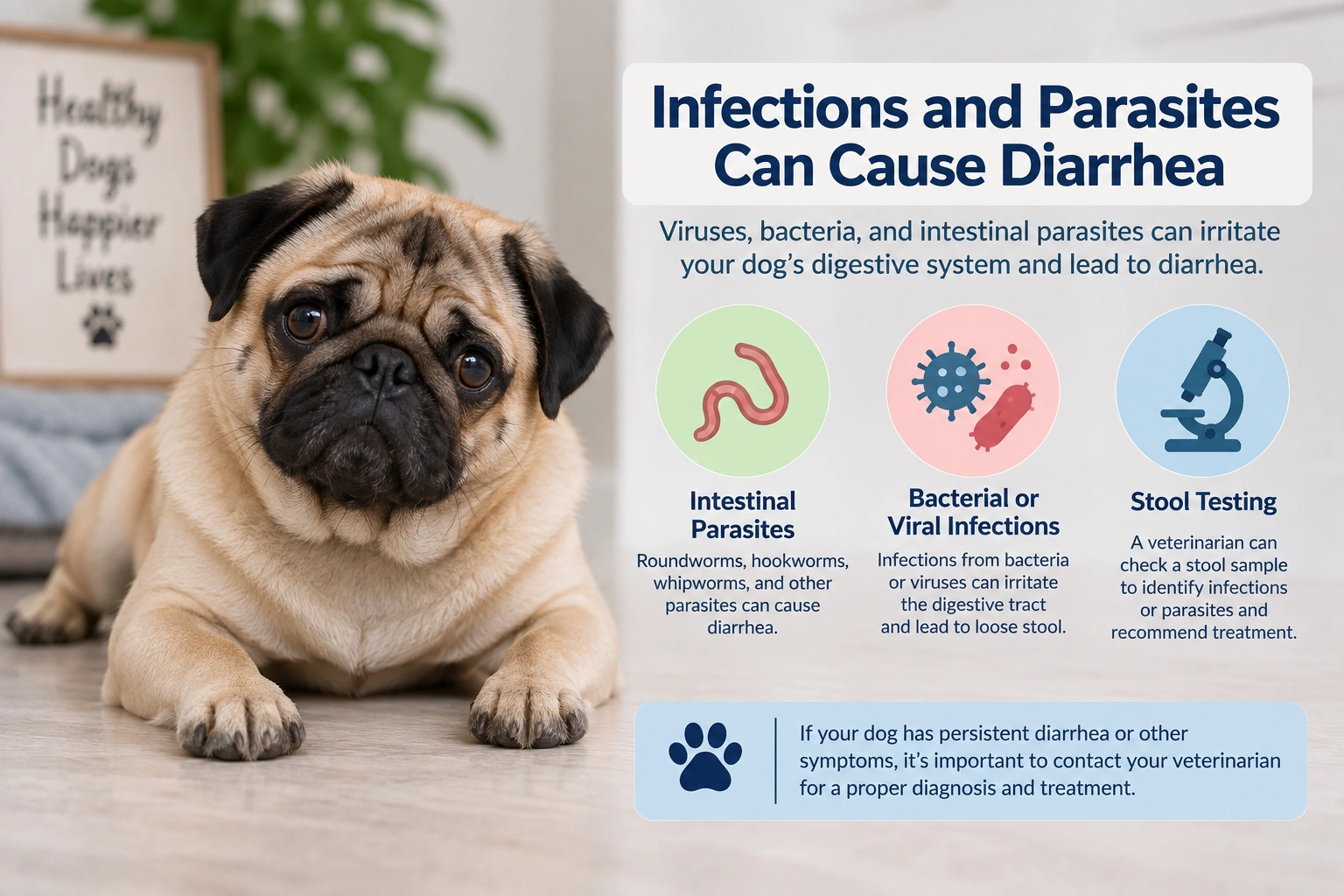
Different parasites can affect the gastrointestinal tract in different ways. Some infected dogs may have few obvious signs, while others develop diarrhea, mucus in the stool, vomiting, reduced appetite, weight changes, or dehydration.
Puppies can be especially vulnerable to some intestinal parasites. Cornell notes, for example, that coccidiosis can cause diarrhea and other gastrointestinal symptoms and may be more severe in puppies.
A veterinarian may recommend examining a stool sample when parasites are suspected.
This is one reason it can be useful to bring a fresh stool sample to a veterinary appointment when your dog has persistent diarrhea.
5. Infections and Intestinal Inflammation
Diarrhea may also occur when the gastrointestinal tract becomes inflamed or is affected by an infection.
Possible causes can include certain viral, bacterial, or other infectious diseases.
The seriousness varies considerably depending on the cause, the dog’s age, vaccination history, overall health, and accompanying symptoms.
Puppies and dogs with other health problems may require particularly careful attention when significant diarrhea develops.
Rather than trying to identify an infection based only on stool appearance, look at the whole picture and seek veterinary advice when your dog appears unwell.
Why Does My Dog Have Diarrhea All of a Sudden?
Sudden diarrhea is often described as acute diarrhea.
It can begin with little warning, even in a dog that seemed completely normal earlier in the day.
Possible triggers include dietary indiscretion, abrupt dietary changes, stress, parasites, gastrointestinal inflammation, infections, or exposure to something irritating.
The key question is not simply how suddenly it started.
You should also consider how your dog is behaving.
A single episode of loose stool in an otherwise energetic dog is different from repeated watery diarrhea in a dog that is weak, vomiting, refusing food, or showing other concerning changes.
Why Does My Dog Have Diarrhea and Throwing Up?
Vomiting and diarrhea occurring together deserve additional attention because both can contribute to fluid loss.
A dog may develop both symptoms with gastrointestinal irritation, dietary problems, infections, exposure to harmful substances, and various other medical conditions.
Cornell notes that vomiting together with diarrhea is one reason veterinary care may be appropriate, particularly when the symptoms persist or the dog is otherwise unwell.
If your dog is also vomiting, pay attention to appetite, energy level, drinking, frequency of the episodes, and any additional changes.
We also have a separate guide explaining Why Is My Dog Vomiting?, which can help you understand that symptom in more detail.
Why Does My Dog Have Diarrhea at Night?
Some owners notice that their dog’s diarrhea seems worse at night or that the dog suddenly needs to go outside during the night.
The timing alone usually does not identify the cause.
Nighttime diarrhea can still be associated with many of the same possibilities as diarrhea occurring during the day, including dietary changes, gastrointestinal irritation, parasites, stress, or other digestive problems.
Instead of focusing only on the clock, keep track of the pattern.
Note when your dog eats, when diarrhea occurs, how frequently your dog needs to go outside, whether the stool changes throughout the day, and whether other symptoms appear.
A pattern recorded over time can give your veterinarian more useful information.
Why Does My Dog Have Diarrhea but Is Acting Normal?
This is an important distinction.
Some dogs with mild diarrhea continue eating, drinking, playing, and behaving normally.
That can be reassuring, but it does not guarantee that the problem should be ignored indefinitely.
Watch for changes in frequency, stool consistency, appetite, thirst, energy, and behavior.
Cornell advises seeking veterinary attention when diarrhea does not resolve within roughly 48–72 hours, and sooner when concerning symptoms occur.
A dog that initially seems normal can also develop additional symptoms later, so continued observation matters.
Why Does My Dog Have Diarrhea With Mucus?
A small amount of mucus can sometimes appear with diarrhea, particularly when the large intestine is irritated.
Inflammation of the colon is called colitis, and large-bowel diarrhea may include mucus, increased urgency, frequent small bowel movements, or straining.
However, mucus alone cannot tell you exactly what is causing the problem.
Colitis can have different underlying causes, and veterinary evaluation may involve your dog’s history, clinical examination, and testing when appropriate.
If mucus keeps appearing or is accompanied by other symptoms, mention it to your veterinarian.
Can Food Intolerance or Allergies Cause Diarrhea?
Food-related problems can sometimes contribute to gastrointestinal symptoms.
A dog’s digestive system may react poorly to certain ingredients or dietary changes, and veterinarians may consider diet when investigating recurrent gastrointestinal problems.
But diarrhea should not automatically be labeled a food allergy.
There are many other possible causes.
If diarrhea repeatedly appears after particular foods or treats, record what your dog ate and discuss the pattern with your veterinarian rather than making major long-term dietary restrictions without guidance.
Can Diarrhea Become Chronic?
Yes.
Occasional acute diarrhea is different from gastrointestinal symptoms that continue or repeatedly return over an extended period.
Chronic gastrointestinal disease may cause diarrhea together with symptoms such as vomiting, appetite changes, weight loss, or flatulence.
Veterinary sources generally describe chronic enteropathies as gastrointestinal signs persisting for around three weeks or longer.
Persistent diarrhea needs investigation because treatment depends on identifying or narrowing down the underlying cause.
What Does the Appearance of My Dog’s Stool Tell Me?
Stool appearance can provide clues, but it usually cannot provide a diagnosis by itself.
Useful observations include consistency, frequency, color, amount, mucus, and whether your dog is straining.
Very watery stool means more fluid is being lost.
Mucus can occur with large-intestinal irritation.
Unusual colors may also matter.
Blood in the stool, particularly black or tar-like stool, deserves veterinary attention because it can be associated with gastrointestinal bleeding.
We will cover blood in a dog’s stool separately because it has several possible causes and warning signs of its own.
Why Dehydration Matters
One of the major concerns with repeated diarrhea is fluid loss.
Dogs lose water and electrolytes through watery stool. When vomiting occurs at the same time, fluid loss can happen even faster.
Dehydration can become medically significant, particularly in puppies, older dogs, small dogs, or dogs with other health conditions.
Keep fresh water available.
If your dog cannot keep water down, appears weak, or has ongoing significant fluid loss, contact a veterinarian rather than relying only on home monitoring.
When Should I Be Concerned About My Dog’s Diarrhea?
The severity of diarrhea is not determined only by how loose the stool looks.
The dog’s overall condition matters just as much.
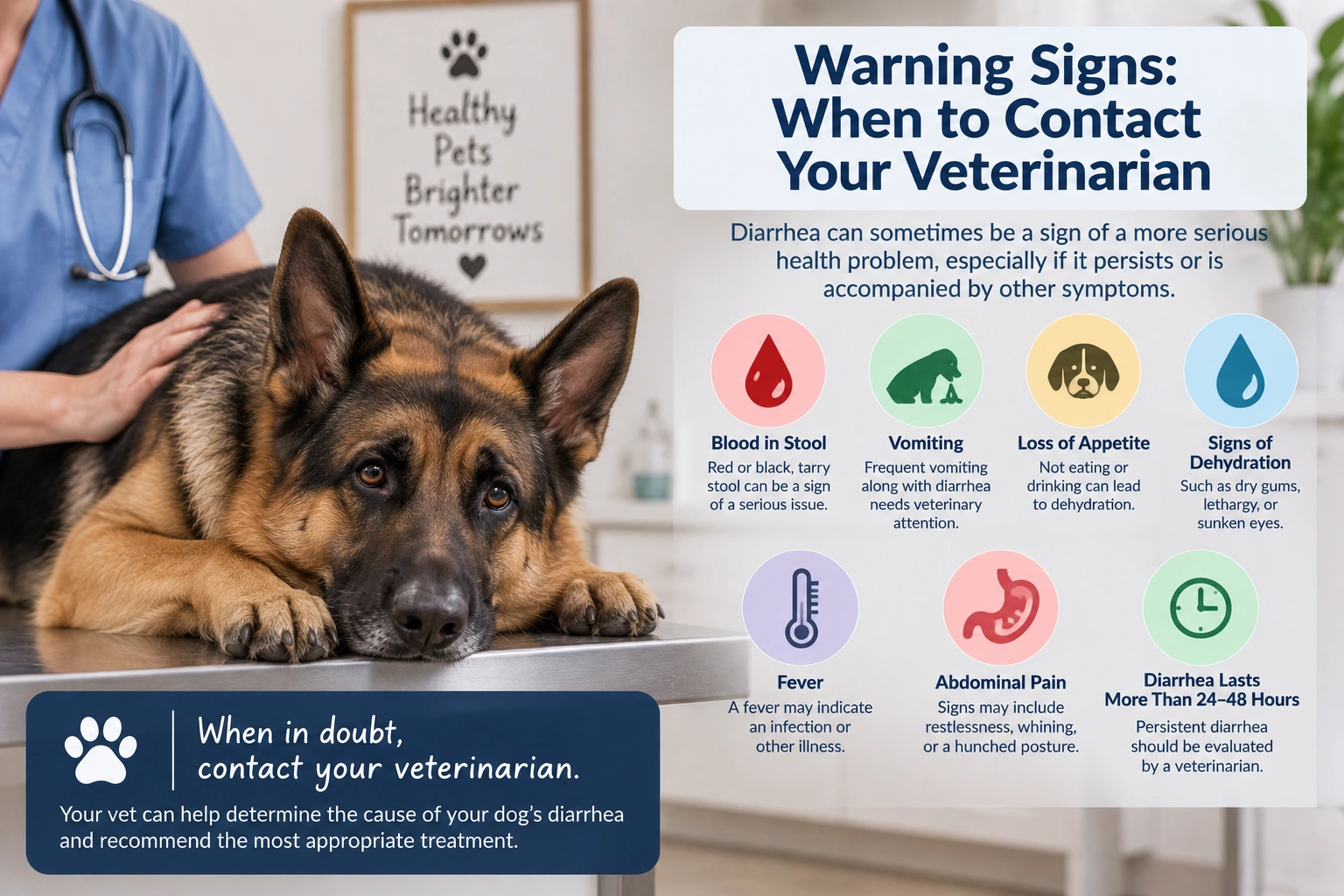
Veterinary attention is particularly important when diarrhea occurs with repeated vomiting, significant lethargy or weakness, loss of appetite, obvious discomfort, black or tarry stool, fresh blood, signs of dehydration, suspected toxin or foreign-object ingestion, or diarrhea that persists rather than improving.
Puppies and dogs with existing health problems may also need earlier evaluation.
When you are uncertain about the severity of your dog’s condition, contacting your veterinarian is safer than trying to diagnose the cause from stool appearance alone.
How Do Veterinarians Investigate Diarrhea?
The veterinary examination usually begins with the dog’s history.
Your veterinarian may ask when the diarrhea started, how often it occurs, what the stool looks like, what your dog has eaten, whether the diet recently changed, whether vomiting is occurring, and whether your dog’s appetite or behavior has changed.
Depending on the situation, diagnostic testing may include fecal testing for parasites, blood tests, or imaging when a blockage or another internal problem is suspected.
Not every dog requires every test.
The examination and clinical history help the veterinarian determine which tests are appropriate.
Should I Give My Dog Human Anti-Diarrhea Medicine?
Do not assume that a medication used for human diarrhea is appropriate for your dog.
Cornell specifically advises against giving human products such as Pepto-Bismol or Imodium unless directed by a veterinarian, because these medications can be harmful to some dogs or interact with other medications.
Treatment depends on the underlying cause.
Veterinary treatment may involve dietary management, fluids, treatment for parasites, probiotics, or other medications depending on the individual case.
What Can I Do While Monitoring My Dog?
Start by observing rather than guessing at the cause.
Keep fresh water available and note the frequency and appearance of bowel movements. Also monitor appetite, energy, vomiting, drinking, urination, and any signs of discomfort.
Think about anything that changed before the diarrhea began: food, treats, environment, travel, boarding, stress, or access to something unusual.
Avoid giving human medications unless your veterinarian specifically recommends them.
If veterinary care becomes necessary, these observations can make your dog’s history much clearer.
Check for Other Symptoms
Diarrhea becomes more informative when considered together with other changes. For example, your dog might also be vomiting, not eating, shaking, drinking more water than usual, or behaving differently.
Our Pet Symptom Checker covers around 200 common dog and cat symptoms and can help you explore other signs you have noticed.
It is an educational tool, not a veterinary diagnosis. If your dog appears seriously ill or has concerning warning signs, contact a veterinarian.
Frequently Asked Questions
Why does my dog have diarrhea but seem fine?
Mild diarrhea can sometimes occur while a dog continues behaving normally. Monitor the stool and your dog’s appetite, energy, drinking, and behavior. If the diarrhea persists or other symptoms appear, contact your veterinarian.
Why did my dog suddenly get diarrhea?
Sudden diarrhea can occur after eating something unusual, changing food too quickly, stress, parasites, gastrointestinal irritation, infections, and other problems. What happened immediately before the diarrhea began can provide useful clues.
Can stress give a dog diarrhea?
Yes. Stressful events can sometimes be associated with temporary gastrointestinal upset, including diarrhea. However, persistent diarrhea should not automatically be blamed on stress.
Why does my dog have diarrhea at night?
Nighttime diarrhea does not have one specific cause. Keep track of meals, treats, bowel movements, and other symptoms to identify a pattern that may help your veterinarian.
Why does my dog have diarrhea and vomiting?
Both symptoms can occur with several gastrointestinal and medical conditions. Because vomiting and diarrhea together increase fluid loss, persistent episodes or illness in the dog deserve veterinary attention.
What does mucus in dog diarrhea mean?
Mucus may occur when the large intestine is irritated, including with colitis. Because several problems can cause intestinal irritation, recurrent mucus should be discussed with a veterinarian.
How long is too long for dog diarrhea?
There is no single safe duration for every dog because severity and accompanying symptoms matter. Cornell recommends veterinary care when diarrhea has not resolved within about 48–72 hours, with earlier attention when vomiting, lethargy, loss of appetite, blood, black stool, or other concerning signs occur.
Should I worry about blood in my dog’s diarrhea?
Blood or black, tarry stool should be taken seriously and discussed with a veterinarian. We cover this symptom separately because the color, amount, accompanying symptoms, and possible causes matter.
Bottom Line
If you are wondering “Why does my dog have diarrhea?”, there is no single answer.
Dietary changes, eating something unusual, stress, parasites, infections, intestinal inflammation, food-related problems, and other medical conditions can all play a role.
The most useful approach is to look beyond the stool itself.
Pay attention to how suddenly the diarrhea started, how frequently it occurs, what your dog recently ate, and whether vomiting, appetite changes, weakness, pain, dehydration, or other symptoms are present.
Many mild cases are temporary, but persistent diarrhea or diarrhea accompanied by concerning symptoms deserves veterinary attention.
And if you have noticed additional changes, use the Pet Symptom Checker to explore your dog’s symptoms and learn which warning signs may need veterinary care.
Para você, fora do artigo: deixei propositalmente os links como texto para colocarmos no WordPress depois. Os dois externos que eu escolheria são Cornell University — Diarrhea in Dogs e Merck Veterinary Manual — Digestive Disorders of Dogs.
Amanhã não precisamos reescrever nada: podemos partir para links internos → links externos → 5 imagens com raças diferentes → Rank Math → programação. E, como nos outros posts, ainda faremos o vocabulário inglês → português separado do artigo.

**Sidnir Vieira**
Founder of TechHavela
A passionate pet and tech content creator, helping dog owners across the U.S. make smarter decisions for their furry friends.