Why Is My Dog Drinking So Much Water? What to Watch For
If you have noticed your dog visiting the water bowl more often than usual, you may be wondering, “Why is my dog drinking so much water?”
Dogs naturally drink different amounts of water depending on their activity level, diet, environment, age, and other factors. A dog may temporarily drink more after exercise, during warm weather, or after eating certain foods.
However, a noticeable or persistent increase in thirst can sometimes be associated with dehydration, medications, fever, hormonal conditions, kidney problems, diabetes, or other health issues.
The key is to look at the change from your dog’s normal habits and whether increased drinking occurs with other symptoms.
Pay attention to how often your dog drinks, whether urination has also increased, and whether there are changes in appetite, weight, energy, or behavior.
Why Is My Dog Drinking So Much Water?
Thirst is one of the body’s natural mechanisms for maintaining proper fluid balance.
When a dog loses water through normal processes such as urination, breathing, activity, or temperature regulation, the body signals the need to replace those fluids.
For this reason, increased drinking is not automatically a sign of illness.
Your dog may temporarily drink more because of:
- Increased physical activity
- Warm weather
- Changes in diet
- Greater water loss
- Excitement or activity
- Individual drinking habits
What matters is whether the change makes sense for the situation and whether your dog’s drinking returns to its usual pattern.
If your dog suddenly begins drinking significantly more than usual and the change persists, it is worth paying attention.
How Do I Know If My Dog Is Drinking More Than Usual?
You know your dog’s normal routine better than anyone.
Some dogs naturally visit their water bowl frequently, while others drink larger amounts only a few times each day.
Instead of focusing only on a single measurement, look for a change in your dog’s established pattern.
You might notice:
- Refilling the water bowl more frequently
- Your dog spending longer at the water bowl
- Drinking repeatedly throughout the day
- Looking for water in unusual places
- Drinking during the night more often
- Increased urination
- Asking to go outside more frequently
- Changes in appetite, weight, or energy
If several of these changes appear together, make a note of them.
These observations can be useful information for your veterinarian.
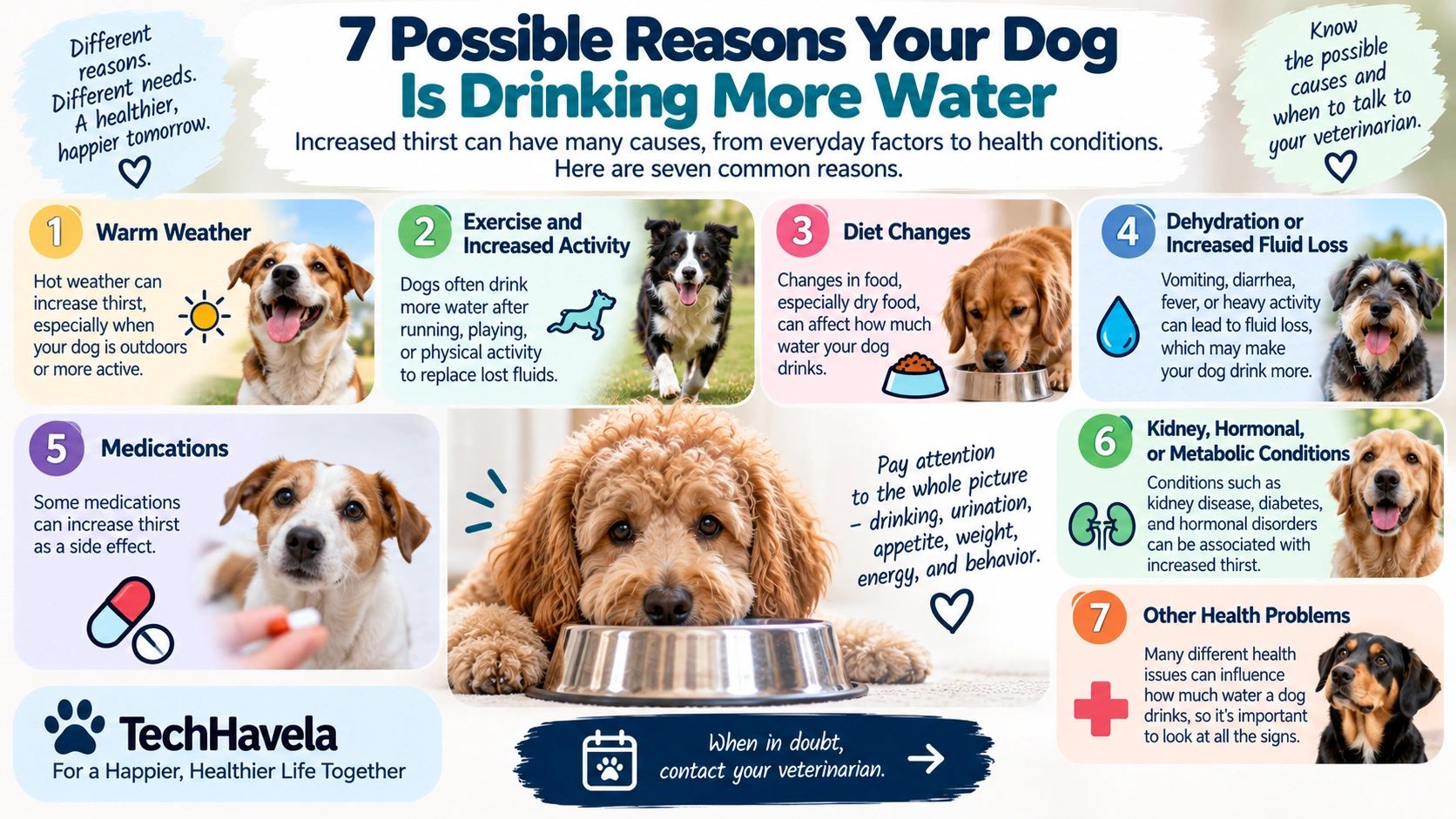
7 Possible Reasons Your Dog Is Drinking More Water
1. Warm Weather
Dogs may naturally drink more water when temperatures rise.
Warm weather can increase fluid needs, especially when your dog spends time outdoors or becomes more active.
Panting also plays an important role in temperature regulation and can contribute to fluid loss.
Make sure your dog has access to fresh water and a comfortable environment.
If increased thirst is accompanied by excessive panting, significant weakness, confusion, vomiting, collapse, or other concerning signs during hot weather, seek veterinary attention promptly.
2. Exercise and Increased Activity
Physical activity can make dogs thirsty.
After running, walking, playing, or exercising, your dog may naturally drink more water to replace fluids.
This increase should generally correspond with the amount of activity.
Pay attention if your dog begins drinking much more than expected even on quiet days when activity levels have not changed.
A persistent increase without an obvious explanation deserves closer observation.
3. Diet Changes
Food can influence how much water a dog drinks.
Dogs eating dry food may obtain less moisture from their meals than dogs eating foods with higher water content.
Changes in diet can therefore affect drinking habits.
Certain foods may also make a dog thirstier.
If increased drinking began soon after a diet change, consider whether the timing is related. However, do not assume diet is responsible if the thirst is persistent or accompanied by other symptoms.
4. Dehydration or Increased Fluid Loss
Dogs may drink more when their bodies need to replace lost fluids.
Fluid loss can occur for several reasons, including:
- Warm weather
- Heavy activity
- Vomiting
- Diarrhea
- Fever
- Reduced food intake
- Other illnesses
A dog experiencing vomiting or diarrhea may lose fluids more quickly than usual.
Signs such as unusual weakness, low energy, repeated vomiting or diarrhea, or significant behavior changes should not be ignored.
Veterinary advice may be needed, particularly when fluid loss continues.
5. Medications
Some medications can affect thirst or urination.
If your dog recently started a medication and you notice increased drinking, review the information provided by your veterinarian and contact the clinic if you have questions.
Do not stop, reduce, or change a prescribed medication without veterinary guidance.
The timing of the change can be useful information. Tell your veterinarian when the increased thirst began and whether it started after a new medication or dosage change.
6. Kidney, Hormonal, or Metabolic Conditions
Persistent increased thirst can sometimes be associated with medical conditions that affect how the body regulates water, blood sugar, hormones, or kidney function.
Possible health problems can include kidney disease, diabetes, and certain hormonal disorders.
The Merck Veterinary Manual lists increased thirst and increased urination among the common clinical signs associated with diabetes mellitus.
These conditions cannot be identified simply by watching how much water a dog drinks.
Veterinary examination and appropriate testing may be necessary to determine the cause.
Other changes that may occur alongside increased thirst include:
- Increased urination
- Weight changes
- Appetite changes
- Low energy
- Weakness
- Changes in coat or skin
- Changes in behavior
A persistent combination of these signs should be discussed with your veterinarian.
7. Other Health Problems
Increased thirst is a relatively nonspecific sign.
Many different changes in the body can influence how much water a dog drinks.
For this reason, it is important not to assume that increased drinking automatically means one particular disease.
Consider your dog’s:
- Age
- Diet
- Activity
- Environment
- Medications
- Urination
- Appetite
- Weight
- Energy level
- Other symptoms
Your veterinarian can use this information together with a physical examination and, when appropriate, diagnostic testing.
Why Is My Dog Drinking So Much Water and Peeing a Lot?
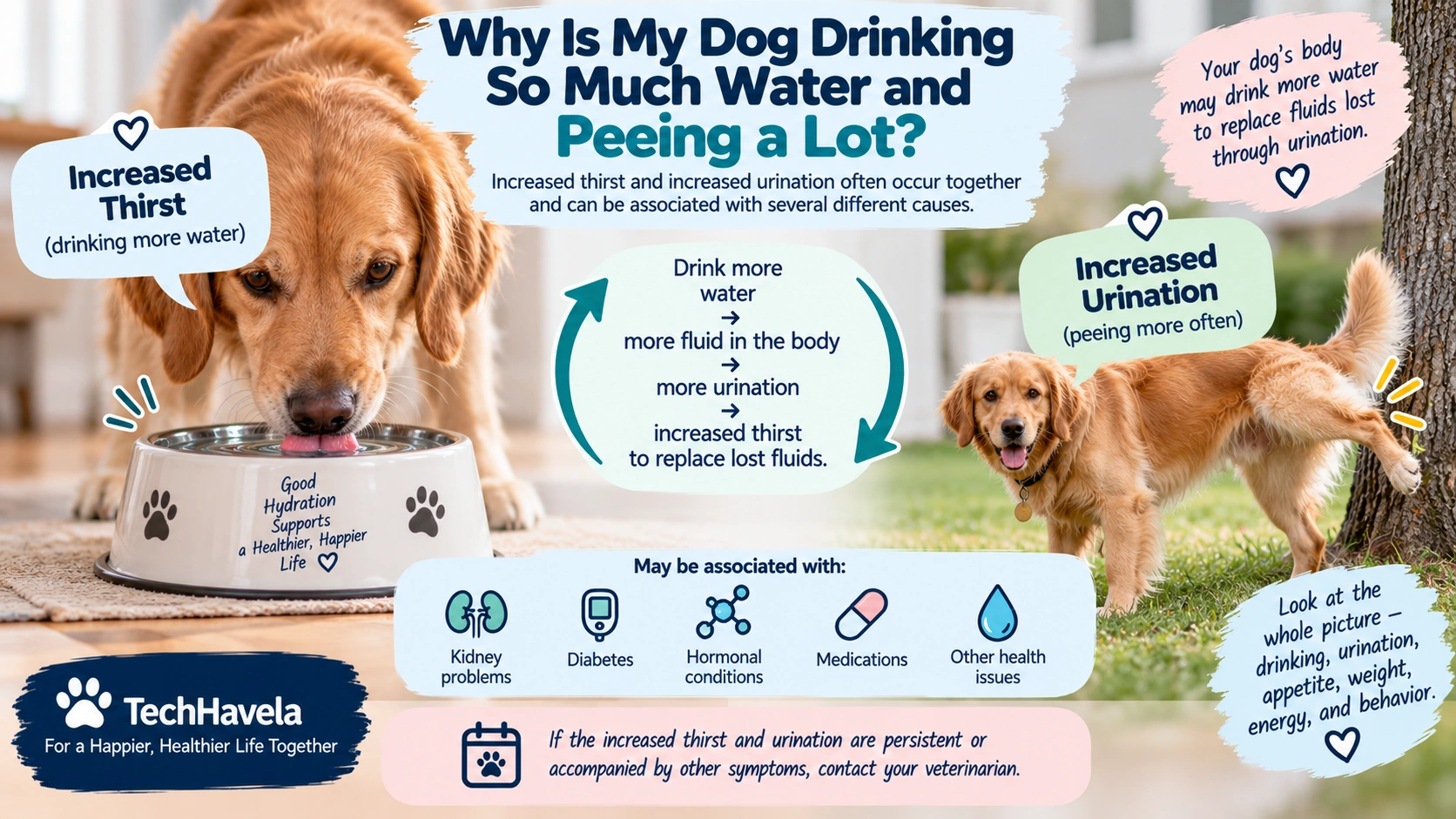
Increased thirst and increased urination often occur together.
According to VCA Animal Hospitals, increased thirst and urination can occur together and may be associated with several different health conditions.
If a dog loses more water through urination, the body may stimulate thirst to replace that fluid.
You may notice:
- More frequent trips outside
- Larger amounts of urine
- Asking to go outside during the night
- Accidents indoors in a previously house-trained dog
- An empty water bowl sooner than expected
Persistent changes in both drinking and urination should be discussed with a veterinarian.
Several different medical conditions can cause this combination, so symptoms alone cannot determine the cause.
Why Is My Dog Drinking So Much Water but Not Eating?
Increased thirst combined with appetite loss deserves closer attention.
A temporary change in appetite can happen for many reasons, but persistent refusal of food together with unusual drinking may indicate that your dog is not feeling well.
Look for other changes such as:
- Vomiting
- Diarrhea
- Weakness
- Shaking
- Low energy
- Weight loss
- Changes in urination
- Behavior changes
If your dog continues drinking unusually large amounts while eating much less than normal, contact your veterinarian.
Why Is My Dog Drinking More Water and Losing Weight?
Unexplained weight loss combined with increased thirst can be an important change.
Weight loss may occur when a dog’s calorie intake decreases, when nutrients are not being used normally, or when an underlying health problem affects the body.
Pay attention to whether appetite has:
- Increased
- Decreased
- Stayed approximately the same
That information can help your veterinarian evaluate the situation.
Persistent increased thirst with unexplained weight loss should be investigated rather than assumed to be a normal change associated with age or activity.
Why Is My Dog Suddenly Drinking More Water?
A sudden change is often easier to notice than a gradual one.
First, consider whether anything else recently changed.
For example:
- Has the weather become warmer?
- Has your dog exercised more?
- Did you change their food?
- Did your dog start a new medication?
- Has vomiting or diarrhea occurred?
- Is your dog urinating more?
- Has appetite changed?
- Has your dog’s energy level changed?
Sometimes there is a straightforward explanation.
When there is no obvious reason, or when increased thirst persists, veterinary advice can help determine whether further evaluation is appropriate.
Why Is My Dog Drinking More Water at Night?
Dogs may occasionally drink during the night, particularly after an active day or during warmer weather.
A new pattern of repeatedly waking to drink, however, is worth observing.
Pay attention to whether your dog also:
- Needs to urinate during the night
- Appears restless
- Pants excessively
- Has difficulty settling
- Has appetite changes
- Is losing weight
- Seems unusually tired during the day
A persistent change in nighttime drinking should be discussed with your veterinarian, especially when other symptoms are present.
Should I Limit My Dog’s Water If They Are Drinking Too Much?
In general, do not restrict your dog’s access to water simply because you think they are drinking too much unless a veterinarian specifically instructs you to do so.
Increased thirst may be the body’s response to increased fluid needs or an underlying health problem.
Removing or severely limiting water without veterinary guidance could create additional problems.
Instead, observe the drinking pattern and contact your veterinarian if the increase is significant, unexplained, or persistent.
If your veterinarian wants to know approximately how much your dog is drinking, they may provide instructions for monitoring water intake safely.
When Should I Worry About My Dog Drinking Too Much Water?
An occasional increase in drinking after exercise or during warm weather can have an understandable explanation.
Persistent or unexplained thirst deserves more attention.
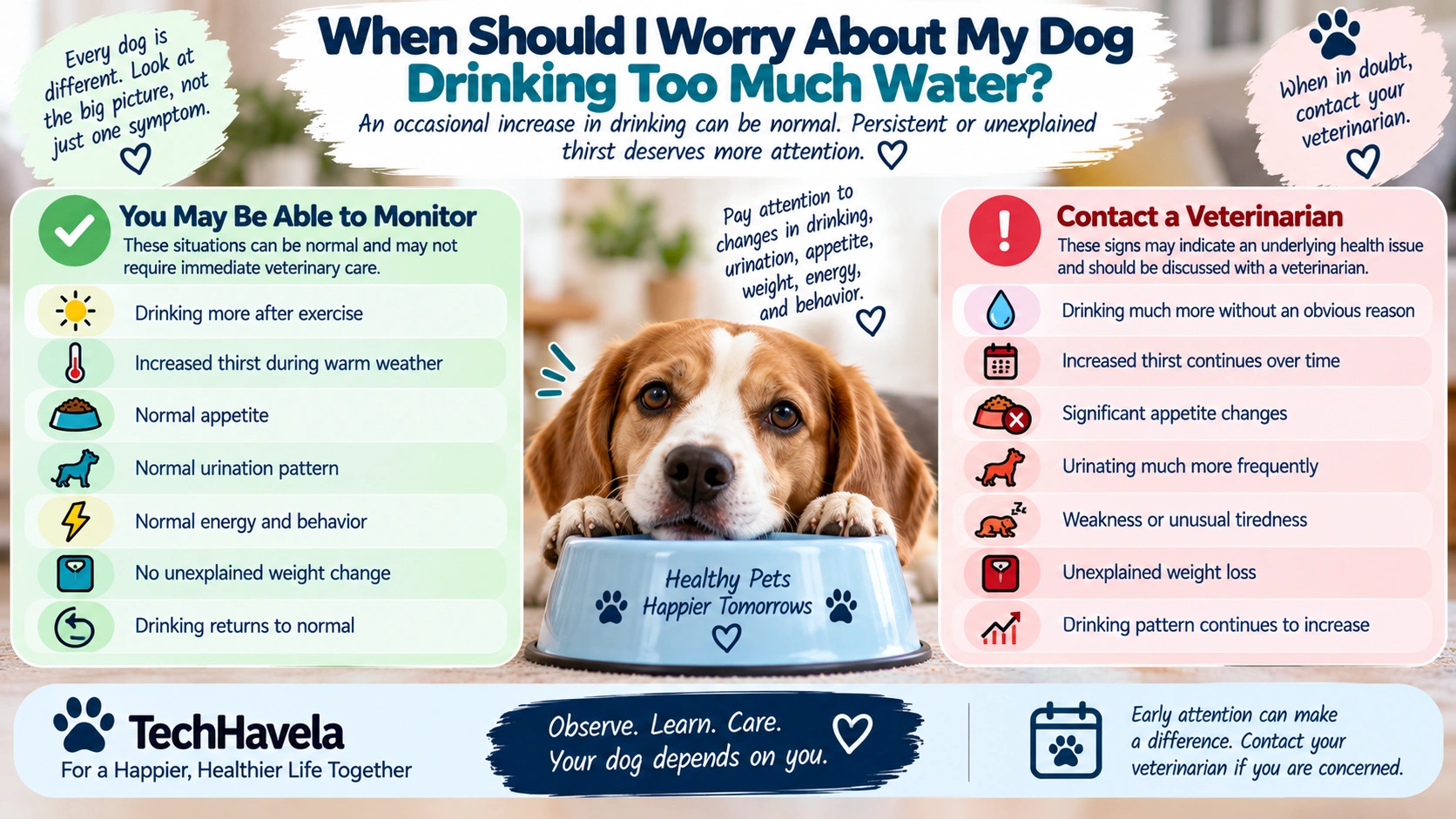
| You May Be Able to Monitor | Contact a Veterinarian |
|---|---|
| Drinking more after exercise | Drinking much more without an obvious reason |
| Increased thirst during warm weather | Increased thirst continues over time |
| Normal appetite | Significant appetite changes |
| Normal urination pattern | Urinating much more frequently |
| Normal energy and behavior | Weakness or unusual tiredness |
| No unexplained weight change | Unexplained weight loss |
| Drinking returns to normal | Drinking pattern continues to increase |
The presence of several changes together can be more informative than thirst alone.
What Other Symptoms Should I Watch For?
When your dog’s drinking habits change, observe the rest of their daily routine.
Important changes can include:
Urination: Is your dog urinating more often or producing more urine?
Appetite: Is your dog eating more, eating less, or refusing food?
Weight: Has there been unexplained weight gain or weight loss?
Energy: Is your dog unusually tired or weak?
Digestive symptoms: Has your dog been vomiting or having diarrhea?
Breathing: Is your dog panting excessively or breathing faster than usual?
Movement: Is your dog shaking, limping, or reluctant to move?
Behavior: Is your dog restless, hiding, confused, or behaving differently?
Recording these changes can help provide a clearer picture if veterinary care is needed.
What Should I Do If My Dog Is Drinking a Lot of Water?
Start by considering whether there is an obvious reason for the increase.
Think about recent changes in:
- Weather
- Exercise
- Diet
- Medication
- Appetite
- Urination
- Weight
- Energy
- Behavior
Keep fresh water available.
Observe whether the increased drinking continues and whether other symptoms develop.
Do not give medications or supplements in an attempt to treat excessive thirst without veterinary guidance.
If the change is significant, persistent, or accompanied by other concerning symptoms, contact your veterinarian.
Check Your Dog’s Other Symptoms
Increased thirst becomes more informative when considered alongside other symptoms.
If your dog is breathing fast, consider whether the change occurs after activity or also happens during rest.
If your dog is not eating, observe how long the appetite change lasts and whether energy levels have also changed.
If your dog is vomiting, fluid loss may affect thirst and hydration.
If your dog is shaking, look for other signs of discomfort, illness, or behavior changes.
If your dog is coughing, observe whether there are also changes in breathing or exercise tolerance.
If your dog is limping, pain or physical discomfort may be another important part of the overall picture.
Looking at symptoms together can provide more useful information than focusing on thirst alone.
Not Sure What Your Dog’s Symptoms Could Mean?
When increased thirst appears together with changes in urination, appetite, weight, energy, digestion, breathing, or behavior, it can be difficult to know what information matters most.
The TechHavela Pet Symptom Checker can help you explore common symptoms in dogs and cats, possible causes, warning signs, and situations in which veterinary care may be needed.
The Pet Symptom Checker provides educational information only. It cannot diagnose your pet or replace professional veterinary care.
Frequently Asked Questions
Is it normal for my dog to drink a lot of water after exercise?
Dogs commonly drink more after physical activity. The increase should generally make sense for the amount of exercise and environmental temperature. Persistent excessive drinking even when your dog has been resting deserves closer attention.
Why is my dog suddenly thirsty all the time?
Warm weather, increased activity, diet changes, medications, fluid loss, and several health conditions can influence thirst. If the change is persistent or has no obvious explanation, contact your veterinarian.
Can dry dog food make a dog drink more water?
Diet can influence water intake. Dry food contains less moisture than many wet foods, so dogs eating primarily dry food may obtain more of their daily fluid directly from drinking water.
Can medications make dogs drink more water?
Some medications can affect thirst and urination. If increased drinking begins after your dog starts a medication, contact your veterinarian with any concerns. Do not stop or change prescribed medication without veterinary guidance.
Why is my older dog drinking more water?
Age itself should not automatically be assumed to explain a major increase in thirst. Older dogs can develop health conditions that affect drinking and urination, so a persistent change should be discussed with a veterinarian.
Should I take away my dog’s water at night?
Do not restrict water simply because your dog is drinking more than usual unless your veterinarian has specifically recommended it. If nighttime thirst is a new or persistent pattern, discuss it with your veterinarian.
When does excessive thirst need veterinary attention?
Veterinary advice is appropriate when increased thirst is persistent, unexplained, becoming more noticeable, or accompanied by increased urination, appetite changes, unexplained weight loss, weakness, vomiting, diarrhea, or other concerning symptoms.
The Bottom Line
If you are asking “Why is my dog drinking so much water?”, begin by looking for changes in your dog’s routine.
Warm weather, exercise, diet, and other everyday factors can temporarily increase thirst. However, dehydration, medications, kidney problems, diabetes, hormonal conditions, and other health issues can also affect drinking habits.
Pay particular attention when increased thirst is new, persistent, unexplained, or accompanied by increased urination, appetite changes, weight loss, weakness, digestive symptoms, or behavior changes.
Keep fresh water available and do not restrict your dog’s access to water unless specifically instructed by a veterinarian.
If the change continues or you notice other concerning symptoms, contact your veterinarian.
→ Use the Pet Symptom Checker to explore your dog’s other symptoms and warning signs.

**Sidnir Vieira**
Founder of TechHavela
A passionate pet and tech content creator, helping dog owners across the U.S. make smarter decisions for their furry friends.