Why Is My Dog Breathing Fast? What Dog Owners Should Know
Seeing your dog breathing faster than usual can be worrying, especially when there is no obvious reason for the change.
So, why is my dog breathing fast?
Dogs may breathe faster for many possible reasons. Exercise, excitement, warm weather, stress, or panting can temporarily increase breathing. However, fast breathing can also occur with pain, fever, respiratory problems, heart-related conditions, or other health issues.
The most important question is not simply how fast your dog is breathing. You should also consider what your dog was doing before it started, whether the breathing returns to normal during rest, and whether other symptoms are present.
Fast breathing while playing on a warm day is very different from rapid breathing while quietly sleeping.
Understanding these differences can help you recognize when observation may be reasonable and when veterinary attention may be needed.
Why Is My Dog Breathing Fast?
A dog’s breathing rate naturally changes throughout the day.
The Merck Veterinary Manual explains that an increased breathing rate can occur in healthy animals after vigorous exercise or in response to anxiety, but it can also be associated with disease.
When dogs exercise, play, become excited, or feel warm, their bodies need to regulate temperature and meet increased oxygen demands. Their breathing may temporarily become faster.
After the dog rests and cools down, breathing would normally begin returning toward its usual pattern.
Fast breathing becomes more concerning when it:
- Happens while your dog is resting
- Continues without an obvious reason
- Does not improve after rest
- Appears more difficult or labored
- Is accompanied by coughing
- Occurs with weakness or unusual tiredness
- Appears together with appetite or behavior changes
The overall situation matters more than one observation alone.
Fast Breathing vs. Panting in Dogs
Fast breathing and panting are related, but they are not exactly the same thing.
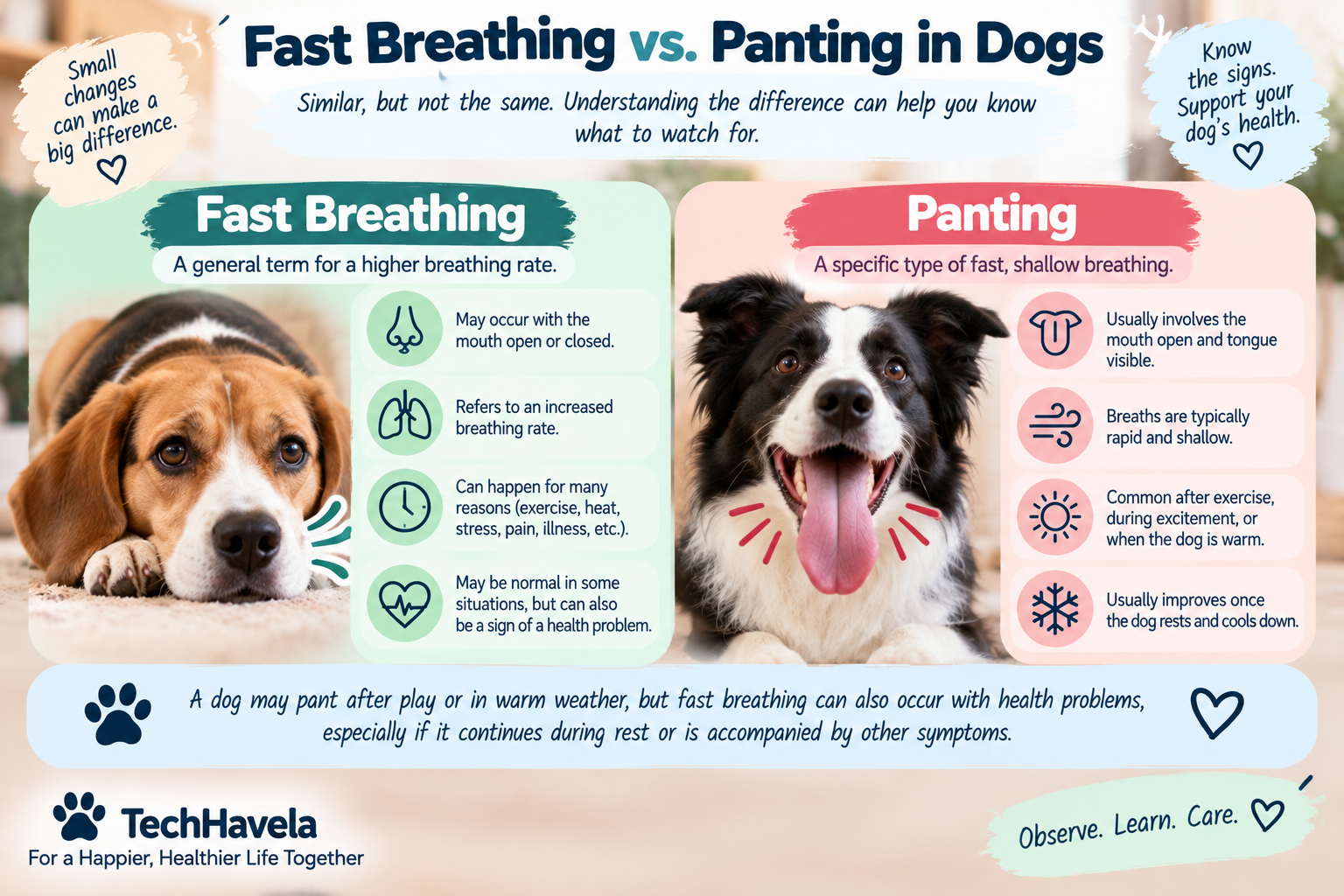
Panting usually involves rapid, shallow breaths with the mouth open and tongue visible. Dogs commonly pant after exercise, during excitement, or when they are warm.
Fast breathing may occur with the mouth open or closed and refers more generally to an increased breathing rate.
A dog that has just been running may pant heavily and then gradually return to normal after resting.
A dog that is lying quietly but continues breathing unusually fast deserves closer attention.
Observe:
- Whether the mouth is open or closed
- Whether your dog recently exercised
- Whether the environment is warm
- Whether the breathing slows with rest
- Whether your dog appears comfortable
- Whether there are other symptoms
These details can be useful when speaking with your veterinarian.
7 Possible Reasons Your Dog Is Breathing Fast
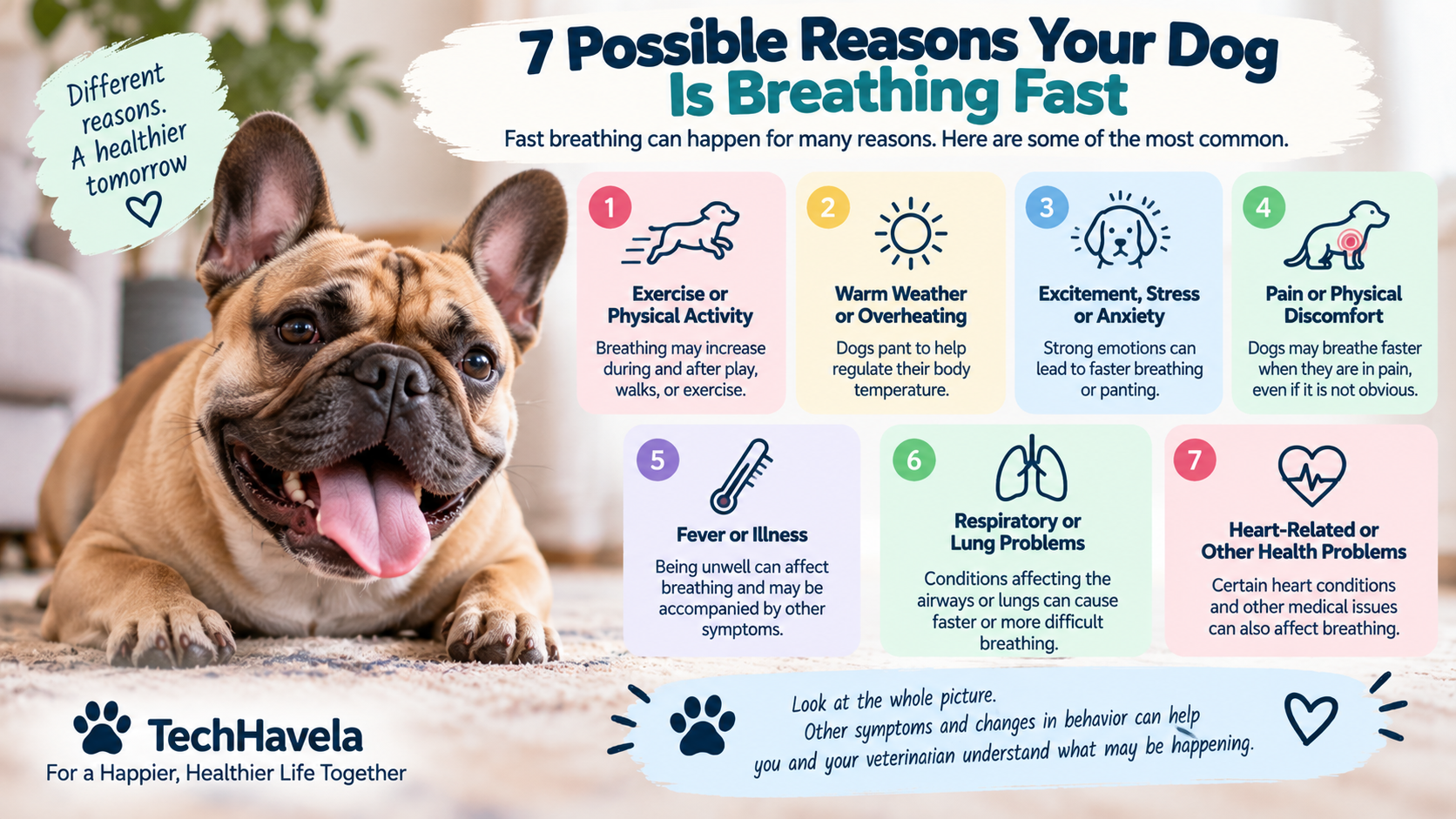
1. Exercise or Physical Activity
One of the simplest reasons for fast breathing is physical activity.
Running, playing, walking, and other forms of exercise increase the body’s demand for oxygen. Dogs may breathe faster or pant as they recover.
After normal exercise, you would generally expect the breathing to gradually slow as your dog rests.
Pay attention if your dog suddenly becomes unable to tolerate activities that were previously easy.
Possible changes include:
- Becoming tired sooner than usual
- Stopping frequently during walks
- Coughing during or after activity
- Taking much longer to recover
- Showing weakness
- Avoiding activities they previously enjoyed
A noticeable change in exercise tolerance is worth discussing with your veterinarian.
2. Warm Weather or Overheating
Dogs use panting as an important way to regulate body temperature.
For this reason, breathing may become faster in warm environments or after activity on a hot day.
Move your dog to a comfortable, cooler environment and allow them to rest.
Pay close attention to their overall condition. Excessive panting or fast breathing accompanied by significant weakness, confusion, vomiting, collapse, or other concerning changes can indicate a more serious situation requiring prompt veterinary attention.
Never leave a dog inside a parked vehicle, even when the weather does not seem extremely hot.
3. Excitement, Stress, or Anxiety
Emotions can also affect breathing.
Some dogs begin panting or breathing faster when they are excited, frightened, stressed, or anxious.
Possible triggers include:
- Car rides
- Thunderstorms
- Fireworks
- Veterinary visits
- Unfamiliar environments
- New people or animals
- Separation
- Intense excitement during play
Look at the circumstances surrounding the change.
If breathing returns to normal once your dog becomes calm, the situation may have been related to temporary excitement or stress.
However, persistent fast breathing should not automatically be assumed to be anxiety, particularly when other symptoms are present.
4. Pain or Physical Discomfort
Dogs experiencing pain or discomfort may sometimes breathe faster than usual.
Pain is not always obvious.
A dog may not cry or whine even when something hurts. Instead, you may notice more subtle changes.
These can include:
- Restlessness
- Difficulty getting comfortable
- Shaking
- Reduced appetite
- Limping
- Reluctance to move
- Changes in posture
- Unusual behavior
- Increased panting or breathing
If fast breathing appears alongside signs of pain or a recent injury, contact your veterinarian.
Do not give your dog human pain medication unless a veterinarian specifically instructs you to do so.
5. Fever or Illness
Illness can sometimes affect a dog’s breathing rate.
A dog that feels unwell may also show other changes, such as:
- Low energy
- Loss of appetite
- Shaking
- Coughing
- Nasal discharge
- Vomiting
- Diarrhea
- Changes in normal behavior
Fast breathing together with several other symptoms can provide important information about your dog’s overall condition.
Rather than trying to determine the illness based on one symptom, consider the complete picture and contact your veterinarian when you are concerned.
6. Respiratory or Lung Problems
Conditions involving the airways or lungs can affect how comfortably and efficiently a dog breathes.
Respiratory problems may sometimes cause:
- Fast breathing
- Coughing
- Noisy breathing
- Increased breathing effort
- Reduced exercise tolerance
- Weakness
- Nasal discharge
- Unusual tiredness
Pay particular attention to breathing effort.
If your dog’s chest or abdomen appears to be working unusually hard with each breath, or your dog appears unable to breathe comfortably, seek veterinary attention promptly.
7. Heart-Related or Other Health Problems
Fast breathing does not always originate from a problem in the lungs.
Certain heart-related conditions and other medical problems can also affect breathing.
Possible accompanying changes may include:
- Coughing
- Reduced exercise tolerance
- Weakness
- Unusual tiredness
- Restlessness
- Difficulty settling at night
- Collapse or fainting
- Changes in appetite
Fast breathing alone cannot identify a heart condition or any other specific disease.
Veterinary examination may be needed to determine why the breathing pattern has changed.
Why Is My Dog Breathing Fast While Resting?
Fast breathing during rest deserves more attention than breathing that increases temporarily after exercise or excitement.
When your dog is calm, their body should not have the same increased oxygen demand that occurs during physical activity.
If you notice fast breathing while your dog is lying quietly, observe:
- How long it lasts
- Whether it happens repeatedly
- Whether your dog appears comfortable
- Whether breathing seems effortless or difficult
- Whether coughing is present
- Whether appetite and energy are normal
- Whether your dog can sleep comfortably
Persistent or unexplained fast breathing at rest should be discussed with your veterinarian.
Why Is My Dog Breathing Fast While Sleeping?
Watching your dog breathe while sleeping can make changes easier to notice.
Dogs may temporarily breathe faster during certain stages of sleep. You might also see small movements of the paws, face, or body.
However, breathing that remains unusually fast throughout quiet sleep, repeatedly occurs, or appears difficult deserves attention.
The best time to observe a dog’s resting breathing pattern is when they are calm, comfortable, and not panting.
If you repeatedly notice a significant change from your dog’s usual sleeping breathing pattern, consider contacting your veterinarian.
How Can I Check My Dog’s Breathing at Rest?
If your dog is resting comfortably, you can simply observe the movement of the chest.
One rise and fall of the chest represents one breath.
VCA Animal Hospitals recommends observing the chest while a pet is resting quietly or sleeping to evaluate the resting breathing rate.
Watch without disturbing your dog and pay attention to the pattern. You are looking not only at speed but also at whether the breathing appears smooth and comfortable.
Useful observations include:
- Whether the breathing seems faster than usual
- Whether the rhythm is regular
- Whether the chest moves normally
- Whether the abdomen is working unusually hard
- Whether unusual sounds are present
- Whether your dog appears relaxed
If you are concerned, recording a short video of the breathing pattern may be useful to show your veterinarian, provided doing so does not delay needed veterinary care.
Avoid relying on a single number to diagnose a problem yourself. Your dog’s symptoms, medical history, activity, environment, and breathing effort all matter.
When Should I Worry About My Dog Breathing Fast?
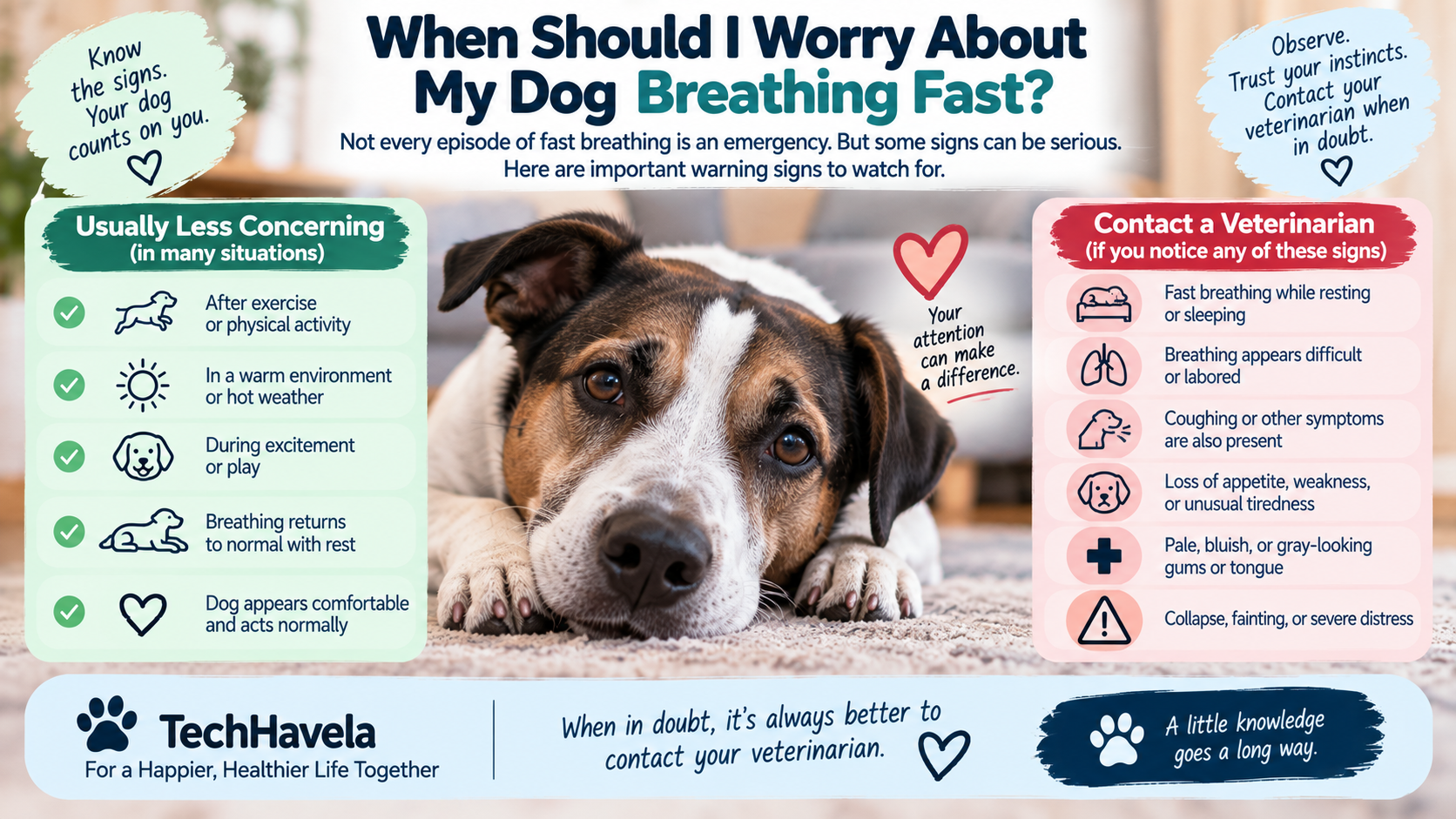
Not every episode of fast breathing has the same level of concern.
| You May Be Able to Monitor | Contact a Veterinarian |
|---|---|
| Breathing increased after normal exercise | Fast breathing continues during rest |
| Dog recently became excited | No obvious reason for the change |
| Warm environment and dog is cooling down | Breathing does not improve after rest |
| Dog appears comfortable | Breathing appears difficult or labored |
| Normal appetite and energy | Loss of appetite, weakness, or unusual tiredness |
| Breathing gradually returns to normal | Coughing or other symptoms are also present |
| Normal behavior | Significant behavior changes |
This table provides general educational information and cannot determine what is happening with an individual dog.
When you are uncertain about a change in your dog’s breathing, contact your veterinarian.
Fast Breathing and Difficulty Breathing Are Not the Same
This distinction is especially important.
A dog can breathe quickly without appearing to struggle for air. Difficulty breathing, on the other hand, may involve visible effort or distress.
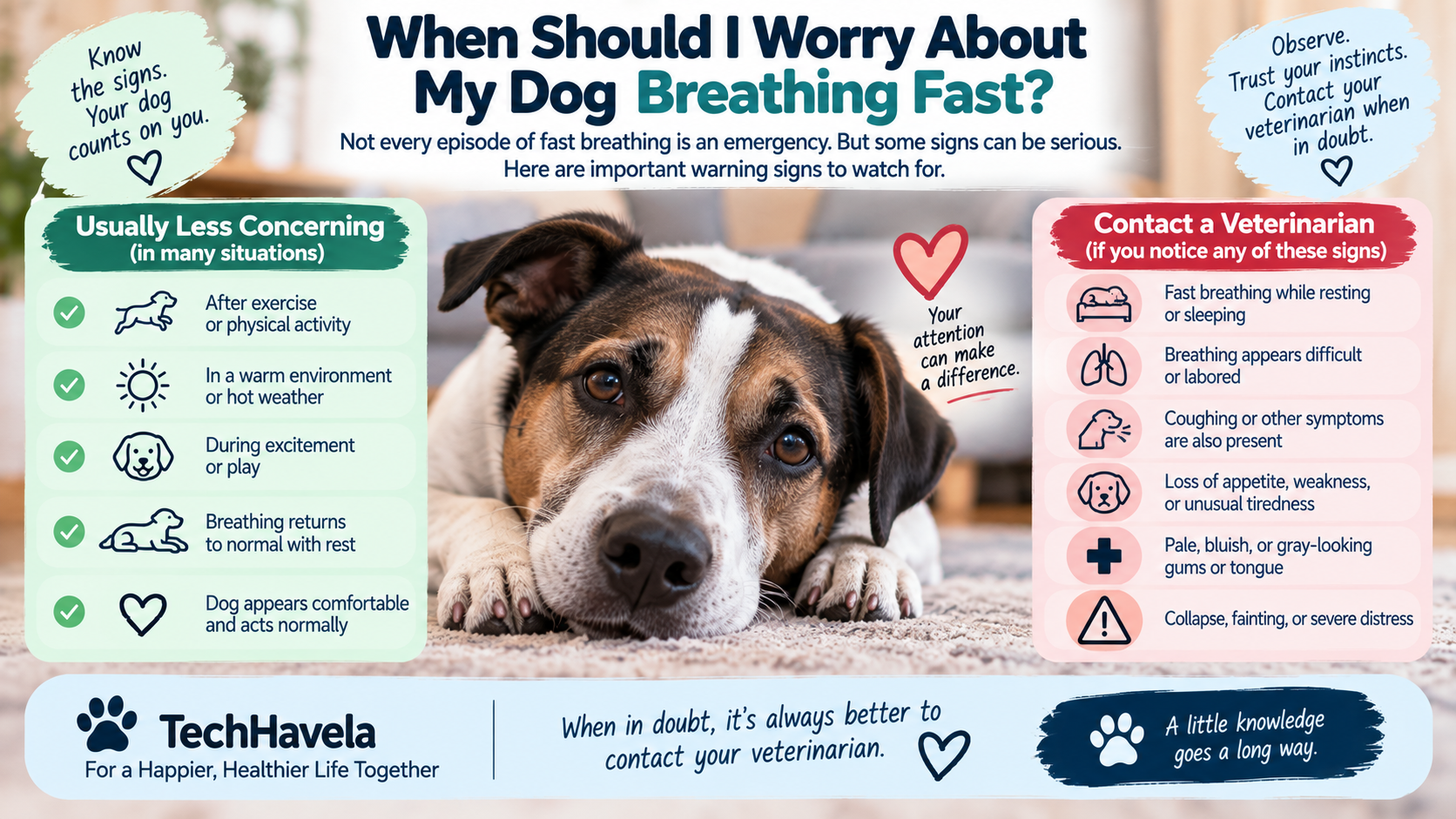
Warning signs can include:
- Noticeably increased effort to breathe
- Strong movement of the abdomen while breathing
- Difficulty settling or lying comfortably
- Neck stretched forward while trying to breathe
- Significant weakness
- Collapse
- Pale, bluish, or gray-looking gums or tongue
These signs can be more concerning than fast breathing alone.
If your dog appears to be struggling to breathe, seek urgent veterinary care.
Why Is My Dog Breathing Fast and Coughing?
Coughing combined with fast breathing provides additional information.
Possible causes can involve the respiratory system, heart, infections, or other health conditions.
Observe whether your dog also has:
- Reduced energy
- Appetite changes
- Nasal discharge
- Difficulty exercising
- Weakness
- Breathing effort
- Fever or signs of illness
Persistent coughing combined with abnormal breathing should be discussed with your veterinarian.
Why Is My Dog Breathing Fast and Shaking?
Shaking can occur for many reasons, including excitement, fear, discomfort, feeling cold, or illness.
When shaking occurs together with fast breathing, consider the circumstances.
Was your dog frightened by a storm? Did the symptoms begin after exercise? Does your dog appear painful or unwell?
Watch for additional changes such as:
- Limping
- Loss of appetite
- Weakness
- Vomiting or diarrhea
- Restlessness
- Difficulty getting comfortable
- Behavior changes
If both symptoms persist without an obvious explanation, contact your veterinarian.
Why Is My Dog Breathing Fast and Not Eating?
Loss of appetite can be an important additional symptom.
A dog that briefly pants after exercise but eats and behaves normally presents a different picture from a dog that is breathing rapidly while resting and refusing food.
Observe whether there are other changes, including:
- Low energy
- Vomiting
- Diarrhea
- Coughing
- Shaking
- Weakness
- Signs of pain
- Behavior changes
When fast breathing and appetite loss occur together and persist, veterinary advice may be appropriate.
What Should I Do If My Dog Is Breathing Fast?
First, consider what happened immediately before you noticed the change.
Was your dog exercising, playing, excited, frightened, or in a warm environment?
Allow your dog to rest in a comfortable environment and observe whether breathing begins returning toward their normal pattern.
Also check:
- Breathing effort
- Energy level
- Appetite
- Ability to walk normally
- Coughing
- Shaking
- Vomiting or diarrhea
- Behavior changes
Do not force your dog to exercise when breathing appears abnormal.
Do not give human medications in an attempt to treat fast breathing.
If the breathing remains unusually fast, becomes more difficult, or is accompanied by concerning symptoms, contact your veterinarian.
Check Your Dog’s Other Symptoms
Fast breathing is only one piece of information.
Looking at other changes can help you better understand your dog’s overall condition.
If your dog is also coughing, pay attention to whether coughing occurs during rest, exercise, or at night.
If your dog is shaking, consider whether pain, fear, illness, or another change may also be present.
If your dog is not eating, appetite loss may be an important additional sign.
If your dog is limping, discomfort or pain may sometimes be associated with changes in breathing.
If vomiting occurs along with abnormal breathing, observe your dog’s energy level, hydration, and overall behavior.
Multiple symptoms do not automatically identify a particular condition, but they can provide useful information for your veterinarian.
Not Sure What Your Dog’s Symptoms Could Mean?
When several symptoms appear at the same time, it can be difficult to know what information is most important.
The TechHavela Pet Symptom Checker can help you explore common symptoms in dogs and cats, possible causes, warning signs, and situations in which veterinary care may be needed.
The Pet Symptom Checker provides educational information only. It cannot diagnose your pet or replace professional veterinary care.
Frequently Asked Questions
Why is my dog breathing fast for no reason?
There may be a reason that is not immediately obvious. Stress, discomfort, illness, respiratory problems, heart-related conditions, and other factors can affect breathing. Persistent unexplained fast breathing should be discussed with a veterinarian.
Why is my dog breathing fast while lying down?
If your dog recently exercised or became excited, breathing may still be returning to normal. However, repeated fast breathing while your dog is quietly resting deserves closer attention, particularly when other symptoms are present.
Why is my dog breathing fast but acting normal?
Temporary fast breathing can occur after activity, excitement, or exposure to warm temperatures even when a dog otherwise appears normal. Observe whether breathing returns to the dog’s usual pattern after rest. Persistent changes should be discussed with your veterinarian.
Why is my dog breathing fast at night?
Nighttime fast breathing can have different possible explanations. Consider whether your dog is sleeping, panting, restless, coughing, or having difficulty getting comfortable. Repeated unexplained changes should be discussed with a veterinarian.
Can pain cause a dog to breathe fast?
Pain or physical discomfort can sometimes be associated with increased panting or breathing. Look for additional changes such as restlessness, limping, shaking, appetite loss, unusual posture, or reluctance to move.
Is fast breathing normal after exercise?
Breathing normally increases during and shortly after exercise. It should gradually settle as the dog rests and recovers. A major change in exercise tolerance, unusually prolonged fast breathing, weakness, or breathing difficulty deserves veterinary attention.
When is fast breathing in a dog an emergency?
Fast breathing becomes especially concerning when the dog appears to be struggling to breathe or when it occurs with significant weakness, collapse, severe distress, or pale, bluish, or gray-looking gums or tongue. Seek urgent veterinary care in these situations.
The Bottom Line
If you are wondering “Why is my dog breathing fast?”, start by considering the situation around the change.
Exercise, warm weather, excitement, and stress can temporarily increase breathing. Pain, illness, respiratory problems, heart-related conditions, and other health issues can also affect a dog’s breathing pattern.
Pay particular attention to whether the breathing happens while your dog is resting, whether it returns to normal, and whether your dog appears to be working harder to breathe.
Other symptoms such as coughing, shaking, appetite loss, weakness, vomiting, limping, or behavior changes can provide additional information.
If fast breathing persists, worsens, occurs repeatedly at rest, or is accompanied by difficulty breathing or other concerning symptoms, contact your veterinarian.
→ Use the Pet Symptom Checker to explore your dog’s other symptoms and warning signs.

**Sidnir Vieira**
Founder of TechHavela
A passionate pet and tech content creator, helping dog owners across the U.S. make smarter decisions for their furry friends.