Why Is My Dog Coughing? Common Causes and Warning Signs
Hearing your dog cough can be concerning, especially when it happens repeatedly or sounds different from anything you have heard before.
So, why is my dog coughing?
Dogs can cough for many possible reasons. Sometimes coughing may be related to temporary throat irritation or something in the environment. In other cases, it may be associated with respiratory infections, airway problems, heart conditions, or other health issues that need veterinary attention.
A single occasional cough may not always indicate a serious problem. However, frequent, persistent, or worsening coughing deserves closer attention, particularly when other symptoms are present.
Understanding what the cough sounds like, when it happens, and whether your dog has other changes can provide useful information for your veterinarian.
Below are seven possible reasons your dog may be coughing, warning signs to watch for, and situations in which veterinary care may be needed.
Why Is My Dog Coughing?
Coughing is a natural reflex that helps clear or protect the airways.
According to the Merck Veterinary Manual, coughing is a protective reflex that helps clear irritants and other material from the respiratory tract.
When something irritates the throat, windpipe, or other parts of the respiratory system, a dog may cough in response.
The occasional cough can happen for relatively simple reasons, but repeated coughing can have many possible causes.
When your dog starts coughing, pay attention to the pattern.
Ask yourself:
- Did the coughing begin suddenly or gradually?
- Is the cough occasional or frequent?
- Does it happen during exercise or excitement?
- Does your dog cough more at night or after resting?
- Does eating or drinking seem to trigger it?
- Is your dog breathing comfortably between coughing episodes?
- Are there other symptoms such as low energy, appetite changes, nasal discharge, or difficulty breathing?
These details can help your veterinarian better understand what may be happening.
7 Possible Reasons Your Dog Is Coughing
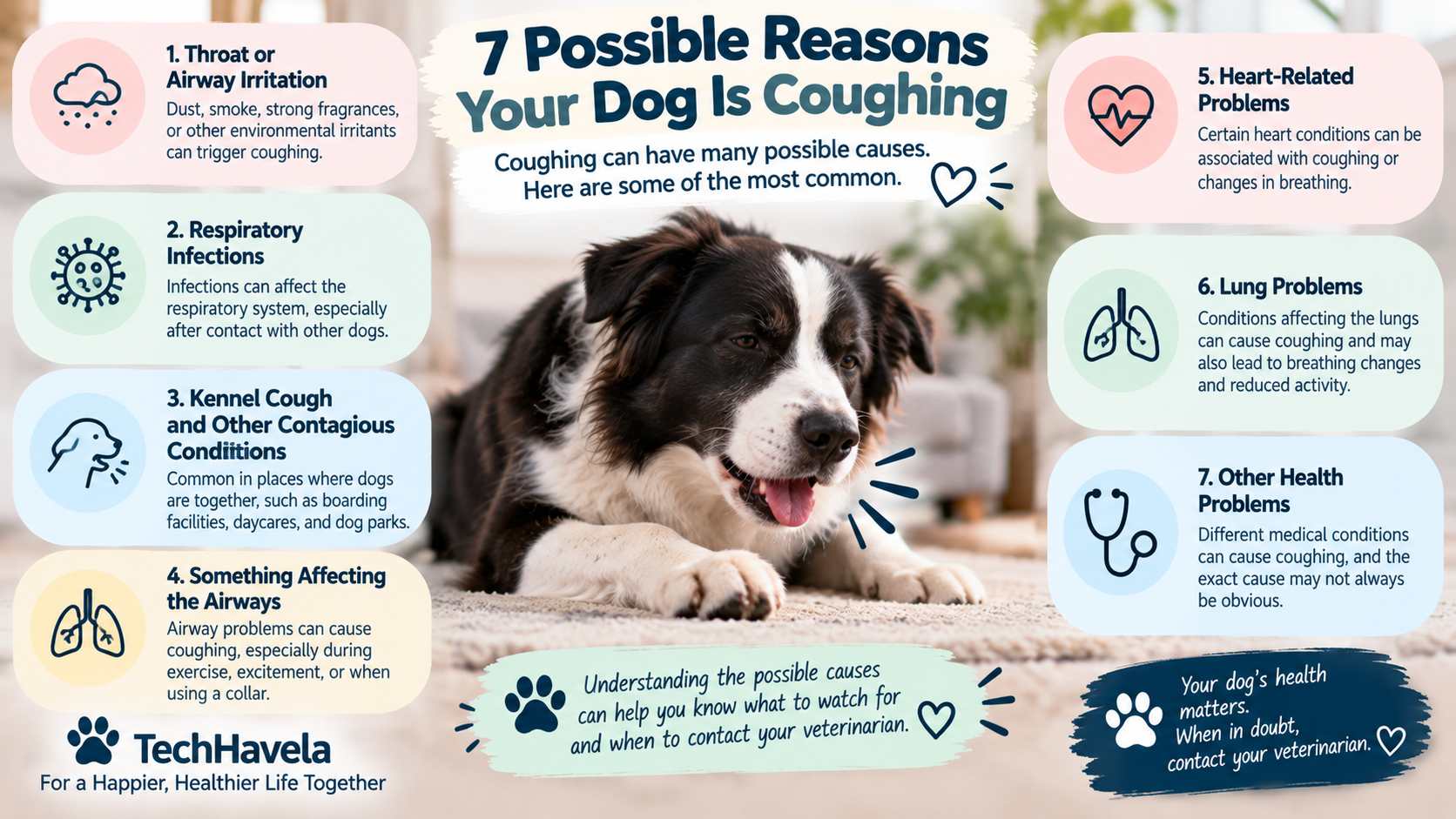
1. Throat or Airway Irritation
One possible reason for coughing is irritation somewhere in the throat or airways.
Dust, smoke, strong fragrances, aerosols, or other environmental irritants may sometimes trigger coughing in sensitive dogs.
You may notice that the cough appears after your dog has been around a particular environment or substance.
Other signs of irritation may include:
- Occasional coughing
- Throat clearing
- Mild gagging
- Sneezing
- Watery eyes
- Temporary changes after exposure to an irritant
If the coughing continues after the possible irritant is gone, becomes frequent, or is accompanied by breathing changes, contact your veterinarian.
2. Respiratory Infections
Respiratory infections are another possible cause of coughing in dogs.
Dogs can develop infections that affect different parts of the respiratory system. Some may spread more easily in places where dogs are in close contact with one another.
VCA Animal Hospitals notes that coughing in dogs can have several possible causes, including respiratory irritation and infections.
Examples include environments such as:
- Boarding facilities
- Dog daycare
- Grooming facilities
- Dog parks
- Training classes
- Animal shelters
- Veterinary waiting areas
Coughing related to a respiratory illness may occur along with other changes, including nasal discharge, sneezing, reduced energy, fever, or decreased appetite.
Not every cough after contact with other dogs means your dog has an infection, but recent exposure is useful information to share with your veterinarian.
3. Kennel Cough and Other Contagious Respiratory Conditions
The term kennel cough is commonly used for contagious respiratory illness in dogs and can involve more than one infectious agent.
A dog with a contagious respiratory condition may develop a frequent cough that can sometimes be triggered by excitement or activity.
Some dogs may otherwise appear relatively normal, while others can develop additional symptoms.
Watch for:
- Frequent coughing
- Gagging after coughing
- Sneezing
- Nasal discharge
- Reduced energy
- Appetite changes
- Signs of fever or illness
If your dog has recently spent time around other dogs and develops a new cough, contact your veterinarian for guidance.
Keeping a coughing dog away from close contact with other dogs until you receive veterinary advice may also help reduce the possibility of spreading a contagious respiratory illness.
4. Something Affecting the Airways
Problems involving the airways can sometimes contribute to coughing.
The airways carry air between the outside environment and the lungs. When they become irritated, narrowed, inflamed, or otherwise affected, coughing may occur.
Some dogs may cough more during:
- Exercise
- Excitement
- Pulling against a collar
- Drinking water
- Changes in temperature
- Periods of increased activity
You may also notice unusual breathing sounds or changes in how easily your dog exercises.
Because different airway problems can produce similar symptoms, persistent coughing should be evaluated rather than diagnosed based on the sound alone.
5. Heart-Related Problems
Not every cough begins in the respiratory system.
Certain heart problems can sometimes be associated with coughing or changes in breathing.
This is particularly important when coughing occurs together with other changes such as:
- Reduced ability to exercise
- Unusual tiredness
- Weakness
- Faster or more difficult breathing
- Restlessness at night
- Difficulty getting comfortable
- Collapse or fainting
A cough alone cannot tell you whether a dog has a heart problem.
However, coughing accompanied by significant changes in breathing, energy, or exercise tolerance deserves veterinary attention.
6. Lung Problems
Conditions affecting the lungs can also cause coughing.
Because the lungs are essential for oxygen exchange, changes involving them may affect both coughing and breathing.
Signs that may occur along with coughing include:
- Faster breathing
- Increased effort when breathing
- Reduced activity
- Weakness
- Loss of appetite
- Fever or signs of illness
- Unusual tiredness
A dog experiencing obvious difficulty breathing needs prompt veterinary attention.
Do not rely on the cough alone to judge how serious the situation may be. Your dog’s overall breathing and behavior are especially important.
7. Other Health Problems
Sometimes a cough does not fit neatly into one category.
Different medical conditions can produce coughing, and the exact cause may not be obvious without a veterinary examination.
Your dog’s age, health history, recent activities, environment, vaccination history, and other symptoms may all help your veterinarian narrow down the possibilities.
Pay particular attention when coughing occurs with:
- Weakness
- Loss of appetite
- Unusual tiredness
- Fever or signs of illness
- Breathing changes
- Exercise intolerance
- Weight changes
- Changes in normal behavior
Persistent or unexplained coughing is worth discussing with your veterinarian.
What Does a Dog Cough Sound Like?
Dog coughing does not always sound the same.
Some coughs may sound dry and harsh, while others may sound softer or seem to involve mucus.
A cough can also sometimes be confused with gagging, reverse sneezing, choking, or other respiratory sounds.
Rather than trying to identify a medical condition based only on the sound, observe the circumstances around it.
If possible, note:
- How frequently your dog coughs
- How long the coughing episodes last
- Whether the cough sounds dry or moist
- Whether coughing leads to gagging
- Whether activity triggers the cough
- Whether your dog coughs while resting
- Whether breathing appears normal afterward
A short video of the coughing episode may also be useful to show your veterinarian if you can record it safely without delaying needed care.
Why Is My Dog Coughing and Gagging?
Coughing and gagging can sometimes happen together.
After a strong coughing episode, a dog may make movements or sounds that resemble trying to clear the throat.
However, repeated coughing and gagging can have different possible causes, and the sound alone is not enough to determine what is happening.
Pay attention to whether your dog is also experiencing:
- Difficulty breathing
- Excessive drooling
- Repeated swallowing
- Loss of appetite
- Weakness
- Nasal discharge
- Unusual behavior
If your dog appears unable to breathe normally, seems distressed, or you suspect something may be blocking the airway, seek urgent veterinary care.
Why Is My Dog Coughing at Night?
Some owners notice that their dog seems to cough more when resting or during the night.
There can be several possible explanations for this pattern.
Changes in position, respiratory conditions, airway problems, and certain heart-related conditions may sometimes affect when coughing is noticed.
The timing alone cannot identify the cause.
If your dog repeatedly coughs at night, particularly if you also notice changes in breathing, exercise tolerance, energy, or sleep, discuss these observations with your veterinarian.
Why Is My Dog Coughing After Drinking Water?
Some dogs occasionally cough shortly after drinking.
This can happen if drinking temporarily irritates the throat or triggers a cough reflex.
However, frequent coughing after drinking can also be associated with other problems involving the throat or airways.
Observe whether it happens:
- Every time your dog drinks
- Only when drinking quickly
- During eating as well
- Along with gagging
- Along with unusual breathing sounds
- At other times during the day
If the pattern is frequent or persistent, veterinary evaluation may help determine the possible cause.
When Should I Worry About My Dog Coughing?
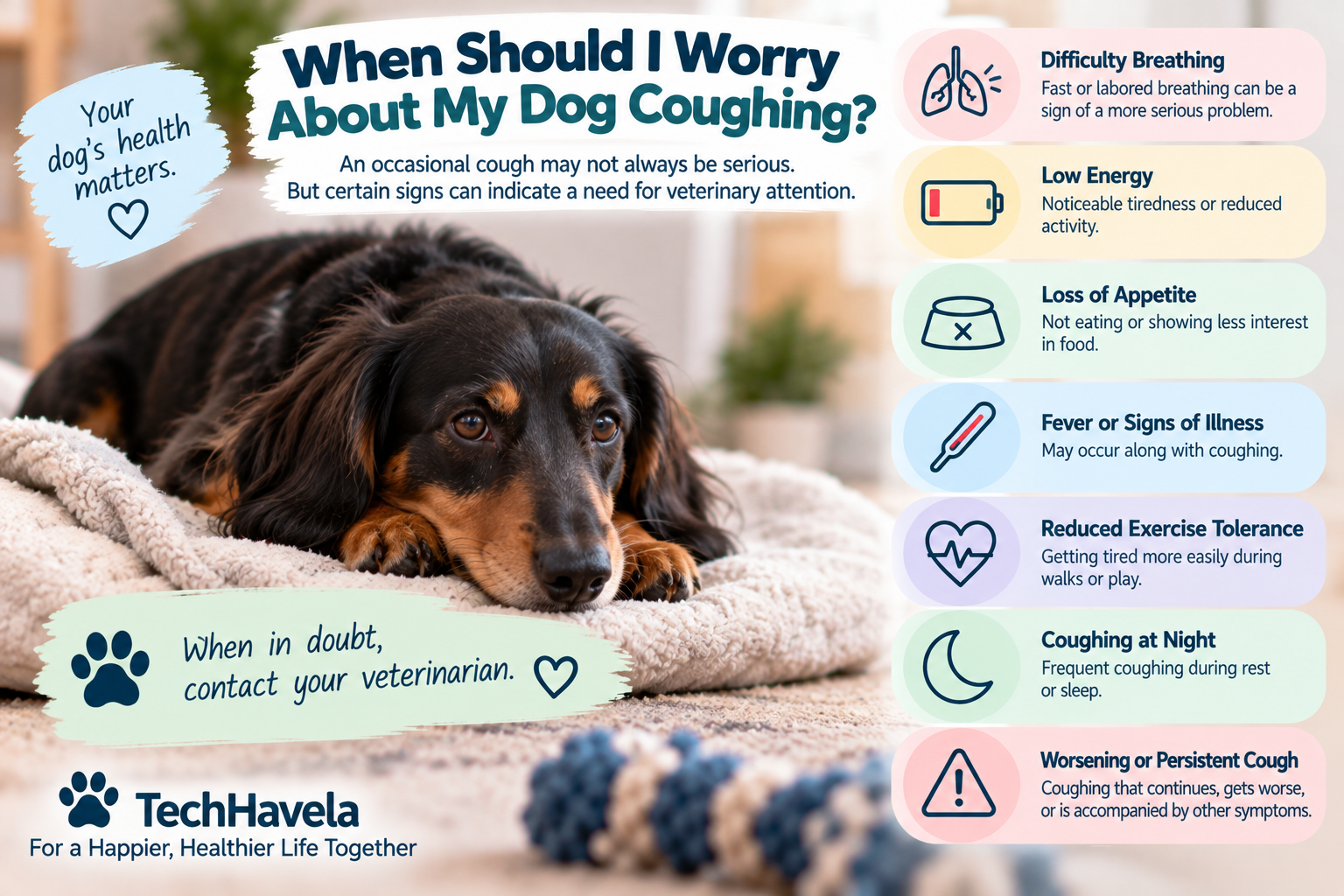
The seriousness of coughing depends on more than the cough itself.
An occasional cough in a dog that is otherwise active, eating normally, and breathing comfortably presents a different situation from persistent coughing accompanied by breathing difficulty or weakness.
| You May Be Able to Monitor | Contact a Veterinarian |
|---|---|
| An isolated occasional cough | Persistent or worsening coughing |
| Dog is breathing comfortably | Breathing becomes faster or more difficult |
| Normal appetite | Loss of appetite |
| Normal energy and behavior | Weakness or unusual tiredness |
| No other concerning symptoms | Fever or other signs of illness |
| Cough appears to be improving | Coughing repeatedly disrupts rest or activity |
| Normal ability to walk and play | Reduced exercise tolerance or collapse |
This table provides general educational guidance and cannot determine what is happening with an individual dog.
When you are uncertain, contacting your veterinarian is the appropriate way to get advice based on your dog’s specific situation.
Dog Coughing and Breathing Problems
Breathing changes are among the most important signs to watch for when your dog is coughing.
Look at your dog while they are calm.
Concerning changes may include:
- Obvious difficulty breathing
- Increased effort to breathe
- Unusually fast breathing while resting
- Inability to settle comfortably
- Significant weakness
- Collapse
- Pale, bluish, or gray-looking gums or tongue
These signs can indicate that your dog needs urgent veterinary attention.
If your dog is struggling to breathe, do not wait to see whether the cough improves on its own.
What Should I Do If My Dog Is Coughing?
Start by observing the pattern and your dog’s overall condition.
Write down or remember:
- When the coughing started
- How frequently it happens
- What the cough sounds like
- What your dog was doing when it started
- Whether activity makes it worse
- Whether coughing occurs during sleep or rest
- Whether your dog recently spent time around other dogs
- Whether appetite and energy have changed
- Whether breathing looks normal
Avoid exposing your dog to smoke, strong fragrances, aerosols, or other obvious respiratory irritants.
Do not give human cough medicine or other medications unless your veterinarian specifically tells you to do so. Medicines designed for people may contain ingredients that are inappropriate or unsafe for dogs.
If coughing persists, worsens, or occurs with other concerning symptoms, contact your veterinarian.
Check Your Dog’s Other Symptoms
Coughing should not always be considered in isolation.
Other symptoms may provide important clues about your dog’s overall condition.
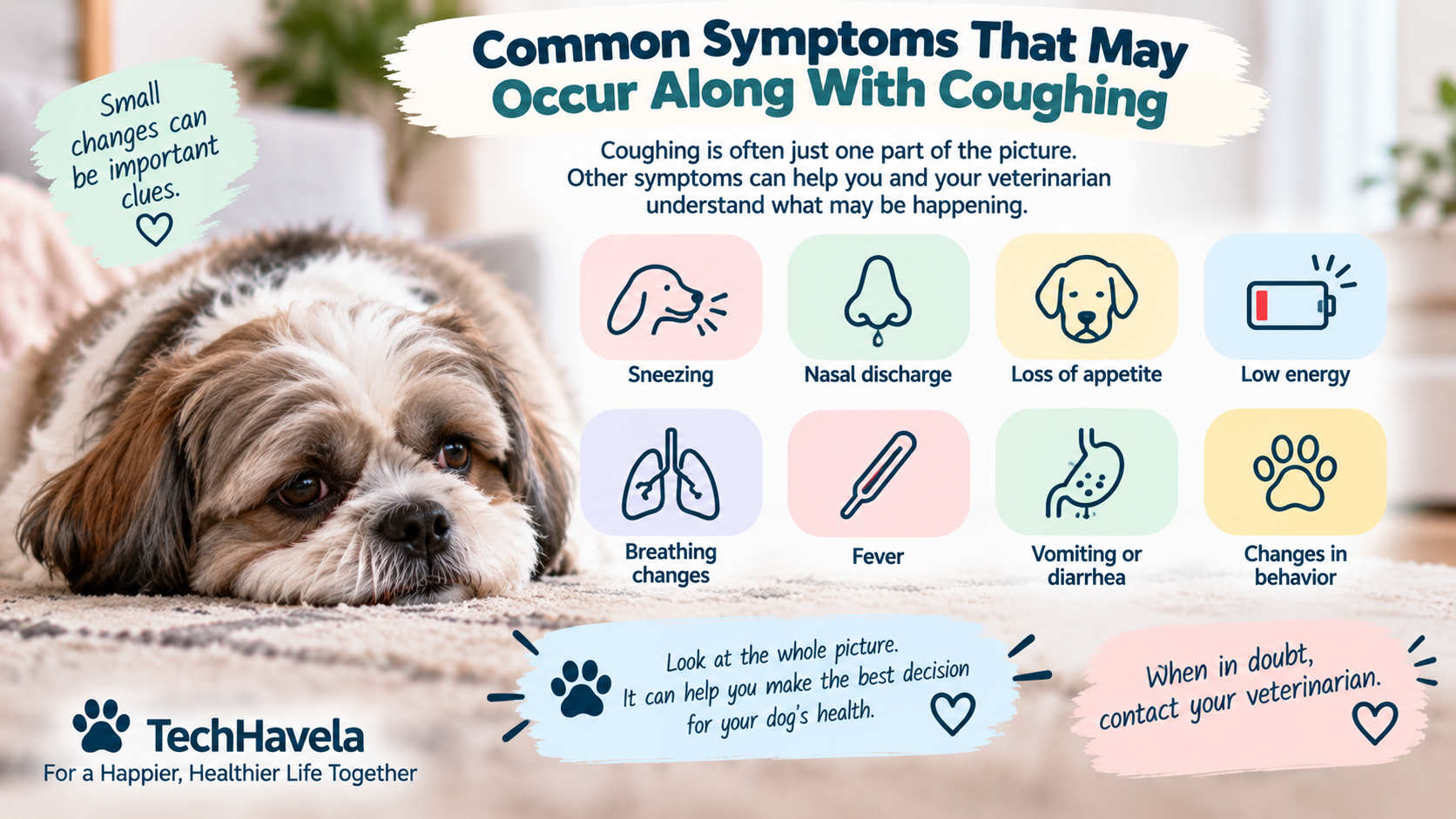
Check your dog’s:
Breathing: Is it comfortable and normal while resting?
Appetite: Is your dog eating normally?
Energy: Is your dog active or unusually tired?
Temperature and general condition: Does your dog seem unwell?
Nose: Is there unusual nasal discharge?
Movement: Is your dog walking and exercising normally?
Behavior: Is your dog restless, hiding, or acting differently?
Digestive system: Is there vomiting or diarrhea?
If your dog is coughing and also not eating, appetite changes may provide additional information about their overall condition.
If coughing occurs along with shaking, observe whether there are other signs such as weakness, discomfort, fever, or behavior changes.
If your dog is also vomiting, consider whether the vomiting began before or after the coughing and whether other symptoms are present.
Not Sure What Your Dog’s Symptoms Could Mean?
Sometimes coughing appears alongside several other changes, making it difficult to know which signs are most important.
The TechHavela Pet Symptom Checker can help you explore common symptoms in dogs and cats, possible causes, warning signs, and situations in which veterinary care may be needed.
The Pet Symptom Checker provides educational information only. It cannot diagnose your pet or replace professional veterinary care.
Frequently Asked Questions
Why is my dog coughing but acting normal?
Some dogs may cough occasionally while continuing to eat, play, and behave normally. Temporary throat or airway irritation is one possible explanation, but persistent coughing can have other causes. If the cough continues, becomes more frequent, or new symptoms appear, contact your veterinarian.
Why is my dog coughing like something is stuck in their throat?
Some types of coughing or gagging can sound as though something is caught in the throat, even when the cause is different. Because airway irritation, respiratory conditions, and other problems can produce similar sounds, repeated episodes should be discussed with a veterinarian.
Why does my dog cough after exercise?
Exercise increases breathing and can sometimes make an existing respiratory or airway problem more noticeable. If coughing regularly occurs during or after exercise, especially with reduced stamina or breathing changes, veterinary evaluation may be appropriate.
Can dogs cough because of allergies?
Environmental irritants and some allergic conditions may contribute to respiratory symptoms in certain dogs. However, coughing has many possible causes, so persistent coughing should not automatically be assumed to be an allergy.
Can kennel cough go away on its own?
The severity and cause of contagious respiratory illness can vary between dogs. Some cases may be mild, while others can require veterinary care. Because coughing can have many causes and contagious illness can spread to other dogs, contact your veterinarian for guidance rather than relying on the cough to identify the condition.
Is coughing in an older dog more concerning?
Older dogs may have a greater likelihood of developing certain respiratory, cardiac, or other health conditions, but age alone does not explain a cough. A new or persistent cough in an older dog should be discussed with a veterinarian, particularly when accompanied by breathing changes, weakness, or reduced exercise tolerance.
When is a dog’s cough an emergency?
Seek urgent veterinary attention when coughing occurs with obvious difficulty breathing, significant weakness, collapse, severe distress, or abnormal gum or tongue color. These signs are more concerning than coughing alone.
The Bottom Line
If you are asking “Why is my dog coughing?”, there are many possible explanations.
Throat or airway irritation, respiratory infections, contagious respiratory conditions, airway problems, heart-related problems, lung conditions, and other health issues can all be associated with coughing.
The cough itself is only part of the picture.
Pay attention to your dog’s breathing, appetite, energy, behavior, exercise tolerance, and other symptoms.
An occasional cough in an otherwise comfortable dog may be very different from persistent coughing combined with breathing difficulty, weakness, or significant changes in behavior.
If coughing continues, becomes worse, or your dog develops concerning breathing changes or other symptoms, contact your veterinarian.
→ Use the Pet Symptom Checker to explore your dog’s other symptoms and warning signs.

**Sidnir Vieira**
Founder of TechHavela
A passionate pet and tech content creator, helping dog owners across the U.S. make smarter decisions for their furry friends.