Why Is My Dog Limping? Common Causes and When to Worry
Seeing your dog suddenly limp can be concerning. Your dog may avoid putting weight on one leg, walk more slowly than usual, or seem uncomfortable after running, playing, or getting up from rest.
So, why is my dog limping?
Dogs can limp for many different reasons. Sometimes the cause may be something relatively minor, such as irritation between the toes or temporary discomfort after activity. In other cases, limping may be associated with an injury, joint problems, pain, or another health condition that needs veterinary attention.
Because dogs cannot tell us exactly where something hurts, observing how they walk and checking for other changes can provide important clues.
Below are seven possible reasons your dog may be limping, warning signs to watch for, and when it may be time to contact your veterinarian.
Why Is My Dog Limping?
Limping is usually a sign that something is affecting the way your dog normally moves or puts weight on a leg.
According to the Merck Veterinary Manual, lameness is an altered gait that can involve changes in weight bearing, stride, stiffness, or willingness to move.
The problem may involve a paw, nail, muscle, joint, bone, or another part of the body.
Some dogs develop a limp suddenly. Others may begin walking differently over time.
When you notice limping, consider what happened before it started.
Ask yourself:
- Did your dog recently run, jump, or play more than usual?
- Did the limping begin suddenly or gradually?
- Is your dog putting any weight on the affected leg?
- Is there anything unusual around the paw or nails?
- Does your dog seem uncomfortable when moving?
- Is the limp worse after activity or after resting?
- Are there other symptoms or behavior changes?
These observations can be useful if you need to speak with your veterinarian.
7 Possible Reasons Your Dog Is Limping
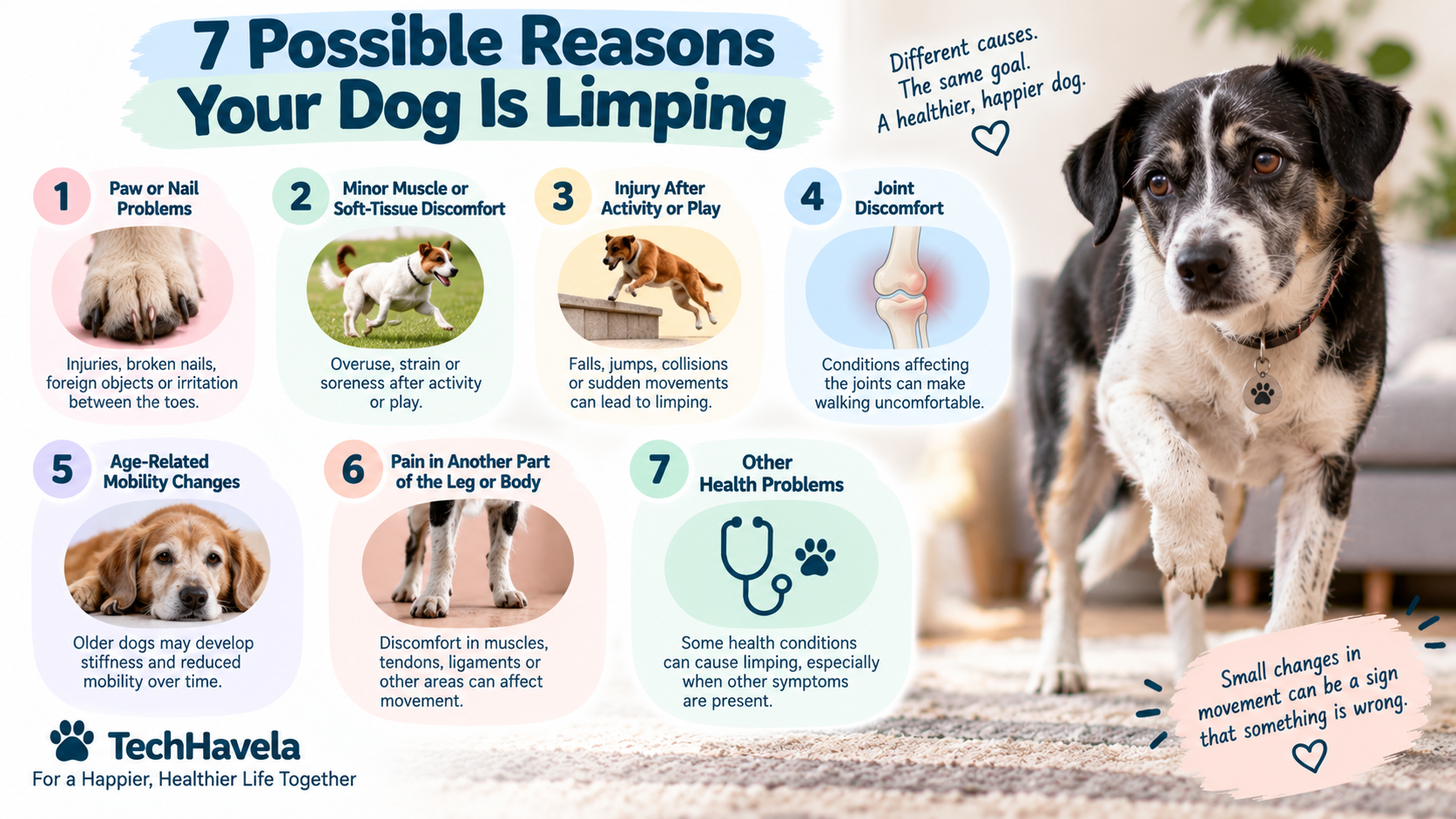
1. Paw or Nail Problems
A problem involving the paw is one possible reason a dog may suddenly start limping.
VCA Animal Hospitals explains that limping can involve different parts of the leg or foot, including joints, bones, muscles, nerves, tendons, ligaments, and skin.
Dogs walk on many different surfaces, so their paws can sometimes become irritated or uncomfortable.
Things worth noticing include:
- A damaged or unusual-looking nail
- Redness around the paw
- Swelling
- Irritation between the toes
- Excessive licking of one paw
- Sensitivity when the paw is touched
- Something unusual attached to or around the paw
If your dog begins limping after being outdoors, the paw is one of the areas a veterinarian may want to evaluate.
Avoid digging into the paw or attempting to remove anything that appears deeply embedded. If you see an injury, significant swelling, bleeding, or your dog is very uncomfortable, veterinary advice may be appropriate.
2. Minor Muscle or Soft-Tissue Discomfort
Running, jumping, sudden turns, and energetic play put stress on a dog’s muscles and other soft tissues.
Sometimes limping begins after unusually intense activity.
You may notice that your dog:
- Moves more slowly
- Avoids certain movements
- Appears stiff
- Hesitates before jumping
- Has difficulty getting comfortable
- Favors one leg
It can be difficult to determine the exact source of discomfort simply by watching your dog at home.
If the limp does not improve, becomes worse, or your dog appears to be in significant pain, contact your veterinarian.
3. Injury After Running, Jumping, or Playing
Dogs can occasionally injure themselves during everyday activities.
A sudden jump, awkward landing, fall, collision, or energetic play session may be followed by limping.
Think about what your dog was doing shortly before the problem appeared.
Did your dog:
- Jump from furniture?
- Run on an uneven surface?
- Play energetically with another dog?
- Slip on a smooth floor?
- Suddenly change direction while running?
The timing can provide useful information.
However, the severity of an injury cannot always be determined from the way a dog walks. Some injuries may require a veterinary examination to understand what is happening.
4. Joint Discomfort
Joint problems can affect how comfortably a dog walks.
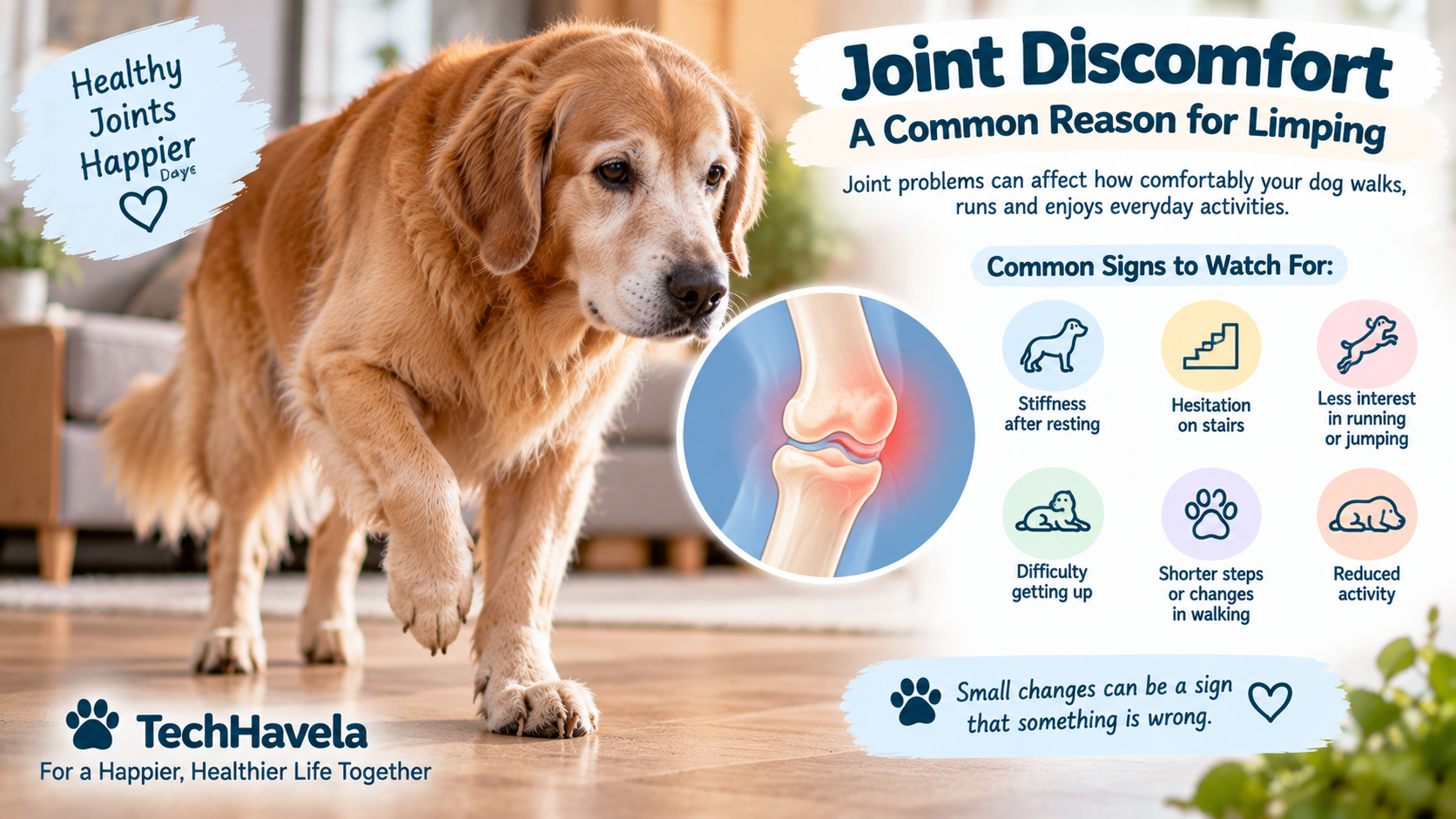
A dog experiencing joint discomfort may appear stiff, take shorter steps, hesitate before using stairs, or have difficulty getting up after resting.
The changes may be more noticeable at certain times of day or after particular activities.
You might notice:
- Stiffness after resting
- Difficulty getting up
- Reluctance to climb stairs
- Less interest in running or jumping
- A change in normal walking
- Reduced activity
Joint discomfort can have different possible causes, so persistent changes should be discussed with your veterinarian rather than assumed to be a normal part of life.
5. Age-Related Mobility Changes
Older dogs may experience changes in strength, flexibility, joints, and mobility.
These changes can sometimes make walking more difficult or contribute to stiffness and limping.
However, age alone should not automatically be considered the explanation for a new limp.
Pay attention to whether your older dog is also experiencing:
- Difficulty standing
- Reduced activity
- Weakness
- Changes in balance
- Reluctance to walk
- Changes in appetite
- Unusual behavior
New or worsening mobility problems in an older dog deserve attention, particularly when other symptoms are present.
6. Pain in Another Part of the Leg or Body
A limp does not always tell you exactly where the problem is located.
Your dog may favor one leg because of discomfort involving another part of the limb or body.
For example, changes involving the paw, leg, joint, muscles, or surrounding tissues can all affect movement.
Dogs may also change their posture or walking pattern when they are uncomfortable.
Watch for additional signs such as:
- Whining
- Restlessness
- Avoiding touch
- Difficulty lying down or getting up
- Changes in posture
- Reduced interest in normal activities
- Unusual behavior
If your dog appears uncomfortable and you cannot identify an obvious reason, a veterinarian can perform a physical examination to help determine where the problem may be coming from.
7. Other Health Problems
Sometimes limping may be associated with a health problem that is not obvious from looking at the leg alone.
This is one reason persistent or unexplained limping should not be ignored.
The complete picture matters.
Pay particular attention when limping occurs together with:
- Significant weakness
- Loss of appetite
- Fever or signs of illness
- Unusual tiredness
- Swelling
- Difficulty standing
- Problems with balance
- Sudden behavior changes
A veterinarian can evaluate your dog’s movement and other symptoms to determine whether further investigation may be needed.
When Should I Worry About My Dog Limping?
Not every limp has the same level of concern.
A mild change after activity in a dog that otherwise appears comfortable and alert presents a different situation from a dog that suddenly cannot use a leg.
Consider contacting your veterinarian when the limping is persistent, worsening, unexplained, or accompanied by other concerning symptoms.
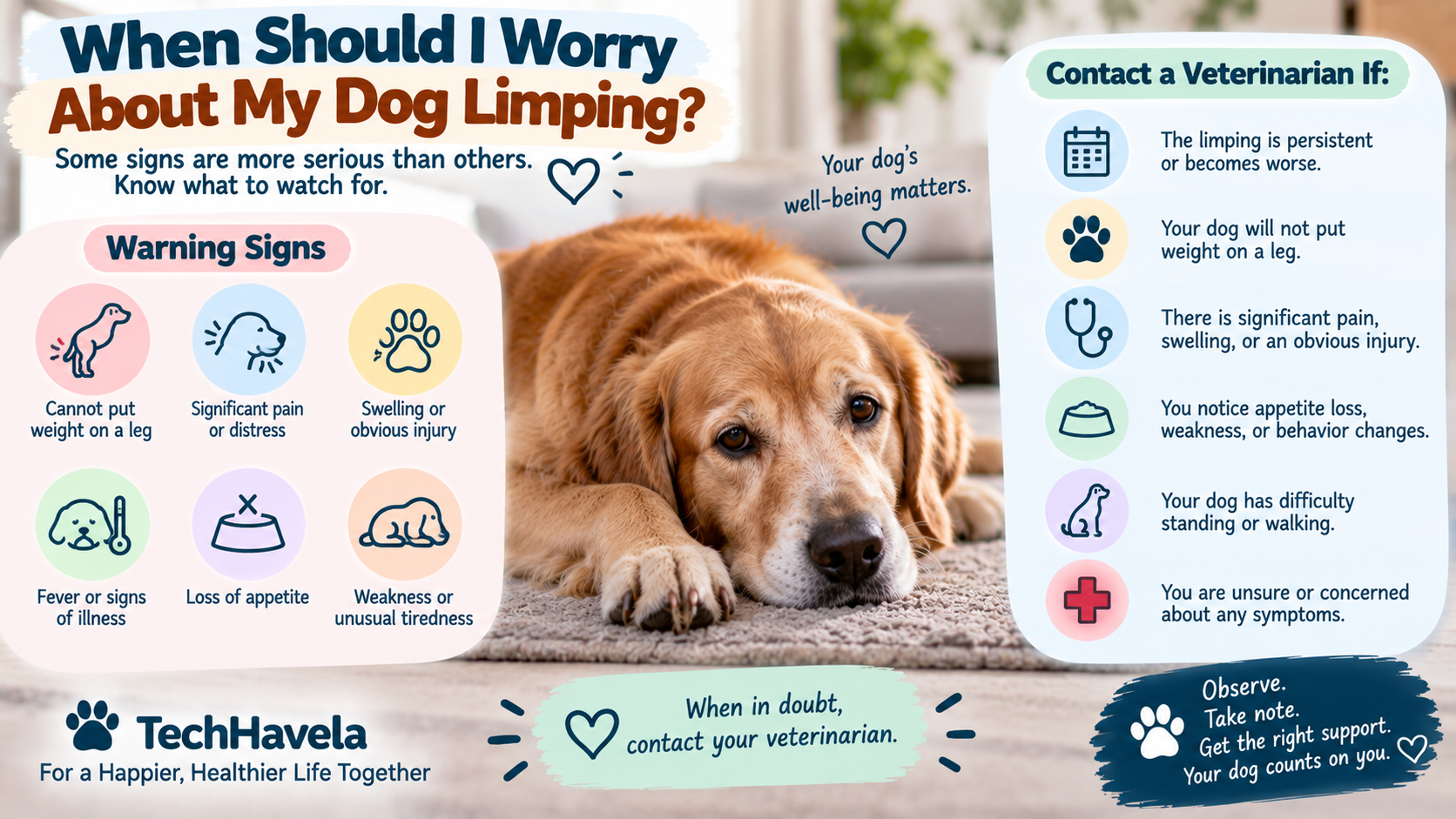
| You May Be Able to Monitor | Contact a Veterinarian |
|---|---|
| Mild limping with an obvious recent activity | Limping that persists or becomes worse |
| Dog is still walking comfortably | Dog will not put weight on a leg |
| Normal appetite and water intake | Significant pain or distress |
| Normal energy and behavior | Significant swelling or an obvious injury |
| No other concerning symptoms | Weakness, unusual tiredness, or behavior changes |
| Limp appears to be improving | Difficulty standing or walking |
This table is only a general guide. Your dog’s age, health history, severity of symptoms, and circumstances also matter.
If you are uncertain about what you are seeing, contacting your veterinarian is the safer way to get guidance specific to your dog.
What Should I Do If My Dog Is Limping?
Start by observing your dog carefully.
Notice which leg appears affected and whether your dog is putting weight on it.
Also note:
- When the limping started
- Whether it began suddenly or gradually
- What your dog was doing beforehand
- Whether the limp changes after activity
- Whether you notice swelling
- Whether your dog is licking one area repeatedly
- Whether appetite or behavior has changed
You can visually look at the paw and surrounding area if your dog is comfortable with you doing so.
Do not force movement, repeatedly bend a painful leg, or continue examining an area if your dog becomes distressed.
Avoid giving your dog human pain medications unless a veterinarian has specifically instructed you to do so. Some medications intended for people can be unsafe for dogs.
If the limp persists, becomes worse, or your dog appears significantly uncomfortable, contact your veterinarian.
Why Is My Dog Limping but Not Crying?
Dogs do not always cry, whine, or vocalize when they are uncomfortable.
A dog may continue eating, interacting with family members, or even trying to play while walking differently.
This means the absence of crying does not necessarily mean the absence of discomfort.
Instead, look for subtler changes such as:
- Favoring one leg
- Taking shorter steps
- Moving more slowly
- Hesitating before jumping
- Difficulty getting up
- Licking one area repeatedly
- Sleeping more than usual
- Avoiding certain activities
Your dog’s normal behavior provides an important reference point.
If something about the way your dog moves is consistently different, it is worth paying attention even when your dog is not vocalizing.
What If My Dog Suddenly Starts Limping?
Sudden limping deserves careful observation because something may have happened recently.
Think about your dog’s activities before the limp appeared.
A dog may begin limping after running, jumping, slipping, playing, or walking outdoors.
Look at the overall situation rather than trying to diagnose the cause yourself.
A dog that develops a mild limp but remains comfortable and continues using the leg presents a different picture from a dog that cannot put weight on the leg or appears to be in significant pain.
Sudden severe limping, an obvious injury, significant swelling, or inability to use the leg warrants veterinary attention.
Check Your Dog’s Other Symptoms
Limping is only one piece of information.
Looking for other changes can help you better understand your dog’s overall condition.
Check your dog’s:
Appetite: Is your dog eating normally?
Energy: Is your dog active and responsive, or unusually tired?
Movement: Is only one leg affected, or is your dog generally weak or unsteady?
Balance: Is your dog walking normally apart from the limp?
Behavior: Is your dog hiding, restless, unusually quiet, or reluctant to be touched?
Digestion: Has there been vomiting or diarrhea? If your dog is also vomiting, see our guide “Why Is My Dog Vomiting? Common Causes and Warning Signs.”
Breathing: Does your dog’s breathing appear normal and comfortable?
Other physical changes: Is there swelling, redness, or another noticeable change?

If your dog is limping and also shaking, read our guide “Why Is My Dog Shaking? 7 Possible Reasons” for additional signs worth observing.
If your dog is also refusing food, our guide “Why Is My Dog Not Eating? What It Could Mean” explains possible reasons for appetite changes and warning signs to watch for.
Not Sure What Your Dog’s Symptoms Could Mean?
Sometimes one symptom appears together with several smaller changes.
Our Pet Symptom Checker can help you explore common dog and cat symptoms, possible causes, warning signs, and situations in which veterinary care may be needed.
→ Check Your Pet’s Symptoms
The Pet Symptom Checker is designed for educational purposes only. It cannot diagnose your pet or replace an examination by a veterinarian.
Frequently Asked Questions
Why is my dog suddenly limping?
Sudden limping may occur after running, jumping, slipping, energetic play, paw irritation, or an injury. Observe whether your dog can put weight on the affected leg and whether there are other signs such as swelling, pain, weakness, or unusual behavior.
Why is my dog limping but still running and playing?
Some dogs continue normal activities even when they are experiencing mild discomfort. Watch whether the limp persists, becomes worse after activity, or is accompanied by other changes. Persistent limping should be discussed with your veterinarian.
Why is my dog limping after sleeping?
Stiffness may sometimes be more noticeable after a dog has been resting. If this happens repeatedly, becomes worse, or affects your dog’s normal activities, a veterinarian can help evaluate the possible cause.
Why is my dog limping on a back leg?
A back-leg limp can have many possible causes involving the paw, muscles, joints, or other structures. The location of the limp alone is not enough to determine the cause. Persistent or significant limping should be evaluated by a veterinarian.
Why is my dog limping on a front leg?
Front-leg limping may also have different possible causes, including problems involving the paw, nail, muscles, joints, or other areas. Observe how your dog walks and whether additional symptoms are present.
Should I walk my dog if they are limping?
If your dog is limping, avoid encouraging strenuous activity while you are trying to understand what is happening. If the limp is persistent, significant, or painful, ask your veterinarian for guidance about appropriate activity.
Can an older dog start limping because of age?
Older dogs can develop changes in joints, strength, and mobility, but a new limp should not automatically be dismissed as normal aging. New or worsening mobility changes are worth discussing with your veterinarian.
When should I contact a veterinarian about my dog’s limp?
Contact your veterinarian if the limping is severe, persistent, worsening, associated with significant pain or swelling, or if your dog cannot put weight on the leg. Other symptoms such as weakness, unusual behavior, appetite loss, or difficulty standing can also make veterinary evaluation more important.
The Bottom Line
If you are wondering “Why is my dog limping?”, there are many possible explanations.
Paw or nail problems, physical activity, injuries, joint discomfort, age-related mobility changes, pain, and other health problems can all affect the way a dog walks.
Rather than focusing only on the limp, observe your dog’s overall condition.
Pay attention to movement, appetite, energy, behavior, balance, and other symptoms.
A mild change that quickly improves may be different from persistent, worsening, or severe limping.
If your dog cannot put weight on a leg, appears to be in significant pain, has an obvious injury, or develops other concerning symptoms, veterinary attention may be needed.
→ Use the Pet Symptom Checker to explore your dog’s other symptoms and warning signs.

**Sidnir Vieira**
Founder of TechHavela
A passionate pet and tech content creator, helping dog owners across the U.S. make smarter decisions for their furry friends.