
Finding a puddle of vomit on the floor is never fun, and it can leave you wondering whether your cat simply coughed up a hairball or is actually sick.
So, why is my cat vomiting? The short answer is that vomiting is a sign, not a diagnosis. Veterinary sources describe many possible causes, from hairballs and eating something unusual to infections, toxins, and diseases of the digestive tract, kidneys, thyroid, or pancreas. An occasional hairball can be part of normal life with a cat, but vomiting that is frequent, repeated, or paired with other changes deserves a call to your veterinarian.
If your cat is showing several unexplained signs at once, you can use our Pet Symptom Checker for Dogs and Cats to explore what you are noticing and prepare for the vet visit.
Prefer to watch? Here is a short video summary of this guide:
Important: This article is educational and cannot diagnose your cat. VCA Animal Hospitals explains that cats often hide illness, an instinct inherited from their wild ancestors, so changes in appetite, energy, hiding, or litter box habits alongside vomiting are worth taking seriously (VCA: Recognizing Signs of Illness in Your Cat).
What Counts as Vomiting in Cats?
The Merck Veterinary Manual describes vomiting as the forceful expulsion of stomach and upper small intestine contents through the mouth. It is usually preceded by signs such as drooling, repeated swallowing, and retching, with strong contractions of the abdomen. Regurgitation is different: it is passive, takes no effort, and the material is often undigested and tube-shaped (Merck Veterinary Manual: Vomiting in Cats).
Telling these apart matters, because your veterinarian will ask which one you saw. It can help to notice:
- Whether your cat heaved, retched, or drooled beforehand
- Whether the material came up with effort or simply dropped out
- Whether it contained food, hair, liquid, or anything unusual
- How long ago your cat last ate
Frequent gagging that brings up whatever your cat recently swallowed is also worth mentioning. Cornell University’s Feline Health Center lists it among the signs of concern (Cornell Feline Health Center: Vomiting).
Is It Normal for a Cat to Vomit Sometimes?
Occasional vomiting is common in cats, and hairballs are the most familiar reason. Cornell notes that a cat may bring up a hairball every week or two without lasting problems, but says vomiting more than once a week warrants a veterinary visit. VCA Animal Hospitals is more cautious about hairballs: it advises contacting your veterinarian if your cat vomits hairballs more than once a month (VCA: Vomiting in Cats).
Because veterinary sources give different thresholds, the practical takeaway is simple: do not assume that regular vomiting is just “what cats do.” If it is happening again and again, talk to your veterinarian rather than waiting to see what happens.
Why Is My Cat Vomiting? Possible Reasons
Vomiting can come from the stomach itself or from illnesses elsewhere in the body. Veterinary references list many possibilities, and only an examination can sort them out.
1. Hairballs
Cats swallow loose hair while grooming. The Merck Veterinary Manual notes that longhaired cats are at greater risk, and Cornell explains that hair is largely indigestible, so some of it can gather into a damp clump in the stomach. Cornell recommends daily brushing and combing to minimize hairballs and their complications (Cornell Feline Health Center: The Danger of Hairballs).
Merck also warns that if your cat has hairballs frequently or vomits repeatedly, something more serious than a hairball could be going on. Our guide to cat behavior can help you notice when grooming habits change.

2. Eating Something Unusual or Changing Food
VCA lists dietary indiscretion among the minor causes of vomiting, including plants, table scraps, and spoiled food. Food intolerance or allergy to certain ingredients is also on the list.
If you recently changed your cat’s food or your cat got into something it should not have, mention it to your veterinarian. Our articles on wet versus dry cat food and on cat food ingredients to avoid can help you think through what your cat has been eating, and our list of human foods cats can eat safely shows which treats are less likely to cause trouble.
3. Intestinal Parasites and Infections
Both VCA and Cornell list internal parasites among the causes of vomiting, and VCA also mentions bacterial or viral infections. Parasites and infections can cause other signs as well, such as diarrhea, so a stool sample may be part of the work-up.
4. Swallowed Objects, String, or Yarn
Cornell lists string or yarn and small objects such as paper clips or rubber bands among the things that can make a cat vomit, and a foreign object can block the intestines. VCA includes intestinal obstruction from a foreign body among the serious causes and says that suspected ingestion of a foreign object calls for prompt veterinary care.
If you think your cat swallowed string, thread, or another object, do not wait to see whether the vomiting stops, and do not try to pull anything out of your cat’s mouth or throat. Call a veterinarian right away.

5. Toxins and Poisonous Substances
Cornell’s list of substances that can cause vomiting includes poisonous plants, spoiled cat food, human medications, antifreeze, and foods such as chocolate and onions. VCA likewise names toxin ingestion as a serious cause and says that suspected ingestion of a toxic substance needs immediate care.
If you suspect poisoning, contact a veterinarian or an animal poison control service immediately. Do not give your cat any medication or home remedy unless a veterinarian tells you to.
6. Digestive Tract Disease
Conditions affecting the stomach and intestines can cause vomiting. VCA names pancreatitis and inflammatory bowel disease, and Cornell lists inflammatory bowel disease and constipation, as well as benign or cancerous growths in the digestive tract. These conditions cannot be told apart at home, and several of them can cause weight loss, diarrhea, or poor appetite along with vomiting.
7. Illness Elsewhere in the Body
Vomiting is not always a stomach problem. Cornell lists diabetes, kidney disease, and hyperthyroidism among the metabolic diseases that can make cats vomit, and VCA mentions liver disease, kidney disease, thyroid disease, and urinary tract obstruction. Merck also notes that nervous system disorders can be involved.
That is why your veterinarian may recommend blood or urine tests, imaging, or other diagnostics when vomiting is frequent or comes with other changes.
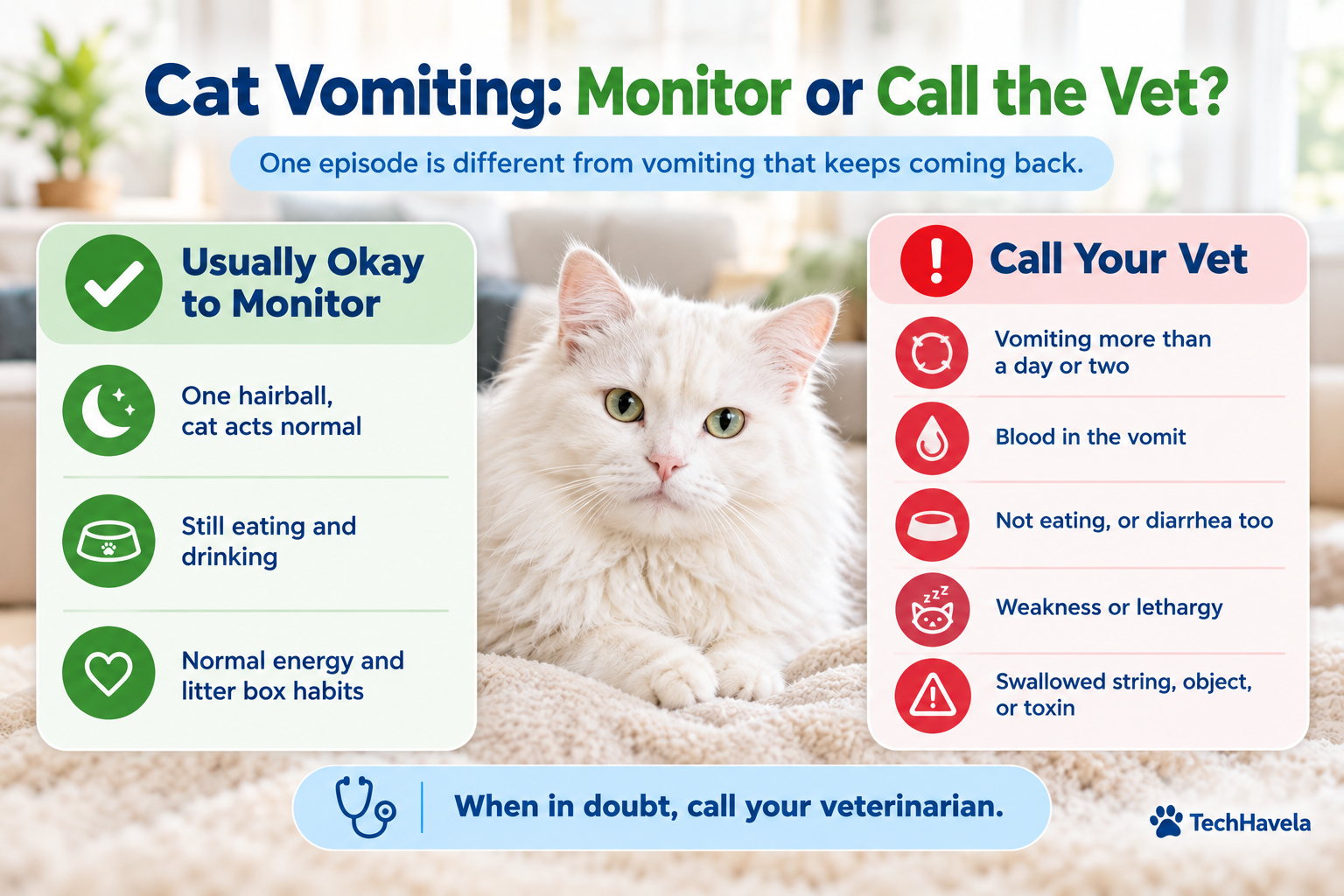
When to Call the Vet Right Away
Many short episodes of vomiting settle by themselves, but some situations should not wait. Veterinary sources describe the following as reasons to seek prompt care:
- Lethargy or weakness. Cornell and VCA both list this among the warning signs.
- Blood in the vomit.
- Not eating or a clear drop in appetite. VCA’s guide to recognizing illness adds that a cat that has not eaten anything in 24 hours needs prompt veterinary care.
- Diarrhea along with vomiting.
- Signs of pain or a swollen, tender belly. VCA and Merck list abdominal pain.
- Dehydration, fever, or weight loss. These appear in Merck’s and VCA’s lists.
- Changes in thirst or urination. Cornell lists increased thirst and urinating more or less than usual.
- Repeated episodes of retching with little coming up. Cornell advises a veterinary visit for repeated unproductive retching.
- Suspected swallowed object or toxic substance.
Duration matters too. VCA notes that many acute cases resolve within 24 hours, but if a cat seems otherwise well and keeps vomiting for more than one to two days, seek veterinary care. Merck says vomiting that lasts longer than that, or happens more often than once or twice daily, calls for a detailed examination by your veterinarian.
If your cat is also breathing with effort, collapses, or cannot be roused normally, treat it as an emergency and go to a veterinarian immediately.
Quick Guide: Monitor or Call the Vet?
| What You Notice | What It May Suggest | Level of Attention |
|---|---|---|
| One hairball, cat otherwise normal | A common reason for occasional vomiting | Monitor; mention it at the next checkup |
| Frequent hairballs or weekly vomiting | Something more than a hairball may be involved | Talk to your veterinarian |
| Vomiting for more than a day or two | Many possible causes | Contact your veterinarian |
| Vomiting plus lethargy, not eating, or diarrhea | An illness that needs a veterinary exam | Prompt veterinary care |
| Blood in the vomit | A reason for urgent evaluation | Urgent veterinary care |
| Repeated retching with little coming up | A digestive or breathing problem that needs a veterinary exam | Prompt veterinary care |
| Suspected string, object, or toxin | A possible obstruction or poisoning | Emergency |
Treat this table as an observation guide, not a diagnostic tool. Different conditions can look alike.
What Should I Do If My Cat Vomits?
If your cat vomited once and is otherwise bright, eating, and behaving normally, you can watch calmly while taking a few sensible steps.
- Keep fresh water available. VCA stresses that water should be freely available.
- Do not decide on fasting by yourself. Merck says a veterinarian may suggest withholding food for 24 hours for short-term vomiting, but that any withholding of water should be guided by the veterinarian. Always ask before changing how you feed a vomiting cat.
- Check the environment. Look for chewed plants, loose string or thread, rubber bands, medications within reach, or other hazards.
- Take notes. Write down when the vomiting started, how often it happens, what it looked like, and whether your cat ate or drank afterward.
- Take a photo. A picture of the vomit can help your veterinarian more than a description.
- Do not give human medications or home remedies unless your veterinarian specifically tells you to.
Stress and routine changes can also affect how a cat behaves, so it is worth reviewing our article on common mistakes that stress out cats and noticing whether anything at home has changed recently.
What Will the Veterinarian Want to Know?
Merck’s guidance ties how urgent vomiting is to how long it has lasted and how often it happens, and to signs such as blood, pain, weakness, fever, and weight loss, so those details matter. It helps to be ready to share:
- When the vomiting began and how often it happens
- Whether there was blood, and a photo if possible
- Appetite, thirst, urination, and stool changes
- Weight loss, lethargy, or hiding more than usual
- Any change in food, treats, or routine
- Possible exposure to plants, string, medications, chemicals, or other pets that are ill
- Your cat’s vaccine and parasite-prevention history
Depending on the findings, your veterinarian may recommend an exam and diagnostic tests. Treatment depends entirely on the cause, which is why it is not safe to guess at home.
Check Your Cat’s Other Symptoms
Vomiting rarely happens in isolation. Appetite, litter box habits, drinking, hiding, and energy can all give your veterinarian useful context. The TechHavela Pet Symptom Checker lets you search for related signs, filter for cats, and read general information about each one. It is an educational tool that supports a conversation with your veterinarian and never replaces an examination.
If your dog is the one vomiting, we also have a separate guide: Why Is My Dog Vomiting?

Frequently Asked Questions
Why is my cat vomiting but acting normal?
Occasional vomiting in a cat that still eats, drinks, plays, and uses the litter box normally is often related to something minor such as a hairball. However, vomiting that keeps coming back deserves a veterinary check even when your cat seems fine, because cats tend to hide illness.
Why is my cat vomiting after eating?
Many things can cause vomiting after meals, including dietary issues, food intolerance or allergy, and digestive disease. Merck also distinguishes true vomiting from regurgitation, which is passive and happens without retching. Describe exactly what you saw so your veterinarian can tell which one it is.
How often is it normal for a cat to throw up hairballs?
Veterinary sources do not agree on a single number. Cornell says a hairball every week or two is generally not a concern, while VCA advises contacting your veterinarian if your cat vomits hairballs more than once a month. If it is happening regularly, ask your veterinarian rather than relying on a rule of thumb.
Can I give my cat medicine for vomiting?
Do not give your cat human medications or any remedy unless a veterinarian tells you to. Cornell lists human medications among the substances that can make cats vomit, and the right treatment depends on what is causing the problem.
Should I stop feeding my cat if it vomits?
Merck says a veterinarian may suggest withholding food for 24 hours in short-term cases, but that decision, and especially any decision about water, should be guided by your veterinarian. Call your clinic for advice before changing your cat’s feeding.
When is cat vomiting an emergency?
Blood in the vomit, signs of pain, weakness, collapse, or a suspected swallowed object or toxin should be treated as emergencies. Other warning signs, such as not eating or diarrhea together with vomiting, also call for prompt veterinary care.
The Bottom Line
If you are asking “why is my cat vomiting?”, the most useful things to notice are how often it happens, what your cat looks like in between, and whether anything else has changed. A single hairball is very different from vomiting that keeps returning, comes with lethargy, or stops your cat from eating.
When in doubt, call your veterinarian. Cats are good at hiding illness, so it is better to ask early than to wait for obvious signs.
This content is educational and does not replace the advice of a veterinarian.

Sidnir Vieira is the founder of TechHavela. A lifelong pet owner who had a dog for many years and now lives with a cat, he writes educational guides that help owners understand symptoms and know when to call the vet. TechHavela’s articles are based on veterinary sources and are not reviewed by a veterinarian.