Quick answer: A cloudy eye in a dog can be a harmless age-related change, or it can be a sign of a problem that threatens vision. VCA Animal Hospitals says a bluish haze in an older dog’s lens, called nuclear or lenticular sclerosis, is a normal aging change that does not seem to bother dogs. But cataracts, glaucoma and other eye problems can also look cloudy, and an eye that is painful, red or suddenly cloudy needs prompt veterinary care. You can use our Pet Symptom Checker to organize what you are noticing before you call.
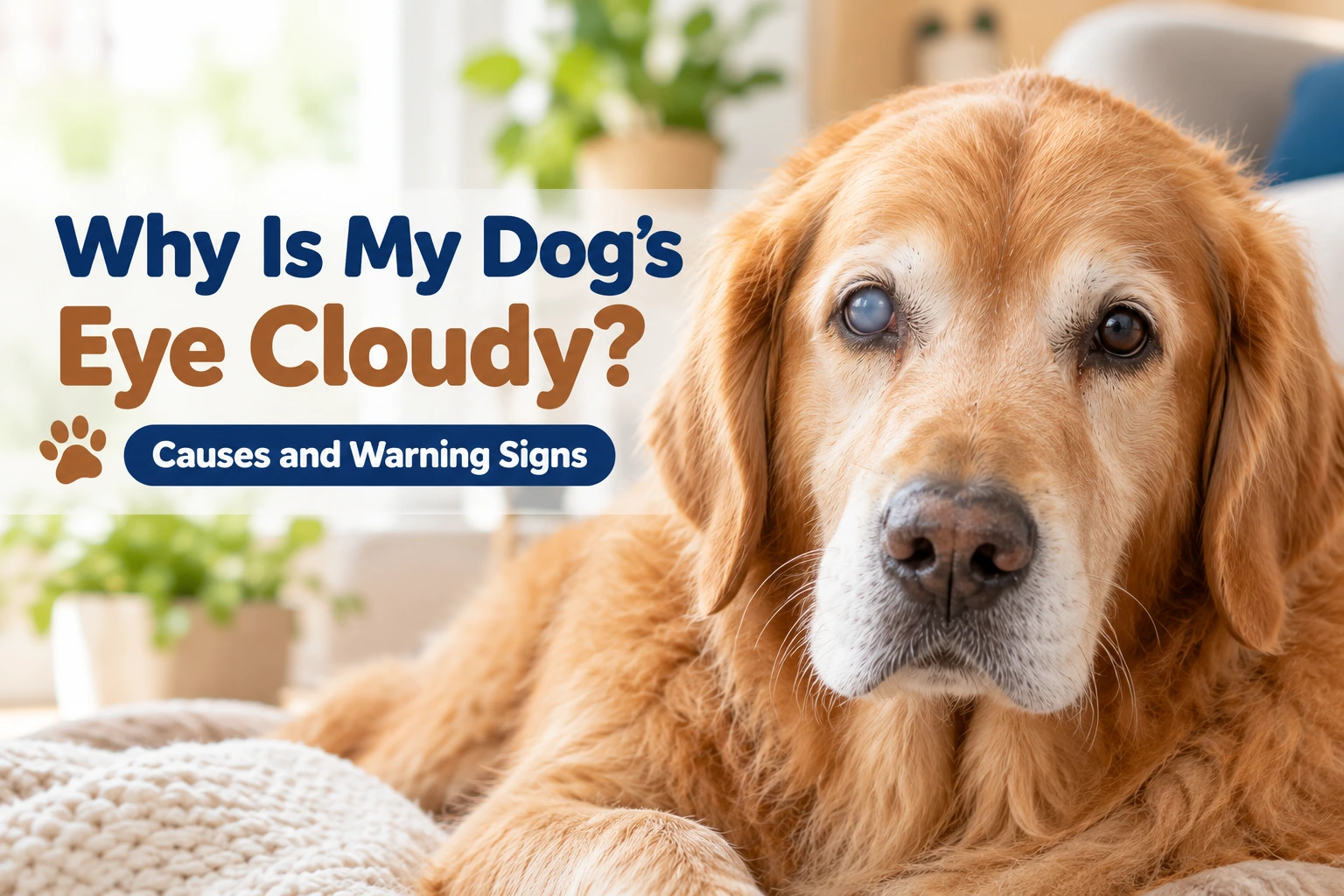
What Does a Cloudy Eye Look Like?
Owners describe cloudy eyes in different ways: a blue-gray haze, a white spot, a milky look, or a surface that looks dull. Where the cloudiness is matters. It may be in the lens, the clear structure behind the pupil, or on the cornea, the clear front surface of the eye. These can look alike at home, and only an eye exam can tell them apart.
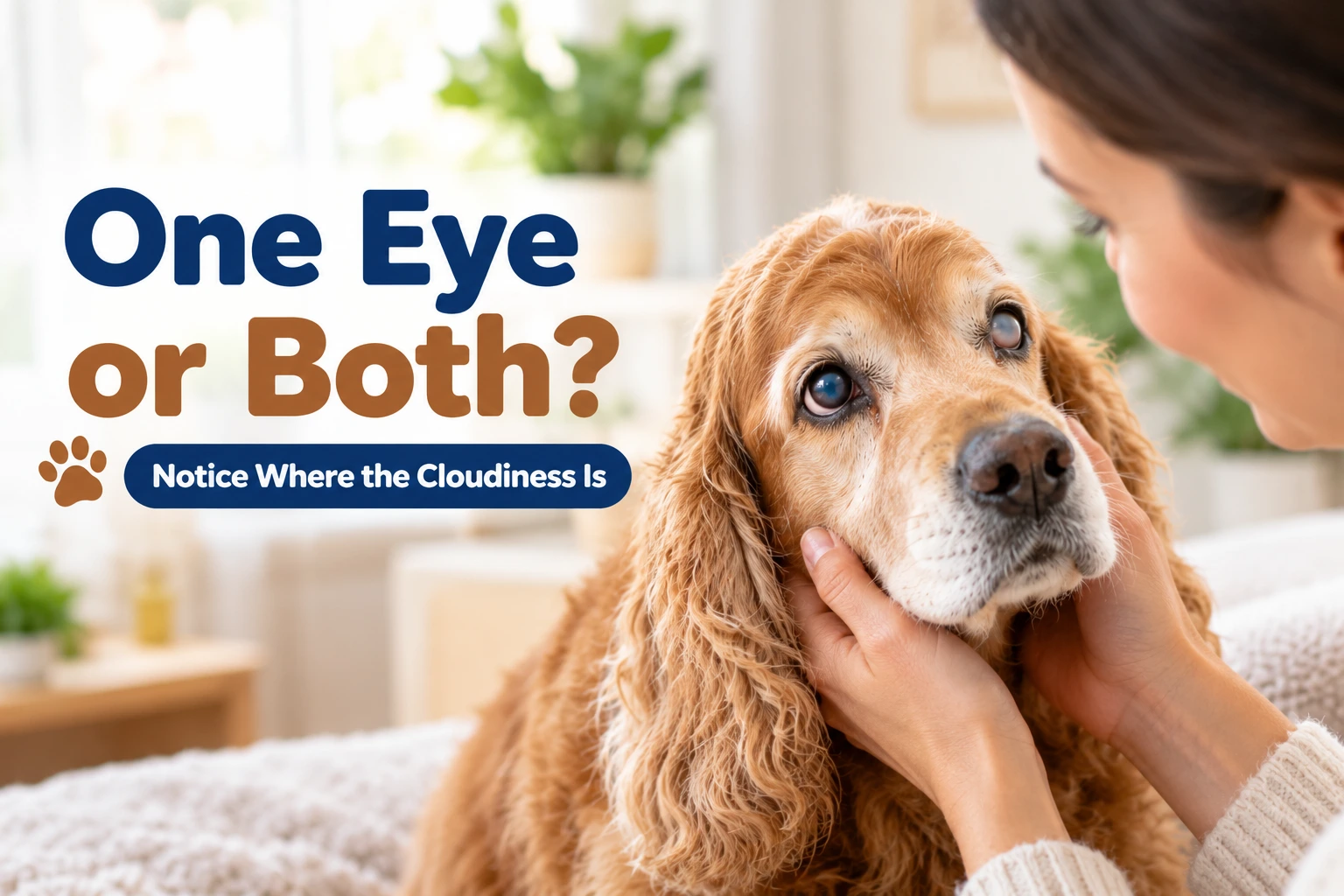
Two details are especially useful to notice: whether the cloudiness is in one eye or both, and whether your dog seems comfortable. VCA says that nuclear sclerosis should not cause pain, discomfort, redness or discharge, and that pawing, rubbing or squinting signals a problem. Its article on cloudy eyes in senior dogs adds that if you cannot tell whether the cloudiness is nuclear sclerosis, the best way to know for sure is to have your veterinarian examine the eyes.
If your dog’s eye is red rather than cloudy, see our guide on why a dog’s eye may be red.
Common Causes of Cloudy Eyes in Dogs
1. Nuclear (lenticular) sclerosis
VCA describes this as a normal, age-related change that gives the lens a bluish, transparent haze. It is not a cataract. It is seen in middle-aged to senior dogs, usually affects both eyes about equally, and does not significantly affect vision. According to VCA’s page on lenticular sclerosis in dogs, no treatment is needed, but regular checkups are advised to watch for cataracts.
2. Cataracts
VCA explains that cataracts make the lens more opaque so that less light reaches the retina, which can impair vision. They tend to look white and opaque rather than bluish and transparent. Inherited disease is the most common cause. Eye injuries and diabetes can also cause cataracts, and some appear with age. VCA notes that cataracts that cover a small part of the lens, or affect only one eye, rarely reduce vision, but at full coverage the dog is blind in that eye. Early cataracts are painless, which is why only an exam can reliably tell them apart from sclerosis. Read more in VCA’s guide to cataracts in dogs.
VCA also says that cataracts caused by diabetes can progress quickly after the disease is diagnosed. If your dog is drinking and urinating much more than usual, see our article on why a dog may be drinking so much water.
3. Glaucoma
VCA states that acute glaucoma is an emergency. Signs it lists include eye pain (a dog may partly close the eye, rub at it, or pull away when touched near the head), a cloudy or bluish cornea, a red and swollen-looking eye, watery discharge, a bulging eyeball, lethargy and loss of appetite. VCA warns that blindness can occur very quickly unless the pressure inside the eye is reduced. Read more on the VCA page about glaucoma in dogs.
4. Dry eye or a surface injury
VCA says dry eye can leave a filmy surface on the eye, and that a scratch can cause a fine web of blood vessels over the eye. These problems also need a veterinary exam.
When to See the Vet Right Away
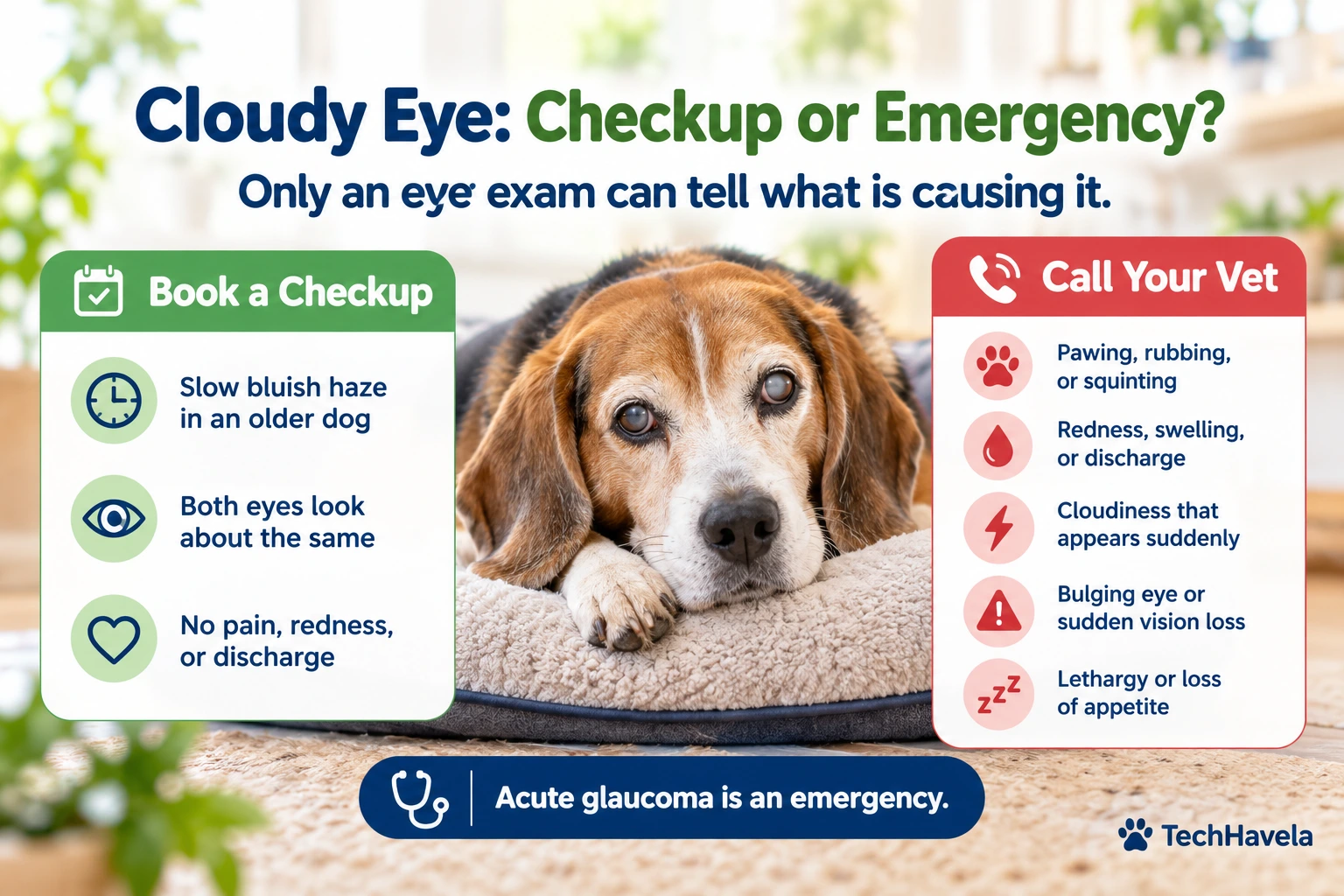
Do not wait and watch if you notice any of these:
- Pain signs: pawing, rubbing, squinting or partly closing the eye, or pulling away when you touch the head.
- Redness, swelling or discharge along with the cloudiness.
- A cloudy or bluish front surface of the eye that appears suddenly. VCA lists this among glaucoma signs and calls acute glaucoma an emergency.
- A bulging eye, or sudden loss of vision, such as bumping into things.
- Lethargy or loss of appetite along with an eye problem.
- An eye injury. Our guide to dog first aid explains what to have ready for emergencies.
What You Can Do at Home
- Look, but do not treat. Do not put drops, ointments or home remedies in your dog’s eye unless your veterinarian tells you to.
- Stop your dog from rubbing the eye if you can do so gently, and call your vet.
- Take clear photos in good light of both eyes, and note when you first saw the change.
- Keep notes on whether your dog bumps into objects, squints, or avoids light.
What the Vet Will Do
VCA says a veterinarian can perform a straightforward eye exam to confirm nuclear sclerosis or identify another problem. In some cases, such as suspected glaucoma, urgent referral to a veterinary ophthalmologist may be needed. Treatment depends entirely on the cause.
What to Tell Your Veterinarian
- When you first noticed the cloudiness, and whether it is in one eye or both
- Whether it appeared suddenly or slowly
- Redness, discharge, squinting or pawing at the eye
- Changes in drinking, urinating, appetite or energy
- Any injury, and your dog’s age and medical history, such as diabetes
- All medications and supplements
How the Pet Symptom Checker Can Help
The Pet Symptom Checker covers dogs and cats. Pick the signs you see, such as eye changes, drinking more, or loss of appetite, and read general information about what they can mean and when to seek care. It does not replace a veterinary exam.
Frequently Asked Questions
Are cloudy eyes normal in old dogs?
A bluish haze in an older dog is often nuclear sclerosis, which VCA describes as a normal aging change. But VCA also says only an exam can reliably distinguish it from early cataracts, so ask your vet.
How is a cataract different from sclerosis?
VCA says cataracts are white and opaque and reduce the light reaching the retina, while sclerosis is bluish and transparent, and the retina can still be seen through it.
Can a cloudy eye be an emergency?
Yes. VCA calls acute glaucoma an emergency, and a cloudy or bluish cornea is one of its signs, especially with pain, redness or a bulging eye.
Can diabetes cause cloudy eyes?
Yes. VCA lists diabetes as a cause of cataracts, and says they can progress quickly after diagnosis.
Does a cloudy eye mean my dog is blind?
Not necessarily. VCA says nuclear sclerosis does not significantly affect vision, while large cataracts can cause blindness. An exam tells which one applies.
The Bottom Line
Some cloudy eyes are a normal part of aging, but others threaten vision quickly. If your dog shows pain, redness, a sudden change or any other sign of illness, call your veterinarian right away. If the eyes simply look hazier with age, a checkup is still the way to know for sure.
This content is educational and does not replace the advice of a veterinarian.

Sidnir Vieira is the founder of TechHavela. A lifelong pet owner who had a dog for many years and now lives with a cat, he writes educational guides that help owners understand symptoms and know when to call the vet. TechHavela’s articles are based on veterinary sources and are not reviewed by a veterinarian.