Quick answer: Why is my cat drooling? Drooling in cats can have several causes, and many of them involve the mouth. The Merck Veterinary Manual says bad breath and drooling are common with inflammation of the mouth or tongue, and that dental and gum disease is the most common oral problem in cats. Foreign objects, burns, viral infections, poisons, kidney disease and other problems can also play a role. Merck advises seeing a veterinarian promptly for excessive drooling. You can use our Pet Symptom Checker to organize what you notice before you call.

Is Drooling Normal for a Cat?
Some cats drool a little when they are very relaxed, for example while purring and being petted. That kind of short, occasional drooling in a happy cat is different from drooling that is new, heavy, long-lasting or comes with other signs. Persistent or excessive drooling should be looked at.
Merck’s cat owner guide to disorders of the mouth in cats lists the signs to watch together with drooling: bad breath, loss of appetite, blood-tinged saliva, pawing at the mouth, pain when opening the mouth or yelping, hesitating to eat then backing away, difficulty swallowing, weight loss, and swelling of the face or neck.

Why Is My Cat Drooling? Possible Causes
1. Dental and gum disease
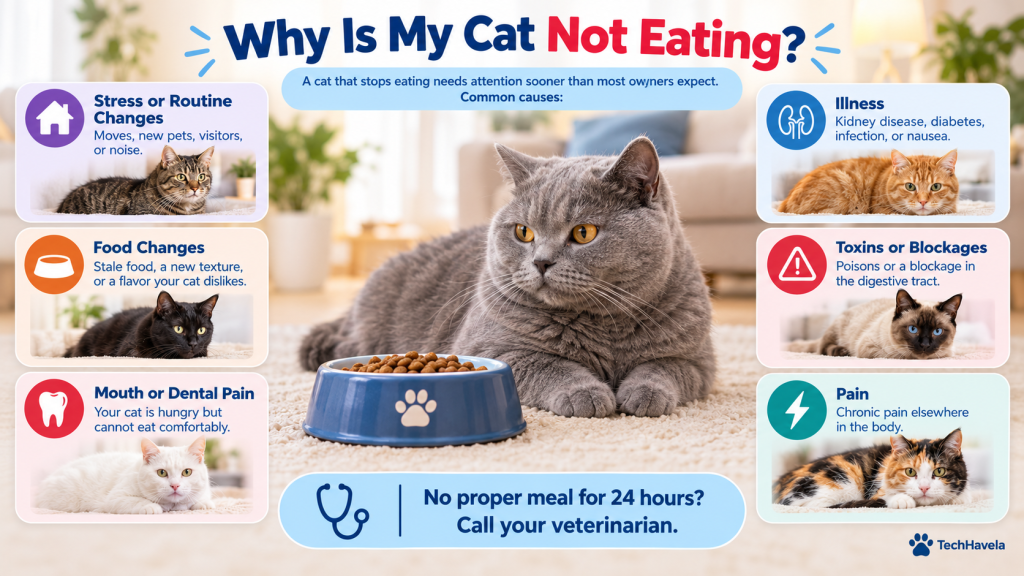
Merck says dental and gum disease is the most common oral problem in cats. A cat with a painful mouth may drool, eat less, or drop food. This is also why a hungry cat can seem to refuse food; see why a cat may not be eating.
2. Stomatitis
Merck describes stomatitis as severe, worsening inflammation of the mouth and throat. Its cause is unproven, and many affected cats also carry long-term calicivirus. Typical signs include pain when opening the mouth, yelping, or hesitating to eat, then backing away.
3. Foreign objects
A thread or string can catch under the tongue, causing drooling and reduced eating, according to Merck. Do not try to pull a string out of your cat’s mouth. See a vet.
4. Other causes
Merck also lists viral infections, burns (for example from chewing electrical cords), tumors, drugs or poisons, and kidney disease or diabetes. If you think your cat chewed a cord or swallowed something harmful, seek emergency care.

When to Call the Vet Right Away
- Heavy or sudden drooling. Merck says excessive drooling needs prompt evaluation, and does not advise waiting for severe signs.
- Trouble swallowing, blood in the saliva, or swelling of the face or neck.
- Pawing at the mouth or yelping, or refusing to eat. VCA says a cat that has not eaten properly for 24 hours needs veterinary attention. See VCA’s guide to recognizing signs of illness in cats.
- Possible poison, burn or swallowed object.
- Breathing difficulty, which VCA lists as needing immediate attention.
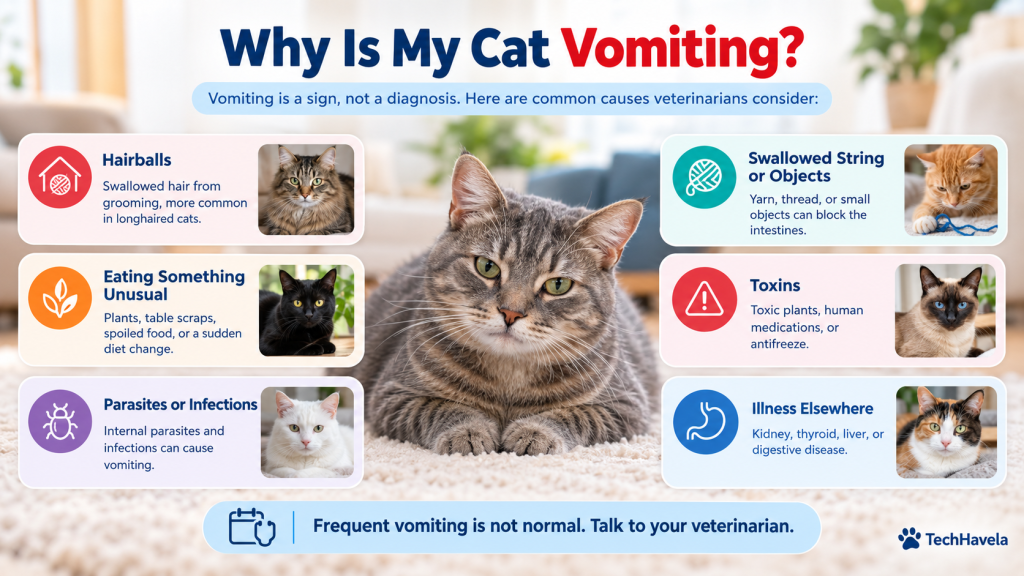
- Vomiting or lethargy with drooling. See why a cat may be vomiting.
What You Can Do at Home
- Stay calm and observe when the drooling happens and what else you see.
- Keep your cat’s face dry and clean if the drool irritates the skin, as Merck notes.
- Do not force your cat’s mouth open or try to remove objects yourself.
- Do not give human medication.
- Keep notes and a short video.

What to Expect at the Vet
Merck says to expect a full oral exam, and that cats in pain may need sedation for it. Treatment depends on the cause: a vet may remove foreign objects or damaged teeth, prescribe antibiotics for an infection, or recommend extractions for stomatitis. Pain medication, soft or liquid diets, and antiseptic rinses may help. Cats that won’t eat or drink may need IV fluids or a feeding tube. Merck also notes that rabies is ruled out first in cases of excessive drooling, so tell your vet about your cat’s vaccination history.
What to Tell Your Veterinarian
- When the drooling started and how often it occurs
- Eating, dropping food or chewing on one side
- Possible exposure to plants, chemicals, cords or string
- Vaccination history
- All medications and supplements

How the Pet Symptom Checker Can Help
The Pet Symptom Checker covers cats and dogs. Select cat, add the signs you see and read general information. It does not replace a veterinary exam. For dogs, see why a dog may be drooling so much. For cat behavior in general, visit our cat behavior guide.

Frequently Asked Questions
Is it normal for a cat to drool when purring?
Occasional drooling in a relaxed cat can happen, but new or heavy drooling should be checked.
What is the most common oral problem in cats?
Merck says it is dental and gum disease.
Can drooling mean my cat ate something toxic?
Merck lists drugs and poisons among the causes. If you suspect it, seek emergency care.
Does drooling always mean dental problems?
No. Merck lists many possible causes, so an exam is needed.
The Bottom Line
Drooling in cats most often points to the mouth, but other causes exist. Do not wait for severe signs. Call your veterinarian promptly.
This content is educational and does not replace the advice of a veterinarian.

Sidnir Vieira is the founder of TechHavela. A lifelong pet owner who had a dog for many years and now lives with a cat, he writes educational guides that help owners understand symptoms and know when to call the vet. TechHavela’s articles are based on veterinary sources and are not reviewed by a veterinarian.