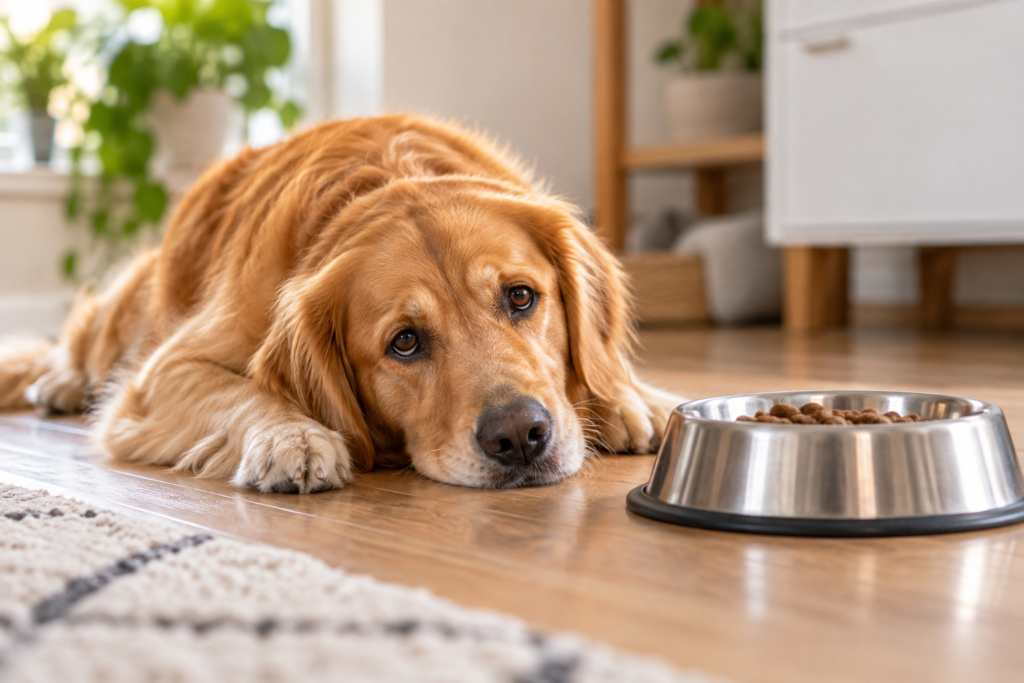
Why Is My Dog Drooling So Much? Common Causes and Warning Signs
If you suddenly notice saliva dripping from your dog’s mouth or find that your dog is drooling much more than usual, it can be concerning.
Some dogs naturally drool more than others, especially breeds with loose lips and facial folds. Dogs may also salivate when they see or smell food, after drinking water, during exercise, or when they are excited.
However, excessive or sudden drooling can sometimes be associated with nausea, dental problems, something irritating the mouth, heat, motion sickness, or another underlying health problem.
The important question is not simply whether your dog is drooling, but whether the drooling is new, excessive, persistent, or accompanied by other symptoms.
If your dog is showing several unusual signs at the same time, our Pet Symptom Checker can help you review common symptoms and warning signs:
Is It Normal for Dogs to Drool?
Drooling is a normal biological process. Saliva helps lubricate food, begins the digestive process, and helps keep the mouth moist.
The amount of saliva you see can vary considerably between dogs.
Some breeds naturally produce more visible drool because of the shape of their lips, cheeks, and muzzle. In these dogs, saliva can accumulate around the mouth and drip more easily.
Other dogs may barely drool at all under normal circumstances.
The key is knowing what is typical for your individual dog.
A dog that has always drooled heavily may not necessarily have a medical problem. But if a dog that rarely drools suddenly begins producing large amounts of saliva, that change deserves closer attention.
IMAGE 1 — FEATURED IMAGE
Planned image:
Why Is My Dog Drooling So Much? — Common Causes and Warning Signs
Use only as the featured image rather than repeating it immediately inside the article.
Why Is My Dog Drooling So Much?
Excessive drooling is sometimes called hypersalivation. You may also see the medical term ptyalism used to describe excessive saliva.
There are many possible explanations.
According to the Merck Veterinary Manual, excessive salivation can occur when a dog produces too much saliva or when the dog cannot effectively swallow the saliva being produced.
Some are relatively harmless and temporary, such as smelling food or riding in a car. Others involve problems inside the mouth, digestive upset, exposure to irritating substances, overheating, difficulty swallowing, or other medical conditions.
Possible causes include:
- Dental or gum problems
- Something stuck in the mouthIrritating or Toxic Substance
- Mouth injuries or irritation
- Nausea
- Motion sickness
- Heat and overheating
- Anxiety or excitement
- Difficulty swallowing
- Certain irritating or toxic substances
- Some underlying illnesses
The circumstances surrounding the drooling can provide useful clues.
For example, drooling that occurs only during car rides suggests a different situation from sudden heavy drooling combined with vomiting, weakness, difficulty swallowing, or unusual behavior.
1. Dental and Gum Problems
Problems involving the teeth and gums are an important possible cause of excessive drooling.
Dental disease can cause inflammation, discomfort, infection, and difficulty chewing. Dogs with painful mouths may produce more saliva or allow saliva to drip rather than swallowing normally.
According to Cornell University College of Veterinary Medicine, excessive drooling, bad breath, pawing at the face, difficulty eating, and gum changes can be signs of dental disease in pets.
You might also notice:
- Bad breath
- Difficulty chewing
- Dropping food
- Eating on one side of the mouth
- Pawing at the face
- Red or swollen gums
- Reduced interest in hard food
A dog can still eat despite having dental discomfort, so normal appetite does not completely rule out a problem inside the mouth.
2. Something Stuck in the Mouth
Dogs explore the world with their mouths. Small objects or pieces of material can occasionally become lodged between the teeth, around the gums, across the roof of the mouth, or farther back in the oral cavity.
A dog experiencing oral discomfort may suddenly begin drooling, licking repeatedly, pawing at the mouth, or having trouble eating.
Do not reach deeply into your dog’s mouth or throat trying to remove something you cannot easily see and safely reach. A painful or frightened dog may bite, and some objects can cause additional injury if pulled incorrectly.
Veterinary examination is appropriate when you suspect something is stuck or the drooling persists.
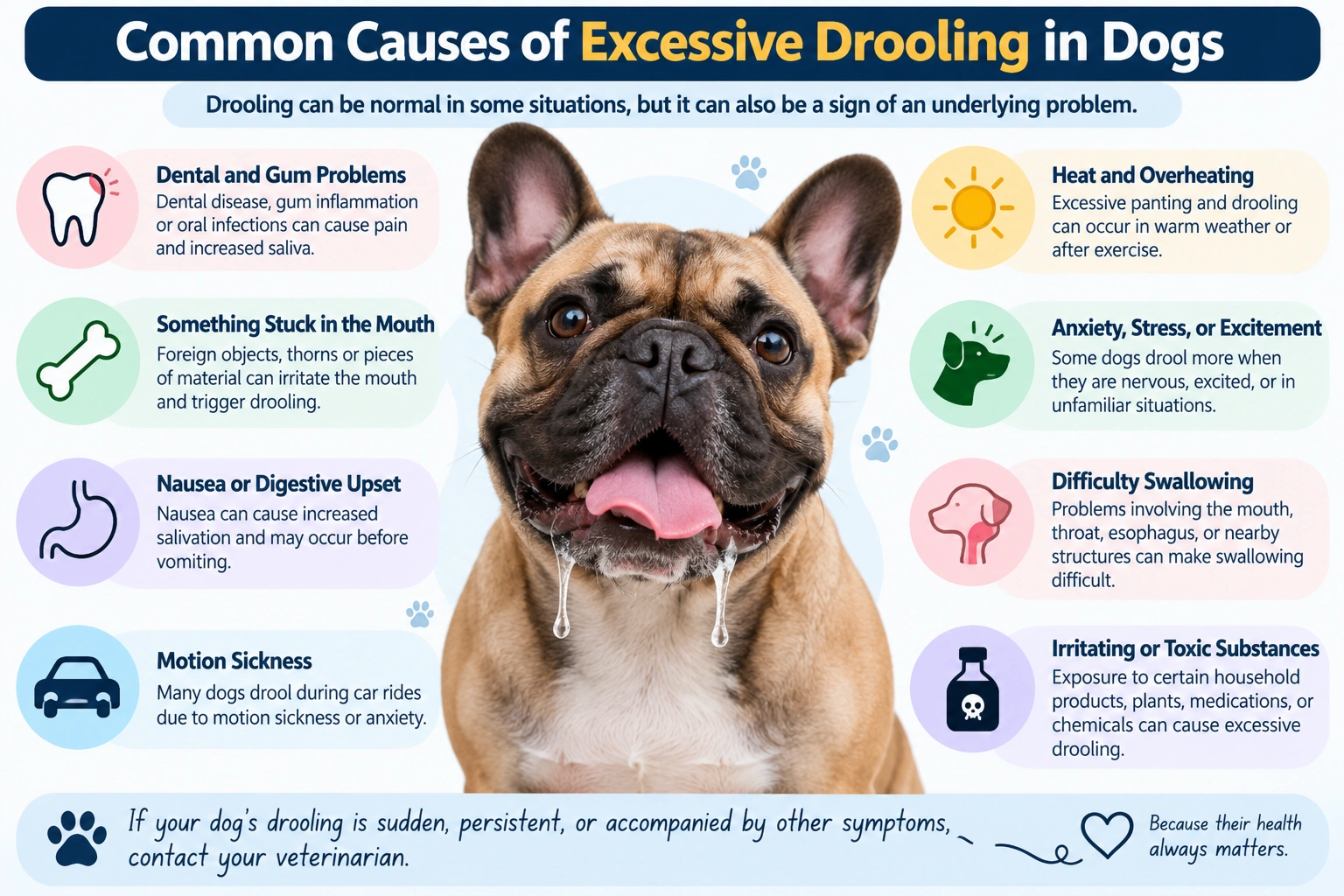
The infographic can show a dog of a breed other than a Golden Retriever and illustrate dental problems, mouth irritation, nausea, motion sickness, heat, anxiety, difficulty swallowing, and other possible causes.
3. Nausea and Digestive Upset
Nausea can cause increased saliva production in dogs.
Sometimes excessive drooling appears before vomiting. A dog that feels nauseated may also lick its lips repeatedly, swallow frequently, appear restless, refuse food, or seem uncomfortable.
If drooling is followed by vomiting, pay attention to how often the vomiting occurs and whether additional symptoms develop.
We have a complete guide about this symptom here:
Occasional digestive upset can have many explanations, but repeated vomiting combined with excessive drooling, weakness, abdominal discomfort, or other significant changes warrants veterinary attention.
4. Motion Sickness
Does your dog start drooling heavily shortly after getting into the car?
Motion sickness is one possible explanation.
Dogs experiencing motion sickness may show increased salivation before they actually vomit. Some may also lick their lips, whine, appear restless, or become unusually quiet during the ride.
This is particularly relevant because some dogs drool almost exclusively during car travel.
If car rides repeatedly trigger the problem, discuss it with your veterinarian rather than giving your dog human motion-sickness medication on your own.
Why Is My Dog Drooling So Much in the Car?
Heavy drooling during car rides can be associated with motion sickness, stress, or a combination of both.
Watch what happens before the drooling begins.
A dog that becomes anxious as soon as the car door opens may be reacting differently from a dog that seems comfortable initially but starts salivating once the vehicle begins moving.
Other possible signs of motion sickness include restlessness, lip licking, swallowing, whining, and vomiting.
Keeping track of when the symptoms begin can provide useful information for your veterinarian.
5. Heat and Overheating
Dogs primarily regulate body temperature through panting rather than sweating the way humans do.
Panting can naturally make saliva more noticeable, particularly after exercise or during warm weather.
However, excessive drooling accompanied by intense panting, weakness, confusion, vomiting, collapse, or difficulty moving can indicate a more serious heat-related problem.
A dog showing signs of significant overheating needs prompt veterinary attention.
Never leave a dog unattended in a parked vehicle, even when the outside temperature does not seem extremely high.
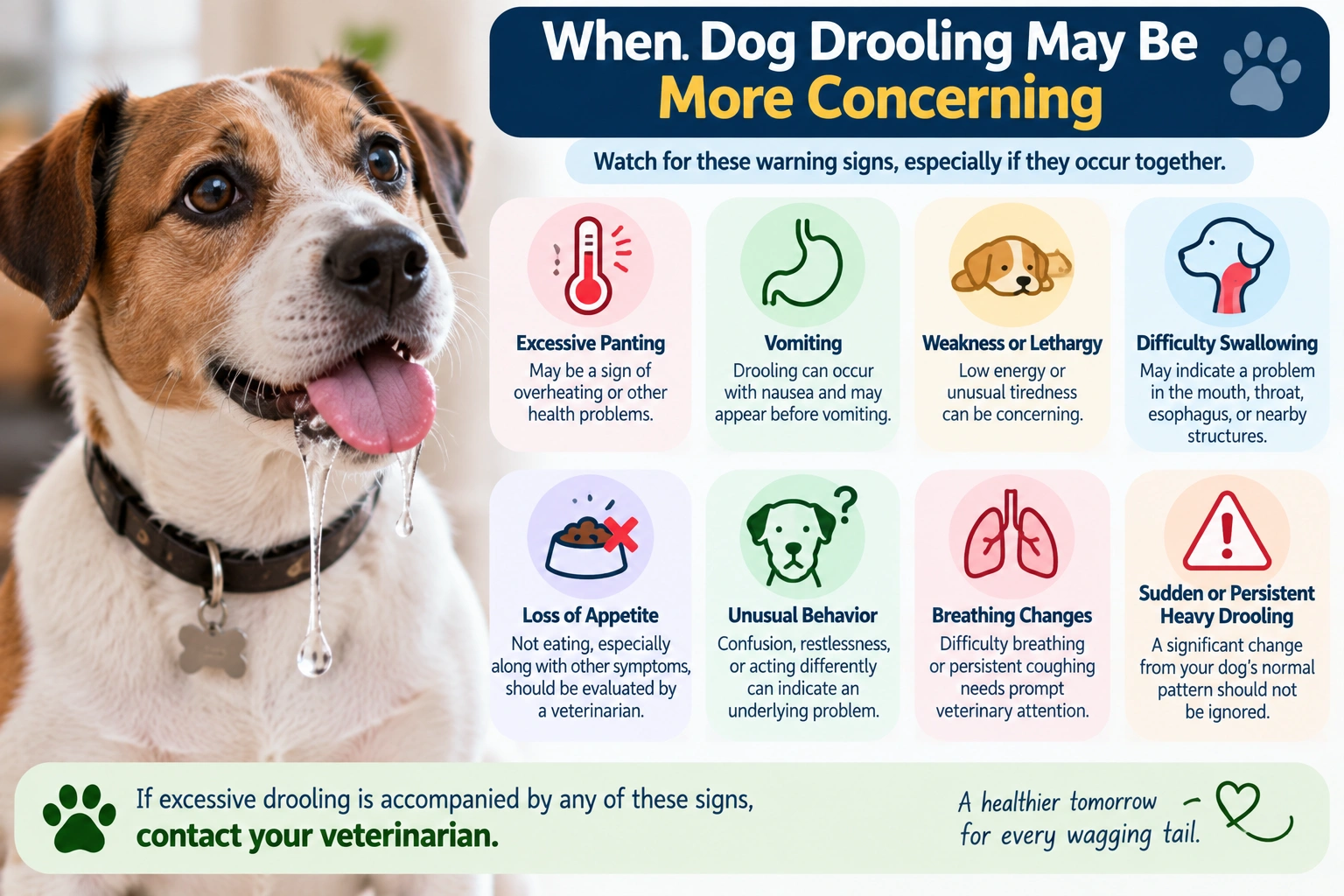
Show warning signs such as excessive panting, vomiting, weakness, difficulty swallowing, unusual behavior, loss of appetite, and sudden heavy drooling.
This gives us a substantial amount of text between Images 2 and 3.
6. Anxiety, Stress, or Excitement
Some dogs salivate more when they are nervous or highly excited.
Triggers can include car rides, veterinary visits, unfamiliar environments, thunderstorms, changes in routine, or other stressful experiences.
Context is especially important here.
If the drooling appears only during a predictable stressful event and disappears when the dog relaxes, stress may be contributing.
Persistent or unexplained drooling should not automatically be attributed to anxiety, particularly when other physical symptoms are present.
7. Difficulty Swallowing
Dogs normally swallow saliva throughout the day.
If swallowing becomes uncomfortable or difficult, saliva may accumulate and drip from the mouth.
Difficulty swallowing can have several possible causes involving the mouth, throat, esophagus, or nearby structures.
Signs that may accompany swallowing problems include repeated swallowing attempts, gagging, coughing while eating or drinking, food falling from the mouth, or reluctance to eat.
Because swallowing problems can sometimes become serious, veterinary evaluation is appropriate when these signs appear.
8. Irritating or Toxic Substances
Dogs can encounter household products, plants, chemicals, medications, and other substances that irritate the mouth or gastrointestinal tract.
Heavy or sudden salivation can sometimes occur after exposure.
Other symptoms may include vomiting, unusual behavior, weakness, tremors, difficulty breathing, or changes in coordination, depending on what was involved.
If you believe your dog may have swallowed or contacted something potentially harmful, contact a veterinarian or animal poison-control service promptly.
The ASPCA also advises contacting a veterinarian or its Animal Poison Control Center promptly when a potentially toxic exposure is suspected.
Do not induce vomiting or give home remedies unless a veterinary professional specifically instructs you to do so.
Why Is My Dog Drooling More Than Usual?
A change from your dog’s normal pattern can be more informative than the absolute amount of saliva.
Ask yourself:
Was the change sudden?
Did your dog recently eat?
Did it begin during a car ride?
Has your dog been outside in hot weather?
Is your dog eating normally?
Is there vomiting or diarrhea?
Does your dog seem uncomfortable?
Is your dog having difficulty swallowing?
Has your dog had access to anything unusual?
These observations can help determine whether the drooling appears situational or whether veterinary assessment may be appropriate.
Why Is My Dog Drooling So Much Suddenly?
Sudden excessive drooling deserves closer attention, especially in a dog that normally does not drool heavily.
Possible explanations range from nausea and oral discomfort to something irritating the mouth or another underlying problem.
Look for additional changes such as vomiting, difficulty swallowing, weakness, unusual breathing, repeated pawing at the mouth, loss of appetite, or unusual behavior.
A sudden change combined with significant symptoms should not simply be watched indefinitely.
Why Is My Dog Drooling So Much and Not Eating?
Drooling combined with reduced appetite can occur when eating or swallowing is uncomfortable or when the dog feels nauseated.
Dental pain, mouth irritation, gastrointestinal problems, and several other conditions can potentially produce this combination.
We discuss appetite changes in detail here:
Pay particular attention if your dog refuses both food and water, seems weak, vomits repeatedly, appears painful, or has difficulty swallowing.
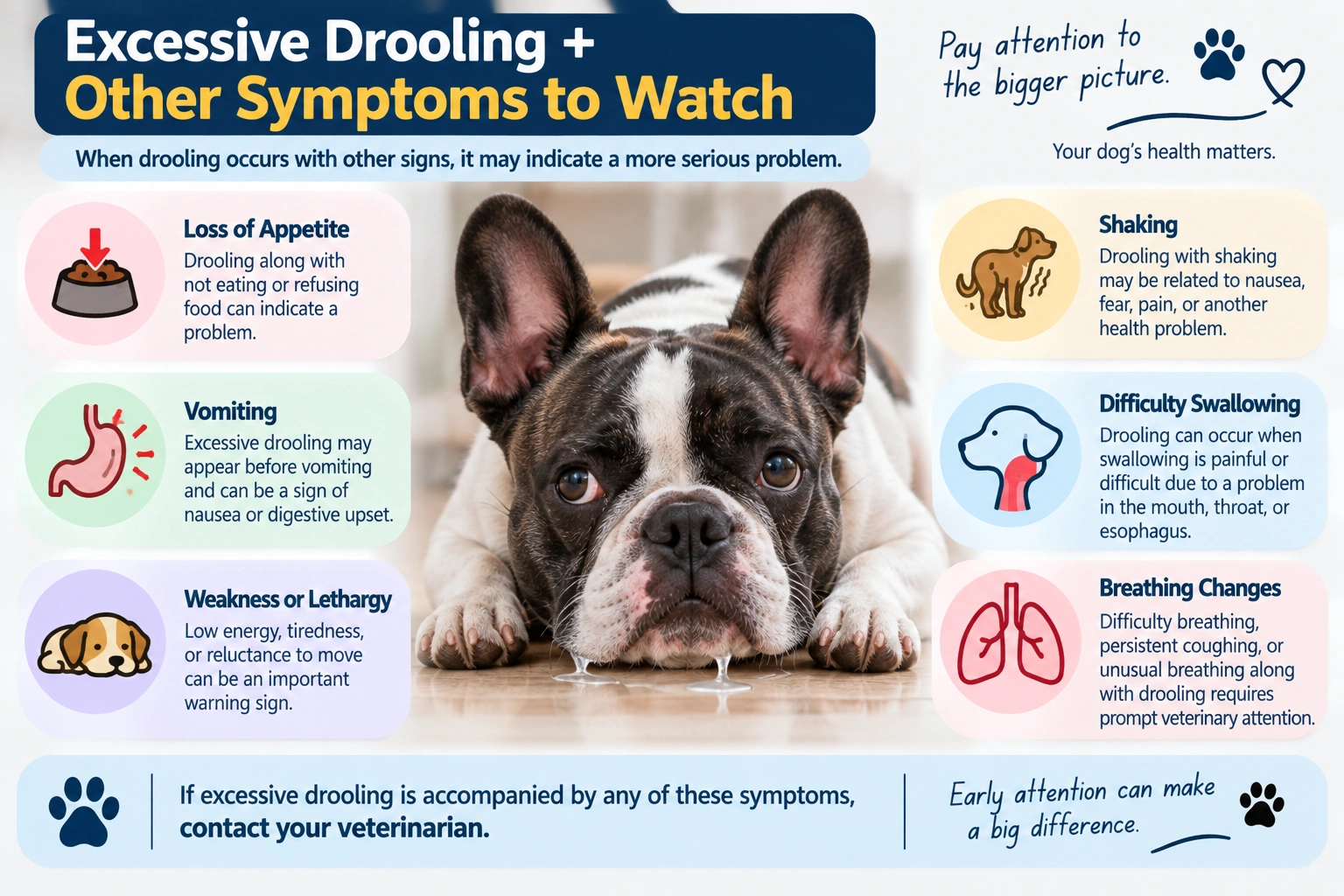
The graphic can pair drooling with loss of appetite, vomiting, shaking, lethargy, difficulty swallowing, breathing changes, and discomfort.
Again, use a different dog breed from Images 1–3.
Why Is My Dog Drooling and Shaking?
Drooling and shaking can occur together for several reasons.
A dog experiencing nausea, fear, pain, significant stress, or another health problem may show both signs.
Because shaking itself has many possible explanations, the surrounding circumstances matter.
Our separate guide explains that symptom in greater detail here:
If the shaking and drooling are sudden, severe, persistent, or accompanied by weakness, vomiting, difficulty walking, abnormal behavior, or suspected exposure to something harmful, contact a veterinarian promptly.
Why Is My Dog Drooling and Coughing?
Drooling combined with coughing can sometimes occur when a dog has irritation involving the mouth or throat, difficulty swallowing, or another problem affecting nearby structures.
Repeated coughing has many possible causes and should be considered separately rather than assuming the drooling explains it.
You can learn more here:
Seek veterinary guidance when coughing is persistent or accompanied by breathing difficulty, weakness, significant distress, or other concerning symptoms.
Why Is My Dog Drooling While Sleeping?
A small amount of saliva during sleep does not necessarily indicate a problem.
A relaxed sleeping position can allow saliva to escape from the mouth, particularly in dogs with loose lips.
What matters is whether this represents a change.
If your dog suddenly begins soaking bedding with saliva or also drools excessively while awake, consider whether other symptoms are present.
Persistent changes should be discussed with your veterinarian.
Why Is My Dog Drooling but Acting Normal?
A dog that is drooling more than usual but otherwise behaving normally may have a temporary explanation such as excitement, anticipation of food, mild motion sickness, or breed-related drooling.
However, appearing normal does not guarantee that nothing is wrong.
Dental problems and some oral conditions, for example, can initially produce subtle signs.
Monitor whether the drooling persists, becomes heavier, or is accompanied by appetite changes, bad breath, vomiting, difficulty chewing, or other symptoms.
When Is Excessive Drooling an Emergency?
Drooling by itself is not always an emergency.
The combination of symptoms is more important.
Seek urgent veterinary attention when excessive drooling occurs with serious signs such as:
- Difficulty breathing
- Collapse or severe weakness
- Significant difficulty swallowing
- Repeated vomiting with worsening condition
- Severe overheating
- Marked abdominal swelling or distress
- Suspected poisoning or harmful substance exposure
- Severe or rapidly worsening symptoms
If you are unsure how serious the situation is, calling your veterinarian or an emergency veterinary clinic can help determine the appropriate next step.
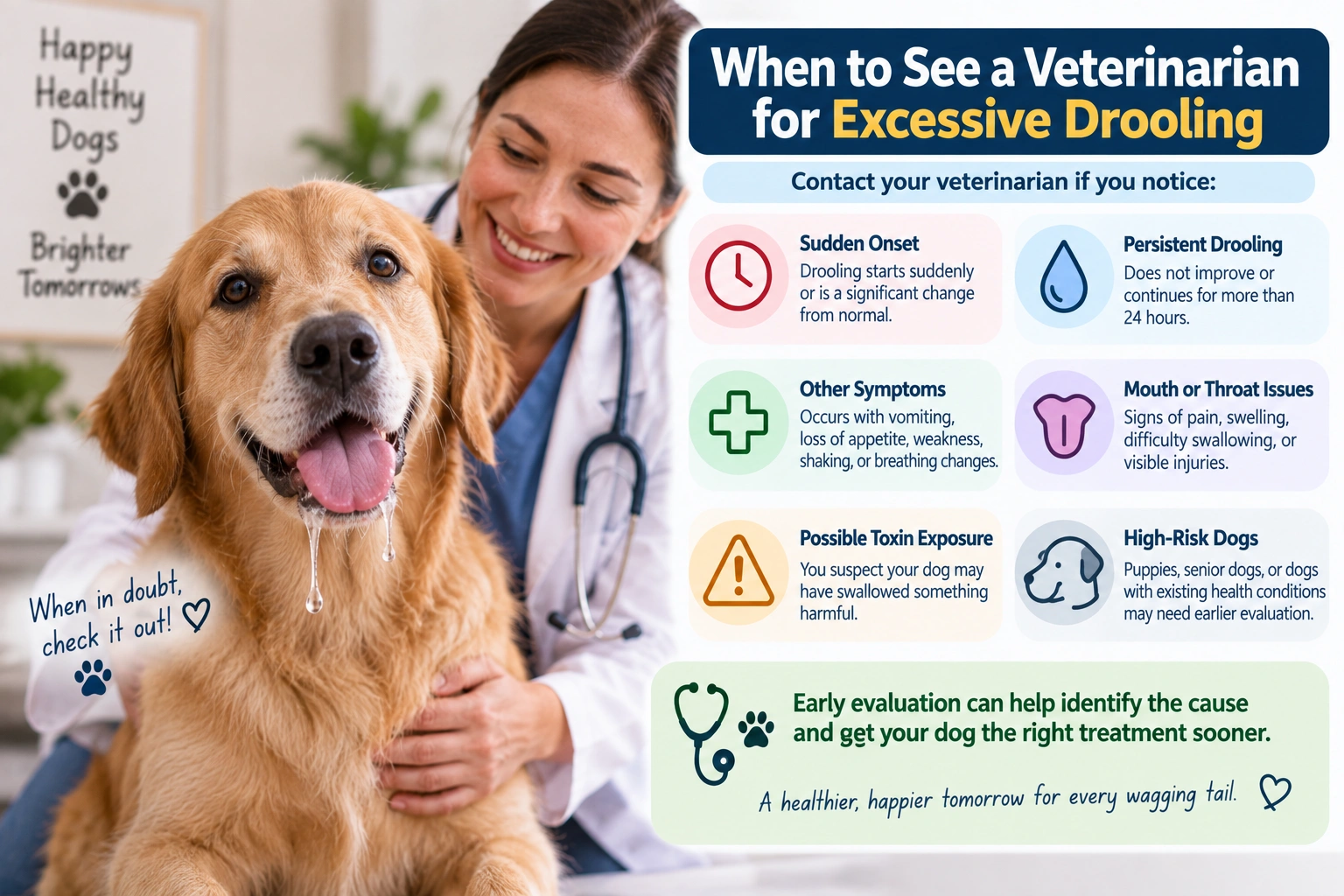
Use another breed — for example, a Border Collie, Dachshund, Australian Shepherd, or mixed-breed dog — and show the major warning signs clearly.
This gives us the fifth image near the end rather than grouping all the graphics near the introduction.
What Should I Observe Before Calling the Veterinarian?
A few observations can make your conversation with the veterinary clinic more useful.
Notice when the drooling began, whether it is constant or intermittent, and whether anything seems to trigger it.
Also observe your dog’s appetite, water intake, energy level, breathing, swallowing, bowel movements, and any vomiting.
If safe to do so, you can look at the front of your dog’s mouth for obvious abnormalities. Do not force the mouth open or reach deeply into the throat.
A short video of the behavior may also help your veterinarian understand what you are seeing.
Should I Give My Dog Medication for Drooling?
Do not give human medications or leftover veterinary medications simply to stop the drooling unless your veterinarian has specifically instructed you to do so.
Drooling is a symptom, not a diagnosis.
Suppressing a symptom without knowing its cause can delay appropriate evaluation, and some human medications can be harmful to dogs.
Treatment depends on what is causing the excessive saliva.
How Will a Veterinarian Investigate Excessive Drooling?
The evaluation depends on your dog’s history and other symptoms.
A veterinarian may ask when the drooling started, whether it occurs continuously or only in certain situations, whether your dog has been vomiting, and whether eating or swallowing has changed.
The mouth, teeth, gums, tongue, and surrounding structures may need to be examined carefully.
Depending on what the examination suggests, additional testing may sometimes be recommended.
The goal is not simply to stop the saliva. It is to determine why the drooling has changed.
Frequently Asked Questions
Why does my dog drool when food is nearby?
Food can stimulate saliva production. Some dogs begin salivating when they see, smell, or anticipate food. If the drooling occurs only in this context and the dog otherwise appears normal, it may simply be a normal response.
Why is my dog suddenly drooling everywhere?
A sudden major change should be taken more seriously than a dog’s usual drooling pattern. Check for vomiting, mouth discomfort, difficulty swallowing, weakness, unusual behavior, overheating, or possible exposure to something harmful.
Can dental problems make a dog drool excessively?
Yes. Problems affecting the teeth, gums, or other structures inside the mouth can contribute to increased drooling, particularly when there is pain or inflammation.
Can nausea cause excessive drooling in dogs?
Yes. Increased salivation can occur with nausea and may sometimes appear before vomiting.
Can car rides make my dog drool?
Yes. Motion sickness and stress associated with car travel can both contribute to increased salivation.
Should I worry if my dog drools while sleeping?
Occasional mild drooling during sleep can occur in healthy dogs. A new or substantial increase, especially when excessive drooling also occurs while awake, deserves closer observation.
Why is my dog drooling so much but otherwise acting normal?
There may be a harmless explanation, but persistent new drooling can also be an early sign of an oral or other health problem. Monitor for additional symptoms and contact your veterinarian if the change continues.
Bottom Line
If you are wondering “Why is my dog drooling so much?”, start by comparing what you are seeing with your dog’s normal behavior.
Drooling can be completely normal when a dog anticipates food, becomes excited, travels in a car, or simply belongs to a breed that naturally drools more.
But sudden, excessive, or persistent drooling can also be associated with dental problems, mouth irritation, nausea, motion sickness, overheating, difficulty swallowing, exposure to irritating substances, or other health conditions.
Pay particular attention to what changed and what other symptoms appear at the same time.
When excessive drooling is accompanied by difficulty breathing or swallowing, repeated vomiting, severe weakness, collapse, significant overheating, suspected poisoning, or rapidly worsening symptoms, seek prompt veterinary care.
For other symptoms you may have noticed, you can also use the Pet Symptom Checker:

**Sidnir Vieira**
Founder of TechHavela
A passionate pet and tech content creator, helping dog owners across the U.S. make smarter decisions for their furry friends.