Quick answer: Why is my cat not eating? A cat that stops eating can be reacting to something simple, like a new food or a stressful change at home, or to a real health problem such as dental pain, kidney disease or nausea. Because cats can get into trouble quickly when they go without food, a cat that is not eating properly deserves attention sooner than most owners expect. If you are unsure, the safest move is to call your veterinarian. You can also start with our Pet Symptom Checker to organize what you are seeing before you call.
Prefer to watch? Here is a short video summary of this guide:
Is Your Cat Really Not Eating, or Just Eating Differently?
Before anything else, it helps to know exactly what changed. Veterinary sources separate two situations that look the same from the outside.
- True anorexia: the cat is simply not interested in food.
- Pseudo-anorexia: the cat is hungry but cannot eat, often because of pain in the mouth or throat, dental disease, or trouble chewing and swallowing.
This difference matters. A cat that walks up to the bowl, sniffs, and then backs away or drops food from its mouth is telling you something different from a cat that ignores the bowl entirely. Both deserve a veterinary visit if it lasts, but the details you notice will help your vet narrow things down. This is explained in the VCA Animal Hospitals guide on anorexia in cats.
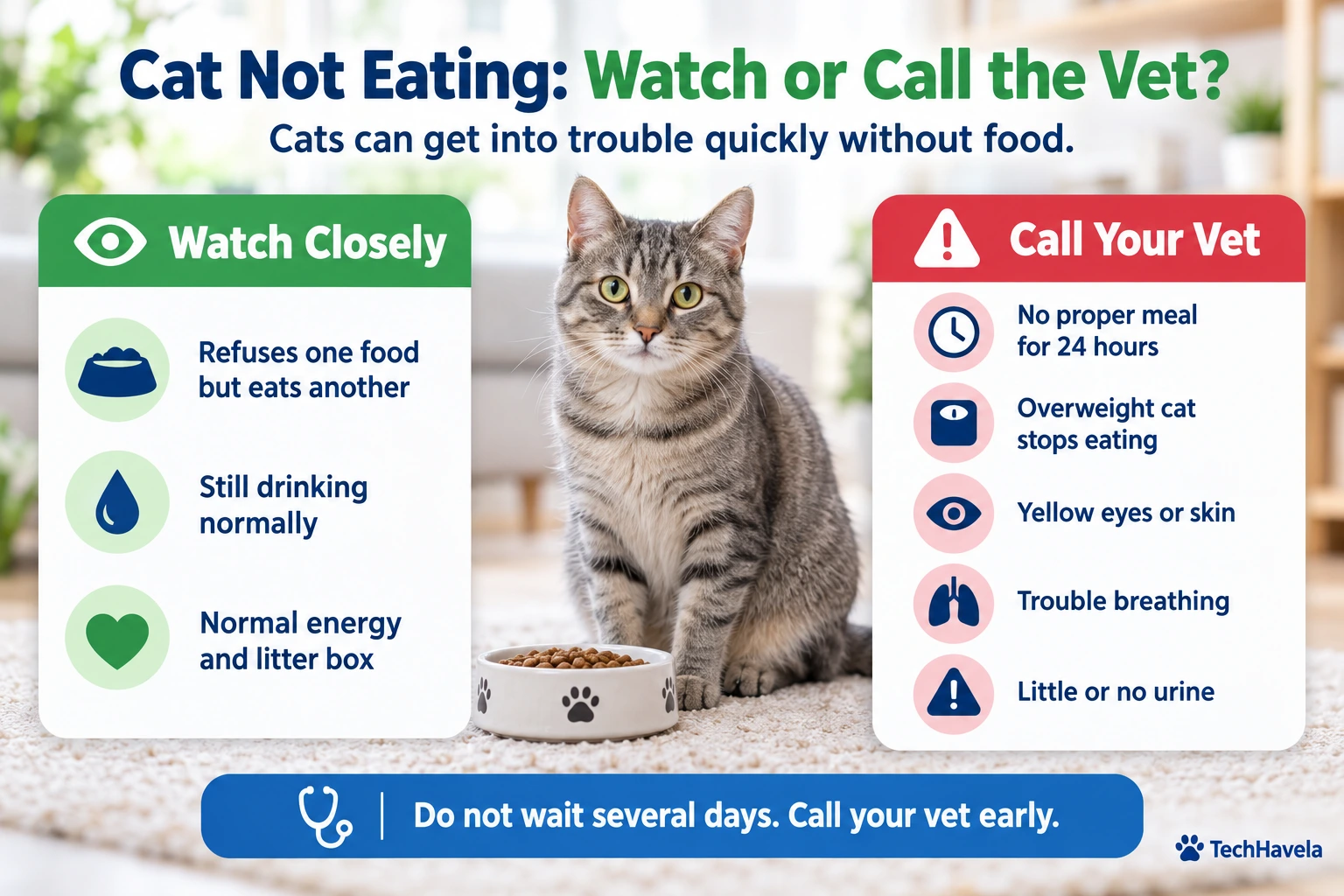
Also check the basics: Is the food fresh? Did the brand or flavor change? Is the bowl clean and in a quiet spot? A cat that refuses one food but happily eats another may be picky rather than ill, but do not assume that without watching closely.
Why Is My Cat Not Eating? Common Reasons
Veterinary references describe many possible causes. Here are the main groups, from the everyday to the more serious. None of these can be sorted out at home with certainty, so treat this list as a way to understand the possibilities, not to diagnose your cat.
1. Stress and changes in routine
Cats like predictable lives. VCA lists stress, altered routines and environmental changes among the causes of a lowered appetite. A move, a new pet, visitors, construction noise, or even rearranged furniture can be enough for some cats. If you suspect stress, our guide to mistakes that stress out cats and our overview of cat behavior can help you spot triggers. Still, stress should be a conclusion your vet helps you reach, not a guess that delays care.

2. A change in diet or food that is unappealing
Food that is stale, has a new texture, or simply does not appeal to your cat can reduce eating. A reduced sense of smell also lowers appetite, because scent plays a large part in a cat’s interest in food. If you are thinking about changing foods, read about wet versus dry cat food and check which ingredients to avoid first.
3. Mouth and dental pain
Dental disease and mouth or throat pain are classic reasons a hungry cat cannot eat comfortably. Signs can include dropping food, chewing on one side, pawing at the mouth, or drooling. These are the typical picture of pseudo-anorexia described by VCA.
4. Illness affecting the whole body
VCA notes that systemic illness, infection and organ problems, such as diabetes or kidney disease, can reduce appetite. Poisoning, pain, cancer, a blockage in the digestive tract, ulcers, nausea and side effects of medications are also on the list. Many of these cause other signs too, like vomiting, changes in thirst, or a change in the litter box. If your cat is also vomiting, see our guide on why a cat may be throwing up.
5. Other things that can lower appetite
High environmental temperature is mentioned as a possible factor, and chronic pain elsewhere in the body can also get in the way of eating.
When to Call the Vet Right Away
This section comes before any home advice on purpose. Do not wait and watch if you see any of the following.
- Your cat has not eaten properly for 24 hours. VCA’s guide on recognizing signs of illness in your cat advises seeking immediate veterinary attention at that point. Another VCA page says to consult your vet immediately if a cat has refused food for more than two days. The two sources give different time marks, so the practical lesson is simple: do not wait several days.
- Your cat is overweight or obese. VCA warns that a sudden loss of appetite is especially dangerous in overweight cats.
- Yellowing of the whites of the eyes or the skin. This is jaundice, and VCA’s page on fatty liver in cats says the disease can be fatal if not treated rapidly and aggressively once jaundice appears.
- Trouble breathing. VCA lists breathing difficulty, such as shallow breathing, mouth breathing or panting, as a reason for immediate attention.
- Little or no urine, or straining in the litter box. VCA states that a lack of urination is a life-threatening emergency.
- Your cat is hiding, very withdrawn, or seems to be in pain, especially along with not eating.
- Your cat may have eaten something toxic or swallowed an object.
Why Not Eating Is a Bigger Deal in Cats
When a cat stops eating, its body starts breaking down fat for energy. VCA explains that a cat’s liver cannot handle large amounts of fat at once, so the cat can develop a condition called hepatic lipidosis, also known as fatty liver. Overweight and obese cats are at particular risk. VCA’s fatty liver page says it typically happens after a cat has gone without eating for several days, and that the outlook can be reasonably good when the underlying cause is treatable and care starts early.
This is the main reason veterinarians do not like the “let’s see if it passes” approach with cats. You do not need to be frightened, but you do need to be prompt.
What You Can Do at Home While You Arrange a Vet Visit
These steps are about comfort and about gathering useful information. They are not a treatment.
- Do not force-feed. VCA says force-feeding is unpleasant for the cat, raises the risk of aspiration pneumonia, and can make a cat more averse to food.
- Offer the usual food, fresh and at room temperature, in a quiet, clean spot away from the litter box and from other pets.
- Do not give human medication. Give medication only if your vet tells you to.
- Watch water intake and the litter box. Note how much your cat drinks and whether urine and stools look normal. VCA mentions that cats with liver or kidney problems often eat less but drink more.
- Keep other things steady. Avoid big changes in routine while your cat is unwell.
Also notice whether the cat seems interested in food but cannot eat, whether it is drooling, and whether anything in the home has changed in the past few weeks.

What to Tell Your Veterinarian
A short, clear history makes the visit more useful. Try to write down:
- When your cat last ate normally, and what it ate
- Any recent change in food, home, routine or household members
- Vomiting, diarrhea, drooling, or trouble swallowing
- Changes in drinking, urinating or stools
- Any chance of toxins, plants, human food or swallowed objects
- Current medications or supplements
Your vet may suggest an exam and tests to look for the cause. Treatment depends entirely on what is found.
How the Pet Symptom Checker Can Help
Our Pet Symptom Checker covers both dogs and cats. You can filter by cat, pick the symptoms you are seeing, and read general information about what they may mean and when to seek care. It does not replace a veterinary exam, but it can help you describe things clearly. If you would like to make mealtimes more predictable in the meantime, a routine matters, and some owners find an automatic option useful; see our look at the best smart cat feeders. Keep in mind that an automatic feeder can also hide a drop in appetite, so keep checking the bowl yourself.
If you also have a dog, you may want to compare with our article on why a dog may stop eating, though cats and dogs are not the same.

Frequently Asked Questions
How long can a cat go without eating?
There is no safe number to rely on. VCA recommends veterinary attention if a cat has not eaten properly for 24 hours, and says to consult your vet immediately if food has been refused for more than two days. Because the risk is higher in overweight cats, it is better to call early.
Can stress alone make a cat stop eating?
Yes, stress and changes in routine are listed as possible causes. But since illness can look the same, a cat that is not eating should not be assumed to be just stressed.
My cat is hungry but will not eat. What does that mean?
This may be pseudo-anorexia, where pain or trouble chewing and swallowing gets in the way. Mouth and dental problems are common examples. A veterinary exam is the way to find out.
Should I force-feed my cat?
No. VCA advises against it because of the risk of aspiration pneumonia and food aversion. Ask your vet about safe ways to support eating.
Is it normal for an older cat to eat less?
A change in appetite is worth discussing with your vet at any age. Do not assume it is just getting older.
The Bottom Line
If you keep asking why is my cat not eating, remember that a cat that is not eating is giving you important information. Some causes are mild, but others are serious, and cats can run into trouble quickly without food. Do not wait for several days. Note what you see, avoid forcing food, and call your veterinarian early. When in doubt, a phone call costs far less than waiting too long.
This content is educational and does not replace the advice of a veterinarian.

Sidnir Vieira is the founder of TechHavela. A lifelong pet owner who had a dog for many years and now lives with a cat, he writes educational guides that help owners understand symptoms and know when to call the vet. TechHavela’s articles are based on veterinary sources and are not reviewed by a veterinarian.