Seeing your dog having trouble walking can be worrying. Your dog may suddenly walk slowly, wobble, limp, drag a paw, walk sideways, have trouble standing, or seem too weak to move normally.
So, why is my dog having trouble walking? There are many possible reasons. Walking difficulties in dogs can be associated with pain, injuries, joint problems, muscle weakness, spinal conditions, balance disorders, neurological problems, or an illness that makes the dog feel weak. How the problem begins matters: a dog that gradually becomes stiff may have a very different problem from a dog that suddenly cannot stand or walk normally.
If your dog is showing several unexplained symptoms at the same time, you can also use the Pet Symptom Checker to explore the signs you are noticing: Check Your Dog’s Symptoms →
Important: This article is educational and cannot diagnose your dog. Sudden inability to stand or walk, repeated falling, severe pain, or rapidly worsening symptoms require prompt veterinary attention.
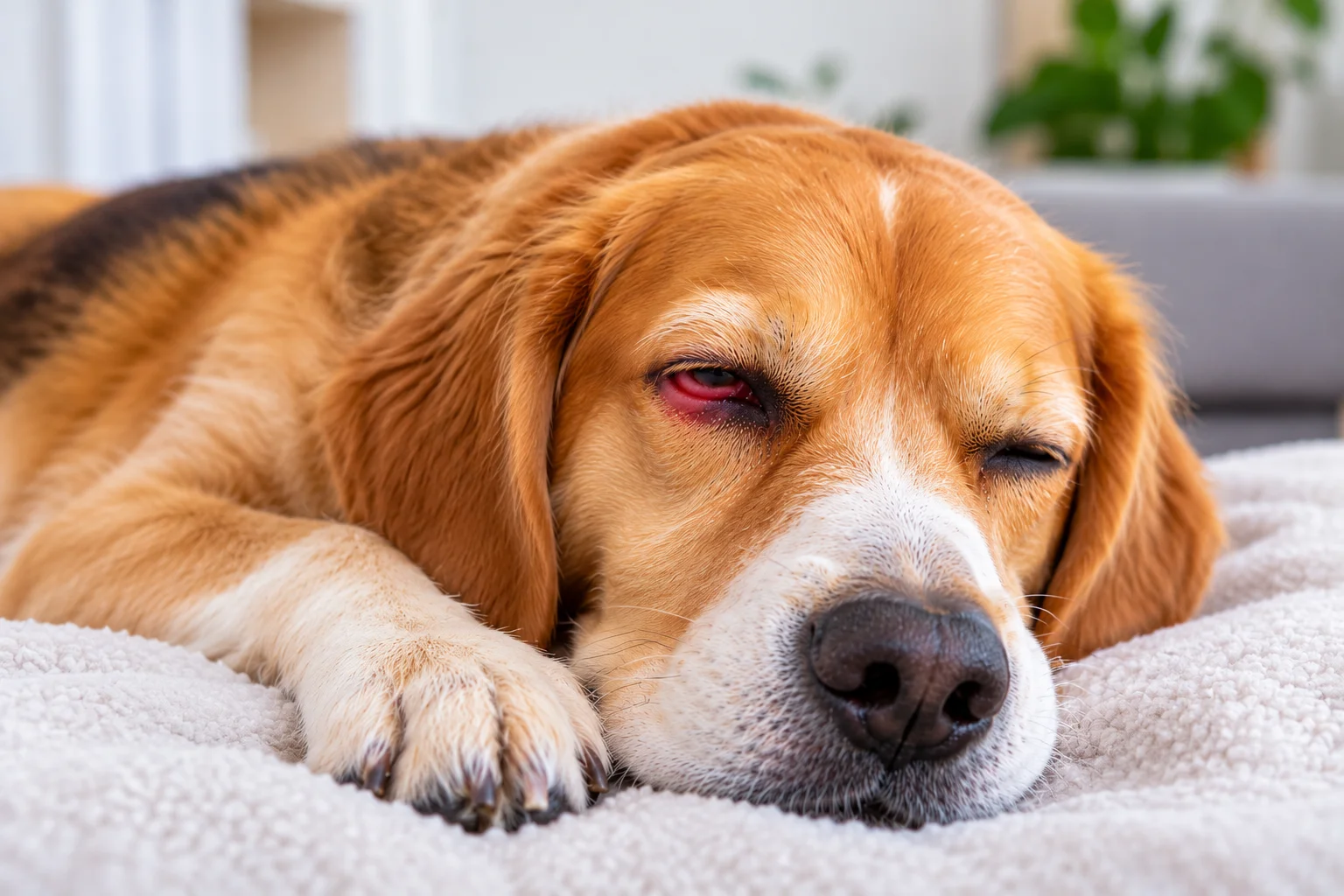
Why Is My Dog Having Trouble Walking?
Normal walking requires the muscles, bones, joints, nerves, spinal cord, brain, and balance system to work together. A problem affecting any of these areas may change the way a dog moves.
Some dogs limp because putting weight on one leg hurts. Others appear weak in all four legs. A dog with a balance or neurological problem may wobble, walk sideways, cross the legs, stumble, or fall.
If your dog appears generally weak rather than simply favoring one leg, read our guide Why Is My Dog Weak? Understanding whether your dog is experiencing pain, weakness, stiffness, or loss of coordination can provide useful information for your veterinarian.
When Is Trouble Walking in a Dog an Emergency?
Not every limp is an emergency, but certain signs require much faster action. Seek urgent veterinary attention if your dog:
- Suddenly cannot stand or walk
- Repeatedly falls or collapses
- Drags one or more limbs
- Develops severe or rapidly worsening weakness
- Appears to be in severe pain
- Has walking problems following significant trauma
- Suddenly loses normal balance or coordination
- Develops serious breathing difficulty
- Becomes poorly responsive
A sudden and major loss of mobility should not simply be watched at home to see whether it disappears. For milder limping, the veterinary hospital group VCA advises that if lameness lasts more than 24 hours, you should seek veterinary care (VCA: First Aid for Limping Dogs).
Common Causes of Walking Problems in Dogs
There isn’t one single cause of walking difficulty. Some problems involve the legs themselves, while others involve the spine, nervous system, or the dog’s overall health.
1. Paw or Leg Injuries
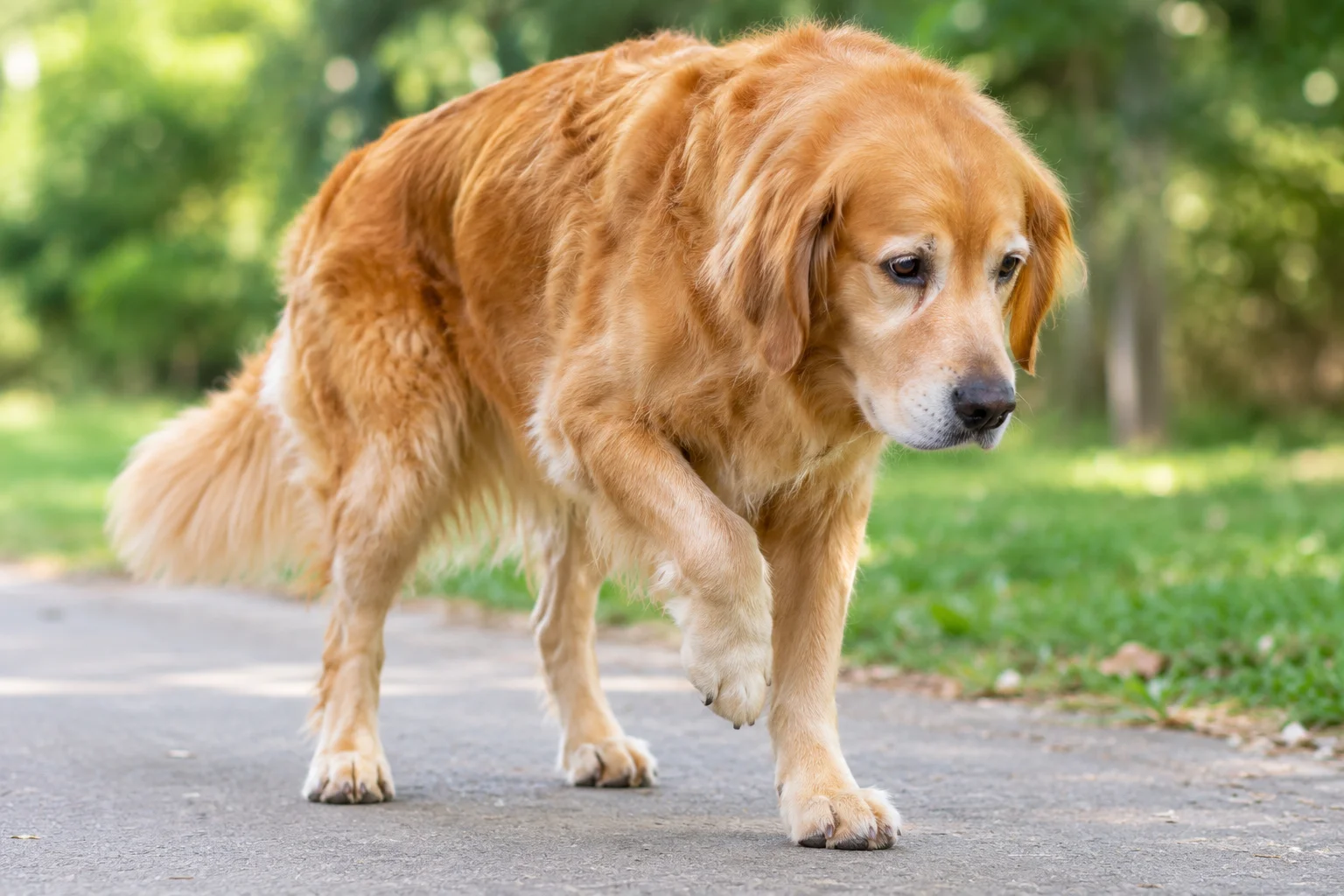
A paw or leg injury is one of the more straightforward reasons a dog may suddenly change the way it walks. You might notice:
- Limping
- Holding one paw off the ground
- Reluctance to put weight on one leg
- Licking a particular paw or leg
- Swelling
- Reluctance to run or climb stairs
The problem could involve the paw, nail, muscle, tendon, ligament, joint, or another structure. If your dog is clearly painful or unable to put weight on a limb, veterinary evaluation is appropriate. Our guide Why Is My Dog Limping? covers limping in more detail.
2. Joint Pain and Arthritis
Joint discomfort may cause dogs to move more slowly or stiffly. You may notice that your dog:
- Has difficulty getting up after sleeping
- Walks slowly after resting
- Avoids stairs
- No longer wants to jump
- Takes shorter steps
- Becomes less interested in physical activity
The Merck Veterinary Manual lists slowness to rise, especially after extended rest, and difficulty with stairs among the common signs of osteoarthritis in dogs (Merck Veterinary Manual: Osteoarthritis in Dogs and Cats). VCA also points out that these changes are not just a dog “slowing down”: it states that age is not a disease and that such signs may be related to osteoarthritis (VCA: Five Signs Your Pet Has Osteoarthritis).
For that reason, persistent stiffness, limping, or difficulty rising deserves veterinary evaluation instead of being treated as a normal part of aging.
3. Muscle Weakness or General Weakness
Sometimes the problem is not that a particular leg hurts. The dog may simply lack the strength to walk normally. A weak dog may:
- Tire quickly
- Walk slowly
- Tremble
- Struggle to stand
- Take short steps
- Lie down frequently
- Become less active
Weakness may also occur together with lethargy. If your dog seems unusually tired or inactive, read What Is Dog Lethargy? Lethargy and weakness are related observations, but they are not exactly the same thing. A lethargic dog may have little interest in activity, while a weak dog may actually have difficulty performing normal movements.
4. Back or Spinal Problems
Problems affecting the back or spinal cord can interfere with movement. Dogs with spinal discomfort may become reluctant to walk, jump, climb stairs, or move their neck or back normally. More significant spinal problems can sometimes cause weakness, poor coordination, or difficulty standing.
One condition veterinarians consider is intervertebral disc disease (IVDD). Cornell University’s Riney Canine Health Center describes dogs with disc problems that may walk with a wobbly gait or seem weak in the rear, and, in severe cases, may be unable to get up. Its advice is to contact your veterinarian at the first sign of back discomfort (Cornell: Intervertebral Disc Disease).
5. Neurological Problems
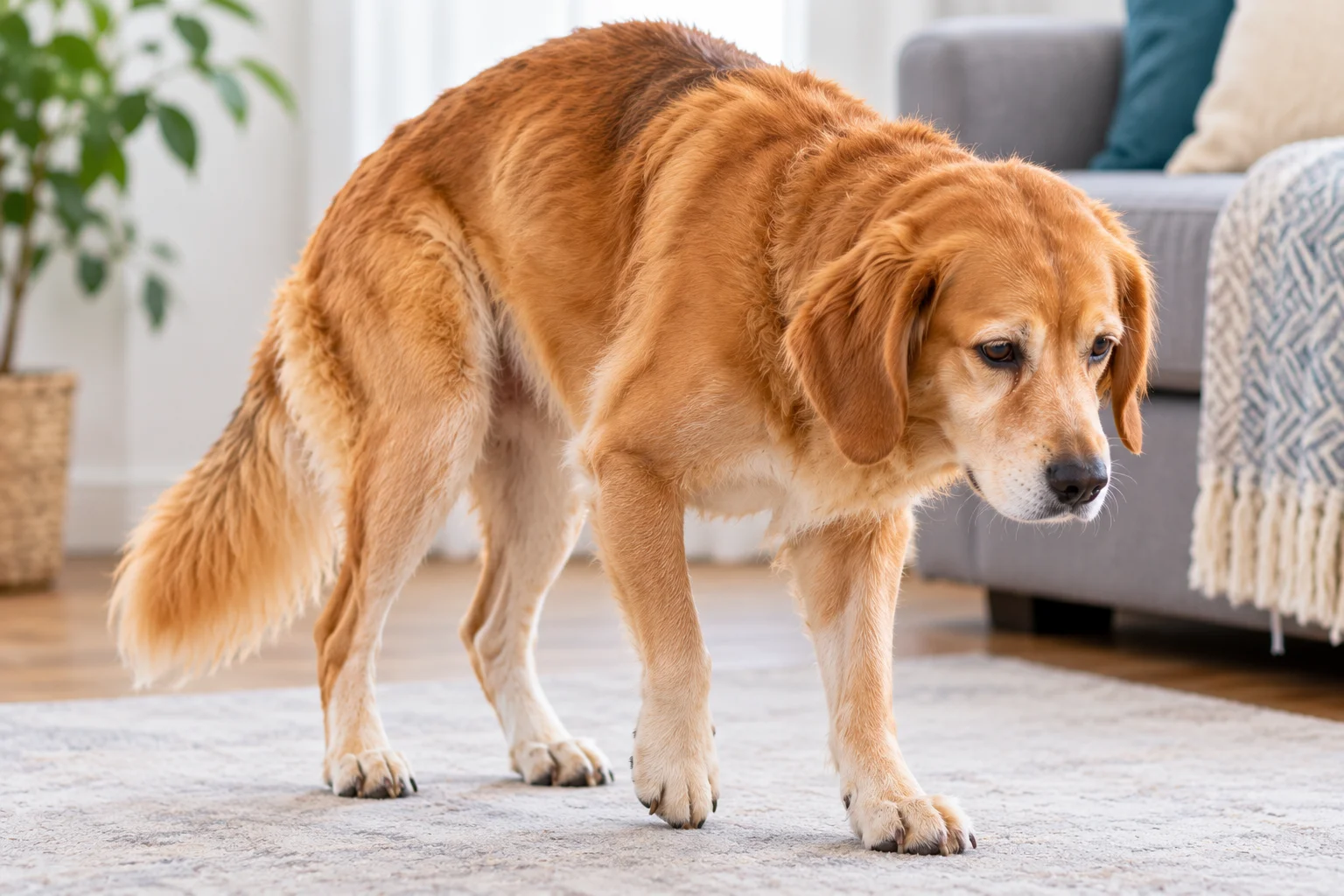
The nervous system controls movement and coordination. Neurological problems may cause:
- Stumbling
- Wobbling
- Paw dragging
- Abnormal positioning of the feet
- Weakness
- Falling
- Difficulty standing
- Loss of normal coordination
These signs do not identify one particular disease. A veterinarian may perform a neurological examination to determine which part of the nervous system could be involved.
6. Balance Problems
A dog can have enough strength to walk but still have difficulty remaining balanced. You may notice the dog:
- Leaning to one side
- Walking sideways
- Stumbling
- Falling
- Standing with the legs spread farther apart
- Developing a head tilt
VCA describes the signs of vestibular disease, a balance disorder, as including sudden loss of balance and coordination, falling or circling to one side, and a head tilt, and notes that these signs usually develop suddenly, often in less than an hour (VCA: Vestibular Disease in Dogs). If a head tilt appears along with balance problems, that combination is particularly useful to mention to your veterinarian. You can read more about head tilts in Why Is My Dog Tilting His Head?
7. Illness Causing Weakness
Walking difficulty does not always begin in the legs, joints, or spine. A dog that feels significantly unwell may become weak and have trouble moving normally. This is why other symptoms matter. For example, pay attention to whether your dog is also:
- Refusing food
- Vomiting
- Shaking
- Panting unusually
- Acting lethargic
- Behaving differently
If appetite has changed, see Why Is My Dog Not Eating? These additional symptoms can provide your veterinarian with important context.
What Your Dog’s Walking Problem May Look Like
The way your dog moves can offer useful clues, but a walking pattern alone cannot diagnose the cause.
| What You Notice | What It May Suggest | Level of Attention |
|---|---|---|
| Walking slowly or stiffly | Pain, joint or muscle discomfort | Monitor closely; veterinary evaluation if persistent |
| Limping or avoiding one leg | Paw, muscle, joint, or limb problem | Veterinary evaluation if persistent or painful |
| Walking sideways | Balance, coordination, pain, or neurological problem | Veterinary evaluation recommended |
| Walking like drunk or wobbling | Balance problem, weakness, or neurological problem | Prompt veterinary evaluation |
| Hunched back while walking | Pain or spinal discomfort | Veterinary evaluation recommended |
| Trouble standing and walking | Weakness, pain, orthopedic or neurological problem | Prompt veterinary evaluation |
| Suddenly falling over | Balance problem, neurological problem, or severe weakness | Urgent veterinary evaluation |
| Suddenly unable to walk | Potentially serious spinal, neurological, traumatic, orthopedic, or other problem | Urgent veterinary care |
Think of this table as an observation guide rather than a diagnostic tool. Different conditions can produce similar walking patterns.
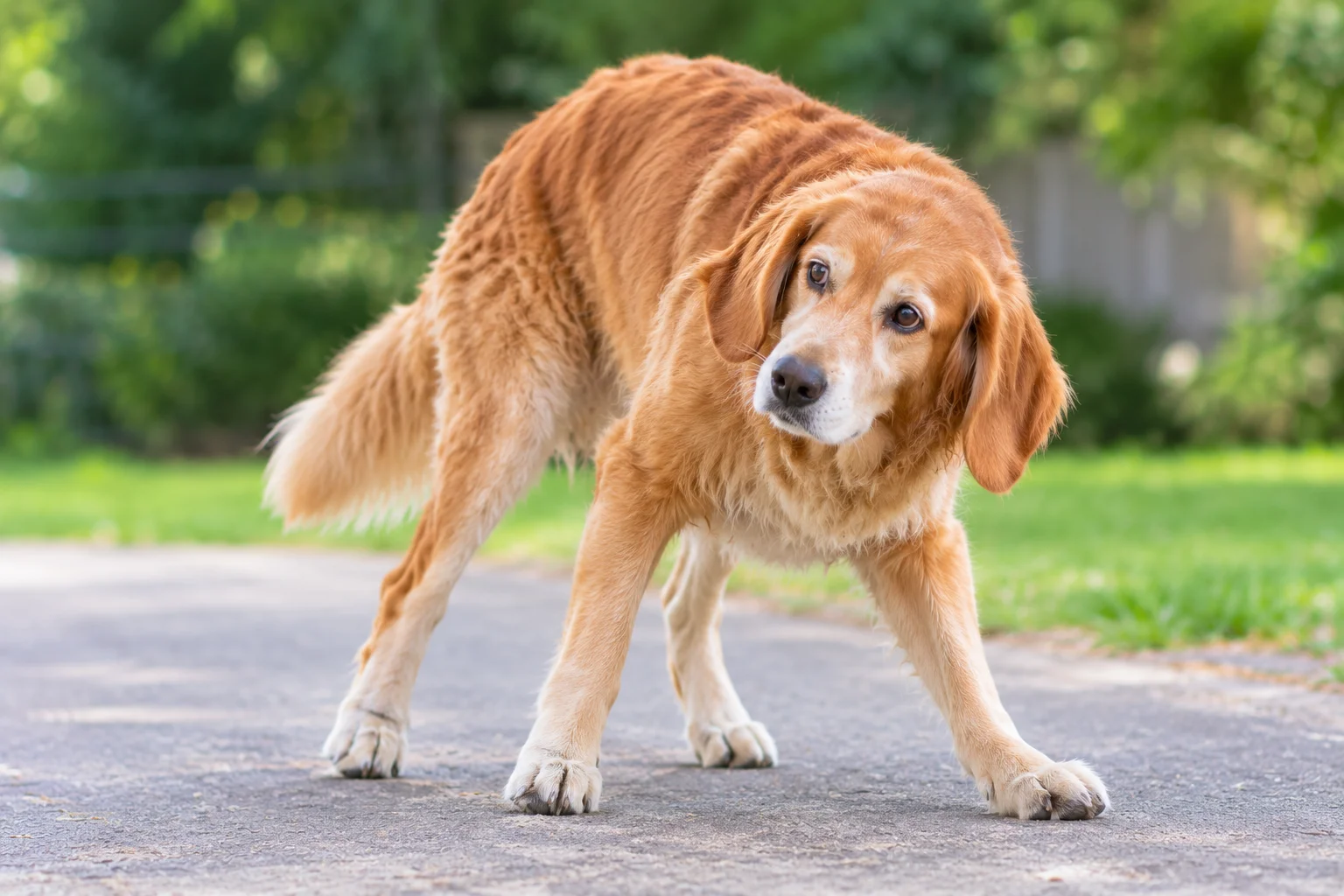
Why Is My Dog Walking Sideways?
A dog that begins walking sideways may be experiencing a problem with balance or coordination. However, sideways walking can also be associated with pain, weakness, or neurological changes.
Pay attention to whether the dog is also:
- Falling toward one side
- Wobbling
- Tilting the head
- Dragging a paw
- Appearing weak
- Having difficulty standing
A sudden change is particularly important. If your dog normally walks straight and suddenly begins drifting sideways or repeatedly falling, contact your veterinarian. If your dog also moves in circles, our guide Why Is My Dog Walking in Circles? may help you describe what you are seeing.
Why Is My Dog Walking Funny?
“Walking funny” can mean many different things. Instead of focusing only on that description, try to identify exactly what has changed. For example:
- Is your dog limping?
- Is one leg being held differently?
- Are the back legs crossing?
- Is your dog wobbling?
- Is a paw dragging?
- Is the back hunched?
- Does your dog fall when turning?
- Does the dog struggle to get up?
These observations may help your veterinarian distinguish a painful limp from weakness or loss of coordination. If possible, safely recording a short video of the abnormal movement may also help your veterinarian see what you observed at home.
Why Is My Dog Walking Like He’s Drunk?
A staggering or “drunk-looking” walk may indicate a loss of normal coordination. Veterinarians call impaired coordination ataxia. VCA defines ataxia as incoordination within the nervous system and explains that it can come from three different areas: the sensory (proprioceptive) system, the vestibular (balance) system, or the cerebellum (VCA: Ataxia in Dogs).
Because several different problems can produce this kind of unsteady walking, a dog that suddenly begins wobbling, stumbling, or falling should be evaluated rather than simply observed for several days.
Why Is My Dog Walking With a Hunched Back?
A hunched or arched back may indicate discomfort. Some dogs change their posture when their back, neck, abdomen, or another area hurts. When the hunched posture occurs together with reluctance to walk, weakness, paw dragging, or difficulty standing, veterinary evaluation becomes particularly important.
Do not assume that a hunched posture automatically means a spinal condition. Several problems can change a dog’s posture.
Why Is My Dog Having Trouble Standing and Walking?
Trouble standing adds another important clue. A dog may struggle to rise because of:
- Pain
- Muscle weakness
- Joint problems
- Orthopedic injuries
- Spinal problems
- Neurological problems
- Balance disorders
- Significant illness
Watch what happens when your dog naturally attempts to stand. Slipping, collapsing, repeatedly falling, crossing the legs, or being unable to support normal body weight should be reported to your veterinarian. Avoid repeatedly forcing your dog to stand just to test whether the problem is improving.
Why Is My Dog Having Trouble Walking All of a Sudden?
A sudden walking problem should be taken seriously. The possible causes include injuries and several orthopedic, spinal, neurological, and medical conditions. What matters here is the abrupt change. A dog that was walking normally earlier and suddenly cannot walk properly is different from a dog whose stiffness has gradually developed over months.
Contact a veterinarian promptly if your dog suddenly:
- Cannot stand normally
- Cannot walk
- Falls repeatedly
- Drags a limb
- Develops severe weakness
- Appears to be in significant pain
- Loses normal coordination
Do not try to determine the exact neurological or orthopedic diagnosis at home.
Why Is My Dog Having Trouble Walking and Shaking?
Shaking can accompany pain, weakness, stress, fear, or a variety of medical conditions. If your dog is trembling, our guide Why Is My Dog Shaking? may help you understand the symptom.
The combination becomes more concerning when the dog is shaking and cannot stand normally, repeatedly falls, appears severely painful, or becomes progressively weaker.
What If My Dog Is Having Trouble Walking and Panting?
Panting is normal in many situations, particularly after activity or when a dog needs to cool down. But unusual panting occurring while a dog is having difficulty walking deserves attention. Pain, stress, illness, and other problems can affect breathing behavior. We have a separate guide covering this symptom: Why Is My Dog Panting So Much?
If your dog is struggling to walk and is also experiencing actual difficulty breathing, not simply panting, seek veterinary care promptly.
Can Anxiety Change the Way a Dog Walks?
Fear and anxiety can change a dog’s behavior and body posture. An anxious dog may tremble, pace, crouch, keep the tail tucked, refuse to move, or behave differently from usual. If the behavioral change appeared suddenly, see Why Is My Dog Anxious All of a Sudden?
However, do not assume that a dog that is physically struggling to stand, dragging its paws, repeatedly falling, or losing coordination is simply anxious. Physical causes should be considered when movement itself appears abnormal.
What If My Dog Is Acting Strange Too?
A change in walking combined with unusual behavior can provide another clue that something is wrong. For example, a dog may suddenly become withdrawn, restless, unusually quiet, confused, or reluctant to interact. Our guide Why Is My Dog Acting Strange All of a Sudden? explains which changes are worth watching.
What Should I Do If My Dog Is Having Trouble Walking?
Keep your dog somewhere safe and reduce opportunities for jumping, climbing stairs, slipping, or falling. VCA’s first aid guidance for lame dogs is also to confine them and restrict their activity until they can be seen by a veterinarian. Observe the symptoms without repeatedly forcing your dog to walk.
Useful things to note include:
- When the problem began
- Whether it appeared suddenly or gradually
- Which legs seem affected
- Whether the dog appears painful
- Whether a paw is dragging
- Whether the dog falls toward one side
- Whether there is shaking
- Whether the dog is eating normally
- Whether panting has changed
- Whether behavior has changed
These details can help your veterinarian understand the pattern. If an accident or emergency is involved, our Essential Guide to Dog First Aid explains what to have ready. You can also use the TechHavela symptom tool to explore other signs you have noticed: Pet Symptom Checker for Dogs and Cats.
Can I Treat My Dog’s Walking Problem at Home?
Treatment depends on the underlying cause. A dog with a minor soft-tissue injury may require a completely different approach from a dog with a spinal, neurological, or significant joint problem. Because these conditions can sometimes look similar at home, avoid assuming that a walking problem is simply arthritis, age, anxiety, or a minor sprain.
Do not give your dog human medications unless a veterinarian specifically tells you to do so.
Frequently Asked Questions
Why is my dog suddenly having trouble walking?
Sudden walking difficulty can be associated with injuries, pain, orthopedic problems, spinal conditions, neurological disorders, balance problems, weakness, or other illnesses. A significant sudden change warrants prompt veterinary advice.
Why is my dog walking sideways all of a sudden?
Sideways walking can occur when balance or coordination is affected, although weakness and pain can also alter gait. Sudden sideways walking accompanied by falling, severe weakness, head tilt, or inability to stand should be evaluated promptly.
Why can’t my dog walk suddenly?
Sudden inability to walk can indicate a serious orthopedic, spinal, neurological, traumatic, or other medical problem. Seek urgent veterinary care.
Why is my dog walking slowly?
Pain, stiffness, fatigue, weakness, joint problems, and illness can all cause slower walking. Persistent slowing accompanied by other symptoms deserves veterinary evaluation.
Why is my dog walking weird on the back legs?
Abnormal movement of the hind legs can be associated with pain, weakness, orthopedic conditions, spinal problems, or neurological disorders. Paw dragging, crossing of the hind legs, repeated falling, or difficulty standing are particularly important signs.
Why is my dog weak and not eating?
Weakness together with appetite loss can occur with many different illnesses and should not be diagnosed from those two symptoms alone. For more information about appetite changes, read Why Is My Dog Not Eating?
Should I make my dog walk to see if it gets better?
Avoid repeatedly making a dog walk when it is clearly struggling. This may increase discomfort or the chance of falling. Keep the dog safe and seek veterinary guidance when the walking problem is significant.
Final Thoughts
If you are asking “Why is my dog having trouble walking?”, two of the most useful things to observe are how the dog is walking and how quickly the problem appeared. A mild limp that develops gradually is very different from suddenly falling, dragging the legs, or being unable to stand.
Also pay attention to symptoms occurring at the same time. Weakness, lethargy, shaking, loss of appetite, unusual panting, anxiety, and behavioral changes can provide additional information. That is why we created individual TechHavela guides covering these symptoms rather than trying to diagnose everything from a single sign.
And when walking difficulty is sudden, severe, painful, worsening, or accompanied by loss of coordination or inability to stand, contact a veterinarian promptly.
This content is educational and does not replace the advice of a veterinarian.

Sidnir Vieira is the founder of TechHavela. A lifelong pet owner who had a dog for many years and now lives with a cat, he writes educational guides that help owners understand symptoms and know when to call the vet. TechHavela’s articles are based on veterinary sources and are not reviewed by a veterinarian.