Why Is My Dog Scratching So Much? Common Causes to Watch
If your dog has started scratching more than usual, you may be wondering, “Why is my dog scratching so much?”
An occasional scratch is normal. Dogs may scratch briefly because of a mild itch, something touching their coat, or temporary skin irritation.
However, frequent, intense, or persistent scratching can be a sign that something is bothering your dog’s skin, coat, ears, or overall health.
Possible causes can include fleas or other parasites, allergies, dry or irritated skin, skin infections, ear problems, and other health conditions.
The most important thing is to notice whether your dog’s scratching represents a change from their normal behavior and whether other symptoms are occurring at the same time.
Why Is My Dog Scratching So Much?
Dogs scratch for many of the same basic reasons people do: something feels itchy or uncomfortable.
The medical term commonly used for itching is pruritus.
According to the Merck Veterinary Manual, itching, or pruritus, is a clinical sign rather than a specific diagnosis, and common causes include parasites, infections, and allergies
Your dog may respond to itching by:
- Scratching with a back leg
- Licking the skin repeatedly
- Chewing or nibbling certain areas
- Rubbing against furniture or the floor
- Shaking the head
- Licking or chewing the paws
The location, frequency, and intensity of the scratching can provide useful clues.
For example, a dog repeatedly scratching around the ears may have a different problem from a dog constantly licking the paws or scratching around the back and tail.
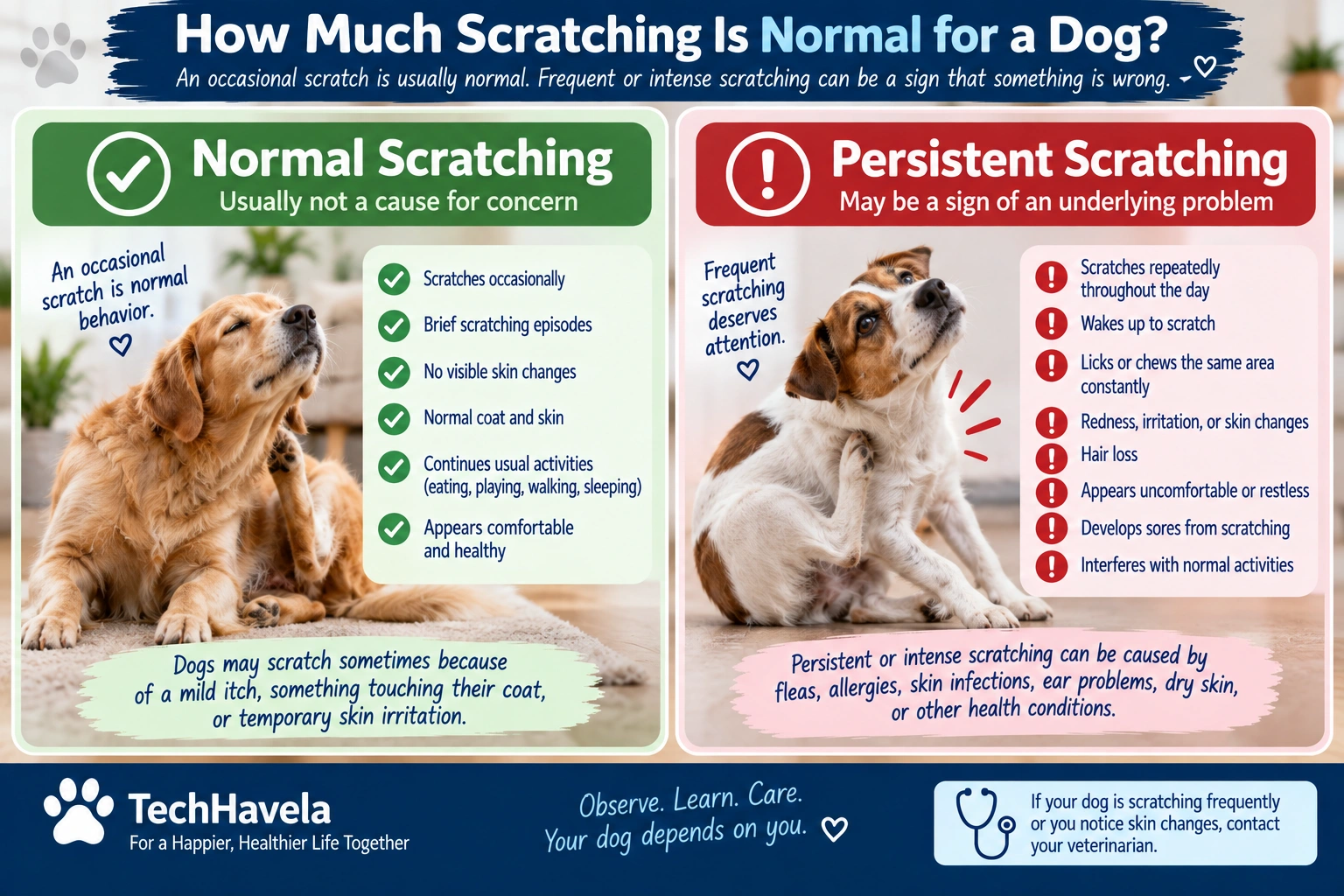
How Much Scratching Is Normal for a Dog?
Most dogs scratch occasionally.
A brief scratch followed by normal activity is usually very different from persistent scratching that interrupts eating, playing, walking, or sleeping.
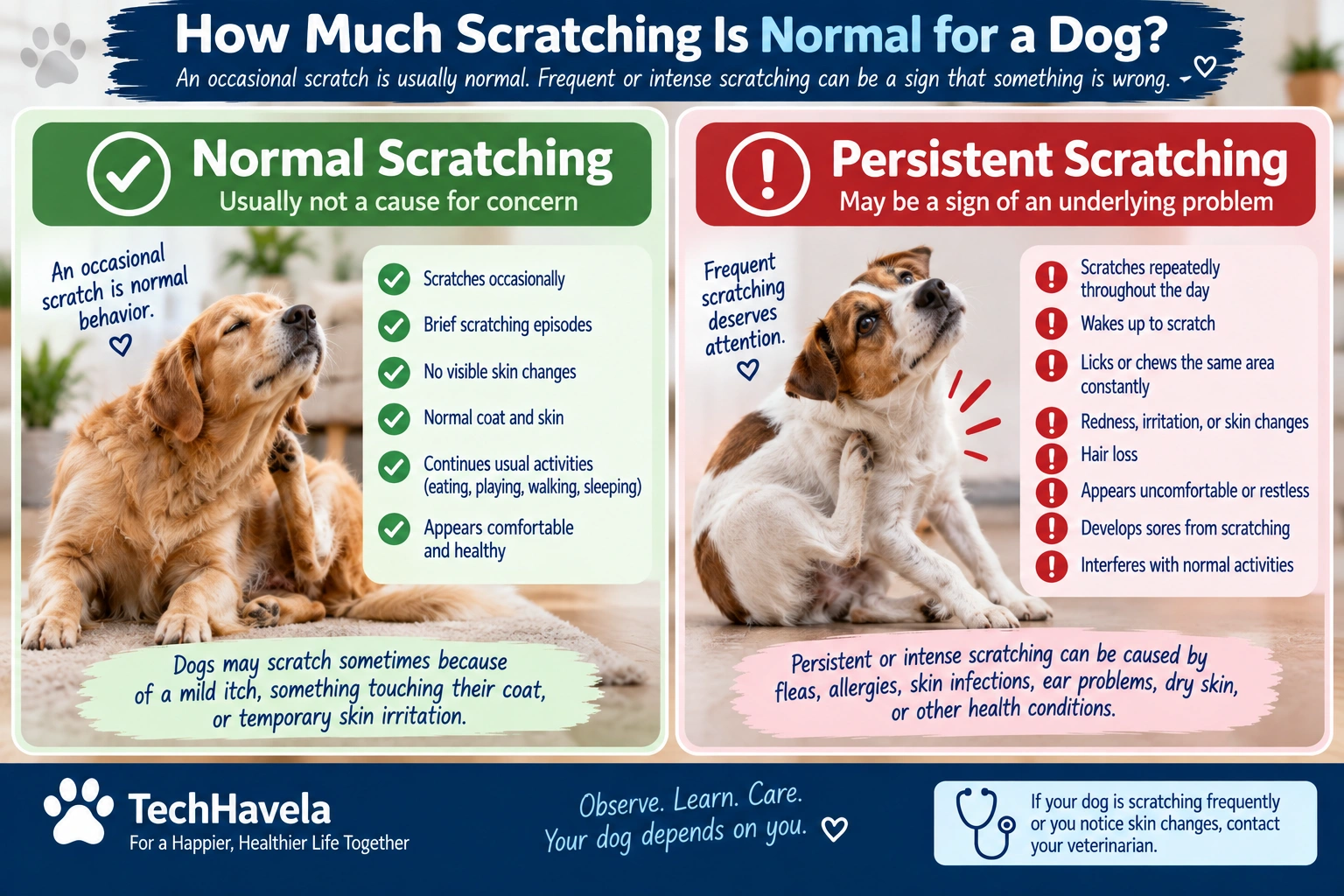
Pay more attention when your dog:
- Scratches repeatedly throughout the day
- Wakes up to scratch
- Licks or chews the same area constantly
- Develops redness or skin changes
- Starts losing hair
- Appears uncomfortable or restless
- Develops sores from repeated scratching
- Suddenly begins scratching much more than usual
The pattern matters more than a single episode.
7 Possible Reasons Your Dog Is Scratching So Much
1. Fleas and Other Parasites
Fleas are one possible cause of itching in dogs.
Some dogs may be particularly sensitive to flea bites, so even limited exposure can cause noticeable itching.
Dogs with flea-related irritation may scratch or chew areas around the:
- Lower back
- Tail base
- Hind legs
- Abdomen
Other external parasites can also cause itching and skin irritation.
Because some parasites can be difficult to identify without proper examination, persistent itching should not automatically be treated based only on what you can see at home.
A veterinarian can help determine whether parasites may be involved and recommend appropriate prevention or treatment.
2. Environmental Allergies
Dogs can develop allergic reactions to substances in their environment.
Possible environmental triggers can include:
- Pollen
- Grass
- Mold
- Dust mites
- Other environmental allergens
Environmental allergies may cause itching in areas such as the paws, face, ears, abdomen, and skin folds.
Some dogs may experience symptoms during particular seasons, while others may have problems throughout the year.
You may also notice frequent paw licking, ear irritation, or recurring skin problems.
The Merck Veterinary Manual notes that environmental allergies can cause itching in dogs, commonly affecting areas such as the feet, face, ears, and abdomen
3. Food-Related Allergies or Sensitivities
Food-related reactions can sometimes contribute to skin problems and itching.
Possible signs may include:
- Persistent itching
- Paw licking
- Ear problems
- Skin irritation
- Digestive changes in some dogs
It is difficult to identify a food allergy simply by guessing which ingredient might be responsible.
Changing foods repeatedly without veterinary guidance can also make it harder to understand what is causing the problem.
If a food-related allergy is suspected, your veterinarian can recommend an appropriate evaluation strategy.
4. Dry or Irritated Skin
Dry or irritated skin can make a dog uncomfortable and itchy.
Possible contributing factors may include:
- Dry environmental conditions
- Frequent bathing
- Irritating grooming products
- Skin sensitivity
- Environmental exposure
- Other underlying skin problems
You may notice:
- Flaky skin
- Dandruff
- Mild redness
- Increased scratching
- A dry-looking coat
Avoid using human shampoos, creams, or other skin products on your dog unless a veterinarian specifically recommends them.
Products designed for people may not be appropriate for canine skin.
5. Skin Infections
Skin infections can cause itching, redness, odor, discomfort, and changes in the coat or skin.
Bacteria and yeast are among the organisms that can be involved in canine skin problems.
Possible signs may include:
- Persistent scratching
- Red or irritated skin
- Unusual odor
- Hair loss
- Crusts or changes in skin texture
- Moist or irritated areas
- Increased licking or chewing
Because allergies, parasites, infections, and other conditions can produce similar signs, veterinary examination may be needed to determine what is happening.
6. Ear Problems
Sometimes what appears to be general scratching is actually related to ear discomfort.
“If your dog is also holding or tilting the head unusually, read our guide to Why Is My Dog Tilting His Head?”
A dog with an ear problem may:
- Scratch around one or both ears
- Shake the head frequently
- Rub the head against furniture
- Hold the head differently
- Develop an unusual ear odor
- Have visible ear discharge
- Appear uncomfortable when the ear area is touched
Ear problems can have several possible causes, including allergies, yeast, bacteria, moisture, or other conditions.
Avoid inserting objects or unapproved products into your dog’s ears.
If ear scratching or head shaking persists, veterinary evaluation is appropriate.
7. Other Health Problems
Not every case of persistent scratching is caused by fleas or allergies.
Other skin conditions and health problems can cause itching, hair loss, redness, or discomfort.
This is why it is helpful to look at the whole picture.
Consider whether your dog has also experienced changes in:
- Appetite
- Weight
- Energy
- Drinking
- Urination
- Digestion
- Behavior
- Coat quality
- Ear health
Persistent itching may require veterinary evaluation to identify the underlying cause.
Why Is My Dog Scratching but I Can’t Find Fleas?
Not seeing fleas does not automatically mean that parasites are impossible, but fleas are also far from the only explanation for itching.
Other possible causes include:
- Environmental allergies
- Food-related reactions
- Dry skin
- Skin infections
- Ear problems
- Other parasites
- Other dermatological conditions
Instead of assuming that fleas are responsible, observe where your dog scratches and whether the skin or coat has changed.
Your veterinarian may examine the skin and recommend additional testing when necessary.
Why Is My Dog Scratching and Licking Their Paws?
Dogs commonly lick their paws as part of normal grooming.
Repeated or intense paw licking, however, may indicate discomfort.
Possible causes can include environmental irritation, allergies, skin problems, something affecting the paw, or other sources of discomfort.
Look between the toes and around the paw for obvious changes such as:
- Redness
- Swelling
- Irritation
- Hair loss
- Unusual odor
- Persistent moisture
Avoid repeatedly applying creams, sprays, or home remedies without knowing the cause.
If paw licking continues or the paw appears painful or irritated, contact your veterinarian.
Why Is My Dog Scratching and Shaking Their Head?
Scratching around the ears combined with repeated head shaking can suggest that the ears are uncomfortable.
Possible causes can include:
- Ear irritation
- Allergies
- Yeast or bacterial problems
- Moisture in the ear
- Foreign material
- Other ear conditions
You may also notice odor, discharge, redness, or sensitivity around the ears.
Persistent head shaking deserves attention because repeated irritation can make the problem worse.
A veterinarian can examine the ear canal and determine what may be causing the symptoms.
Why Is My Dog Scratching at Night?
Itching can occur at any time, but nighttime scratching may seem more noticeable because the environment is quieter and your dog is resting.
What matters is whether scratching is interfering with normal sleep or happening repeatedly.
Ask yourself:
- Is my dog waking up to scratch?
- Is the scratching focused on one area?
- Is there paw licking or chewing?
- Are the ears involved?
- Is the skin red or irritated?
- Is hair loss developing?
- Is the problem becoming more frequent?
Persistent nighttime itching should be considered together with your dog’s daytime symptoms.
Why Is My Dog Scratching and Losing Hair?
Repeated scratching, licking, or chewing can damage the coat and contribute to hair loss.
However, hair loss may also be associated with the underlying condition causing the itching.
Possible causes can include:
- Parasites
- Allergies
- Skin infections
- Chronic irritation
- Hormonal or other health conditions
The pattern of hair loss can provide useful information.
Tell your veterinarian whether the hair loss is localized to one area or appears in multiple places and whether the skin underneath looks red, irritated, flaky, darkened, or otherwise different.
What Other Skin Changes Should I Watch For?
When your dog is scratching frequently, examine the coat and visible skin without aggressively rubbing or irritating the area.
Watch for:
- Redness
- Flaky or dry skin
- Hair loss
- Unusual odor
- Crusts
- Moist areas
- Changes in skin color
- Swelling
- Persistent licking
- Repeated chewing
- Ear odor or discharge
You can also note where the symptoms occur.
The paws, ears, abdomen, face, tail area, and skin folds can provide useful clues for a veterinarian.
When Should I Worry About My Dog Scratching So Much?
Occasional mild scratching may not be concerning, especially when your dog otherwise appears comfortable and healthy.
Persistent or worsening itching deserves more attention.
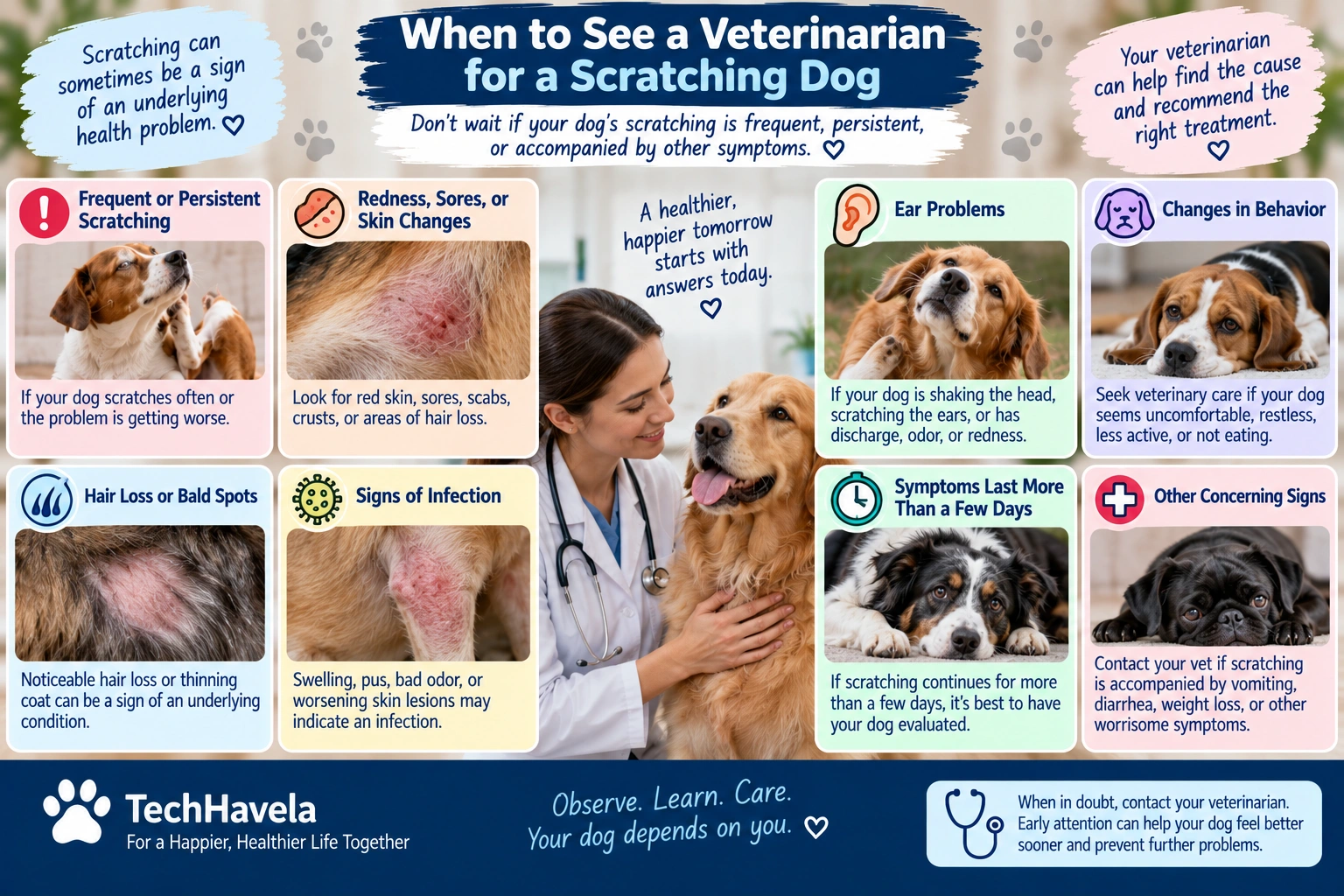
| You May Be Able to Monitor | Contact a Veterinarian |
|---|---|
| Occasional brief scratching | Persistent or intense scratching |
| No visible skin changes | Red, irritated, or damaged skin |
| Normal coat | Noticeable hair loss |
| Normal behavior and energy | Restlessness or obvious discomfort |
| No unusual odor | Strong skin or ear odor |
| No repeated licking or chewing | Constant licking or chewing |
| Scratching quickly returns to normal | Symptoms continue or worsen |
Contact your veterinarian sooner if your dog appears very uncomfortable, develops significant skin changes, or has other concerning symptoms.
Can I Stop My Dog From Scratching at Home?
The safest approach is to identify why your dog is itching rather than simply trying to suppress the scratching.
Different causes require different approaches.
A product intended for one condition may be ineffective or inappropriate for another.
Until you know the cause:
- Observe where your dog scratches
- Look for visible skin or coat changes
- Note whether the ears or paws are involved
- Keep track of when the itching began
- Consider recent environmental or diet changes
- Note any medications or grooming products recently introduced
Avoid giving human medications or applying human creams, essential oils, or other products without veterinary guidance.
If scratching is persistent, worsening, or causing skin damage, contact your veterinarian.
What Should I Tell My Veterinarian?
Good observations can make the veterinary visit more useful.
Be prepared to explain:
- When the scratching started
- Whether it began suddenly or gradually
- Which areas are affected
- How often your dog scratches
- Whether your dog licks or chews the skin
- Whether hair loss is present
- Whether the skin looks different
- Whether the ears are involved
- Whether diet recently changed
- Whether grooming products changed
- What parasite prevention your dog receives
- Whether other symptoms are present
Photos of visible skin changes taken over several days may also help show how the problem has changed.
Check Your Dog’s Other Symptoms
Scratching may occur alongside other changes that provide useful information.
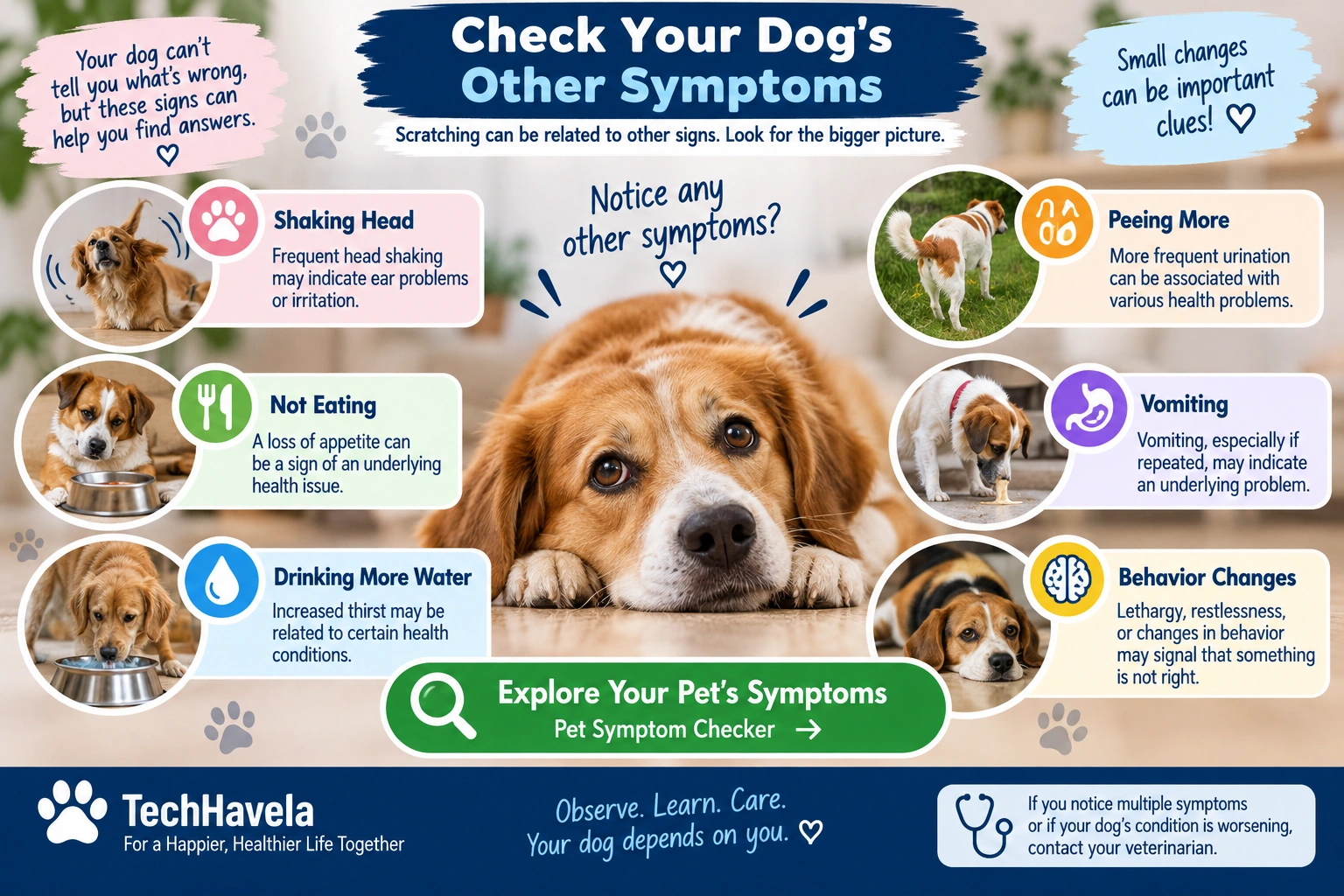
If your dog is shaking, consider whether the ears, skin, or another source of discomfort may be involved.
If your dog is not eating, watch for changes in energy and behavior.
If your dog is drinking much more water, consider whether other health changes are occurring.
If your dog is peeing more than usual, observe whether increased thirst is also present.
If your dog is vomiting, note whether digestive changes began around the same time as the skin problem.
Looking at several symptoms together can provide a clearer picture than focusing only on scratching.
Not Sure What Your Dog’s Symptoms Could Mean?
Persistent scratching can occur with allergies, parasites, skin problems, ear problems, and other health conditions.
The TechHavela Pet Symptom Checker can help you explore common symptoms in dogs and cats, possible causes, warning signs, and situations in which veterinary care may be needed.
→ Check Your Pet’s Symptoms
The Pet Symptom Checker provides educational information only. It cannot diagnose your pet or replace professional veterinary care.
Frequently Asked Questions
Why is my dog suddenly scratching so much?
A sudden increase in scratching can have several possible explanations, including parasites, environmental exposure, skin irritation, allergies, or other skin problems. Observe where your dog scratches and whether redness, hair loss, ear problems, or other symptoms appear.
Why is my dog itching if there are no fleas?
Fleas are only one possible cause of itching. Allergies, dry or irritated skin, infections, ear problems, other parasites, and additional health conditions may also cause scratching.
Can allergies make my dog scratch constantly?
Allergic skin problems can cause persistent itching in some dogs. Environmental and food-related allergies are among the possibilities, but veterinary evaluation may be needed to determine the underlying cause.
Why does my dog keep licking and chewing their paws?
Repeated paw licking or chewing may occur because of allergies, irritation, skin problems, something affecting the paw, or other discomfort. Persistent licking deserves attention, particularly when redness, swelling, odor, or hair loss develops.
Why is my dog scratching their ears?
Ear scratching can be associated with irritation, allergies, yeast or bacterial problems, moisture, foreign material, or other ear conditions. Head shaking, odor, discharge, or sensitivity are additional signs to watch for.
Should I use human anti-itch cream on my dog?
Do not apply human anti-itch creams or medications unless your veterinarian specifically recommends them. Products designed for people may be inappropriate for dogs or unsafe if licked.
When does dog scratching need veterinary attention?
Contact your veterinarian when scratching is persistent or intense, causes skin damage or hair loss, occurs with ear problems or unusual odor, or is accompanied by other concerning changes.
The Bottom Line
If you are asking “Why is my dog scratching so much?”, start by comparing the behavior with your dog’s normal scratching habits.
Fleas and other parasites, environmental allergies, food-related reactions, dry or irritated skin, infections, ear problems, and other health conditions are among the possible causes.
Pay attention to where your dog scratches, how frequently it happens, whether licking or chewing is also occurring, and whether you notice redness, hair loss, odor, ear problems, or other symptoms.
Avoid attempting to treat persistent itching with human medications or random home remedies.
If your dog’s scratching is persistent, worsening, causing skin damage, or accompanied by other concerning symptoms, contact your veterinarian.
→ Use the Pet Symptom Checker to explore your dog’s other symptoms and warning signs.

**Sidnir Vieira**
Founder of TechHavela
A passionate pet and tech content creator, helping dog owners across the U.S. make smarter decisions for their furry friends.