Quick answer: Why is my cat sleeping so much? Cats normally sleep a lot, often 12 to 16 hours a day according to VCA Animal Hospitals, so a sleepy cat is usually just a cat. What matters is change: a cat that suddenly sleeps more than usual, skips meals or play, or seems groggy when awake may not feel well. If you are unsure, talk to your veterinarian. To organize what you are noticing, you can start with our Pet Symptom Checker, which covers cats and dogs.

How Much Sleep Is Normal for a Cat?
VCA says cats typically get 12 to 16 hours of sleep a day. Kittens and senior cats often nap even more, and many cats rest more on cold or rainy days. The total number of hours is less useful than your own cat’s normal pattern, so a cat that has always been a champion napper is not automatically a concern.
Cats also sleep in different ways. If you are curious about what different positions may say about comfort, read our article on pet sleeping positions.

Signs That Sleeping Too Much May Be a Problem
VCA’s guide on whether a pet is sleeping too much suggests asking whether:
- sleep times have shifted from your cat’s usual routine;
- your cat no longer wakes for familiar triggers, such as a visitor, a treat bag or the can opener;
- sleep is causing your cat to skip normal activities such as meals or play;
- your cat seems groggy or listless when awake instead of alert and energetic;
- the sleep changes happen together with other symptoms, such as vomiting, coughing or hair loss.
VCA says changes like these should always be checked out. VCA’s guide to recognizing signs of illness in cats also lists sleeping more, playing less and restlessness among the behavior changes that can signal illness. Because cats hide illness and pain, a quiet cat that sleeps more may be showing the only clue you will get.

When to Call the Vet Right Away
Before trying anything at home, know the signs that should not wait. VCA’s urgent care guidance on lethargy says to seek emergency care if a pet is difficult to wake or cannot get up or walk when prompted. VCA also says a pet that is not acting like itself or is sleeping more than usual should have an urgent care appointment.
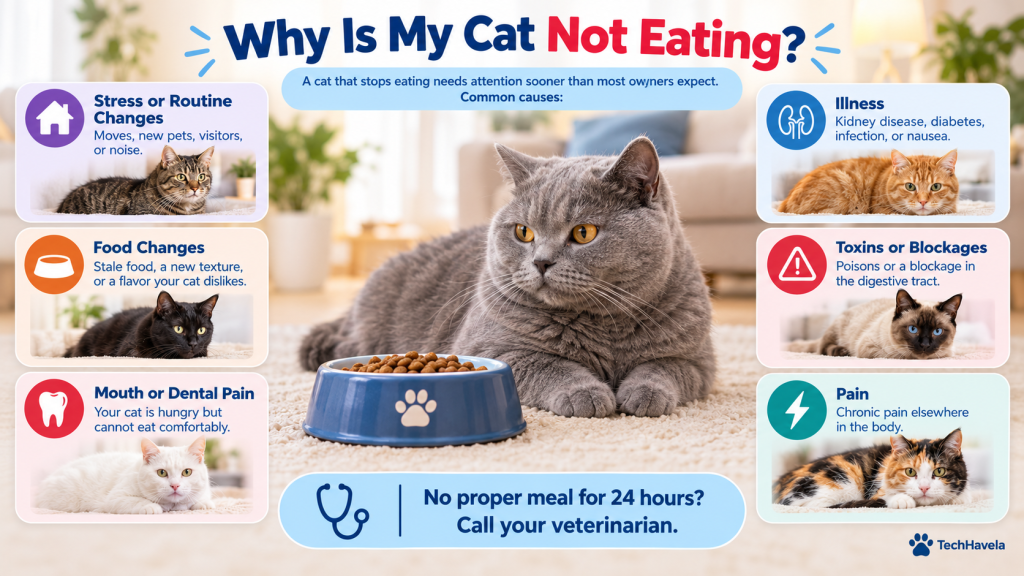
For cats, also contact your veterinarian promptly if the extra sleep comes with any of the signs VCA lists for immediate attention: no food for 24 hours or more, any difficulty breathing, straining in the litter box or very little urine, eye abnormalities, or signs of dehydration. If your cat has stopped eating, see our article on why a cat is not eating.
Possible Reasons a Cat Sleeps More
Only a veterinarian can find the cause, but it helps to know the range.
1. Illness or pain
Many illnesses make cats less active. VCA notes that arthritis may stop a cat from jumping onto furniture or counters, and a cat in pain may rest more. In an older cat, do not assume that slowing down is only aging; see our guide to senior cats for what to expect.
2. Digestive or other symptoms
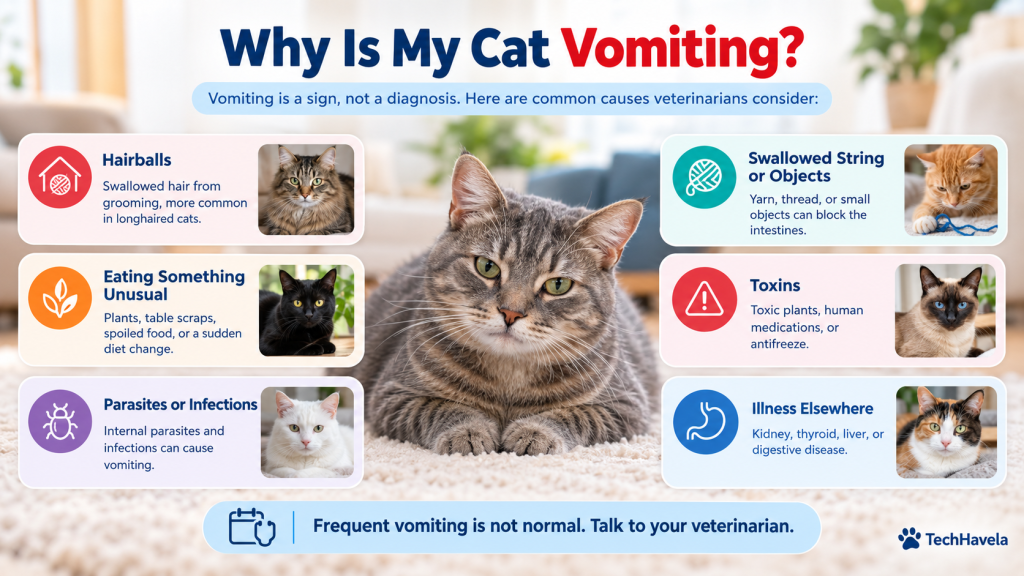
Sleepiness together with vomiting or diarrhea should be checked. See our articles on cat vomiting and cat diarrhea.
3. Weight loss or changes in appetite and thirst
If your cat is sleeping more and also losing weight, read why a cat is losing weight. Increased thirst is another clue; see why a cat drinks so much water.
4. Stress, boredom or a change at home
A cat that is bored or stressed may withdraw and sleep more. Make sure your cat has playtime, safe hiding spots and a routine. Our tips to keep an indoor cat entertained can help. If your cat is also avoiding contact, read why a cat is hiding.
5. Normal rest
If your cat wakes easily, eats well, plays, grooms and uses the litter box normally, extra naps are often just part of being a cat.

What You Can Do at Home
- Note when the change started and write down what else has changed. VCA advises sharing this timeline with your veterinarian.
- Check the basics: appetite, drinking, litter box habits, breathing, grooming and activity.
- Offer play and enrichment a few times a day and see whether your cat responds.
- Keep the environment calm and comfortable, with easy access to food, water, the litter box and a warm resting place.
Do not give any human medicine or supplement. If the change lasts more than a short while or you are worried, call your veterinarian.

What the Veterinarian May Do
Your veterinarian will ask about the timeline and your cat’s routine and will do a physical exam. Depending on the findings, they may suggest tests to look for an underlying cause. Bring your notes and, if you can, a short video of your cat at home.

How the Pet Symptom Checker Can Help
Our Pet Symptom Checker helps you look up symptoms in cats and dogs and see common reasons and warning signs. It does not diagnose and does not replace a veterinarian, but it can help you decide what to tell the clinic.
Frequently Asked Questions
How many hours does a cat sleep a day?
VCA says cats typically sleep 12 to 16 hours a day. What matters most is whether your cat’s pattern has changed.
Is it normal for an older cat to sleep more?
Some extra rest can be normal, but a clear change should still be discussed with your veterinarian, because pain and other treatable conditions can look like slowing down.
My cat sleeps all day but eats normally. Should I worry?
If your cat wakes easily, eats, plays and acts like itself, it is often fine. If anything seems different, ask your veterinarian.
Is a dog’s sleepiness the same as a cat’s?
The warning signs are similar, but dogs and cats have different normal patterns. If you also have a dog, read why a dog is sleeping so much.
Final Thoughts
A sleepy cat is usually a normal cat, but a sudden change in sleep, especially with other symptoms, deserves attention. When in doubt, have it checked.
This article is for general education only. It does not diagnose any condition and does not replace advice from your veterinarian.

Sidnir Vieira is the founder of TechHavela. A lifelong pet owner who had a dog for many years and now lives with a cat, he writes educational guides that help owners understand symptoms and know when to call the vet. TechHavela’s articles are based on veterinary sources and are not reviewed by a veterinarian.