Quick answer: Why is my cat drinking so much water? A cat that suddenly drinks much more than usual may be dealing with a medical problem. Veterinary sources list kidney disease, diabetes, an overactive thyroid, liver disease and several other conditions as possible causes, as well as some medications. Because increased thirst is often a sign of an underlying illness, it is worth a call to your veterinarian, not a wait-and-see approach. You can use our Pet Symptom Checker to organize what you are noticing before you call.

What Counts as Drinking Too Much?
Most owners notice the change before they can measure it: the water bowl empties faster, the cat visits it more often, or the litter box clumps are larger. The veterinary term for increased thirst is polydipsia. It often goes together with passing more urine.
A useful first step is to measure. VCA Animal Hospitals suggests measuring how much water your pet drinks over a 24-hour period and sharing that number with your vet, along with your cat’s medical history, any recent vomiting or weight changes, and every medication and supplement your cat takes. You can read more in VCA’s guide to testing for increased thirst and urination.
If several pets share the water, measuring is harder, so ask your vet how to track it. If you need ideas for tracking habits, our guide to the best smart litter boxes covers devices that track litter box visits.

Why Is My Cat Drinking So Much Water? Possible Causes
VCA lists the following possible causes for cats. Only a veterinary exam and tests can tell which one applies, so use this list to understand the possibilities, not to diagnose your cat.
- Kidney problems, including kidney failure and infection
- Hormone problems, such as an overactive thyroid, diabetes, diabetes insipidus, or overactive or underactive adrenal glands
- Liver disease
- High blood calcium
- Some cancers
- Electrolyte imbalances
- Certain medications
- Uterine infection in unspayed females
- Psychogenic thirst, a rare behavioral cause
VCA’s guide to recognizing signs of illness in cats adds a helpful pattern: cats with liver or kidney problems often eat less but drink more, and increased urine may point to kidney, liver or diabetes problems.

When to Call the Vet Right Away
Any clear increase in thirst deserves a veterinary call. Seek care promptly, or go to an emergency clinic, if you notice:
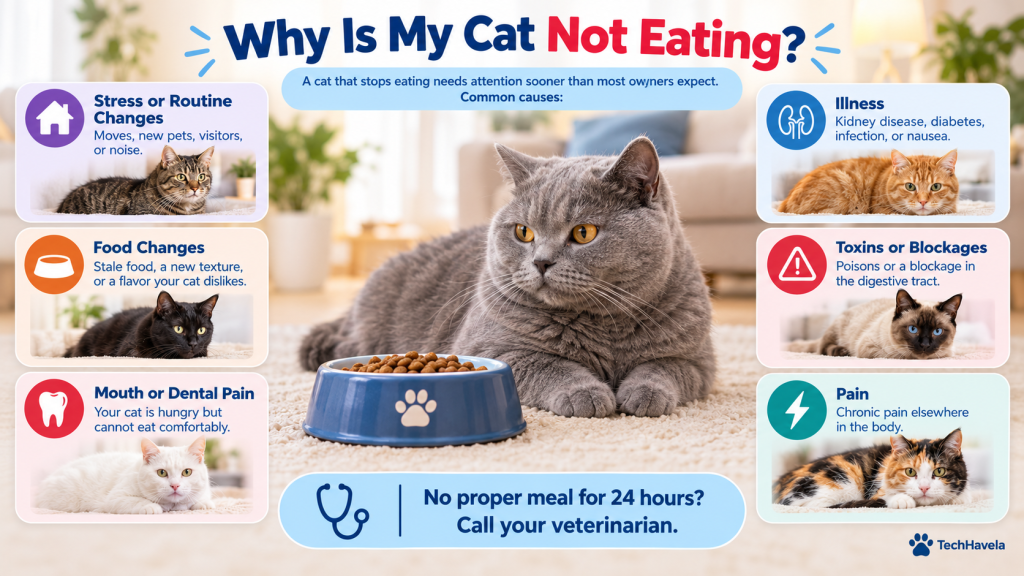
- Not eating properly for 24 hours, which VCA says calls for immediate veterinary attention. See why a cat may not be eating.
- Little or no urine, or straining in the litter box. VCA states that lack of urination is a life-threatening emergency.
- Breathing difficulty, such as shallow or open-mouth breathing.
- Vomiting, weakness, weight loss or hiding.
What You Can Do at Home
- Measure water intake for 24 hours, as VCA suggests, and write the number down.
- Do not limit water. A cat that is drinking more should have access to fresh water while you arrange a vet visit.
- Watch the litter box: how often your cat urinates, the size of the clumps and any straining.
- Write down your cat’s food and weight changes. If you are not sure what your cat is eating, our article on wet versus dry cat food explains the differences.
- List every medication and supplement, since certain medications can increase thirst.

What to Tell Your Veterinarian
- How much your cat drinks in 24 hours, and since when it increased
- Changes in appetite, weight, vomiting or energy
- Litter box changes
- All medications and supplements
- For unspayed females, recent heat cycles
Your vet will decide which tests are needed.

How the Pet Symptom Checker Can Help
The Pet Symptom Checker covers both cats and dogs. Select cat, add the signs you see, and read general information. It does not replace a veterinary exam. If you also have a dog, compare with why a dog may be drinking so much water.

Frequently Asked Questions
Is it normal for a cat to drink more in hot weather?
Weather alone is not a reliable explanation. A lasting or marked change is worth a call to your vet.
Does a cat that drinks a lot always have kidney disease?
No. Several conditions can cause increased thirst, which is why testing is needed.
Should I restrict my cat’s water?
No. Keep fresh water available and talk to your vet.
What should I measure?
VCA suggests measuring how much your cat drinks over 24 hours.
The Bottom Line
Drinking much more than usual is a sign to take seriously in cats. Measure intake, watch the litter box and call your veterinarian soon.
This content is educational and does not replace the advice of a veterinarian.

Sidnir Vieira is the founder of TechHavela. A lifelong pet owner who had a dog for many years and now lives with a cat, he writes educational guides that help owners understand symptoms and know when to call the vet. TechHavela’s articles are based on veterinary sources and are not reviewed by a veterinarian.