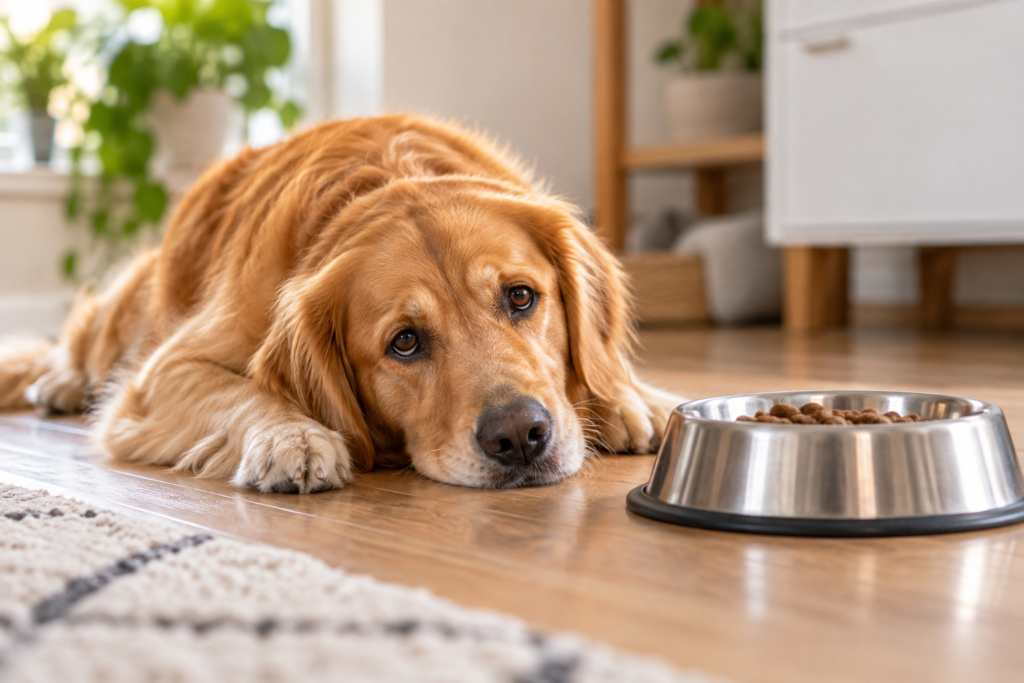
Why Is My Dog Sleeping So Much? When to Pay Attention
If you have recently noticed your dog spending more time curled up on the couch, napping throughout the afternoon, or seeming to sleep most of the day, you may be wondering: Why is my dog sleeping so much?
Dogs naturally sleep much more than people do. Many healthy adult dogs spend a large part of each day sleeping or resting, while puppies and senior dogs may need even more sleep.
In many cases, a dog that sleeps a lot is simply following a normal sleep pattern. Age, activity level, daily routine, environment, and individual personality can all influence how much time a dog spends asleep.
However, a noticeable change in your dog’s usual sleeping habits can sometimes be important—especially when increased sleep occurs with reduced appetite, weakness, breathing changes, vomiting, diarrhea, difficulty walking, or unusual behavior.
The most useful question is often not simply how many hours your dog sleeps, but whether their sleeping pattern has changed from what is normal for them.
You can also check your dog’s symptoms if you have noticed other changes along with increased sleeping.
How Much Sleep Is Normal for a Dog?
Dogs can spend a surprisingly large portion of their day asleep.
Most dogs sleep approximately 12–16 hours per day, although individual sleep needs vary according to age, breed, activity level, health, and lifestyle.
Puppies can sleep considerably longer. During periods of rapid growth and development, young puppies may sleep approximately 18–20 hours per day.
Senior dogs may also spend more time sleeping than younger adults.
Instead of concentrating on one exact number, pay attention to your dog’s usual routine.
A healthy adult dog that has always enjoyed long naps but wakes easily for meals, walks, playtime, and interaction may simply be a naturally good sleeper.
A dog that suddenly begins sleeping several hours more than usual and loses interest in normal activities deserves closer attention.
According to PetMD, most dogs sleep around 12–16 hours daily, with puppies and senior dogs often requiring additional rest.
Why Is My Dog Sleeping So Much?
There is no single explanation for increased sleeping in dogs.
Sometimes the reason is completely normal. Your dog may be recovering from an unusually active day, adjusting to a different routine, growing, aging, or simply taking advantage of a quiet afternoon.
In other situations, increased sleeping may occur because a dog does not feel well.
The key is to look at the entire picture.
Ask yourself:
Is your dog eating normally?
Are they drinking normally?
Do they still become excited about walks?
Do they respond normally when you call them?
Are they walking normally?
Are they interested in family members and favorite activities?
Has their sleeping pattern changed suddenly?
A dog that sleeps frequently but behaves normally when awake is very different from a dog that is difficult to wake, weak, withdrawn, or uninterested in activities they normally enjoy.
Common Reasons Dogs Sleep More
1. Normal Sleep and Rest
Sometimes there is nothing wrong at all.
Dogs do not usually sleep in one continuous period like humans. They often sleep overnight and then take several naps throughout the day.
A quiet household may also encourage more daytime sleeping.
If your dog wakes normally, eats well, moves comfortably, interacts with you, and maintains their normal personality, frequent naps may simply be part of their routine.
2. Age
Age has a major influence on sleep.
Puppies need large amounts of rest while their bodies and nervous systems develop.
The American Kennel Club notes that puppies commonly sleep around 18–20 hours per day.
Older dogs may also sleep more because they tire more easily and may have lower activity levels.
This means that increased sleeping can be normal at both ends of a dog’s life.
However, age should not automatically be used to explain every behavioral change.
If a senior dog suddenly begins sleeping substantially more than before, becomes confused, stops eating normally, develops mobility problems, or shows other changes, veterinary evaluation may be appropriate.
3. Increased Physical Activity
Think about what your dog did during the previous day or two.
A long hike, extended play session, swimming, training session, trip to the park, or unusually busy day may result in additional sleep afterward.
Temporary extra rest following increased activity is different from persistent lethargy.
Your dog should generally return to their usual energy pattern after recovering.
4. Changes in Routine
Dogs often adapt their activity to the household around them.
If family members are away during the day, the house becomes quieter, walks occur at different times, or your dog’s daily routine changes, their sleeping habits may change as well.
Recently adopted dogs may also sleep differently while adapting to their new environment.
Watch the overall behavior rather than the number of naps alone.
5. Boredom or Reduced Stimulation
A dog with little to do may spend more time resting.
Dogs benefit from appropriate physical activity, social interaction, sniffing, play, and mental stimulation.
The amount and type of activity needed vary greatly between individual dogs.
A dog sleeping because the house is quiet may quickly become alert when you pick up the leash or offer a favorite activity.
A dog experiencing true lethargy may remain unusually uninterested.

Dog Is Sleeping All Day — Is That Normal?
The phrase dog is sleeping all day can sound alarming, but the answer depends on what “all day” actually means and what happens when the dog is awake.
Dogs frequently alternate between sleeping, resting, observing their surroundings, eating, walking, and interacting with people.
A dog may appear to sleep nearly all day simply because you notice the naps more than the short periods of activity.
Consider how your dog responds when something interesting happens.
Does your dog get up when you prepare food?
Do they respond to the leash?
Do they greet familiar people?
Do they show interest in toys?
Do they willingly go outside?
If the answer is yes and everything else appears normal, frequent sleeping may simply reflect your dog’s natural routine.
On the other hand, if your dog previously followed you around the house and now remains in bed, or once became excited about walks but suddenly shows little interest, the change itself is important.
My Dog Is Sleeping More Than Usual
This is one of the most useful observations a dog owner can make.
Your dog’s normal behavior provides a personal baseline.
For example, suppose your dog normally sleeps through the morning but becomes active every afternoon. If they suddenly begin sleeping through the afternoon and evening as well, that change is worth monitoring.
Pay attention to when the change started and whether anything else changed at approximately the same time.
Useful observations include appetite, drinking, urination, bowel movements, walking, breathing, interactions, and interest in normal activities.
If your dog is also refusing food, see why your dog may not be eating.
Sleeping a Lot vs. Lethargy
Sleeping frequently and being lethargic are not necessarily the same thing.
A sleepy dog may simply be resting.
When something interesting happens, the dog usually wakes, responds normally, and participates.
Lethargy generally refers to an unusual reduction in energy or responsiveness.
A lethargic dog may appear reluctant to move, uninterested in normal activities, unusually weak, or simply unlike their normal self.
This distinction matters.
According to VCA Animal Hospitals, sleeping more than normal or showing a significant change in energy can warrant veterinary attention. A pet that is difficult to wake or unable to get up and walk when prompted requires more urgent evaluation.
Possible Medical Reasons a Dog May Sleep More
Increased sleeping is a nonspecific sign, meaning many different conditions can potentially affect energy levels.
It is not possible to determine the cause simply by counting the hours your dog sleeps.
Possible explanations may include pain or discomfort, infection or inflammation, metabolic or hormonal disorders, anemia, heart or respiratory problems, gastrointestinal illness, mobility problems, and other underlying conditions.
This does not mean a dog that takes long naps has one of these conditions.
What matters is whether increased sleep represents a meaningful change and whether other symptoms are present.
Pain or Discomfort
Dogs experiencing discomfort may become less active and spend more time lying down.
Some dogs show obvious signs of pain, while others become quieter.
Difficulty standing, stiffness, reluctance to climb stairs, avoiding jumping, or changes in walking can provide additional clues.
If mobility has also changed, read why your dog may be limping.
Illness or Infection
When the body is dealing with illness or inflammation, energy levels may decrease.
A dog may sleep more and simultaneously develop changes in appetite, digestion, temperature, behavior, or normal activity.
Because these signs can occur with many different conditions, persistent changes should be discussed with a veterinarian.
Metabolic or Hormonal Problems
Some metabolic and hormonal disorders can affect energy and activity.
However, excessive sleeping alone cannot identify a hormonal condition.
Veterinarians consider the dog’s history, physical examination, other symptoms, and sometimes laboratory testing before determining whether an underlying disorder is present.
Heart or Respiratory Problems
Reduced stamina can sometimes make a dog appear sleepier or less active.
Pay particular attention if reduced energy occurs with coughing, unusual breathing, exercise intolerance, weakness, or collapse.
If your dog’s breathing has changed, see why your dog may be breathing fast.

Why Is My Puppy Sleeping So Much?
Puppy owners are often surprised by how quickly a playful puppy can fall asleep.
This is usually normal.
Puppies are growing rapidly and processing enormous amounts of new information every day.
Play, training, exploration, social interaction, and physical development all require energy.
Young puppies may sleep 18–20 hours during a 24-hour period, according to the American Kennel Club.
Instead of worrying about frequent naps alone, observe how your puppy behaves while awake.
A puppy that wakes normally, eats, drinks, plays, explores, and interacts is very different from a puppy that is unusually weak, difficult to wake, or uninterested in food.
Why Is My Old Dog Sleeping So Much?
Senior dogs commonly sleep more than younger adult dogs.
Aging can reduce stamina, and older dogs may need longer recovery periods after exercise.
They may also prefer shorter periods of activity followed by more frequent naps.
However, do not assume every change is simply “old age.”
New changes in appetite, mobility, awareness, bathroom habits, breathing, or behavior deserve attention.
Senior dogs can also experience changes in their sleep-wake cycle.
Some older dogs may sleep more during the daytime while becoming restless or confused at night.
The most useful approach is to compare your senior dog’s current behavior with their own previous routine.

Why Does My Dog Sleep So Much During the Day?
Daytime sleeping is common in dogs.
Unlike most people, dogs tend to divide their sleep into multiple periods.
A dog may sleep overnight, wake for breakfast and a walk, nap through much of the morning, become active again later, and then take another afternoon nap.
Your household routine also matters.
If little happens while you are working or away from home, your dog may simply use that quiet period for sleeping.
The important question remains whether your dog behaves normally when awake.
Dog Sleeping a Lot and Not Eating
Increased sleeping becomes more concerning when accompanied by loss of appetite.
A dog may occasionally skip a meal without having a serious problem, but a meaningful combination of reduced appetite and reduced energy deserves attention.
Many medical and nonmedical problems can affect both appetite and energy, so these symptoms cannot identify one specific cause by themselves.
VCA notes that decreased appetite combined with listlessness can occur with many diseases and conditions and may require investigation to determine whether the cause is medical or nonmedical.
If both changes persist or your dog appears unwell, contact your veterinarian.
Dog Sleeping a Lot and Breathing Fast
Dogs can breathe somewhat differently while dreaming, and temporary changes during sleep are not necessarily abnormal.
However, persistent fast or difficult breathing—particularly while resting—deserves closer attention.
Look for other changes such as coughing, weakness, inability to get comfortable, reduced exercise tolerance, pale or abnormal-looking gums, or collapse.
Breathing difficulty can require prompt veterinary care.
Dog Sleeping More and Drinking More Water
Changes in sleep accompanied by noticeably increased thirst or urination are worth monitoring.
Several conditions can influence thirst, urination, and energy.
Rather than trying to diagnose the cause at home, record what you observe and discuss persistent changes with your veterinarian.
You can also read why your dog may be drinking so much water.
When Should I Pay Attention to Excessive Sleeping?
Pay closer attention when increased sleeping is new, sudden, persistent, or accompanied by other symptoms.
Changes that may warrant veterinary evaluation include reduced appetite, unusual weakness, difficulty standing or walking, vomiting or diarrhea, persistent coughing, breathing changes, significant behavior changes, confusion, pain, or loss of interest in activities your dog normally enjoys.
A dog that simply loves naps but immediately jumps up for dinner or a walk is different from a dog that no longer wants to get up.
That difference can be more informative than the total number of sleeping hours.
When Is Sleeping Too Much an Emergency?
Sleeping itself is generally not an emergency.
The concern is what accompanies it.
Seek prompt veterinary care if your dog is extremely difficult to wake, cannot stand or walk normally, has significant difficulty breathing, collapses, has a seizure, appears severely weak or disoriented, or develops another sudden and serious change.
Do not wait for a specific number of sleeping hours before responding to serious symptoms.

What Should I Track Before Calling the Veterinarian?
Simple observations can provide useful information.
Note approximately when the increased sleeping began and whether it happened suddenly or gradually.
Also pay attention to your dog’s appetite, water intake, urination, bowel movements, breathing, mobility, interest in walks, and interactions with family members.
Think about recent changes as well.
Was there unusually intense exercise?
Did your dog’s routine change?
Was there travel or boarding?
Has your senior dog gradually slowed down, or did the change occur suddenly?
These details can help your veterinarian understand what has changed.
What Will the Veterinarian Check?
The evaluation depends on your dog’s age, history, symptoms, and physical examination.
Your veterinarian may ask how long your dog has been sleeping more, whether appetite or thirst has changed, and whether you have noticed vomiting, diarrhea, coughing, pain, weakness, or changes in behavior.
A physical examination can help determine whether additional testing is appropriate.
Depending on the findings, a veterinarian may recommend diagnostic tests such as blood or urine testing or other investigations.
The goal is not to treat “sleeping too much” as a disease. It is to determine whether the change represents normal behavior or is connected to another problem.
Should I Wake My Dog If They Sleep a Lot?
A healthy dog following a normal sleep pattern generally does not need to be repeatedly awakened simply because they enjoy naps.
Sleep is important for physical and mental recovery.
Instead, focus on maintaining an appropriate daily routine that includes opportunities for exercise, bathroom breaks, mental stimulation, meals, and interaction.
If you are concerned because your dog is sleeping significantly more than usual, repeatedly waking them is not a substitute for determining why their behavior changed.
How Can I Tell Whether My Dog Is Just Tired?
Think about responsiveness.
A normally tired dog will usually become interested when something important happens.
They may wake when they hear the food container, see the leash, notice a family member arriving, or hear a favorite toy.
After resting, their usual personality and activity generally return.
A dog that remains unusually withdrawn, weak, difficult to motivate, or uninterested in favorite activities may be showing more than ordinary tiredness.
Frequently Asked Questions
Is it normal for my dog to sleep most of the day?
It can be. Dogs naturally sleep and rest for a substantial portion of the day. Age, activity level, routine, and individual differences influence sleep needs. A sudden change from your dog’s normal pattern is more important than frequent naps alone.
How many hours a day should a dog sleep?
Many adult dogs sleep approximately 12–16 hours in a 24-hour period. Puppies may sleep around 18–20 hours, while senior dogs often need additional rest. Individual patterns vary.
Why does my dog sleep so much when I am home?
Your dog may simply feel relaxed and safe, or your household routine may provide many opportunities to nap. If your dog behaves normally when awake, frequent sleeping alone is not necessarily concerning.
Why is my dog sleeping more than usual?
Changes in activity, routine, age, stress, recovery from exercise, discomfort, or illness can all affect sleep. If the change is persistent or accompanied by other symptoms, contact your veterinarian.
Do older dogs sleep more?
Yes. Senior dogs commonly spend more time sleeping and resting than younger adults. However, a sudden or significant change should not automatically be attributed to age.
Is my dog sleeping because they are bored?
Possibly. A dog with limited stimulation may spend more time resting. A bored but healthy dog will generally respond normally to walks, play, training, or other interesting activities.
Should I worry if my dog sleeps all day and does not eat?
The combination of increased sleeping and reduced appetite deserves more attention than sleeping alone. If your dog continues refusing food, appears weak, or develops other symptoms, contact your veterinarian.
How do I know if my dog is sleeping or lethargic?
A sleeping dog typically wakes and responds normally to interesting events. A lethargic dog may remain unusually inactive, weak, reluctant to move, or uninterested in activities they normally enjoy.
Bottom Line
If you are asking “Why is my dog sleeping so much?”, remember that dogs naturally spend much more time sleeping than humans.
Puppies, senior dogs, and dogs recovering from active days may sleep especially long hours.
The most important factor is your dog’s normal pattern.
A dog that has always been a champion napper, wakes easily, eats normally, enjoys walks, and behaves normally when awake may simply need a lot of rest.
A sudden or persistent increase in sleeping—especially when combined with appetite changes, weakness, breathing problems, difficulty walking, digestive symptoms, or unusual behavior—deserves closer attention.
When in doubt, observe the whole dog rather than the clock.

**Sidnir Vieira**
Founder of TechHavela
A passionate pet and tech content creator, helping dog owners across the U.S. make smarter decisions for their furry friends.