Quick answer: Why is my cat coughing? Coughing in cats is less common than in dogs, and it is often confused with bringing up a hairball. According to VCA Animal Hospitals, a true cough is a forceful exhale that produces no hairball, and it usually points to inflammation of the lower airways, such as bronchitis. Asthma, infections, allergies, parasites and inhaled irritants are other possibilities. A cat that coughs for more than a few days, or has any trouble breathing, needs a veterinarian. You can use our Pet Symptom Checker to organize what you are seeing before you call.

Is It a Cough, a Hairball or Vomiting?
Many owners think their cat is trying to bring up a hairball when it is actually coughing. VCA’s guide to coughing in cats describes a cough as a forceful exhale in which the cat crouches and extends its neck, with no hairball produced. Severe coughing can end in a retch, and the cat may bring up stomach contents such as bile.
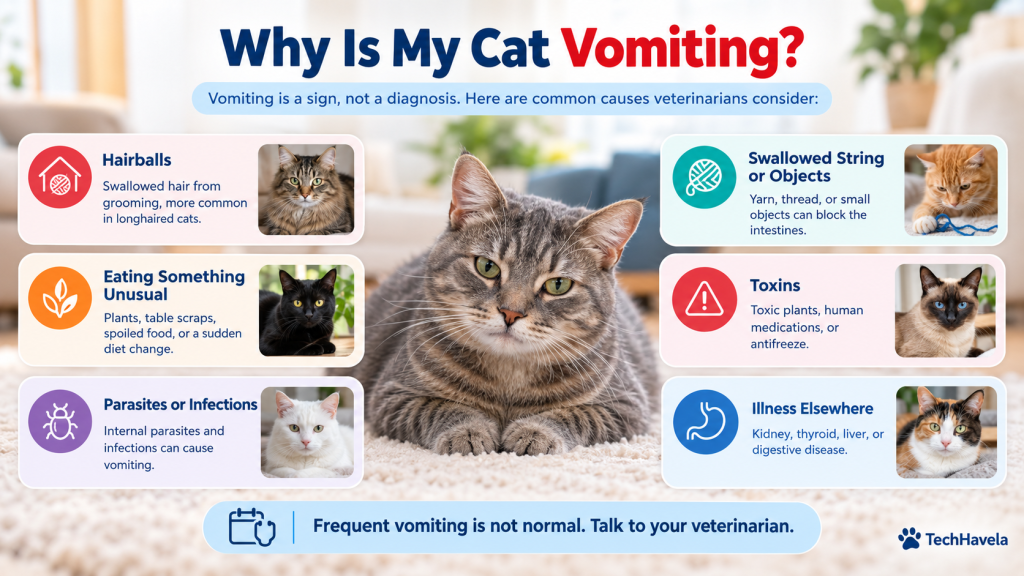
Cornell University’s Feline Health Center also notes that frequent hacking may have nothing to do with hairballs and could reflect another digestive or a respiratory problem such as asthma. Its article on the danger of hairballs explains why repeated unproductive retching should be seen by a veterinarian. If your cat is actually vomiting, see our guide on why a cat may be vomiting.
If you can safely do so, take a short video of the episode. It helps your vet tell a cough from retching or breathing trouble.

Why Is My Cat Coughing? Common Causes
VCA says coughing in cats usually reflects inflammation of the lower airways, especially some form of bronchitis. It lists these possible causes:
- Viral or bacterial infections, such as feline viral rhinotracheitis or Bordetella
- Heartworms or other parasitic worms
- Allergies
- Foreign material, such as inhaled grass, or irritation from inhaled liquids or gases
- Upper airway disease, where nasal discharge drains into the larynx and trachea
- Chest tumors, occasionally
Asthma and bronchitis
Cornell’s page on feline asthma says most clinicians and researchers agree that the condition is caused by an allergic reaction to inhaled allergens. VCA lists possible airway triggers such as cat litter dust, cigarette smoke, perfume, hairspray, mold, pollen and essential oil diffusers. Asthmatic cats often cough and may crouch with the head and neck extended. If your cat coughs, avoid smoke, sprays and strong scents around the cat until your vet advises otherwise.

When to Call the Vet Right Away
- Open-mouth breathing, or gums or tongue that look blue or gray. VCA says an asthma attack is an emergency.
- Trouble breathing of any kind. VCA lists shallow breathing, mouth breathing or panting as reasons for immediate attention. Our article on fast breathing in cats explains how to count breaths.
- A cough that lasts more than a few days, is severe, produces phlegm, or keeps coming back.
- Weight loss, or a cat that seems sick, lethargic or is not eating. Cornell advises that a cat that is lethargic and refuses food for more than a day or so should be seen without delay.
- Repeated unproductive retching.
What You Can Do at Home
- Stay calm and keep your cat calm. Stress can make breathing harder.
- Reduce irritants: smoke, perfume, hairspray, essential oil diffusers and dusty litter, which VCA lists as possible triggers.
- Record a video of the cough and note how often it happens.
- Do not give human cough medicine or other medication unless your vet tells you to.

What to Tell Your Veterinarian
VCA says the vet will ask when the problem started and how it has progressed, about changes in the home environment, and about any other signs of illness. Be ready to tell them:
- How long the cough has lasted and how often it occurs
- Whether it happens after exercise, at night or after eating
- Changes in the home: new litter, cleaning products, smoke, a new pet
- Appetite, weight and energy
- Parasite prevention and vaccinations

How the Pet Symptom Checker Can Help
The Pet Symptom Checker lets you choose cat, pick the signs you see and read general information about them. It does not replace a veterinary exam. For comparison, you can also read about why a dog may be coughing, though cat and dog coughs are not the same.

Frequently Asked Questions
Is my cat coughing up a hairball?
Possibly, but VCA notes that a cough produces no hairball. If nothing comes up, it may be a cough.
Is a cat cough an emergency?
It can be. Open-mouth breathing or blue or gray gums mean you should get emergency care.
Can litter dust cause coughing?
VCA lists cat litter dust among possible triggers for asthmatic cats.
How long can a cough go on before seeing a vet?
VCA advises a visit if the cough lasts more than a few days, is severe, or recurs often.
The Bottom Line
Coughing in cats should not be brushed off as a hairball. Watch the breathing, avoid irritants, record a video and call your veterinarian if the cough lasts or comes with any breathing trouble.
This content is educational and does not replace the advice of a veterinarian.

Sidnir Vieira is the founder of TechHavela. A lifelong pet owner who had a dog for many years and now lives with a cat, he writes educational guides that help owners understand symptoms and know when to call the vet. TechHavela’s articles are based on veterinary sources and are not reviewed by a veterinarian.