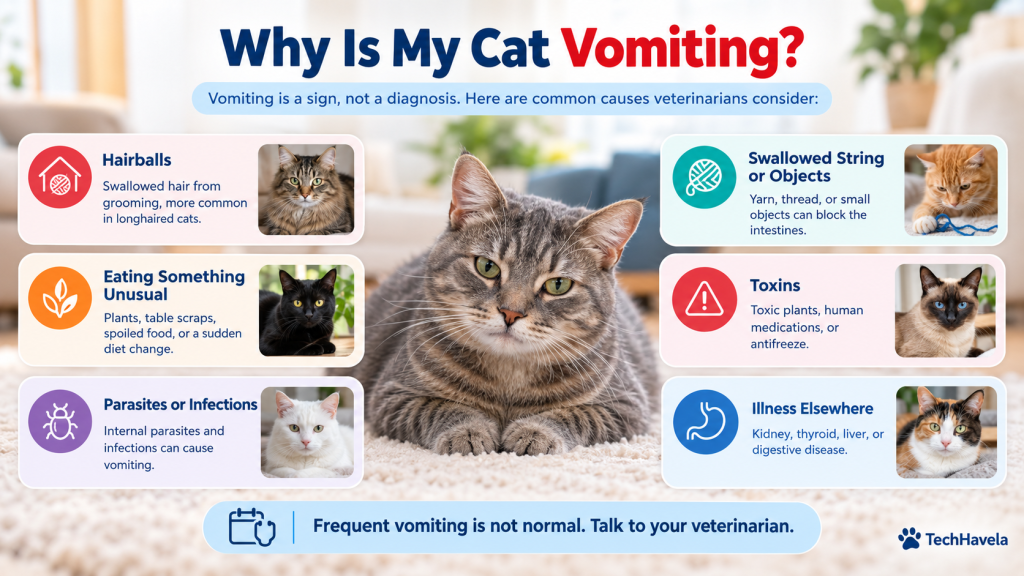
Quick answer: Why is my cat acting strange? Cats are good at hiding illness and pain, so a change in behavior is often the first and only sign that something is wrong. Sometimes the cause is stress or a change at home, but it can also be a medical problem. When a cat that is usually calm becomes clingy, irritable, restless, withdrawn or just “not herself,” it is worth paying attention and, if the change lasts, calling your veterinarian. To organize what you are noticing, you can start with our Pet Symptom Checker, which covers cats and dogs.

Why Behavior Changes Matter in Cats
According to VCA Animal Hospitals, cats have evolved to hide signs of illness and pain. In the early stages of an illness, the only thing an owner may notice is that the cat has become quiet and withdrawn, and a cat can be quite sick before anyone realizes something is wrong. VCA’s guide to recognizing signs of illness in cats recommends a veterinary exam as soon as possible whenever a cat does not seem right.
That is why you are the best detector. You know your cat’s usual routine. If you want a refresher on normal behavior, read our overview of cat behavior.

Behavior Changes That Can Signal a Problem
Withdrawal, hiding or clinginess
VCA lists withdrawal or hiding, clinginess, more attention-seeking and crankiness among the behavior changes that can go with illness, although it varies by personality. See our guide on why a cat is hiding.
Sleeping more, playing less or restlessness
VCA also lists sleeping more, playing less and restlessness. If sleep is the main change, read why a cat is sleeping so much. VCA notes that hyperthyroidism can cause hyperactivity, night restlessness and howling.
Changes in grooming
A cat that stops grooming can end up with a messy or greasy coat, mats or more dandruff. Over-grooming, on the other hand, can point to skin problems, parasites, pain or stress and may cause bald or raw patches. See why a cat is losing hair and why a cat is scratching.
Changes in appetite and thirst
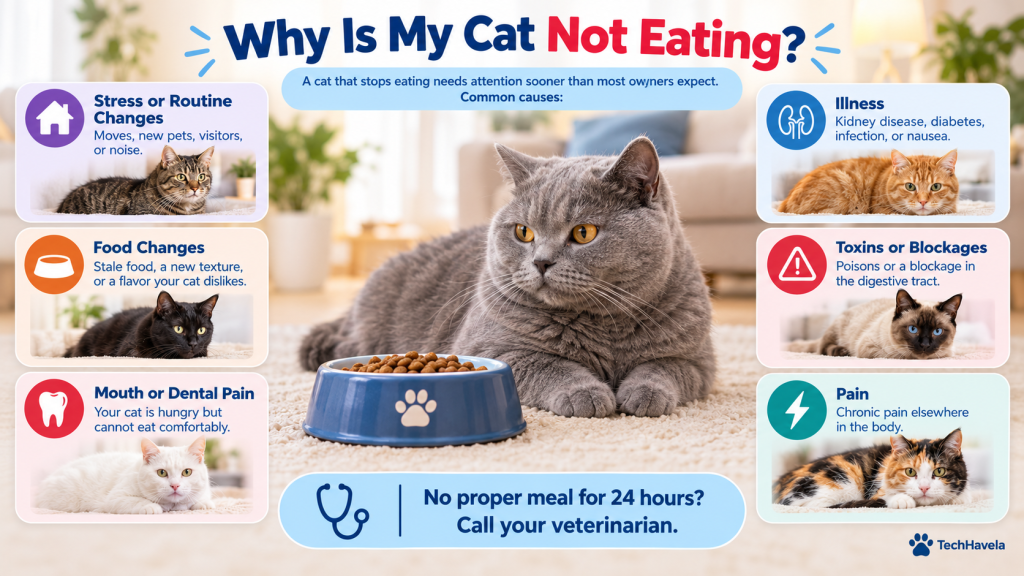
Eating or drinking more or less than usual can be a concern. VCA notes that dental disease can make a cat seem picky, and that kidney or liver problems often cause lost appetite with increased thirst. See why a cat is not eating and why a cat drinks so much water.
Changes in jumping or movement
Arthritis may stop a cat from jumping onto furniture or counters. A cat that avoids jumping is not being lazy; the movement may hurt.
Changes in the litter box
Straining, frequent trips, or excessive licking of the genital area can signal a urinary problem, and VCA says small, hard, dry stools are never normal. Our article on litter box secrets your cat hides gives more context.

When to Call the Vet Right Away
Do not wait if your cat shows any of the signs VCA lists for immediate veterinary attention:
- no food for 24 hours or more;
- very little or no urine, or straining in the litter box;
- any difficulty breathing, including mouth breathing or panting;
- eye abnormalities such as discharge, squinting, unequal pupils or a raised third eyelid;
- sudden inability to use the back legs;
- signs of dehydration, or pale, blue or yellow gums, skin or eyes.
VCA’s advice is simple: if in doubt, do not delay.
Possible Non-Medical Reasons
Not every change means illness. A new pet or person, a move, a change in routine, loud noises or boredom can all affect a cat. If this sounds like your home, see our article on mistakes that stress out cats and our tips to keep an indoor cat entertained. Still, stress is a reasonable explanation only when your cat is otherwise eating, drinking, breathing and using the litter box normally, and when the change fades once the trigger is gone.

What You Can Do at Home
- Write down what changed and when. Include appetite, thirst, litter box habits, grooming, activity and vocalizing.
- Look for a trigger such as a new pet, visitor, move or schedule change.
- Keep routines steady and provide quiet spots, food, water and the litter box in easy places.
- Record a short video of the behavior to show your veterinarian.
Do not give human medicines or supplements, and do not punish a cat for a behavior change. If the change lasts, schedule a visit.

What the Veterinarian May Do
The veterinarian will take a history and examine your cat. If a medical cause is found, treatment depends on the cause. If no medical cause is found, a behavior plan can help. Bring your notes and video.

How the Pet Symptom Checker Can Help
Our Pet Symptom Checker helps you look up symptoms in cats and dogs, see common reasons and spot warning signs. It does not diagnose and does not replace a veterinarian.
Frequently Asked Questions
Why is my cat suddenly clingy?
VCA lists clinginess among behavior changes that can go with illness, but it can also come from stress or a change at home. If it is new and lasts, ask your veterinarian.
My cat is acting strange but eating normally. Should I worry?
Watch for other changes and keep notes. If the change continues or you are unsure, have your cat checked, since cats hide signs of illness.
Can a change in routine make a cat act strange?
Yes. A new pet, visitor, move or change in schedule can affect a cat. If the behavior does not settle, look for medical causes.
Is it different in dogs?
The idea is similar. If you have a dog, read why a dog is acting strange all of a sudden.
Final Thoughts
When your cat does not seem right, trust your instinct. VCA advises that when a cat does not seem right, a veterinary exam as soon as possible is the safest choice.
This article is for general education only. It does not diagnose any condition and does not replace advice from your veterinarian.

Sidnir Vieira is the founder of TechHavela. A lifelong pet owner who had a dog for many years and now lives with a cat, he writes educational guides that help owners understand symptoms and know when to call the vet. TechHavela’s articles are based on veterinary sources and are not reviewed by a veterinarian.