Quick answer: Why is my cat losing weight? A cat that loses weight without being on a diet is telling you something, and the cause can range from a stressful change at home to a medical problem such as diabetes, hyperthyroidism, kidney disease, dental pain or a digestive disorder. Because cats hide illness well, weight loss can be one of the first signs you notice. If your cat is losing weight and you do not know why, a veterinary visit is the right next step. To organize what you are seeing before the appointment, you can start with our Pet Symptom Checker, which covers cats and dogs.

How Much Weight Loss Is a Concern?
According to VCA Animal Hospitals, weight loss is considered clinically significant when a cat loses more than 10% of its normal body weight and the change is not caused by fluid loss or dehydration. For a 10-pound cat, that means losing more than about one pound. VCA also notes that the faster a cat loses weight, the more concerning the change is.
That is why it helps to weigh your cat regularly. A small home scale works for many cats, and writing the number down once a month makes slow changes easier to spot. Our guide to vet check-ups for pets explains what a routine visit covers, including a weight check.

Common Reasons a Cat Loses Weight
VCA groups the causes into a few broad categories. Only a veterinarian can tell you which one applies to your cat, but knowing the list helps you describe what you have noticed.
1. Eating less than the body needs
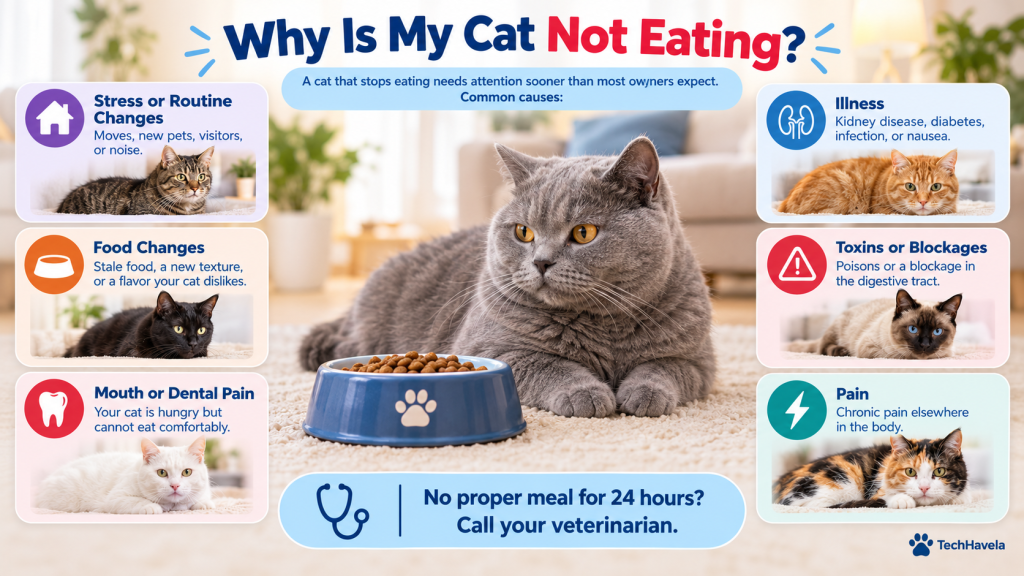
A cat may eat less because of low appetite, loss of smell, or trouble chewing or swallowing. Dental disease is a common reason a cat seems picky or avoids food, because the mouth hurts. If your cat has bad breath or drops food, see our guide on why a cat’s breath may smell bad. If your cat is refusing meals altogether, read why a cat is not eating.
2. Problems absorbing or digesting food
Conditions such as inflammatory bowel disease, gastrointestinal cancer, severe intestinal parasites and exocrine pancreatic insufficiency can keep nutrients from being absorbed even when a cat eats normally.
3. Losing nutrients or fluid
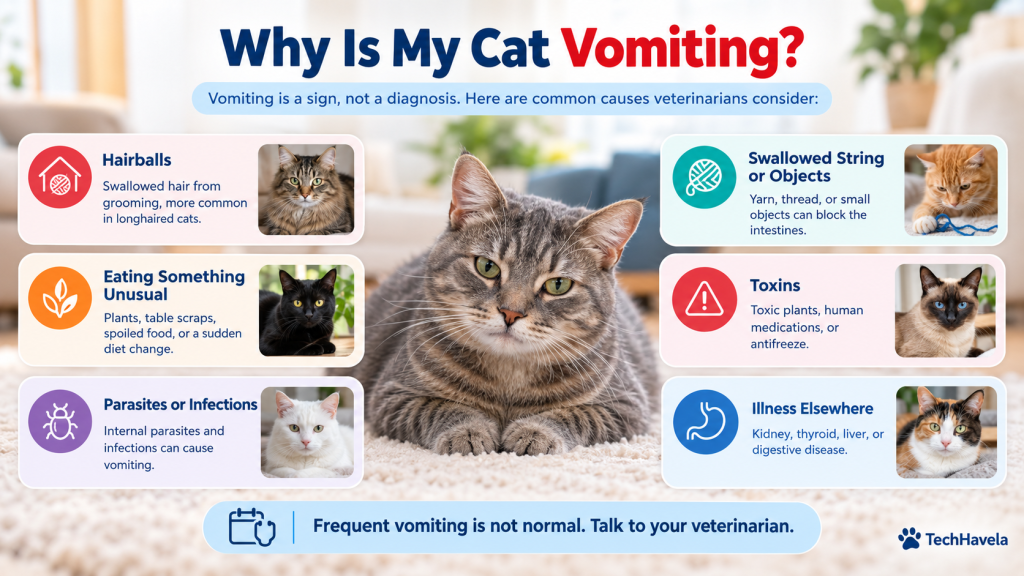
Prolonged vomiting, diarrhea or very frequent urination can cause weight loss. See our articles on cat vomiting and cat diarrhea for warning signs.
4. Metabolic and hormonal disease
VCA lists diabetes, hyperthyroidism and cancer among the metabolic causes. In many of these cats the appetite is normal or even increased while the body weight goes down, which is why weight loss in a cat that is still eating well should not be ignored. Extra thirst is another clue; our article on why a cat drinks so much water covers it.
5. Higher energy needs
Fever, pregnancy or nursing, prolonged cold exposure and hypermetabolism from an underlying illness can all increase energy needs.
6. Stress and changes at home
VCA notes that changes in diet, environment or stress, including a new pet in the home, can cause weight loss, but this loss is usually brief and minor. If your cat is otherwise eating, drinking and using the litter box normally, review our list of mistakes that stress out cats.

When to Call the Vet Right Away
Before trying anything at home, know which signs should not wait. VCA’s guide to recognizing signs of illness in cats says to seek immediate veterinary attention if a cat:
- has not eaten for 24 hours or more, because cats that stop eating risk fatty liver disease;
- is producing very little or no urine, or is straining in the litter box;
- has any difficulty breathing;
- has eye abnormalities such as discharge, squinting or unequal pupils;
- shows signs of dehydration, such as skin that stays tented when gently pinched.
Also call your veterinarian soon if weight loss comes with vomiting, diarrhea, changes in drinking or urination, trouble chewing or swallowing, fever or unusual tiredness. These are the changes VCA recommends reporting. Do not assume that weight loss in an older cat is just aging; Cornell’s Feline Health Center stresses that changes in a senior cat should not be written off as old age.

What You Can Do at Home While You Arrange a Visit
- Weigh your cat and note the date and the number.
- Keep a short diary of appetite, thirst, vomiting, stool quality and energy. A few days of notes make the vet visit more useful.
- Do not change food suddenly or start supplements without asking your veterinarian.
- Take a photo of your cat’s body from above and the side so changes are easier to compare later.
- Keep other pets from competing for the food bowl so you can tell how much your cat is really eating.
Avoid giving any human medication. Never start a weight-gain plan on your own before the cause is known.

What Your Veterinarian May Do
According to VCA, the veterinarian will take a thorough history and do a nose-to-tail physical exam. Further testing may include blood and urine tests, X-rays, blood pressure measurement and sometimes an abdominal ultrasound. Treatment depends on the cause and may involve diet changes, medication or other therapies. The outlook ranges from good to poor, depending on the diagnosis, which is another reason early evaluation matters.
Bring your notes, a list of everything your cat eats, and information about parasite prevention and vaccines. If your cat has other symptoms such as scratching or hair loss, mention them too; see why a cat is losing hair for how to describe those changes.

How the Pet Symptom Checker Can Help
Our free Pet Symptom Checker lets you look up symptoms in cats and dogs, see common reasons and learn which signs call for faster action. It does not diagnose and does not replace a veterinarian, but it can help you organize what you are seeing so you can explain it clearly at the clinic.
Frequently Asked Questions
Is it normal for an older cat to lose weight?
Not as a rule. Weight loss in a senior cat can come from treatable conditions, so it deserves a veterinary check rather than being blamed on age.
My cat is losing weight but eating normally. Should I worry?
Yes, it is worth a visit. VCA lists conditions such as diabetes and hyperthyroidism among the causes of weight loss, and these can happen with a normal or increased appetite.
Can stress make a cat lose weight?
It can, but VCA says weight loss from stress or a change in diet or environment is usually brief and minor. If the loss continues, look for a medical cause.
How often should I weigh my cat?
Many veterinary sources suggest weighing your cat about once a month so you can notice gradual changes early.
Final Thoughts
Weight loss is a symptom, not a diagnosis. The sooner the cause is found, the more options your veterinarian has. For more on spotting early signs, see our guide on why a cat is hiding, and keep your cat’s checkups up to date.
This article is for general education only. It does not diagnose any condition and does not replace advice from your veterinarian. If you are worried about your cat, contact a veterinary clinic.

Sidnir Vieira is the founder of TechHavela. A lifelong pet owner who had a dog for many years and now lives with a cat, he writes educational guides that help owners understand symptoms and know when to call the vet. TechHavela’s articles are based on veterinary sources and are not reviewed by a veterinarian.