Quick answer: Why is my cat losing hair? Hair loss in cats, called alopecia, has many possible causes. The Merck Veterinary Manual says itch or pain from allergies, parasites or skin infections is a common trigger, and that the most common cause of symmetric hair loss is flea allergy dermatitis. Stress-related overgrooming, hormone problems and nutrition are other possibilities. Because the cause can’t be seen from the coat alone, a veterinary exam is the way to find out. You can use our Pet Symptom Checker to organize what you notice before you call.

What Hair Loss Can Look Like
Hair loss in cats can appear as thin patches, bald spots, a thinning belly or inner legs, or a coat that looks ragged. Sometimes you will not see your cat licking at all, because cats often hide itching, as the Merck manual notes. That makes it important to look at the skin too: redness, scaling, thickening, a change in skin color, scabs or discharge.
Merck’s cat owner guide to hair loss (alopecia) in cats groups the causes into inflammatory, friction-related, non-inflammatory and congenital types.

Why Is My Cat Losing Hair? Common Causes
1. Itch from fleas, allergies or other skin problems
Merck says itch or pain from allergies, parasites or skin infections is a common trigger for hair loss. The most common cause of symmetric hair loss, which it calls feline acquired symmetric alopecia, is flea allergy dermatitis. Our guide on why a cat may be scratching goes into the itch side of this.
2. Infections
Bacterial, fungal or parasitic infections of the skin can cause hair loss, according to Merck. A vet can check with skin smears, cultures, flea combing and skin scrapes.
3. Overgrooming from stress
Merck notes that excessive grooming, usually from stress, can cause hair loss. If you suspect stress, read about mistakes that stress out cats and about cat behavior. Keep in mind that itch or pain can also drive overgrooming, so stress should not be assumed without an exam.
4. Hormonal imbalances and nutrition
Non-inflammatory causes include nutritional deficiencies, especially protein, and hormonal imbalances. If you are reviewing your cat’s food, see wet versus dry cat food and ingredients to avoid.
5. Friction
A poorly fitted collar or harness can cause hair loss in one spot, per Merck.
6. Other causes
Merck also lists hair loss after respiratory infections, burns, skin tumors (less common) and hair loss present from birth.

When to Call the Vet Right Away
Hair loss is not usually an emergency by itself, but see a vet promptly if you notice:
- Red, inflamed, oozing or scabbed skin, which can point to infection. Merck says some causes can lead to secondary problems such as infection or discharge.
- Hair loss that is spreading quickly or shows scaling and skin thickening.
- Constant licking or chewing that does not stop.
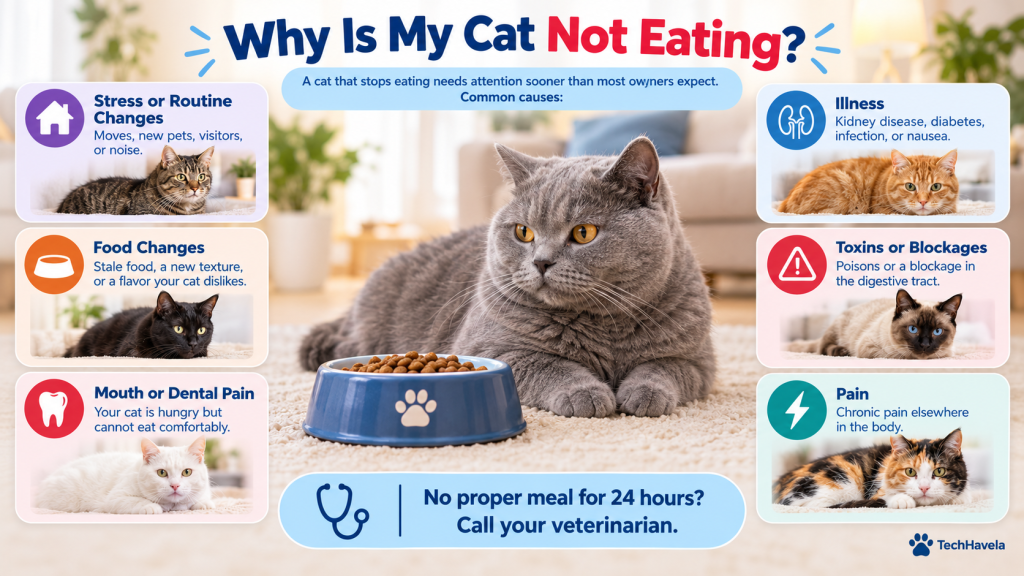
- Signs of wider illness, such as not eating, hiding, weight loss or a change in drinking. See why a cat may not be eating.
What You Can Do at Home
- Look closely. Part the fur and check the skin, and the base of the tail and neck.
- Take photos over a few days to show changes.
- Check the collar fit, if your cat wears one.
- Do not use flea products meant for dogs or home remedies. Ask your vet which flea control is safe for cats.
- Note stressors: a move, a new pet, changes in routine.

How a Vet Finds the Cause
Merck describes the steps a vet may take: a detailed history and physical exam, skin smears and cultures, flea combing and skin scrapes, a skin biopsy if needed, and blood and urine tests if a hormonal problem is suspected. For cats without obvious fleas, a trial of flea control may be recommended.
What to Tell Your Veterinarian
- When you first noticed the hair loss and where it is
- Itching, licking or chewing
- Flea control history and other pets in the home
- Diet changes and treats
- Any stress, new pet or move
- All medications and supplements

How the Pet Symptom Checker Can Help
The Pet Symptom Checker covers cats and dogs. Filter by cat, add the signs you see and read general information. It does not replace an exam. If you also have a dog, see why a dog may be losing hair.

Frequently Asked Questions
Is hair loss in cats normal?
Normal shedding is not the same as bald patches or thinning. Patches deserve a vet visit.
Can stress cause hair loss?
Yes. Merck says excessive grooming, usually from stress, can cause it. But itch and pain can also cause overgrooming.
What is the most common cause?
For symmetric hair loss, Merck says flea allergy dermatitis is the most common cause.
Will my indoor cat get fleas?
It can happen. Ask your vet about flea control.
The Bottom Line
Cat hair loss has many causes, from fleas and allergies to stress and hormones. Look at the skin, take photos and ask your veterinarian to find the cause.
This content is educational and does not replace the advice of a veterinarian.

Sidnir Vieira is the founder of TechHavela. A lifelong pet owner who had a dog for many years and now lives with a cat, he writes educational guides that help owners understand symptoms and know when to call the vet. TechHavela’s articles are based on veterinary sources and are not reviewed by a veterinarian.