Smelly Dog Ears: Common Causes and Warning Signs
Smelly dog ears are more than an unpleasant nuisance. A noticeable change in ear odor can sometimes occur along with inflammation, excess wax, moisture, yeast or bacterial overgrowth, allergies, or another ear problem.
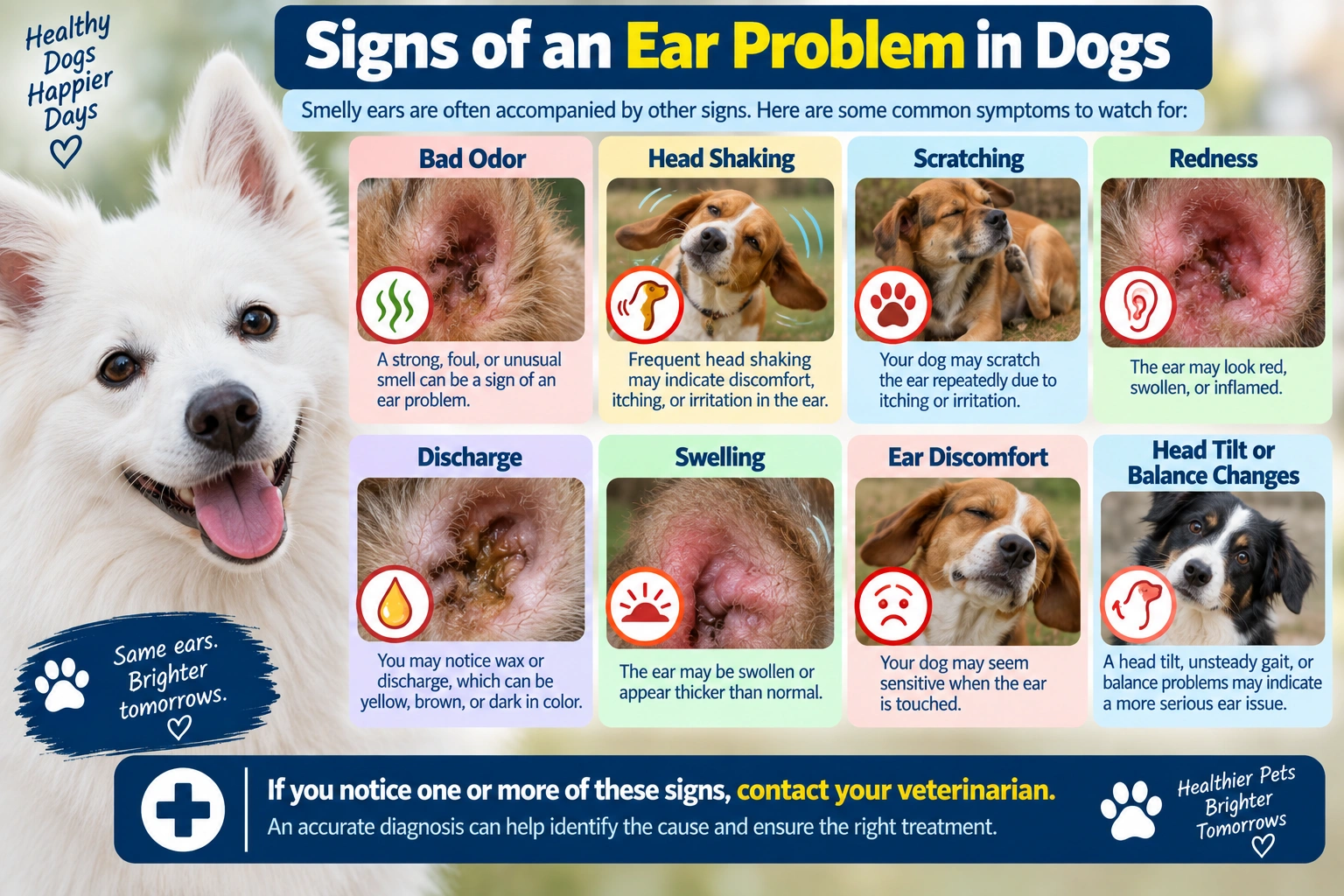
You may also notice your dog scratching an ear, shaking the head, rubbing the side of the face, or developing redness or discharge inside the ear.
A bad smell alone cannot tell you exactly what is causing the problem. The appearance of the ear, the type of discharge, whether one or both ears are affected, and other symptoms can provide useful clues.
If your dog has several symptoms and you are unsure what they may mean, you can also use our Pet Symptom Checker.
Is It Normal for a Dog’s Ears to Smell?
A dog’s ears may have a mild natural scent, but a strong, foul, sour, or noticeably different odor deserves attention, particularly when it develops together with other ear changes.
According to the Merck Veterinary Manual, signs of otitis externa can include foul odor, head shaking, scratching, redness, swelling, discharge, pain, and itching. One or both ears may be affected.
Pay attention to whether the smell is new, getting stronger, or accompanied by visible changes.
Why Do My Dog’s Ears Stink?
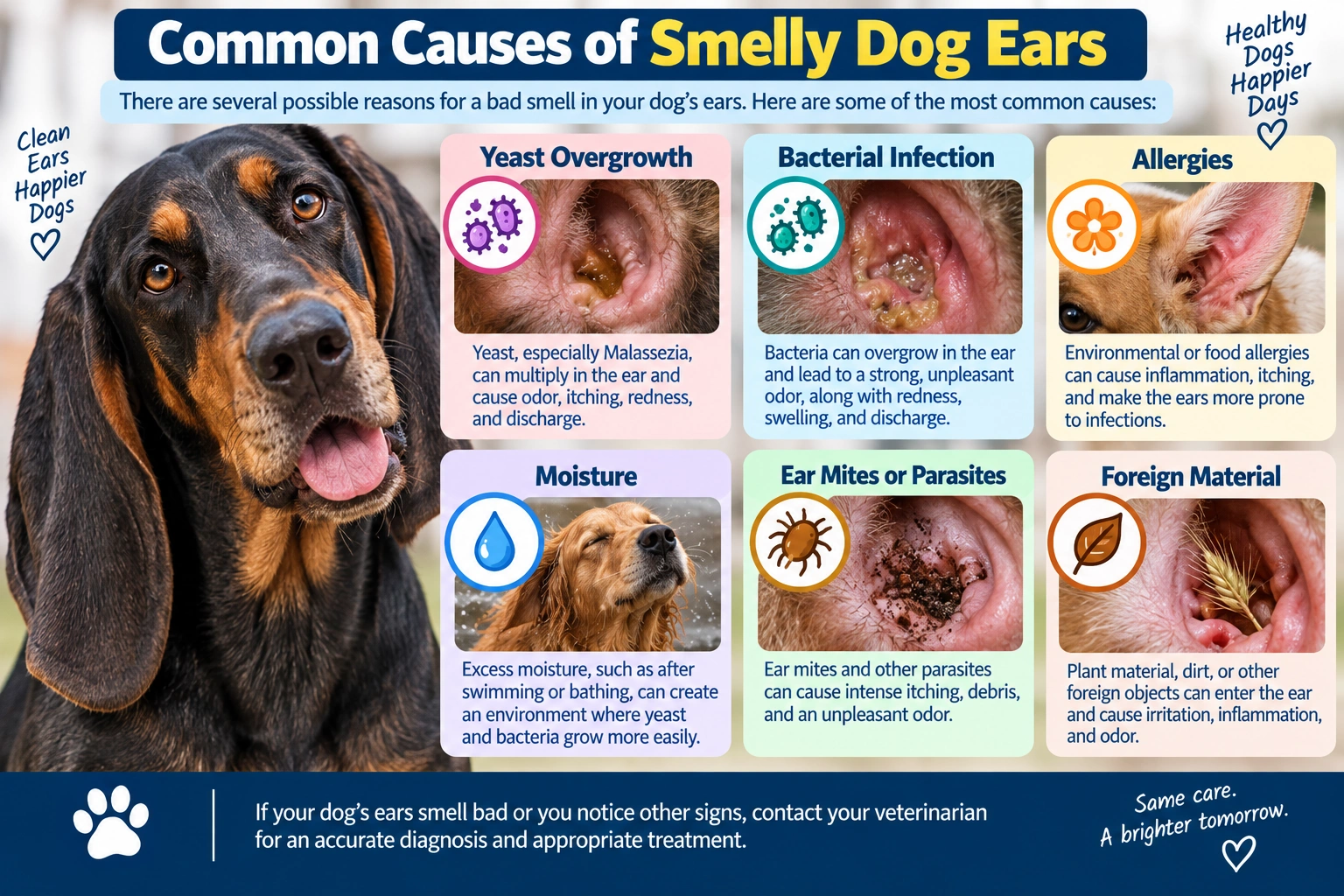
There are several possible reasons for unpleasant ear odor in dogs.
Common possibilities include:
- Otitis externa
- Yeast overgrowth
- Bacterial infection
- Allergies
- Excess moisture
- Ear mites or other parasites
- Foreign material inside the ear canal
- Excess wax or discharge
- Underlying skin disease
These possibilities can overlap. For example, allergies can contribute to inflammation that changes the environment inside the ear, making secondary yeast or bacterial problems more likely.
That is why treating odor alone does not necessarily address the underlying cause.
1. Otitis Externa
Otitis externa means inflammation of the external ear canal and is a common ear disorder in dogs.
The condition can make an ear itchy, painful, red, swollen, or smelly. Discharge may also develop, and dogs frequently shake their heads or scratch their ears.
Possible contributing factors include parasites, foreign objects, allergies, bacteria, yeast, and problems involving the middle ear.
Because several different problems can produce similar symptoms, veterinary examination is important when signs persist or become more pronounced.
2. Yeast Overgrowth
Yeast can normally be present in small numbers in a dog’s ear.
Problems can develop when conditions inside the ear allow yeast populations to increase. The Merck Veterinary Manual notes that Malassezia yeast may be present in low numbers in healthy ears but can multiply in dogs with otitis externa.
An affected dog may have odor, itching, redness, discharge, or head shaking.
It is tempting to identify a yeast problem based solely on a particular smell, but odor by itself cannot reliably establish whether yeast is responsible.
A veterinarian can examine material from the ear under a microscope to help identify what is present.
3. Bacterial Ear Infections
Bacteria are another possible contributor to smelly, inflamed ears.
As with yeast, some microorganisms can be present in low numbers without causing disease. Changes in the ear environment can allow problematic overgrowth.
Bacterial otitis can be associated with discharge, redness, pain, inflammation, and unpleasant odor. Some bacterial infections can produce a particularly strong odor.
Determining what is actually happening inside the ear is important because different ear conditions may require different treatment.
4. Allergies
Allergies can play an important role in recurring ear problems.
Environmental or food allergies can affect the skin of the ear and external ear canal, producing itching and redness. Allergic inflammation can also predispose dogs to secondary bacterial or yeast otitis externa.
A dog with allergies may have problems beyond the ears, including itchy skin elsewhere on the body.
If scratching is also a major problem, read:
Why Is My Dog Scratching So Much?
5. Moisture in the Ear
Moisture can change the environment inside a dog’s ear and contribute to ear problems.
This may be particularly relevant after swimming or bathing or in dogs whose ear anatomy makes ventilation more difficult.
However, a smelly ear after swimming should not automatically be assumed to be a simple moisture problem.
If odor persists or your dog begins scratching, shaking the head, or developing redness or discharge, an ear problem may need veterinary evaluation.
6. Ear Mites and Other Parasites
Parasites are another possible cause of inflammation of the external ear canal.
Ear mites can cause significant itching and debris in the ear. Dogs may scratch intensely or shake their heads.
Parasites are only one possible explanation, however, so seeing dark material inside an ear does not by itself confirm ear mites.
Veterinary examination can help distinguish parasites from yeast, bacterial problems, wax, or other causes.
7. Something Stuck in the Ear
Foreign material can sometimes enter a dog’s ear canal and cause sudden irritation and inflammation.
Plant material and other debris are possible examples.
A dog may suddenly begin shaking the head, scratching one ear, holding the head differently, or showing signs of discomfort.
Do not insert tweezers, cotton swabs, or other objects deep into the ear canal in an attempt to retrieve something you cannot clearly and safely reach.
Veterinary examination allows the ear canal and eardrum to be assessed with appropriate equipment.
Why Does My Dog Have Smelly Ears and Keep Shaking His Head?
Head shaking is an important symptom when it appears together with ear odor.
Dogs may shake their heads because an ear is itchy, painful, inflamed, or irritated by discharge or foreign material.
The Merck Veterinary Manual identifies head shaking among the common signs of otitis externa.
Persistent head shaking deserves attention because it indicates that something is bothering your dog.
Smelly Dog Ears and Head Tilt
A head tilt together with signs of an ear problem deserves particular attention.
Problems involving the middle or inner ear can produce signs beyond odor and scratching. Inner ear inflammation can affect balance and may cause a head tilt, difficulty walking, or abnormal eye movements.
If your dog is tilting the head, our detailed guide explains several possible reasons:
Why Is My Dog Tilting His Head?
A persistent head tilt accompanied by ear symptoms, balance problems, difficulty walking, or other neurological changes should be evaluated by a veterinarian.
Why Does My Dog’s Ear Smell Bad and Have Brown Discharge?
Ear discharge can vary in color, consistency, and amount.
Brown material may represent wax, inflammatory debris, or material associated with an ear disorder. Color alone does not identify the underlying cause.
VCA Animal Hospitals notes that dogs with ear infections may have red and inflamed ear canals, bad odor, and black or yellowish discharge.
If discharge is increasing, foul-smelling, or associated with itching, pain, redness, or head shaking, veterinary evaluation is appropriate.
Why Does Only One of My Dog’s Ears Smell?
Some ear conditions affect only one ear.
A foreign object, localized infection, inflammation, or another problem may initially be limited to one side.
Persistent one-sided ear problems deserve veterinary evaluation, especially when they repeatedly return.
The veterinarian can examine the ear canal with an otoscope and, when necessary, evaluate samples of discharge or debris to help determine what is causing the problem.
Can Ear Problems Make My Dog’s Face Swell?
Certain significant infections or inflammatory problems around the ear and nearby tissues may occur with swelling or other facial changes.
Facial swelling itself has many possible causes, including problems unrelated to the ears.
If your dog’s face is swollen, see our dedicated guide:
Facial swelling accompanied by breathing difficulty or rapidly worsening symptoms requires urgent veterinary attention.
What Does a Dog Ear Infection Smell Like?
Owners describe abnormal ear odors in many different ways: foul, sour, musty, yeasty, or unusually strong.
These descriptions can be useful when explaining the problem to your veterinarian, but they cannot reliably identify whether bacteria, yeast, inflammation, parasites, or another condition is responsible.
Veterinary diagnosis may involve examining the ear canal and eardrum with an otoscope and evaluating a sample of ear material under a microscope.
In other words, the smell is a symptom, not a diagnosis.
Should I Clean My Dog’s Smelly Ears?
Cleaning can be part of routine ear care for some dogs, but a painful, inflamed, or infected ear is different from a healthy ear.
The appropriate cleaning method and product depend on the condition of the ear.
The Merck Veterinary Manual advises following veterinary instructions for home cleaning and warns that irritating home remedies can worsen inflammation and secretions.
If your dog’s ear is painful, very red, swollen, producing discharge, or suddenly smells much worse than normal, it is sensible to have the cause evaluated before repeatedly applying products.
Should I Use Vinegar or Other Home Remedies for Smelly Dog Ears?
Avoid putting homemade mixtures into an inflamed or painful ear without veterinary guidance.
The Merck Veterinary Manual specifically warns that irritating home remedies, including vinegar mixtures, can worsen swelling and secretions in inflamed ears.
Products that may be tolerated by a healthy ear can cause irritation when the ear canal is already inflamed.
The condition of the eardrum also matters when selecting ear products, which is another reason that unexplained or persistent symptoms deserve professional evaluation.
Can I Use Cotton Swabs Inside My Dog’s Ear?
Avoid inserting cotton swabs or other objects deeply into the ear canal.
A dog’s ear canal has a different structure from a human ear canal, and deeper cleaning should not be improvised when the ear is painful, inflamed, or filled with discharge.
A veterinarian can use an otoscope to examine the canal and eardrum and determine whether cleaning is needed.
When Should I Take My Dog to the Veterinarian for Smelly Ears?
Contact your veterinarian when ear odor persists or occurs with other significant symptoms.
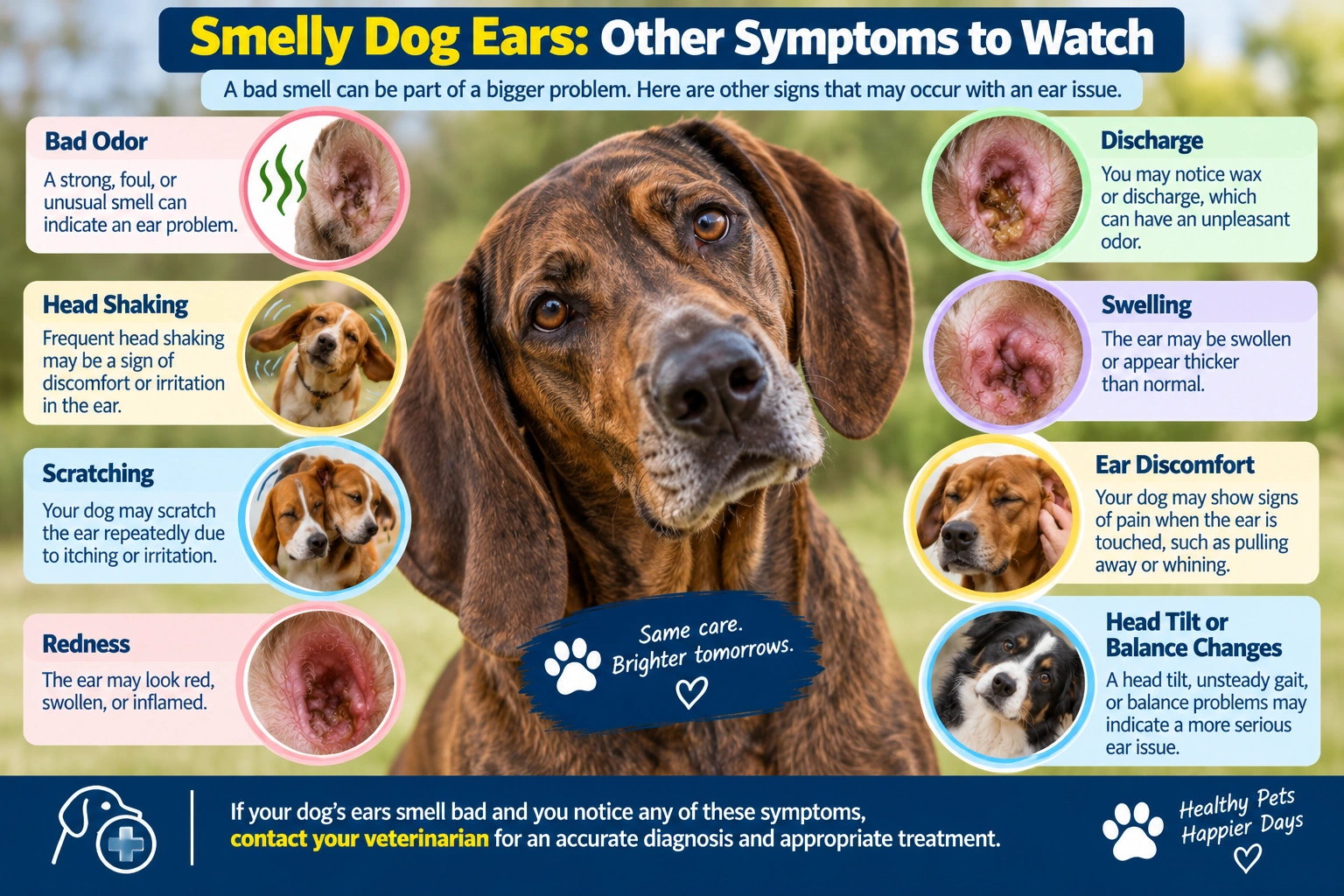
Signs to watch for include:
- Frequent head shaking
- Persistent scratching
- Red or swollen ear canals
- Significant discharge
- Ear pain
- Sensitivity when the ear is touched
- Head tilt
- Balance problems
- Difficulty walking
- Recurrent ear problems
- Sudden behavioral changes
A dog with balance problems, a persistent head tilt, difficulty walking, or abnormal eye movements may have involvement beyond the external ear and should receive prompt veterinary attention.

What Will the Veterinarian Check?
The veterinarian may first examine the outer ear for redness, inflammation, swelling, discharge, injuries, or excess wax.
An otoscope can then be used to look farther into the ear canal and evaluate the eardrum when possible.
If infection or microbial overgrowth is suspected, a sample of material from the ear may be examined to look for yeast, bacteria, inflammatory cells, or other findings.
This matters because similar-looking ear problems can have different underlying causes.
Treatment should therefore be based on what is actually found rather than simply trying to mask the odor.
Can Smelly Dog Ears Keep Coming Back?
Yes.
Recurring ear problems may occur when an underlying factor has not been identified or controlled.
Allergies, ear anatomy, chronic inflammation, and other conditions can contribute to recurrence. The Merck Veterinary Manual emphasizes the importance of identifying contributing causes because ear inflammation can return when those causes remain unresolved.
If your dog’s ears repeatedly become smelly, itchy, or inflamed, tell your veterinarian how often the problem occurs and whether it affects one or both ears.
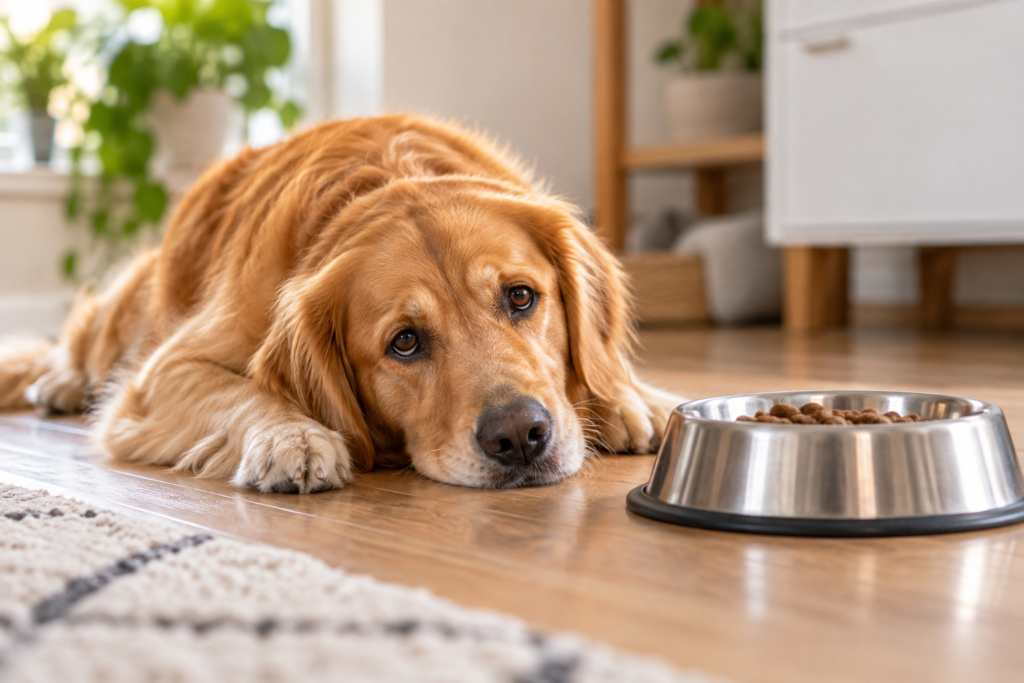
Can Ear Pain Make My Dog Stop Eating?
Significant pain can sometimes affect a dog’s behavior and appetite.
Middle ear disease may also cause pain when opening the mouth in some dogs.
If your dog has an ear problem and has also stopped eating, our appetite guide provides additional symptoms to watch for:
A substantial or persistent appetite change should be discussed with your veterinarian.
Frequently Asked Questions
Why do my dog’s ears stink?
Unpleasant ear odor may occur with otitis externa, yeast or bacterial overgrowth, allergies, excess moisture, parasites, foreign material, or other ear conditions. Odor alone cannot determine the cause.
Are smelly dog ears always an infection?
No. Infection is one possibility, but allergies, parasites, foreign material, inflammation, and other problems can also contribute to abnormal ear odor.
Why do my dog’s ears smell yeasty?
Owners sometimes describe abnormal ear odor as “yeasty,” but smell alone cannot confirm yeast overgrowth. A veterinarian can examine ear material to determine whether yeast or bacteria are present in abnormal numbers.
Why does my dog keep scratching a smelly ear?
Itching and scratching can occur with inflammation, allergies, parasites, yeast or bacterial problems, and other ear conditions.
Can allergies cause smelly dog ears?
Yes. Allergies can contribute to inflammation of the external ear and can predispose affected dogs to secondary bacterial or yeast problems.
Can swimming cause ear problems in dogs?
Moisture can contribute to an environment in which ear problems develop in susceptible dogs. Persistent odor, redness, scratching, head shaking, pain, or discharge after swimming deserves attention.
Should I treat my dog’s smelly ears at home?
Do not assume the cause based on smell alone. Different ear problems can require different treatment, and irritating home remedies may make an inflamed ear worse.
Bottom Line
Smelly dog ears can be associated with several different conditions.
Otitis externa, yeast or bacterial overgrowth, allergies, moisture, parasites, foreign material, and other ear problems are among the possibilities.
Watch for additional symptoms such as head shaking, scratching, redness, swelling, discharge, pain, head tilt, or balance changes.
A persistent bad smell should not simply be covered up. Identifying the underlying cause is more important than eliminating the odor itself.
If your dog’s ears smell bad and symptoms persist, worsen, or repeatedly return, contact your veterinarian.

**Sidnir Vieira**
Founder of TechHavela
A passionate pet and tech content creator, helping dog owners across the U.S. make smarter decisions for their furry friends.