Dog Shaking Head? Common Causes and What to Watch
A dog shaking head occasionally is usually nothing unusual. Dogs may shake their heads after waking up, getting wet, playing outside, or experiencing a brief irritation around the ears.
However, when your dog keeps shaking his head repeatedly, especially when the behavior appears with scratching, redness, odor, discharge, swelling, or discomfort, there may be an underlying ear problem that deserves attention.
Head shaking is not a diagnosis by itself. It is a behavior that can occur for many different reasons, ranging from temporary irritation to inflammation involving the ear canal.
If your dog is shaking his head more than usual, pay attention to when it happens and whether other symptoms appear. You can also check your dog’s symptoms to learn about other signs that may be occurring at the same time.
Why Is My Dog Shaking His Head?
Dogs commonly shake their heads when something feels uncomfortable inside or around their ears.
The movement can be a natural attempt to relieve itching, irritation, pressure, moisture, or another uncomfortable sensation.
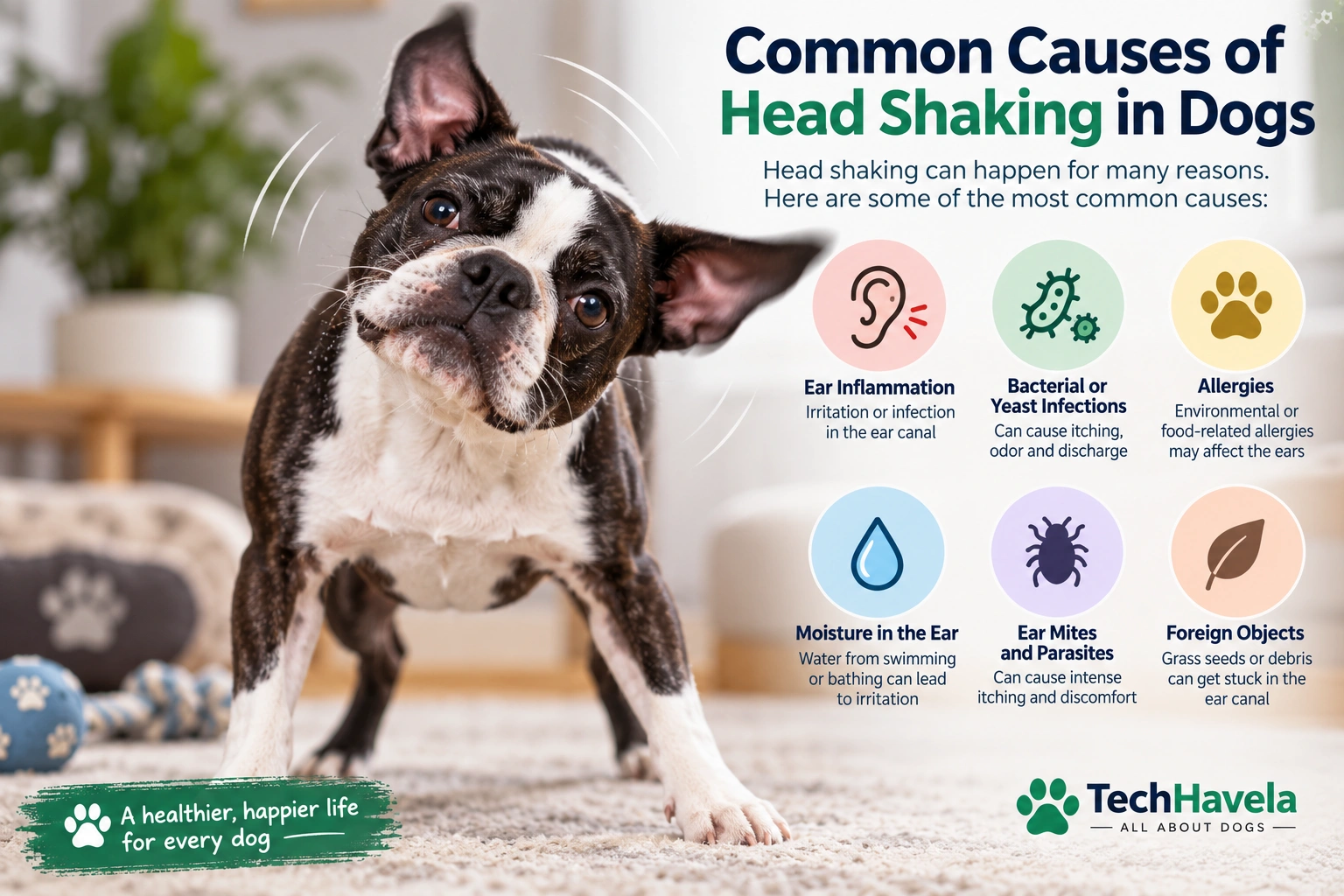
Common possible causes include ear inflammation, yeast or bacterial overgrowth, allergies, trapped moisture, ear mites, excess wax or debris, and foreign material inside the ear canal.
According to the Merck Veterinary Manual, head shaking is one of the common signs associated with otitis externa in dogs, along with scratching, odor, redness, swelling, discharge, itching, and pain.
The symptoms that occur along with the head shaking can provide useful clues about what may be bothering your dog.
Is It Normal for Dogs to Shake Their Heads?
Occasional head shaking can be completely normal.
For example, a dog may shake his head after swimming, bathing, waking from sleep, or briefly scratching an itchy ear.
What matters is the pattern.
A dog shaking his head once or twice is very different from a dog repeatedly shaking his head throughout the day.
The behavior becomes more concerning when it becomes frequent, intense, or persistent, or when other symptoms develop.
Watch for scratching, unusual odor, redness, discharge, swelling, tenderness, or changes in your dog’s balance.
Common Causes of Head Shaking in Dogs
Several conditions can make a dog’s ears uncomfortable enough to trigger repeated head shaking.
1. Ear Inflammation
Otitis externa is inflammation of the external ear canal and is a common ear disorder in dogs.
An inflamed ear may become itchy, painful, red, swollen, or sensitive.
Dogs experiencing this discomfort frequently shake their heads or scratch at the affected ear.
Inflammation can be associated with allergies, parasites, foreign material, yeast or bacteria, or other conditions affecting the ear.
2. Yeast or Bacterial Overgrowth
Yeast and bacteria can contribute to inflammation of the ear canal.
Possible signs may include repeated head shaking, scratching, redness, discharge, unpleasant odor, and sensitivity when the ear is touched. VCA notes that these symptoms can overlap with other ear conditions, which is one reason examination of the ear is important.
Appearance or smell alone cannot reliably tell you exactly what is causing the problem.
A veterinarian may examine material from the ear under a microscope to help determine what is present.
3. Allergies
Allergies can affect a dog’s skin as well as the ears.
Some dogs with allergic skin disease develop recurring inflammation and itching around the ears. This can also create conditions that contribute to secondary ear problems.
A dog with allergies may show symptoms elsewhere, including itchy paws, facial itching, or irritated skin.
If your dog is also frequently scratching other areas of the body, read why your dog may be scratching so much.
Recurring ear problems may be a clue that an underlying condition is contributing to repeated inflammation.
4. Water or Moisture in the Ear
Swimming and bathing can leave moisture inside the ear canal.
A dog may briefly shake his head afterward as he attempts to remove the water.
If head shaking continues long after swimming or bathing, especially when accompanied by redness, odor, discharge, or discomfort, the ears may need veterinary evaluation.
5. Ear Mites and Other Parasites
Ear mites and other parasites can cause irritation and itching around the ears.
Dogs affected by mites may shake their heads and repeatedly scratch their ears.
Other ear problems can produce similar symptoms, so head shaking and scratching alone cannot confirm that mites are present.
6. Something Stuck in the Ear
Plant material or other small pieces of debris can sometimes enter a dog’s ear canal.
This may cause sudden and persistent head shaking, sometimes affecting one ear more than the other.
The dog may also paw at the affected ear or become sensitive when the area is touched.
Foreign material is one of the possible causes veterinarians consider when examining dogs with otitis externa.
Avoid inserting cotton swabs, tweezers, or other objects deep into the ear canal in an attempt to find or remove something yourself.
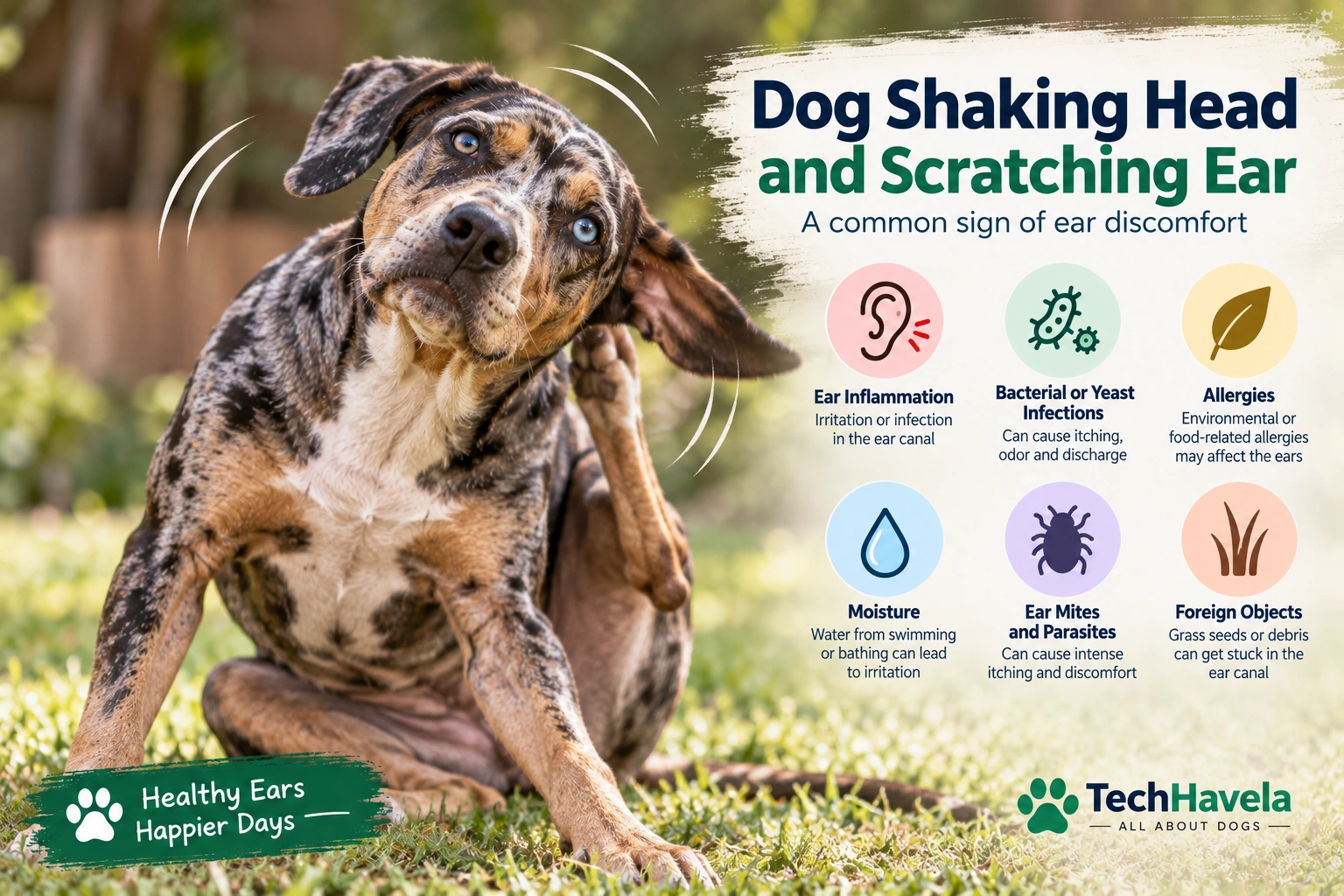
Dog Shaking Head and Scratching Ear
A dog shaking head and scratching ear at the same time is probably experiencing irritation or discomfort around the ear.
Possible causes include inflammation, allergies, infection, parasites, trapped moisture, or foreign material.
Look for other changes such as redness, odor, discharge, swelling, crusting, or sensitivity.
Repeated scratching can also irritate the skin around the ear.
If scratching is occurring elsewhere on the body as well, our guide to why dogs scratch so much explains several other possible reasons.
Persistent head shaking and scratching should be evaluated rather than assuming that every case has the same cause.
Dog Keeps Shaking Head but Ears Are Clean
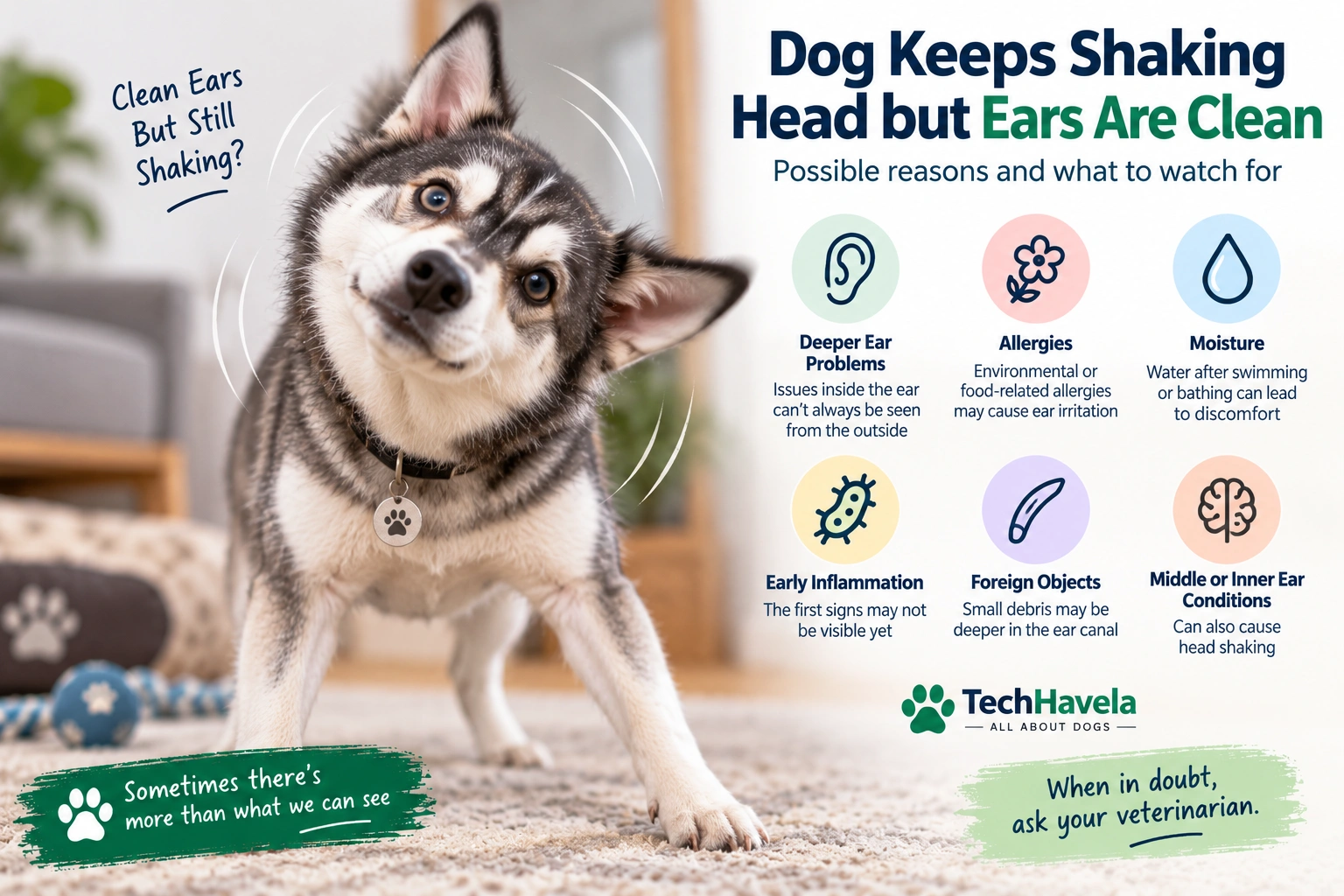
A dog may keep shaking his head even when the visible parts of the ears appear completely clean.
That does not necessarily mean nothing is wrong.
A dog’s ear canal extends much deeper than the portion you can see by simply lifting the ear flap. Veterinarians use an otoscope to examine deeper portions of the canal and the eardrum.
Possible explanations for head shaking with apparently clean ears can include early inflammation, allergies, irritation, foreign material deeper in the canal, or problems involving structures that cannot be seen from the outside.
If repeated head shaking continues even though the ears look normal, a veterinary examination can help determine whether there is a problem deeper in the ear.
Why Is My Dog Shaking His Head a Lot?
Frequency is important when evaluating head shaking.
One or two shakes after waking or getting wet are very different from a dog shaking his head repeatedly throughout the day.
Frequent head shaking suggests that something may continue to irritate or bother the ear.
Pay attention to whether the behavior is becoming more frequent and whether your dog is also scratching, rubbing his ears against furniture, avoiding touch, or showing signs of discomfort.
A noticeable change from your dog’s normal behavior is worth monitoring.
Why Is My Dog Shaking Only One Side of His Head?
When one ear is affected more than the other, the dog’s behavior may appear more pronounced toward one side.
Localized inflammation, foreign material, injury, or another problem involving one ear can potentially produce one-sided symptoms.
Check only the visible portion of the ear for obvious redness, swelling, discharge, or debris.
Do not insert anything deep into the ear canal.
Persistent symptoms affecting one ear should be examined, particularly if the dog appears uncomfortable.
Dog Shaking Head After Swimming or a Bath
A few vigorous head shakes immediately after swimming or bathing can be normal.
Dogs naturally try to remove water from their ears.
The situation deserves more attention when head shaking continues or when additional symptoms such as itching, redness, odor, discharge, or pain develop.
Dogs that repeatedly develop ear problems after swimming may benefit from discussing appropriate preventive ear care with their veterinarian.
Dog Shaking Head After Grooming
Some dogs temporarily shake their heads after grooming.
Moisture, loose hair, cleaning of the ears, or temporary irritation may contribute.
However, repeated head shaking should not automatically be assumed to be a harmless grooming reaction.
If your dog appears uncomfortable, continually scratches an ear, develops redness or swelling, or keeps shaking his head, the ears should be checked.
Dog Shaking Head and Smelly Ears
Head shaking accompanied by unpleasant ear odor is an important combination to notice.
Ear inflammation can produce odor along with redness, discharge, itching, pain, and repeated head shaking.
If odor is one of your dog’s main symptoms, read our complete guide to common causes of smelly dog ears.
Smell alone cannot determine whether yeast, bacteria, or another problem is responsible.
Persistent odor combined with frequent head shaking or scratching deserves veterinary attention.
Dog Shaking Head and Head Tilt
Head shaking and a persistent head tilt are two different signs.
Head shaking is generally a rapid movement. A head tilt means the dog consistently holds the head toward one side.
Problems involving the middle or inner ear can sometimes produce more serious signs. The (Merck Veterinary Manual) describes head shaking among the signs associated with middle-ear inflammation, while inner-ear involvement can cause head tilt and balance abnormalities.
If your dog is holding his head to one side, read why your dog may be tilting his head.
Persistent head tilt, loss of balance, difficulty walking, or unusual eye movements deserve prompt veterinary attention.
Can Head Shaking Cause an Ear Hematoma?
Repeated vigorous head shaking and scratching can contribute to an aural hematoma.
An aural hematoma is a fluid-filled swelling that develops within the ear flap after bleeding occurs beneath the skin.
The Merck Veterinary Manual’s guide to aural hematomas explains that these swellings commonly occur when head shaking or scratching causes a small blood vessel to break.
The affected ear flap may become swollen, thickened, soft, or puffy.
Because the underlying reason for the head shaking also needs to be identified, a swollen ear flap should be examined by a veterinarian.
Should I Clean My Dog’s Ears If He Keeps Shaking His Head?
Cleaning is not always the correct first response to repeated head shaking.
If an ear is painful, severely inflamed, contains foreign material, or the eardrum is damaged, putting products into the ear without knowing the cause could create additional problems.
(Vca) notes that determining the cause and checking the eardrum are important before certain ear medications are used.
Over-cleaning may also irritate sensitive ears.
If your veterinarian has already recommended an appropriate routine cleaning method for your dog, follow those instructions.
Persistent head shaking accompanied by pain, redness, discharge, odor, or swelling should be evaluated rather than repeatedly cleaned without knowing the cause.
Can I Use Home Remedies for a Dog Shaking His Head?
It can be tempting to put vinegar mixtures, peroxide, oils, or other household products into a dog’s ear when head shaking begins.
However, an irritated or inflamed ear can be sensitive, and you cannot determine from head shaking alone whether the eardrum and deeper structures are healthy.
For persistent symptoms, identifying the underlying cause is safer than experimenting with substances inside the ear.
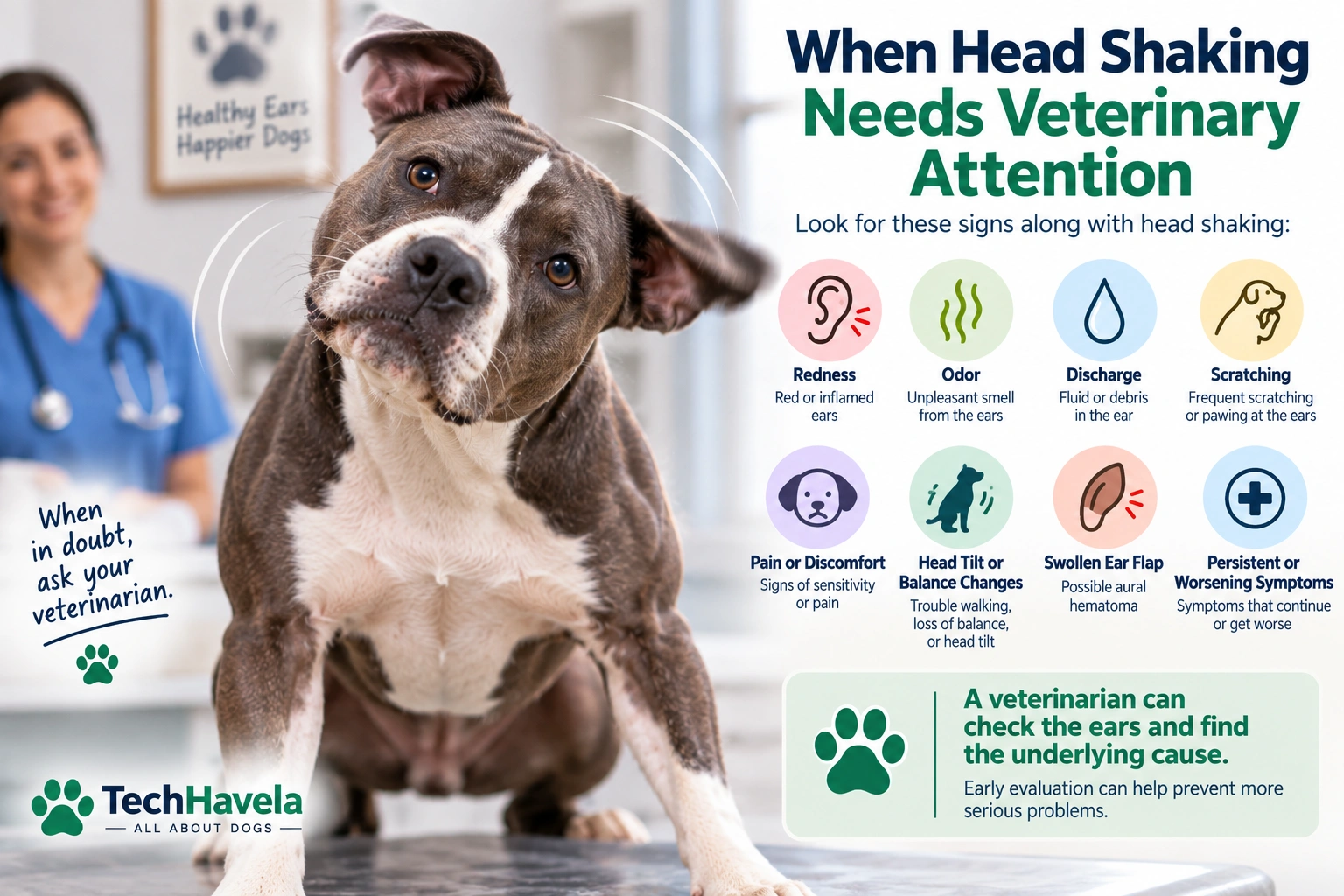
When Should I Take My Dog to the Veterinarian?
Occasional head shaking without other symptoms can often be monitored.
Veterinary attention becomes more important when the behavior is frequent, persistent, painful, or getting worse.
Contact a veterinarian if you notice significant discharge, persistent odor, redness, swelling, repeated scratching, obvious ear pain, or a swollen ear flap.
More concerning signs include persistent head tilt, loss of balance, difficulty walking normally, or unusual eye movements. Middle- and inner-ear disease can affect structures involved in balance.
Changes in appetite or behavior may also accompany significant discomfort. If appetite has changed, see why your dog may not be eating.
What Will the Veterinarian Check?
A veterinarian will generally begin by examining the outer ear and ear canal.
An otoscope allows deeper examination of the canal and can help the veterinarian evaluate areas that cannot be seen from the outside, including the eardrum.
The veterinarian may look for inflammation, debris, foreign material, parasites, excessive wax, discharge, or changes within the ear canal.
When discharge is present, a sample may be examined microscopically to look for yeast, bacteria, or parasites.
Recurring or unusual cases may require additional investigation to identify allergies, chronic inflammation, middle-ear disease, or another underlying condition.
Can Head Shaking Keep Coming Back?
Yes.
Recurring head shaking may indicate that the underlying trigger has not been completely resolved or continues to return.
For example, allergies can contribute to recurring ear inflammation. Chronic ear problems may also involve several factors rather than one simple cause.
Merck emphasizes the importance of identifying contributing causes because ear inflammation can recur when underlying factors remain.
Instead of treating each episode as an unrelated problem, recurring symptoms should be discussed with a veterinarian.
Frequently Asked Questions
Why does my dog keep shaking his head?
Repeated head shaking usually means something is irritating or causing discomfort around the ears. Possible causes include inflammation, allergies, moisture, parasites, infection, debris, or foreign material.
Why is my dog shaking his head but not scratching?
Not every ear problem produces obvious itching. Irritation, moisture, foreign material, or problems deeper in the ear can sometimes cause head shaking without frequent scratching.
Why does my dog shake his head after waking up?
An occasional shake after waking can be normal. Repeated shaking throughout the day is more important to monitor, particularly when other symptoms appear.
Why does my dog keep shaking his head at night?
Ear discomfort can occur at any time of day. If repeated head shaking interrupts your dog’s rest or occurs with scratching, pain, odor, discharge, or other symptoms, consider having the ears evaluated.
Can allergies make a dog shake his head?
Yes. Allergies can contribute to inflammation and itching involving the ears, and some dogs experience recurring ear problems associated with allergic disease.
Can an ear infection make a dog shake its head?
Yes. Head shaking and ear scratching are common signs associated with inflammation and infection of the external ear canal.
Why is my dog shaking his head after swimming?
Water in the ear can cause temporary irritation and head shaking. Persistent shaking, particularly with odor, redness, discharge, or discomfort, deserves closer attention.
Can something be wrong even if my dog’s ears look clean?
Yes. Much of a dog’s ear canal cannot be seen from the outside. An otoscope is used during veterinary examination to view deeper portions of the canal and the eardrum.
Bottom Line
An occasional dog shaking head is usually not unusual. Repeated head shaking, however, can indicate that something is irritating or causing discomfort in or around the ears.
Ear inflammation, yeast or bacterial problems, allergies, moisture, parasites, and foreign material are among the possible causes.
Pay particular attention when head shaking occurs together with scratching, odor, redness, discharge, swelling, pain, or changes in balance.
Different ear conditions can produce very similar symptoms, so identifying the underlying cause is more useful than assuming every case is an ear infection.
Persistent, painful, worsening, or recurring symptoms should be evaluated by a veterinarian.

**Sidnir Vieira**
Founder of TechHavela
A passionate pet and tech content creator, helping dog owners across the U.S. make smarter decisions for their furry friends.