Quick answer: Why is my cat’s nose running? A runny nose in cats is most often linked to an upper respiratory infection, which can be caused by viruses such as feline herpesvirus and calicivirus, or by bacteria. Irritants and other problems can also be involved. Mild cases may pass, but a cat that stops eating, has trouble breathing or gets worse needs a veterinarian. To organize what you are seeing, you can start with our Pet Symptom Checker, which covers cats and dogs.

What Is Coming From the Nose?
Look at what comes out. Is it clear, cloudy, yellow-green or bloody? Is your cat also sneezing, squinting or breathing with an open mouth? Cornell University’s Feline Health Center describes respiratory infections in cats as a common problem, often caused by feline herpesvirus, feline calicivirus, Chlamydia felis and Bordetella bronchiseptica, with signs that can include nasal discharge, sneezing and eye discharge.

When to Call the Vet Right Away
Before any home care, know what should not wait. VCA’s guidance on recognizing signs of illness in cats lists breathing difficulty and going 24 hours without food among the signs that need prompt attention. Call your veterinarian right away if your cat:
- breathes with an open mouth, breathes fast or seems to struggle (see why a cat may breathe fast);
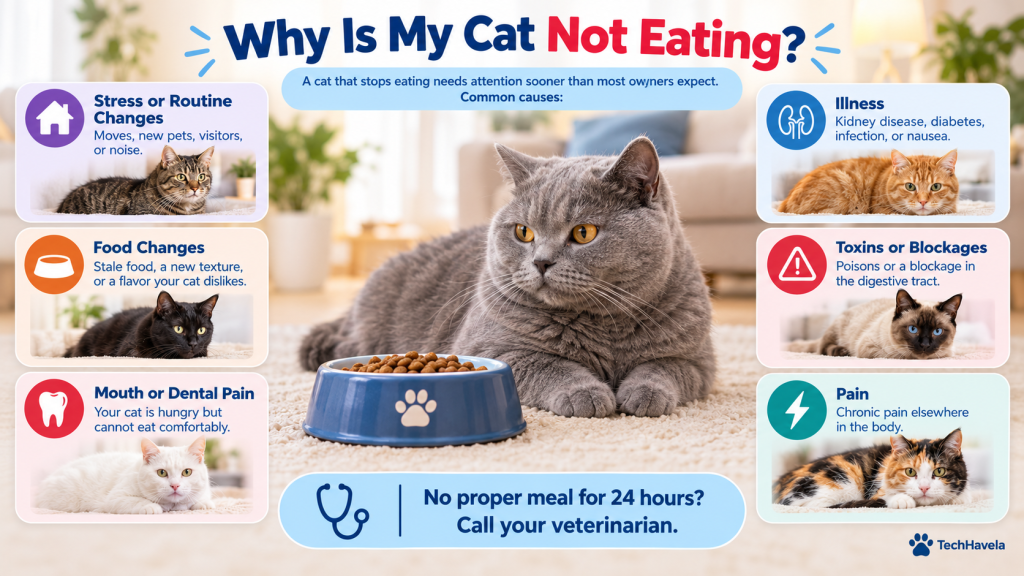
- stops eating or drinking, or has not eaten for a day (see not eating);
- has thick yellow or green discharge, or any blood;
- has eye signs such as squinting, discharge or a swollen eye;
- is very tired, hiding or has a fever;
- is a kitten, a senior cat or has other health problems.

Possible Causes
Only a veterinarian can find the cause. According to Cornell, the main causes of feline upper respiratory infections are:
- Viruses: feline herpesvirus and feline calicivirus.
- Bacteria: Chlamydia felis and Bordetella bronchiseptica.
- Fungal infection: Cryptococcus, in some cases.
Cornell explains that these infections are contagious between cats and that vaccines may reduce the severity of disease but do not fully prevent it. A cat with a runny nose may also be coughing or sneezing, see why a cat may cough. Other things, such as irritants in the air, can also make a nose run, so a vet should look at a cat whose signs do not clear up.

What You Can Do While You Arrange Care
- Keep your cat warm, calm and comfortable, away from smoke, dust and strong sprays.
- Offer fresh water and tempting food. A cat that cannot smell may eat less. Tell your vet if appetite drops.
- Gently wipe the nose and eyes with a clean, damp cloth if your cat allows it.
- Keep sick cats apart from other cats and wash your hands between pets.
- Do not give human cold or flu medicine. Many are dangerous to cats.

What the Veterinarian May Do
Cornell notes that care is often supportive, such as fluids, nutrition support and treating complications, and bacterial infections may need antibiotics. Your veterinarian will decide what your cat needs. Follow every instruction and finish any prescribed treatment.

How the Pet Symptom Checker Can Help
Our Pet Symptom Checker helps you look up symptoms in cats and dogs and see common reasons and warning signs. It does not diagnose and does not replace a veterinarian, but it can help you describe the problem clearly. Routine visits help too, see why vet check-ups matter.
Frequently Asked Questions
Is a runny nose in a cat serious?
It can be mild, but it can also be a sign of infection. If your cat stops eating or has trouble breathing, call a vet.
Is it contagious to other cats?
Infections can spread between cats. Keep the sick cat apart and ask your vet.
Can I give my cat cold medicine?
No. Never give human medicine to a cat without veterinary guidance.
Does a vaccinated cat get a runny nose?
It can happen. Cornell says vaccines do not fully prevent these infections.
Final Thoughts
A runny nose is common, but it should not be ignored when it comes with other signs. Keep your cat comfortable and call your veterinarian if it does not improve.
This article is for general education only. It does not diagnose any condition and does not replace advice from your veterinarian.

Sidnir Vieira is the founder of TechHavela. A lifelong pet owner who had a dog for many years and now lives with a cat, he writes educational guides that help owners understand symptoms and know when to call the vet. TechHavela’s articles are based on veterinary sources and are not reviewed by a veterinarian.