How Therapy Cats Bring Calm to Stressful Hospital Wards
Hospitals are stressful, unfamiliar places, and increasingly, some wards welcome an unlikely visitor to help ease that tension.
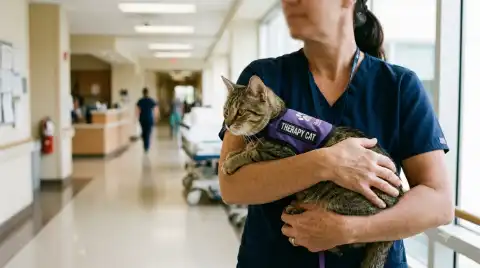
A calm, trained cat making quiet rounds alongside its handler is still an uncommon sight compared to therapy dogs, but it’s becoming more familiar.
The idea itself is simple: a few quiet minutes with a friendly animal can measurably ease the stress of a hospital stay — and that’s exactly how therapy cats bring calm to some of the hardest moments patients face.
Why Cats Are Rarer Than Dogs in Therapy Work
Therapy work asks a lot of an animal — tolerating strange smells, sudden noises, medical equipment, and handling from unfamiliar people, all while staying relaxed.
Dogs are generally bred and socialized for exactly that kind of adaptability, while cats tend to be more sensitive to unfamiliar environments by nature.
The cats who do succeed at it are usually unusually social, low-reactivity animals identified early through temperament evaluation.
How a Cat Becomes a Certified Therapy Animal
Organizations like Pet Partners, a nonprofit that registers therapy animal teams across the U.S., run a formal evaluation process before any animal is approved for visits.
That process typically includes a temperament assessment, handler training, health and vaccination screening, and ongoing supervised visits before a team is fully registered.
Not just any friendly house cat qualifies. What matters most is consistent, predictable calm across many different environments, verified over time rather than a single good day.
What a Hospital Visit Actually Looks Like
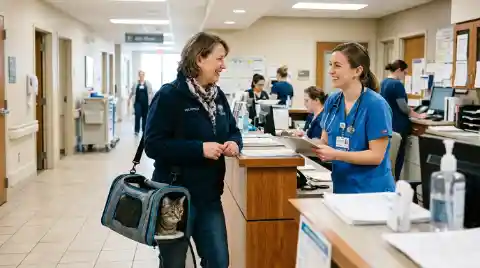
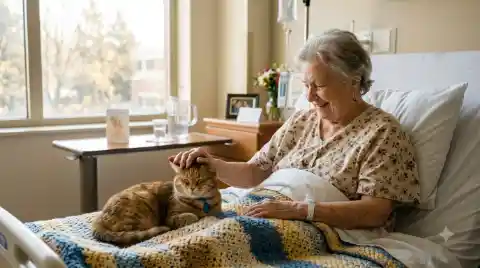
Visits tend to be short and low-key. The cat usually stays close to its handler, sitting on a lap or bed only when invited by the patient.
The handler manages every interaction, watching the cat’s body language closely and ending the visit the moment the animal shows any sign of stress.
Patients are never required to participate. For many, simply seeing a calm animal nearby is enough of a break from the routine of a hospital stay.
The Real Impact on Patients
- Lower reported anxiety. Even short visits are often followed by patients describing feeling calmer and less tense.
- A break from routine. A brief, unscripted moment offers a mental pause from tests, medications, and monitoring.
- Comfort for pet owners. Patients who miss their own animals at home often find real comfort in a familiar kind of company.
- A small lift for staff too. Nurses and staff on the ward often say the visits brighten their day as much as the patients’.
What Handlers and Hospitals Watch For
Not every ward is a fit for animal visits. Hospitals set strict rules about which units allow them, often excluding immunocompromised or sterile-environment areas entirely.
Handlers keep visits brief and let the cat set the pace. If the animal shows any sign of stress, the visit ends immediately — the welfare of the cat always comes first.
Hygiene protocols, hand sanitizing, and coordination with nursing staff are standard parts of every visit, long before the cat ever enters a patient’s room.

Frequently Asked Questions
Are therapy cats trained differently from therapy dogs?
The certification process is similar, but the bar for temperament tends to be higher for cats simply because natural fits for the role are rarer.
Can any friendly cat become a therapy cat?
Not usually. Most programs report that many cats who seem sociable at home still aren’t suited to the unpredictability of a hospital environment.
Is it safe for immunocompromised patients to be near a therapy animal?
Hospitals set unit-specific rules for exactly this reason, and many high-risk units simply don’t allow animal visits at all.
How would someone get their own cat involved in therapy work?
The usual first step is an evaluation through a recognized registering organization, which assesses temperament before any training begins.
How Therapy Cats Bring Calm, One Visit at a Time
A therapy cat’s job is small in scope — a few quiet minutes, a gentle presence, nothing more. But for a patient in the middle of a hard stay, that small thing can matter a great deal.
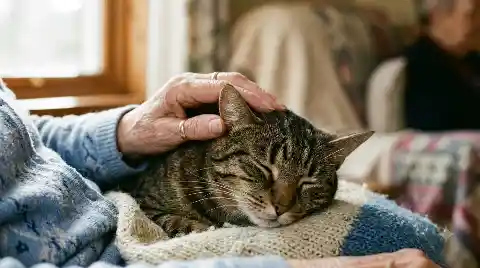
It’s a reminder that comfort doesn’t always require grand gestures. Sometimes it just takes a calm animal willing to sit still and be petted.
If you’re considering visiting a hospital or care facility with your own pet, or you’re a patient with questions about a pet at home while you recover, our Pet Symptom Checker can help you keep an eye on your animal’s health from a distance. For more on the broader world of pets and people, see our piece on the unlikely friendship between a cat and a dog.
Source: Pet Partners — general guidance on therapy animal team registration and evaluation.

Sidnir Vieira is the founder of TechHavela. A lifelong pet owner who had a dog for many years and now lives with a cat, he writes educational guides that help owners understand symptoms and know when to call the vet. TechHavela’s articles are based on veterinary sources and are not reviewed by a veterinarian.