The Quiet Heroism of Search and Rescue Dogs
When a hiker goes missing on a mountain trail or a building collapses after a disaster, one of the first responders on scene often has four legs and a nose that can detect a single human scent molecule among thousands.
Search and rescue dogs work in near silence, guided by scent, training, and an unshakable bond with their handler. There is no glory in the job, only long hours and difficult terrain.
This is a look at the general world of search and rescue dogs: how they train, how they work, and why their quiet dedication deserves more recognition than it gets.
Born to Search: How Training Shapes a Working Dog
Most search and rescue dogs begin training as puppies, selected for high drive, confidence, and an obsessive love of play. That play instinct becomes the foundation of every skill they learn.
Organizations like the National Disaster Search Dog Foundation train dogs for well over a year before they are certified, teaching scent discrimination, agility over rubble, and obedience under chaotic conditions.
Certification standards, often modeled on FEMA’s Urban Search & Rescue guidelines, require dogs to prove they can locate a person reliably, ignore distractions, and work safely alongside their human handler.
Reading the Wind, Not the Ground
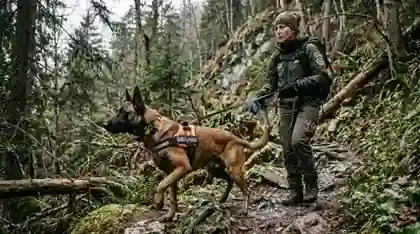
Unlike a bloodhound trailing a specific scent trail, many search and rescue dogs are trained as air-scent specialists, working the wind rather than the ground beneath them.
These dogs move in wide patterns across a search area, lifting their heads to catch drifting particles of human scent carried on the breeze, then narrowing in as the scent grows stronger.
Other dogs specialize in trailing, following a specific individual’s scent from a known starting point, or in disaster response, detecting live victims trapped beneath collapsed structures.
The Physical and Emotional Toll of the Job
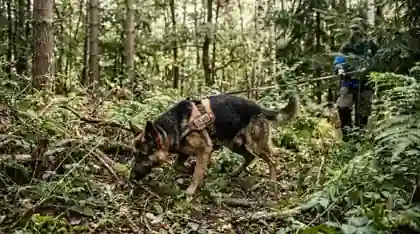
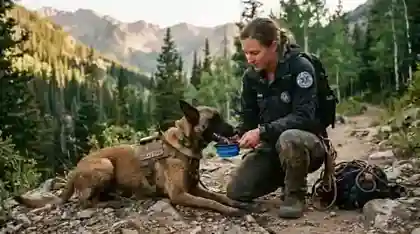
Search operations can last for hours in extreme heat, cold, or rain, and handlers must watch constantly for signs of fatigue, dehydration, or injury in their dogs.
Regular water breaks and rest periods are built into every search protocol, not as an afterthought but as a safety requirement for the dog to keep working effectively.
The emotional toll matters too. Handlers often describe the bond with their search dog as one of the deepest relationships of their lives, built on trust in life-or-death situations.
Real Impact
- Faster search coverage: A trained dog can search terrain far faster than a large team of human volunteers, narrowing the area rescuers need to cover on foot.
- Detection humans can’t match: A dog’s sense of smell is estimated to be tens of thousands of times more sensitive than a human’s, allowing detection of scent under rubble or dense brush.
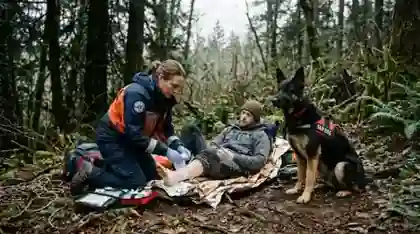
- Disaster response support: Certified teams are deployed to help locate survivors after earthquakes, building collapses, and other large-scale emergencies.
- Comfort in difficult moments: Beyond locating people, many search dogs and their handlers also provide a calming presence for families waiting for news.
Frequently Asked Questions
What breeds make good search and rescue dogs?
A. Labrador Retrievers, German Shepherds, and Border Collies are common choices, though many working breeds and mixed-breed dogs can succeed with the right drive and temperament.
How long does it take to certify a search and rescue dog?
A. Most dogs train for one to two years before earning certification, working through scent discrimination, obedience, and agility milestones along the way.
Do search and rescue dogs work for free?
A. Most search and rescue teams are volunteer-based, with handlers covering significant personal costs in time, training, and equipment to keep their dogs mission-ready.
What happens when a search dog retires?
A. Retired search dogs typically live out their years as beloved pets with their handler’s family, finally getting to rest after years of demanding work.

Why Search and Rescue Dogs Deserve Our Gratitude
Search and rescue dogs rarely make headlines, but their work saves lives in the moments that matter most. Behind every successful search is months of quiet, patient training.
If you’re concerned about a pet’s health or behavior, our pet symptom checker can help you decide when it’s time to call the vet. You may also enjoy reading about how rescue dogs learn to trust again or the bond between veterans and their service dogs.
Source: National Disaster Search Dog Foundation — general guidance on search and rescue dog training and certification standards.

Sidnir Vieira is the founder of TechHavela. A lifelong pet owner who had a dog for many years and now lives with a cat, he writes educational guides that help owners understand symptoms and know when to call the vet. TechHavela’s articles are based on veterinary sources and are not reviewed by a veterinarian.