Quick answer: Why is my cat eating litter or non-food items? This behavior is called pica. VCA Animal Hospitals lists medical and behavioral causes, including anemia, anxiety and other conditions, so a veterinary exam is a good idea. Swallowed objects can block the gut, which makes it urgent if your cat vomits or stops eating. You can also use our Pet Symptom Checker, which covers cats and dogs.

What Is Pica in Cats?
Pica means eating things that are not food. VCA describes it in its page on pica in cats as persistently eating non-food items such as plastic, paper, fabric or string. Litter is another non-food item that some cats eat. Chewing a houseplant or a bit of cardboard once is not the same as doing it again and again.

When to Call the Vet Right Away
Call your veterinarian right away, or go to an emergency clinic, if your cat:
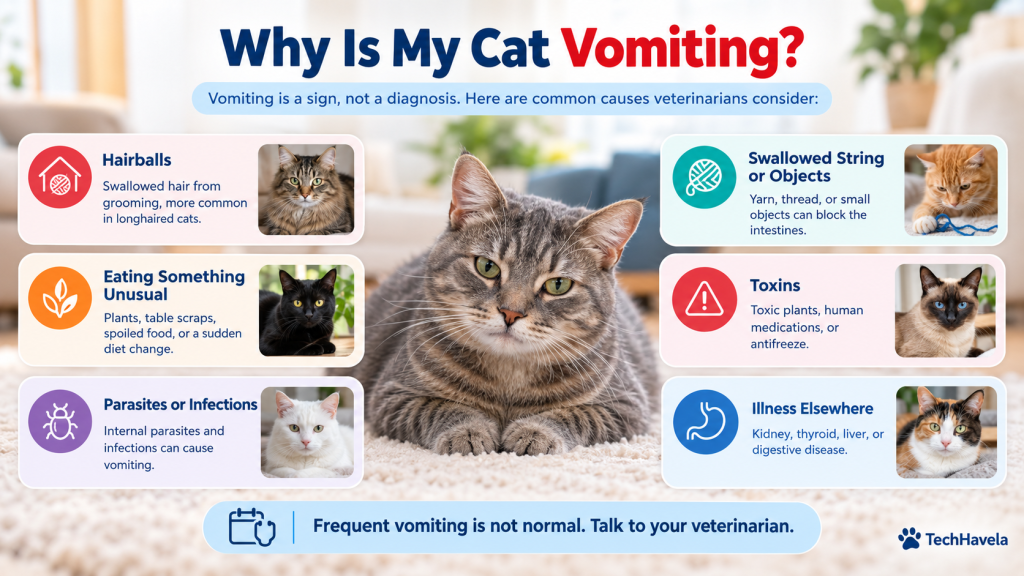
- vomits again and again or cannot keep food down (see why a cat may vomit);
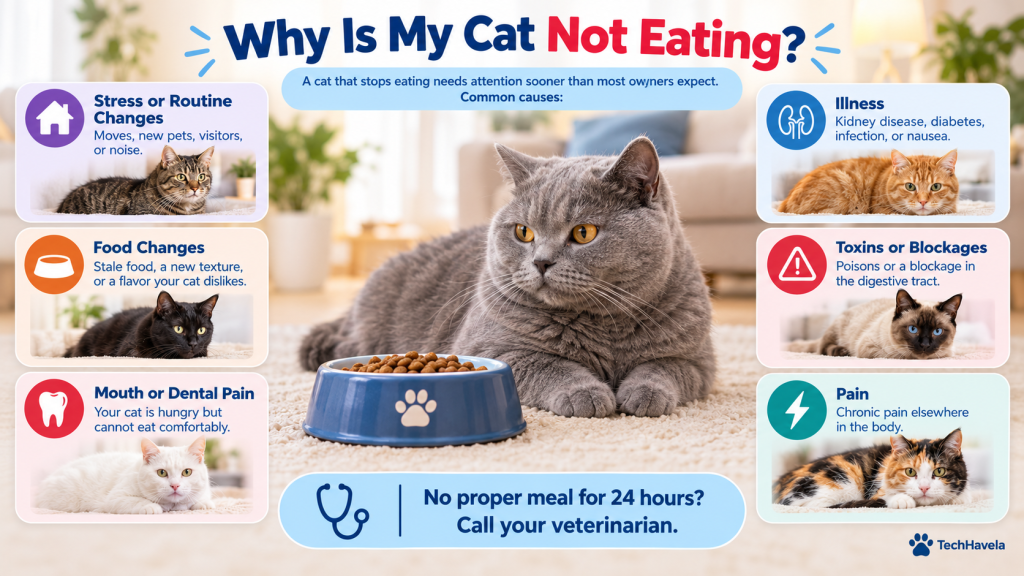
- stops eating, or seems tired and weak (see not eating);
- strains or cries when trying to go to the bathroom, or has a hard, painful belly;
- has pale gums;
- is known to have swallowed string, thread, plastic or fabric.
VCA notes that the most common problem is a gut blockage when an object cannot be digested and gets stuck. String and thread can be especially dangerous, so do not pull anything that is hanging from your cat’s mouth or rear.

Possible Causes
Only a veterinarian can find the cause. VCA lists anemia, anxiety, compulsive disorders, diabetes and hyperthyroidism among the conditions that can cause pica in cats, and says pale gums and weakness can signal anemia. Stress and boredom may also play a role, see mistakes that stress out cats and how to keep an indoor cat entertained.
If a cat is losing weight or acting differently, read why a cat may lose weight and why a cat may act strange.

What You Can Do at Home
- Put away items your cat chews: string, rubber bands, plastic bags, hair ties and small toys.
- Offer safe toys and play every day.
- Note what your cat eats and how often, to tell your vet.
- Keep the litter box clean and check the litter you use with your vet if your cat eats it. See also why a cat may avoid the litter box.
- Do not punish your cat. It can increase stress.

What the Veterinarian May Do
Your vet will examine your cat and may recommend blood tests to look for anemia and other conditions. If your cat swallowed something, imaging may be needed. Treatment depends on the cause.

How the Pet Symptom Checker Can Help
Our Pet Symptom Checker helps you look up symptoms in cats and dogs and see common reasons and warning signs. It does not diagnose and does not replace a veterinarian, but it can help you describe the problem clearly. Read also our tips on litter box secrets.
What Counts as Pica
Pica is the habit of eating things that are not food. In cats, this can include litter, plastic, fabric, wool, rubber bands, paper, plants, string and even hair ties. Chewing and licking such items is not the same as swallowing them. Many cats chew on objects out of curiosity, boredom or because of teething. The concern begins when a cat repeatedly eats non-food items, because swallowed items can cause blockages, choking or poisoning. VCA Animal Hospitals lists several health conditions that can lie behind pica, which is why a veterinary exam is important when the habit is new, frequent or intense.
Eating Litter: A Special Concern
Many owners first notice pica when a cat eats cat litter. Clay and clumping litters can expand in the stomach or intestines and may cause blockages, especially if a cat swallows a lot. Litter can also contain dust and chemicals that irritate the cat. Eating litter can be a sign of anemia, which VCA mentions as a possible cause of pica. It can also come from stress, boredom or a medical problem. If your cat eats litter, take it seriously, watch for vomiting, straining or loss of appetite and talk to your vet. Switching to a different type of litter, such as one made of paper or another natural material, may be suggested, but ask your vet first because the right choice depends on your cat’s needs.
Medical Causes of Pica
- Anemia, a low red blood cell count, which can cause pale gums and weakness.
- Diabetes and hyperthyroidism, which can change appetite and behavior.
- Digestive diseases, including problems that affect nutrient absorption.
- Nutritional deficiencies, especially in cats on unbalanced diets.
- Dental pain, which may lead to unusual chewing.
- Neurological problems and some infections, which can change behavior.
Because many of these conditions can be treated, finding the cause matters. Your vet may recommend blood tests, a check of the gums and teeth, a stool exam and other tests.
Behavior-Related Pica
When medical causes are ruled out, pica may be linked to behavior. Stress, anxiety, boredom, lack of play and frustration can all contribute. Some cats, such as certain Oriental breeds like Siamese and Burmese, are known for wool sucking and chewing fabrics, and early weaning may play a role in some cases. VCA lists compulsive disorders among the possible causes. The right approach combines a veterinary check with changes in the environment and sometimes help from a behavior professional. See also mistakes that stress out cats and how to keep an indoor cat entertained.
Dangers of Swallowed Objects
Some objects can be especially dangerous. String, thread, yarn, tinsel, ribbon and dental floss can form a “linear foreign body,” where one end anchors and the intestines bunch up around the string, sometimes cutting the tissue. Plastic bags and wrappers can block the gut. Rubber bands, hair ties and sewing needles can cause serious injury. If you see string hanging from your cat’s mouth or bottom, do not pull it, and go to a veterinarian immediately. Signs of a blockage include repeated vomiting, not eating, belly pain, hiding and lethargy. Our guide on why a cat may vomit explains more about vomiting in cats.
Plants and Other Poisons
Cats that chew plants can be poisoned by some of them. Lilies are especially dangerous for cats, and even small amounts of pollen or water from a vase can cause kidney failure. Other plants, such as dieffenbachia and philodendron, can irritate the mouth and stomach. If your cat eats or chews any plant that you do not know, call your vet or a poison control service quickly. Keep a list of the plants in your home and check each one for cat safety, and provide safe cat grass for chewing.
What You Can Do at Home
- Remove temptations. Keep string, rubber bands, plastic bags, hair ties and small objects away from your cat.
- Offer safe alternatives. Provide cat grass, sturdy chew toys and puzzle feeders.
- Increase play and exercise. Use wand toys, climbing trees and short play sessions every day.
- Keep a steady routine. Feed at regular times and keep the litter box clean.
- Use bitter-taste deterrents only if your vet agrees. Some products are not safe for cats.
- Do not punish. Punishment can increase stress and make the behavior worse.
Diet and Pica
A balanced, complete cat food is important. Some cats chew non-food items because they feel hungry or lack certain nutrients, and in others the problem is the food itself. Ask your vet whether your cat’s diet is complete for its life stage, and whether the amount you feed is right. Many cats do well with several small meals, puzzle feeders or slow-feeding bowls, which can increase the time they spend eating and lower the urge to chew other things. Avoid changing diets suddenly, since this can upset the stomach.
What the Veterinarian May Do
The vet will ask what your cat eats, how often and for how long, and will examine the mouth, belly and gums. Tests may include blood work, thyroid and diabetes checks, a stool test and X-rays or ultrasound if there is a chance of a swallowed object. If a blockage is found, a procedure or surgery may be needed. For behavior-related pica, your vet may suggest environment changes, more play and sometimes medicine or a referral to a behavior specialist. Follow-up is important, since pica can come back.
Keeping a Record
Record what your cat eats or chews, when it happens and what is going on around that time. Take photos of anything you find chewed. Note changes in appetite, weight, litter box habits and energy. Bring this information to your vet. A clear record can show patterns such as chewing more when you leave, at night or after a stressful event, and it can help your vet make a plan that works for your cat.
Pica in Kittens and Young Cats
Kittens explore with their mouths, and chewing on objects is common as they grow and their teeth come in. Provide a variety of safe toys and supervise play with anything that has strings, ribbons or small parts. Do not leave kittens alone with objects that could be swallowed. If your kitten swallows non-food items repeatedly, or is not growing well, schedule a vet check. Early help can prevent habits from becoming fixed and can catch health problems that may be affecting your kitten’s development.
Wool Sucking and Fabric Chewing
Some cats suck or chew on wool, cotton and other fabrics. Occasionally they swallow pieces. This behavior is more common in certain breeds, but it can happen in any cat. It may start in kittens that were weaned early, or it can develop with stress and boredom. Because swallowed fabric can cause a blockage, it is important not to ignore the habit. Keep blankets and clothes that your cat likes to chew out of reach, offer a safe alternative such as a soft toy that cannot be torn apart and discuss the behavior with your vet.
When Pica Appears in Senior Cats
Pica that begins in an older cat is more likely to be linked to a medical cause. Diseases such as hyperthyroidism, diabetes, kidney disease or cognitive changes become more common with age and can alter appetite and behavior. If your older cat begins eating litter, chewing plastic or licking odd surfaces, do not assume it is just a habit. A thorough exam and blood work are a good idea. Treating the underlying condition can improve both health and behavior.
Working With Your Vet on a Long-Term Plan
Pica often needs a plan that combines medical care, environment changes and patience. Ask your vet to help you set goals, such as reducing the number of episodes per week, and to explain which signs mean you should return. Follow the plan consistently, and keep records of progress. If one approach does not work, tell your vet, since there are several options. Many cats improve once the cause is found and their environment is adjusted to meet their needs for play, safety and comfort.
Frequently Asked Questions
Is it normal for a cat to eat litter?
Not usually. VCA explains that eating non-food items can have medical or behavioral causes, so a vet check is a good idea.
Can anemia cause a cat to eat litter?
VCA lists anemia among the causes of pica in cats. Only a veterinarian can test for it.
Is pica dangerous?
It can be. Swallowed objects can block the gut, and string can be especially risky.
Will my cat grow out of it?
It depends on the cause. Your veterinarian can help you find it and make a plan.
Final Thoughts
A cat that keeps eating litter or other non-food items needs a vet visit. Remove risky items, offer play and watch for vomiting or loss of appetite.
This article is for general education only. It does not diagnose any condition and does not replace advice from your veterinarian.

Sidnir Vieira is the founder of TechHavela. A lifelong pet owner who had a dog for many years and now lives with a cat, he writes educational guides that help owners understand symptoms and know when to call the vet. TechHavela’s articles are based on veterinary sources and are not reviewed by a veterinarian.