The Unlikely Friendship Between a Cat and a Dog Twice Its Size
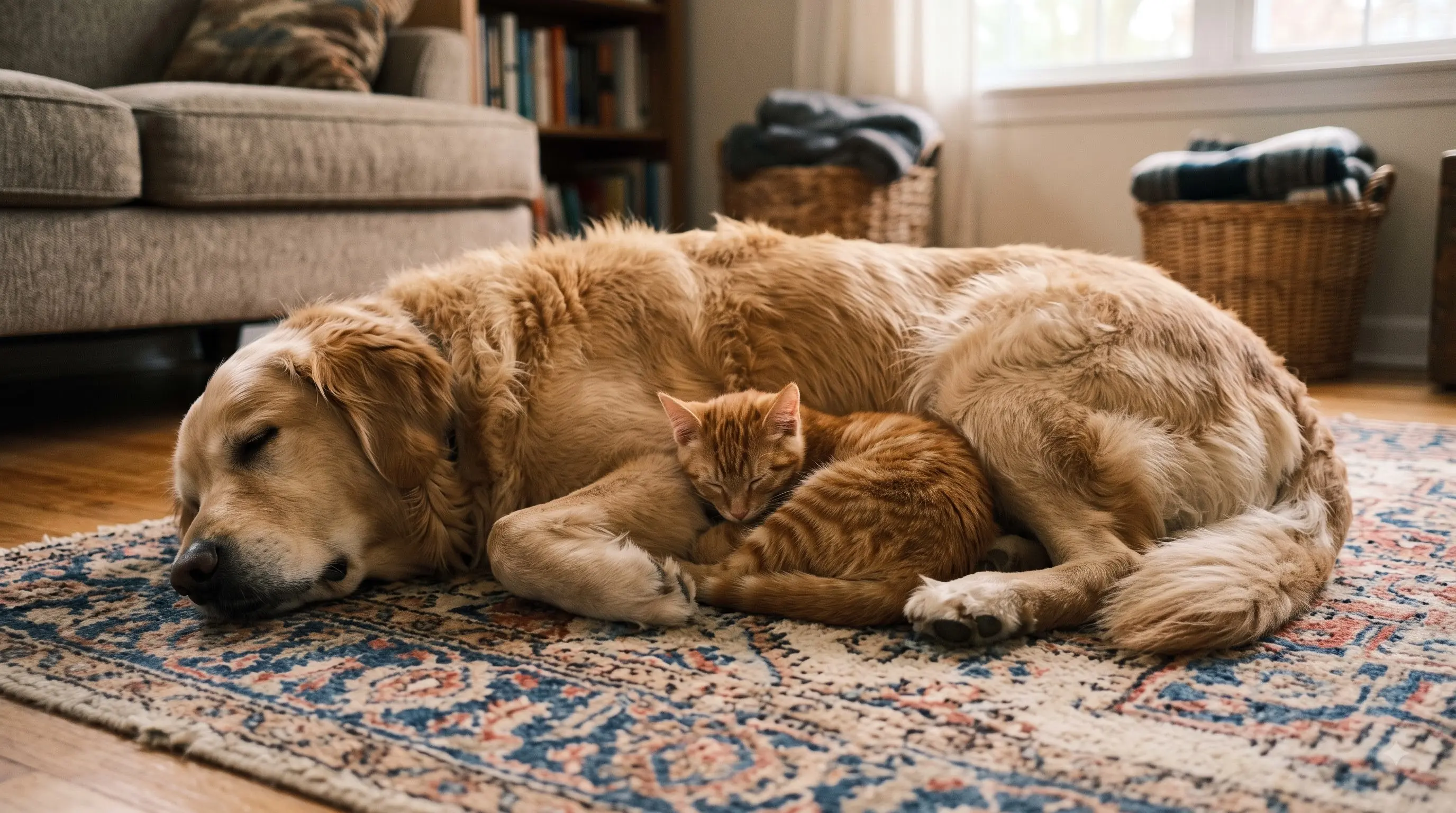
A cat and dog friendship doesn’t seem to care about size the way most people expect it to. A small cat curling up against a dog that outweighs it by fifty pounds, or napping directly on top of a large breed’s back, is one of the more common surprises in multi-pet households.
This kind of unlikely animal friendship isn’t a fluke — it’s a pattern that shows up again and again once a cat and dog get past their first cautious introduction.
Why Size Rarely Matters Once Trust Is Built
Animal behaviorists point out that cats and dogs read body language, scent, and routine far more than raw size when deciding whether another animal is safe.
According to the ASPCA’s pet care resources, a calm, well-socialized large dog that respects a cat’s space often earns trust faster than a smaller, more erratic animal would.
Once a cat decides a dog is predictable and non-threatening, size stops being a factor at all — the cat and dog friendship that follows is built on temperament, not proportions.
How the Bond Usually Starts
Most successful pairings begin with careful, gradual introductions: scent swapping before any face-to-face meeting, short supervised sessions, and plenty of separate space for the cat to retreat to if needed.
Confident cats sometimes take charge of the relationship almost immediately, walking right up to a much larger dog with no hesitation.
Shyer cats may take weeks of quiet coexistence before trusting a dog enough to relax fully in its presence. However long it takes, a patient start is usually what determines whether a cat and dog friendship takes hold at all.
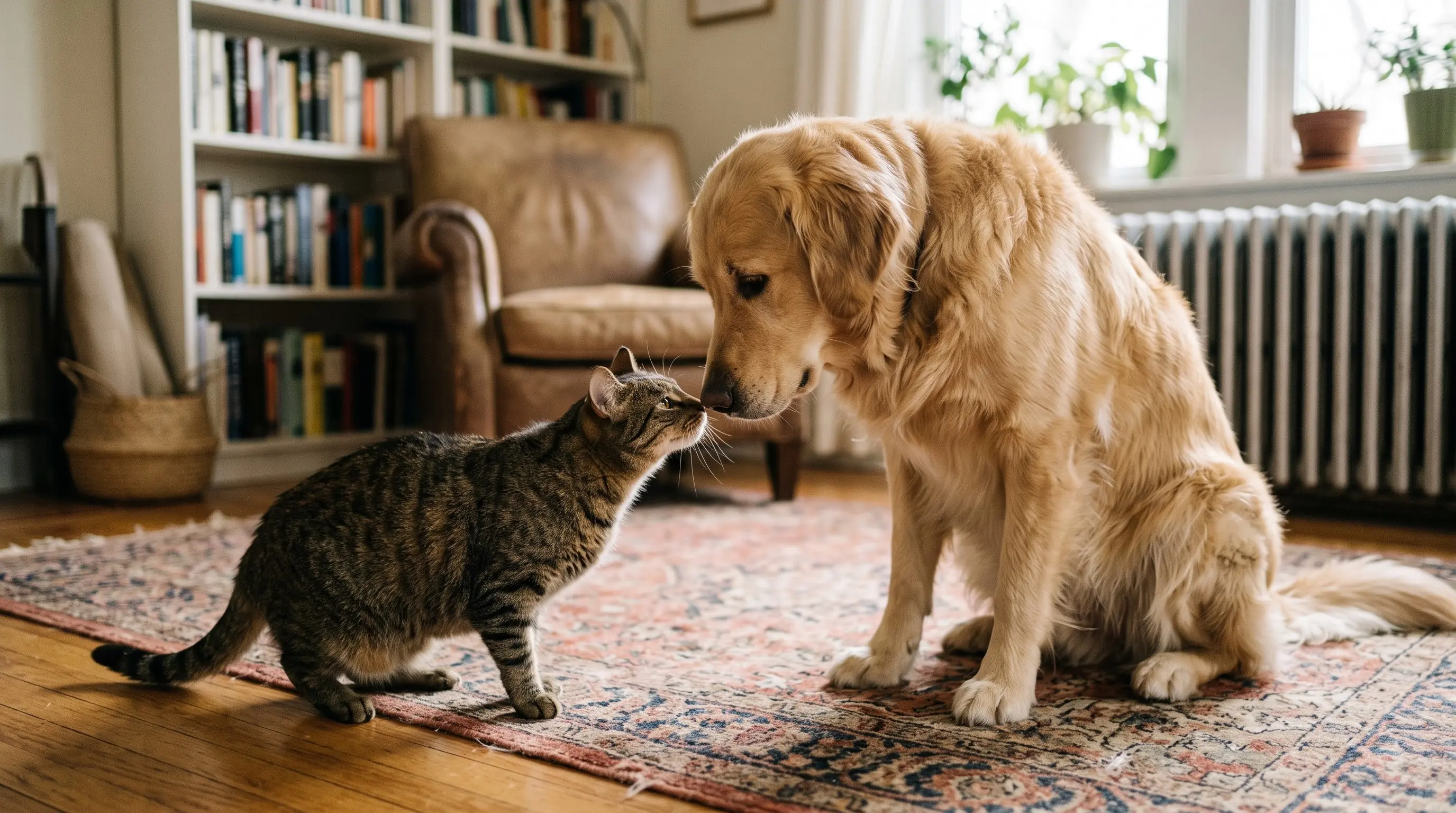
What Makes Certain Pairings Click
Temperament matching plays a bigger role than breed or size in whether a cat and dog friendship succeeds. Dogs with a naturally gentle, low-prey-drive disposition tend to make the best companions for cats regardless of their size, since a calm large dog is often less startling to a cat than an excitable small one.
Cats who’ve been socialized around dogs early in life, or who simply have a confident personality, also tend to adapt faster to sharing space with a much bigger housemate.
The Everyday Signs of a Real Bond
Once the friendship is established, the signs are hard to miss: mutual grooming, sleeping in physical contact, following each other from room to room, or a cat rubbing against a dog’s legs the same way it would greet a trusted person.
Some large dogs become visibly protective of a resident cat, positioning themselves between the cat and unfamiliar visitors or other animals.
These aren’t isolated cute moments — they’re consistent, repeated behavior that reflects a genuine attachment, and they’re usually the clearest evidence that a cat and dog friendship has fully taken root.
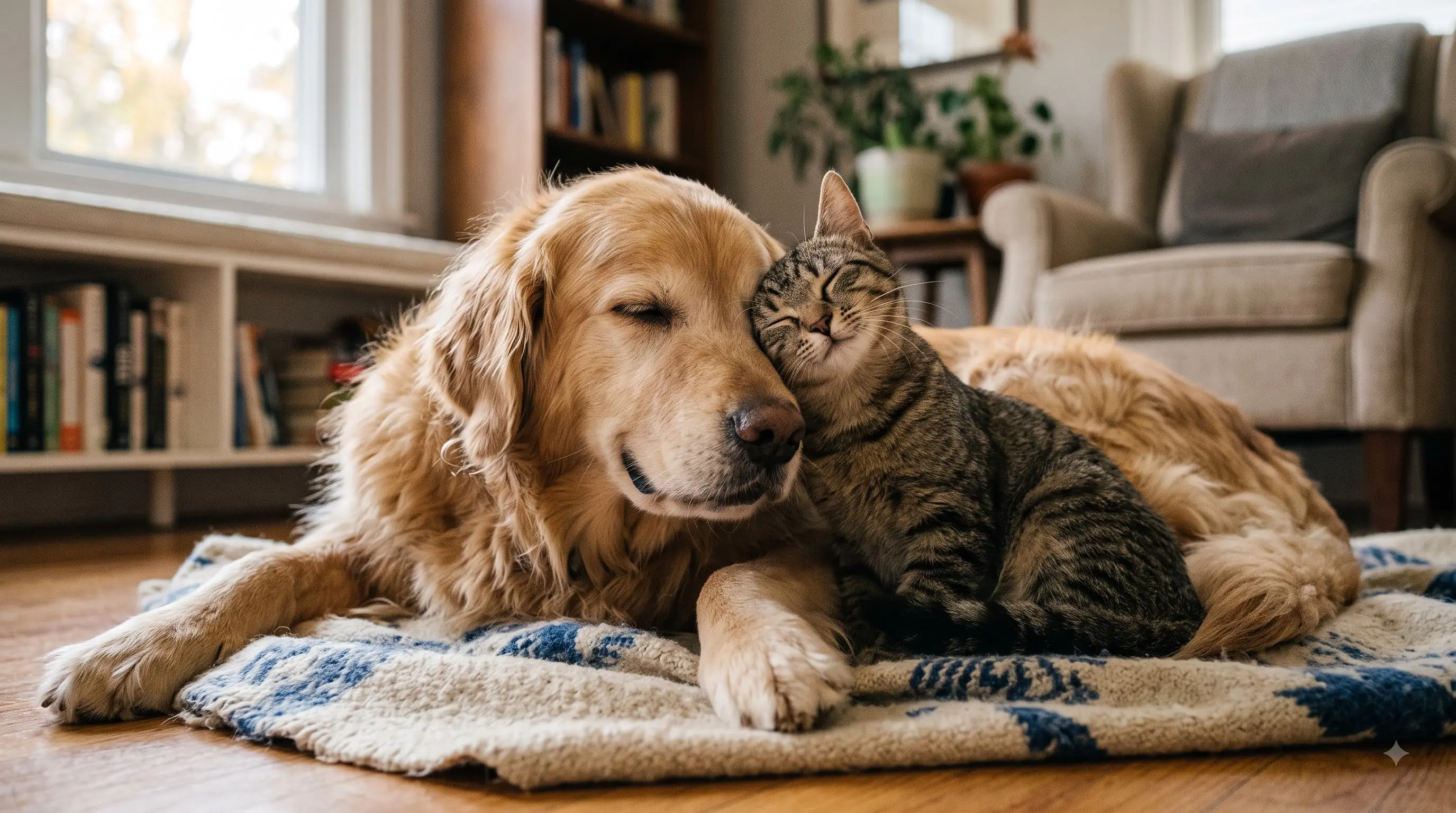
Real Impact of a Successful Cat and Dog Friendship
- Reduces household stress, since a bonded pair often self-regulates play and space far better than mismatched pets
- Gives shy or anxious cats a source of comfort and security beyond their human family
- Demonstrates to adopters that size differences shouldn’t rule out a pairing before it’s even tried
- Often deepens over years, with older bonded pairs showing some of the strongest interspecies attachment seen in home settings


Frequently Asked Questions
How long does it typically take for a cat and a large dog to bond?
A cat and dog friendship can form in as little as a few days for confident, well-matched pairs, or take several weeks or months for more cautious animals. Consistent, low-pressure exposure tends to speed things up.
Are certain dog breeds better matched with cats?
Breeds bred for lower prey drive and calm temperaments generally do better, but individual personality often matters more than breed alone — a well-socialized dog of any size can form a strong bond with a cat.
Should I worry about a large dog accidentally hurting a small cat during play?
Supervision during the early stages is important, but most bonded pairs naturally adjust their play style to each other’s size and comfort level over time.
What should I feed pets in a mixed cat-and-dog household?
Cats and dogs need different diets, so separate feeding areas matter. If introducing a new food to either pet, the FDA’s Center for Veterinary Medicine recommends transitioning gradually over 7 to 10 days to avoid digestive upset.
Give an Unlikely Friendship the Chance to Happen
A cat and dog friendship rarely looks the way people expect going in — size, breed, and first impressions matter far less than patience and a calm introduction.
If you’re bringing a new cat or dog into a multi-pet household, the Pet Symptom Checker is a useful tool for monitoring both animals’ health during the adjustment.
And if you’re specifically looking for a dog that tends to do well in homes with cats, our guide on the best dog breeds for homes with cats is a good place to start.
Source: U.S. Food and Drug Administration, Center for Veterinary Medicine — guidance on transitioning pets to a new diet.

Sidnir Vieira is the founder of TechHavela. A lifelong pet owner who had a dog for many years and now lives with a cat, he writes educational guides that help owners understand symptoms and know when to call the vet. TechHavela’s articles are based on veterinary sources and are not reviewed by a veterinarian.