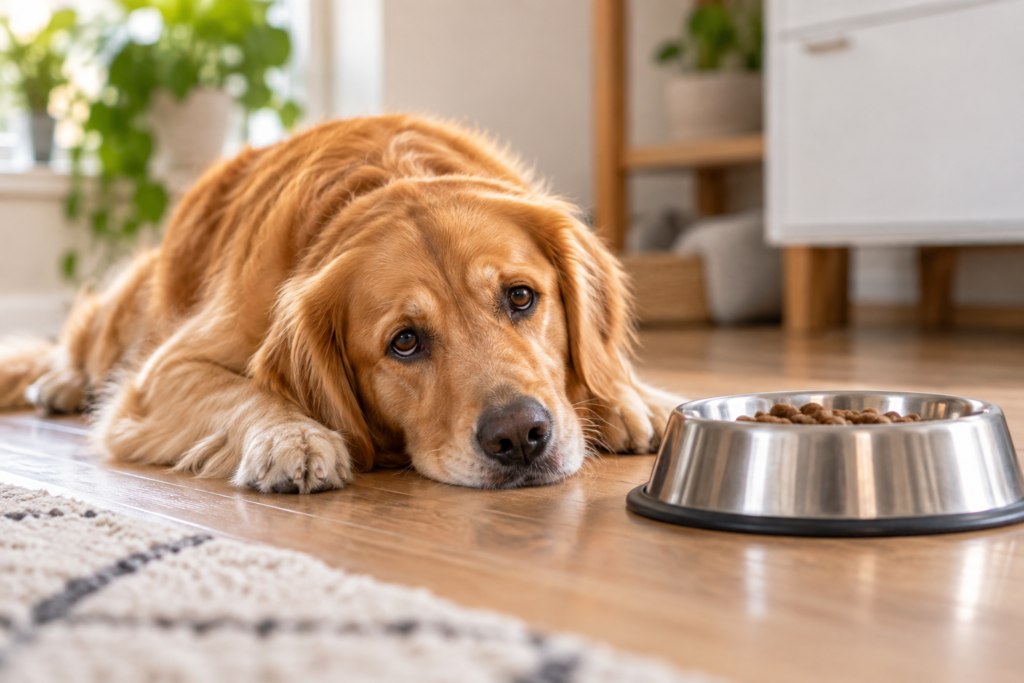
Quick answer: Dog heatstroke warning signs include heavy panting, drooling, weakness, vomiting, confusion, collapse and bright red gums. Heatstroke is a medical emergency. Move your dog out of the heat, start cooling with cool water and go to a vet right away. You can also use our Pet Symptom Checker, which covers dogs and cats.

Why Heatstroke Is an Emergency
Cornell’s Riney Canine Health Center calls it a medical emergency. VCA Animal Hospitals explains in its page on heat stroke in dogs that heat can cause serious harm to the body, so a dog should be seen by a vet even if it seems to recover.

When to Call the Vet Right Away
If you think your dog has heatstroke, call a vet or go to an emergency clinic right away. Signs include:
- heavy panting, drooling and looking for shade (see why a dog may pant so much);
- bright red gums or tongue, or a racing pulse;
- vomiting or diarrhea, sometimes with blood (see vomiting);
- weakness, confusion, stumbling or collapse (see why a dog may be weak);
- trouble breathing or a seizure.

What to Do Right Away
- Move your dog to shade or an air-conditioned place.
- Start cooling with cool or room-temperature water. Use a hose, wet towels or a fan. Rewet towels often.
- Avoid ice and ice baths. Cornell and other veterinary sources advise against them, because very cold water can slow the cooling.
- Focus on the neck, armpits, belly and groin.
- Offer small sips of water but do not force your dog to drink.
- Go to the vet while you cool your dog. Ask someone to drive.

Who Is at Higher Risk?
Dogs with short noses, overweight dogs and dogs with heart or lung problems are more at risk. Never leave a dog in a parked car, and avoid hard exercise in hot weather. Cornell has more advice in its summer heat safety tips for dogs. Our guide to dog emergency signs covers other urgent problems.

What the Veterinarian May Do
The team will check your dog’s temperature and condition and may recommend tests. VCA notes that heatstroke can harm organs, so your vet may want to monitor your dog after the first care.

How the Pet Symptom Checker Can Help
Our Pet Symptom Checker helps you look up symptoms in dogs and cats and see common reasons and warning signs. It does not diagnose and does not replace a veterinarian. In a heat emergency, cool your dog and go to a vet first.
How Dogs Cool Down, and Why It Is Limited
Humans cool themselves by sweating through the skin. Dogs cannot do that well. They have a few sweat glands in their paw pads, but most of their cooling comes from panting, which moves air over the tongue and the lining of the mouth, and from heat lost through the skin of the belly and ears. This system works in mild weather, but it has limits. When the air is hot and humid, panting becomes much less effective because moisture does not evaporate easily. A dog can then keep warming up even while it pants hard. Our article on why a dog may pant so much explains normal panting and when it becomes a warning sign.
A dog’s normal body temperature is roughly 101 to 102.5 degrees Fahrenheit (about 38.3 to 39.2 degrees Celsius). When the temperature climbs well above that range because of heat and not because of an infection, the body can no longer keep up. Cells and organs begin to be damaged. That is heatstroke, and it can lead to serious problems in the brain, kidneys, liver, heart and blood within hours.
Common Situations That Lead to Heatstroke
Veterinary organizations such as the AVMA and VCA Animal Hospitals repeat the same warnings, because the same situations cause the same tragedies year after year:
- Being left in a parked car. Even on a mild day, the inside of a car can heat very fast, and cracking the window does little to help. Never leave a dog in a car, not even for a few minutes.
- Exercise in hot or humid weather. Long walks, runs or games of fetch at midday can be too much, especially for dogs that do not know when to stop.
- Hot pavement and no shade. Dogs kept in a yard with no shade or fresh water can overheat quickly.
- Poor ventilation. Closed rooms, garages, crates covered with blankets or travel in a hot cargo area can trap heat.
- Muzzles or tight restraints that limit panting.
- Sudden changes in climate. A dog that is not used to heat may overheat on the first hot days of the year or when traveling to a warmer place.
Heatstroke can also happen indoors, for example in a home without air conditioning during a heatwave, or after a power cut.
Early Signs Versus Advanced Signs
Recognizing the early stage gives you a chance to act before the situation becomes critical. Early signs often include heavy, fast panting, drooling, a bright red tongue and gums, restlessness, seeking shade or cool floors and a dog that seems unusually eager to rest. As the temperature rises, signs may progress to thick, ropey saliva, vomiting or diarrhea, a rapid heartbeat, weakness, stumbling, glazed eyes and pale, gray or bluish gums. In the most severe cases, dogs can collapse, have seizures, lose consciousness or bleed abnormally. Once a dog shows the later signs, it is an emergency and every minute counts. See also why a dog may be weak and why a dog may breathe fast.
First Aid While You Head to the Vet
Heatstroke needs veterinary care, even if your dog seems to recover. Internal damage can appear hours or days later. While you arrange the trip, you can start gentle cooling, following the advice veterinary organizations commonly give:
- Move your dog out of the heat to shade or an air-conditioned room or car.
- Call the clinic and tell them you are on your way with a possible heatstroke so they can prepare.
- Cool with water that is cool, not ice cold. Pour or spray cool water over the body, especially the belly, groin, armpits and paws. Wet towels can help, but change them often so they do not trap heat.
- Use airflow. A fan or the car’s air conditioning helps evaporation.
- Offer small sips of cool water if your dog is alert and wants to drink. Do not force water and do not let your dog gulp.
- Stop active cooling when the temperature is near normal, if you are measuring it, to avoid overcooling. Do not use ice or ice-cold water, because it can narrow blood vessels near the skin and slow the loss of heat.
Do not delay the trip to cool the dog at home for a long time. Cooling and transport should go together.
What Your Vet Will Likely Do
When you arrive, the team will measure your dog’s temperature, check heart rate, breathing, gum color and mental state and may start treatment right away. Care often includes controlled cooling, intravenous fluids, oxygen if needed and monitoring. Blood tests help check the kidneys, liver and clotting, since heat can damage these organs. Some dogs need to stay in the hospital for a day or more. The outlook depends on how high the temperature got, how long it stayed high and how fast treatment started, which is why early action is so important.
Who Is at Higher Risk?
Any dog can suffer heatstroke, but certain dogs need extra care. Flat-faced breeds, such as bulldogs, pugs, boxers and Boston terriers, have narrow airways and cannot pant as efficiently. Overweight dogs, dogs with thick or dark coats, puppies, seniors and dogs with heart, lung or throat problems are also more at risk. Dogs that have had heatstroke before may be more sensitive afterward. If your dog is in one of these groups, plan walks for the coolest hours, keep outings short and carry water.
Prevention Checklist for Hot Weather
- Walk in the early morning or late evening, and check the pavement with the back of your hand. If it is too hot for your hand, it is too hot for paws.
- Provide plenty of fresh water and shade at all times, and bring water on trips.
- Never leave your dog in a parked car.
- Keep your dog indoors in a cool room during the hottest part of the day.
- Avoid hard exercise in heat, and watch for early signs.
- Consider cooling mats or a shallow pool for dogs that enjoy water, always with supervision.
- Ask your vet about grooming. Do not shave a double-coated dog without advice, because the coat can help protect against heat and sun.
Myths About Heatstroke
A few common beliefs can be harmful. One is that a dog that is panting is “just fine.” Panting is normal in some situations but can also be an early sign of trouble. Another is that a short time in a car is safe. Temperatures in a closed car can rise to dangerous levels very quickly. A third is that cold water or ice is the best way to cool a dog. Veterinary groups generally recommend cool water, not ice-cold. A fourth is that a dog that looks better after cooling does not need a vet. Many dogs have hidden internal injury after heatstroke, and a check-up is important.
If you ever see a dog left in a hot car, contact local authorities or the business where the car is parked, rather than trying to handle the situation alone.
Heat and Travel: Planning Ahead
Travel adds extra risks. Before a long trip, check the forecast at your destination and along the route. Plan stops in shaded places, offer water at each stop and never leave your dog in the car, not even for a quick errand. If you fly or use public transport, ask about rules for hot weather, since some airlines limit pet travel when temperatures are high. Pack a cooling mat, a collapsible bowl and a towel that you can wet. On arrival, give your dog time to adjust to a new climate before heavy exercise. A dog that is used to cool weather may need several days to adapt to heat.
Heat Outdoors: Beaches, Parks and Hikes
Outdoor activities are great for dogs, but they need planning in hot weather. At the beach, sand can burn paws and there may be little shade, so bring an umbrella and fresh water. On hikes, choose shaded trails, take frequent breaks and carry more water than you think you need. Do not let your dog drink from stagnant water, which can carry germs. Watch for signs such as slowing down, heavy panting, lagging behind or lying down and refusing to move. When you see these signs, stop, move to shade and cool your dog gently. It is better to cut a trip short than to risk heatstroke.
After a Heatstroke Scare
If your dog has had a heat-related scare, even a mild one, talk with your vet about follow-up. Some dogs need blood tests in the days after, and some become more sensitive to heat afterward. Keep a close eye on appetite, energy, urination and stool for several days. Adjust your routine so that your dog gets exercise in cooler hours, and consider changes at home, such as a fan, air conditioning or a cooling mat. Share what happened with everyone who cares for your dog, such as dog walkers or family, so that they can help prevent a repeat.
Frequently Asked Questions
Is heavy panting always heatstroke?
No. Dogs pant for many reasons. Heavy panting with drooling, weakness or vomiting in hot weather needs urgent attention.
Should I use ice water?
Cornell and other sources advise cool or room-temperature water instead of ice.
Does my dog need a vet if it seems better?
Yes. VCA notes that heatstroke can harm organs even after a dog seems to recover.
Can I leave my dog in the car for a minute?
No. Never leave a dog in a parked car.
Final Thoughts
Heatstroke can be prevented. If you see the warning signs, cool your dog with cool water and go to a vet right away.
This article is for general education only. It does not diagnose any condition and does not replace advice from your veterinarian.

Sidnir Vieira is the founder of TechHavela. A lifelong pet owner who had a dog for many years and now lives with a cat, he writes educational guides that help owners understand symptoms and know when to call the vet. TechHavela’s articles are based on veterinary sources and are not reviewed by a veterinarian.