Quick answer: Why is my cat’s nose dry or crusty? Crusting often comes from dried nasal discharge, for example with an upper respiratory infection or allergies, or from a skin problem on the nose. A dry nose alone is not always a sign of illness, but crusts, discharge, bleeding or breathing trouble deserve a vet visit. You can also organize what you see with our Pet Symptom Checker, which covers cats and dogs.

Dry Nose or Crusty Nose?
A dry nose can be normal for a short time, for example after a nap in a warm spot. A nose with crusts, scabs or discharge is different. VCA Animal Hospitals lists nasal discharge that has crusted around the nose as a sign that a pet should be examined, in its page on runny nose, coughing and sneezing.

When to Call the Vet Right Away
Call your veterinarian right away, or go to an emergency clinic, if your cat:
- has trouble breathing or is very tired (see why a cat may breathe fast);
- has blood in the nasal discharge or a nosebleed;
- refuses to eat (see not eating);
- has yellow or green discharge from the nose or eyes;
- keeps getting worse instead of better.
VCA also explains in its guide to nosebleeds in cats that bleeding from the nose should be checked by a veterinarian.

Possible Causes
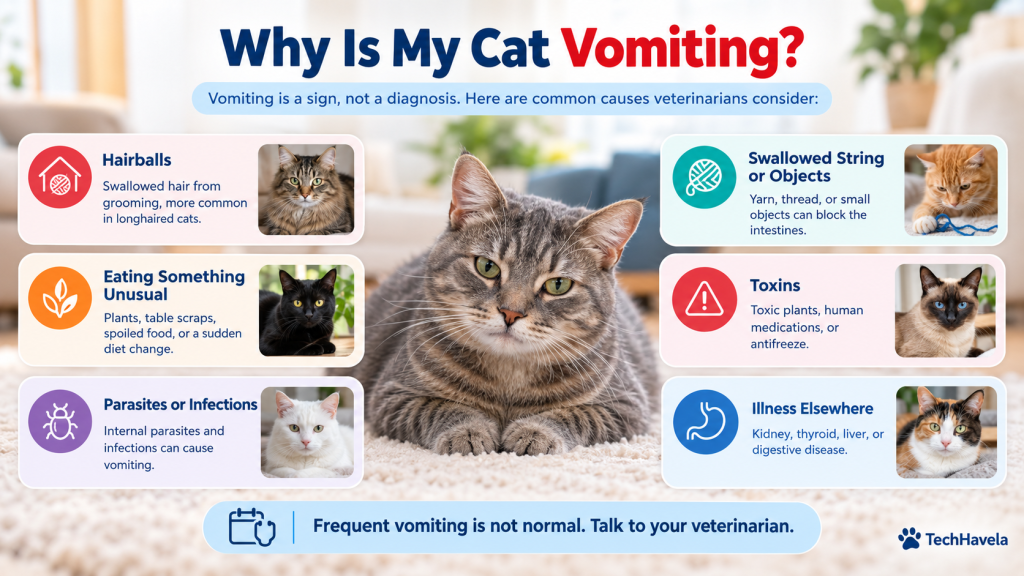
Only a veterinarian can find the cause. Common possibilities include:
- Dried nasal discharge. VCA says upper respiratory infections are most commonly caused by viruses such as feline herpesvirus and calicivirus, and allergies or a foreign object in the nose can also cause discharge. See also why a cat’s nose may run.
- Skin problems. VCA lists possible causes of crusting on the nose such as mites, fungus, immune-system disorders and sun damage. In cats with a pale nose, VCA explains in its page on solar dermatitis in cats that the skin can start red and dry and later become crusted and ulcerated.
- Dry, flaky skin (seborrhea). VCA explains in its page on seborrhea in cats that allergies, parasites and infections can be behind it.

What You Can Do at Home
- Do not pick the crusts. This can hurt the skin and delay healing.
- Keep your cat’s face clean. PetMD suggests gently wiping discharge with a warm, damp towel.
- Watch for changes in appetite, energy, breathing and sneezing.
- Keep your cat indoors and away from strong sun if the nose is pale and red, and ask your vet about sun protection.
- Separate sick cats. VCA notes that infections can be contagious, so keep a cat with a runny nose away from other cats until a vet checks it.
Do not use creams or medicines made for people or for other pets without asking your vet. Stress and household changes can also affect cats, see mistakes that stress out cats.

What the Veterinarian May Do
Your vet will look at the nose and face, ask how long the problem has lasted and may recommend tests, such as skin tests or a check for infection. Treatment depends on the cause.

How the Pet Symptom Checker Can Help
Our Pet Symptom Checker helps you look up symptoms in cats and dogs and see common reasons and warning signs. It does not diagnose and does not replace a veterinarian, but it can help you describe the problem clearly. For related signs, read why a cat may scratch.
What a Healthy Cat Nose Looks Like
A normal cat nose can look slightly different from one day to the next. It is often cool and a little moist, but it can also be warm and dry after a nap in the sun or near a heater. Color can vary by cat. Some noses are pink, some are dark, and some are speckled. Many cats also develop darker freckle-like spots as they age. Because normal can look so different, the best tool you have is comparison: you know your cat’s usual nose better than anyone. A change from that baseline, especially if it lasts, is what deserves attention.
A dry nose alone does not tell you whether a cat is sick. A cat can have a perfectly healthy dry nose, and a sick cat can have a wet one. What matters more are the other signs: crusts, scabs, discharge, sneezing, noisy breathing, changes in eating or energy. When these appear, a veterinary exam is the right step.
Dry Nose Versus Crusty Nose
These are two different things and it helps to separate them. A dry nose feels rough or warm without any visible build-up. It often passes by itself. A crusty nose has a visible layer, often brown, yellow or green, around or inside the nostrils, and may stick to the fur. Crusts often come from dried discharge, which is why a cat with a runny nose can wake up with a crusty one. They can also come from skin conditions on the nose itself, where scabs or sores form.
If you can see sores, raw skin, bleeding or swelling, or if the crust returns soon after you gently clean it, do not wait for it to clear by itself. Call your vet. Our article on why a cat’s nose may run explains more about discharge, which is one of the most common reasons for crusts.
Upper Respiratory Infections and the Nose
Upper respiratory infections are common in cats, especially in kittens, cats from shelters and cats that live with many others. VCA Animal Hospitals explains that these infections are most often caused by viruses such as feline herpesvirus and calicivirus. Typical signs include sneezing, watery or thick discharge from the nose and eyes, congestion, and sometimes a lower appetite. When the discharge dries around the nostrils, it forms crusts.
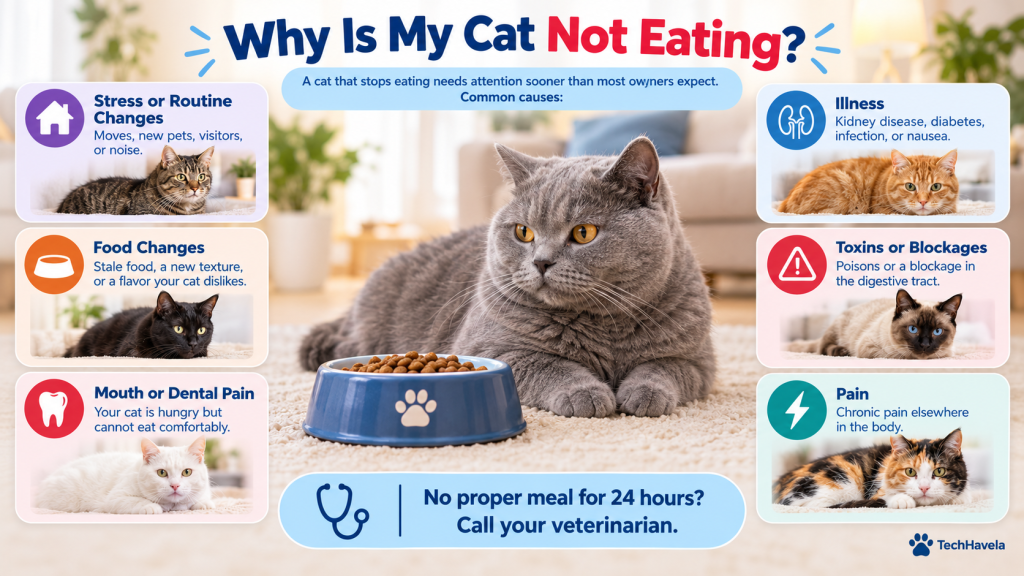
A cat with a blocked nose may stop eating because it cannot smell its food, so watch appetite closely. A cat that refuses food for more than a day needs a vet. Read more in why a cat may not be eating. Some cats carry the herpesvirus for life and have flare-ups during stress, which is another reason to keep routines calm.
Allergies, Irritants and Foreign Objects
Cats can react to things in the air, such as dust, pollen, smoke, strong perfumes, cleaning sprays and some types of litter dust. These irritants can cause sneezing and a runny nose, and dried discharge can lead to crusts. A foreign object, such as a blade of grass or a small seed that is breathed in, can cause sudden sneezing and discharge from just one nostril. If you notice discharge from one side only, a bad smell or pawing at the face, see your vet.
You can lower irritants at home: choose low-dust litter, avoid spraying aerosols near your cat, do not smoke indoors and keep the house ventilated. These steps do not replace a veterinary exam, but they can make life easier for a cat with a sensitive nose.
Skin Problems on the Nose
The nose is skin too. VCA lists possible causes of crusting on a cat’s nose such as mites, fungal infections, immune-system problems and sun damage. Cats with pale noses and ears, especially white cats that spend time in the sun, may be at higher risk of sun-related changes. A scab that does not heal, a sore that bleeds or an area that keeps changing shape should be looked at by a veterinarian soon. These changes need proper diagnosis, which may include a skin scraping, a sample from the area or other tests.
Do not use creams, ointments or sunscreens made for people on your cat unless your vet says so. Cats lick their noses and swallow what is on them, and some ingredients are toxic to cats.
How to Clean a Crusty Nose Safely
If your cat is comfortable with it and there are no open sores or bleeding, you can gently clean away dried discharge. Ask your vet if you are unsure. A safe method looks like this:
- Wash your hands and choose a calm moment, when your cat is relaxed.
- Moisten a clean cotton pad or soft cloth with warm water. Do not use soap, alcohol or medicated wipes unless your vet suggests them.
- Hold the cloth against the crust for a few seconds to soften it. Do not scrub or pull.
- Wipe gently away from the nostrils. Use a fresh pad for each side.
- Offer a treat and let your cat go if it becomes stressed. Try again later.
If the crusts return quickly, if your cat resists strongly because it hurts, or if the area bleeds, stop and call your vet.
Signs That Mean You Should Not Wait
Call a veterinarian soon, or go to an emergency clinic if it is outside office hours, if you see any of the following with a dry or crusty nose:
- Trouble breathing, open-mouth breathing or loud, wet breathing sounds.
- Blood in the discharge or a nosebleed.
- Thick yellow or green discharge from the nose or eyes.
- Refusing food for a day or more, or hiding and acting very tired.
- Swelling of the face, a nose that looks different on one side or a sore that does not heal.
Cats are good at hiding illness, so subtle signs matter. For more on this, see why a cat may hide.
Special Cases: Kittens, Seniors and Multi-Cat Homes
Kittens get sick faster than adult cats, and a kitten with a crusty nose, sticky eyes and low appetite needs to be seen quickly. Senior cats may have other illnesses, such as kidney or dental disease, that make infections harder to fight. Cats in multi-cat homes can pass upper respiratory infections to each other, so if one cat is sneezing and has crusts, watch the others and ask your vet whether to separate them. Wash your hands between handling cats and clean shared bowls and bedding.
Keeping a Simple Nose Diary
If your cat’s nose changes on and off, a short diary can help your vet. Take a clear photo every few days in good light, and note whether there was sneezing, eye discharge, a change in appetite or a change in the home, such as new cleaning products or a new cat. Patterns such as “worse after a stressful week” or “worse in spring” can point toward the cause and save time at the clinic. Bring the photos to your appointment along with your notes.
Questions to Ask Your Veterinarian
A short list of questions can make the visit more useful. You might ask: What do you think is causing the crusting? Is my cat contagious to other pets or to people in the home? Does my cat need tests, such as a swab or skin scraping? How should I clean the nose, and how often? What signs would mean I should come back sooner? Write down the answers, and ask for a plan in simple steps. If your vet prescribes drops, ointment or medicine, follow the instructions exactly and finish the course even if the nose looks better. Many cats also need a recheck, so book the follow-up before you leave the clinic.
Frequently Asked Questions
Is a dry cat nose a sign of fever?
Not by itself. A dry nose alone does not tell you whether a cat is sick. Look at the whole cat and call your vet if you are worried.
Can I put ointment on my cat’s nose?
Ask your veterinarian first. Products made for people or other pets may not be safe for cats.
Why is my cat’s nose crusty after a cold?
Dried discharge from an upper respiratory infection can leave crusts around the nose. A vet visit is a good idea if it lasts.
When is a crusty nose urgent?
If there is trouble breathing, blood, no appetite or yellow or green discharge, call your vet right away.
Final Thoughts
A dry nose can be normal, but crusts and discharge are worth a closer look. Watch your cat, keep the face clean and ask your vet if the problem lasts or comes with other signs.
This article is for general education only. It does not diagnose any condition and does not replace advice from your veterinarian.

Sidnir Vieira is the founder of TechHavela. A lifelong pet owner who had a dog for many years and now lives with a cat, he writes educational guides that help owners understand symptoms and know when to call the vet. TechHavela’s articles are based on veterinary sources and are not reviewed by a veterinarian.