Why Is My Dog’s Face Swollen? Possible Causes and Warning Signs
A dog face swollen suddenly can be alarming, especially when your dog looked completely normal only a short time ago. Swelling may appear around the muzzle, lips, cheeks, eyes, or jaw, and sometimes only one side of the face is affected.
If your dog’s face is swelling up, possible causes range from an allergic reaction or insect sting to dental disease, an injury, infection, or another underlying condition.
Some causes are relatively localized, while others may require prompt veterinary attention. The timing of the swelling, where it appears, and whether your dog has other symptoms can provide important clues.
If your dog is showing several symptoms and you are unsure what they may mean, you can also use our Pet Symptom Checker to review common symptoms and warning signs.
What Does Facial Swelling Look Like in Dogs?
Facial swelling can look different depending on its location and possible cause.
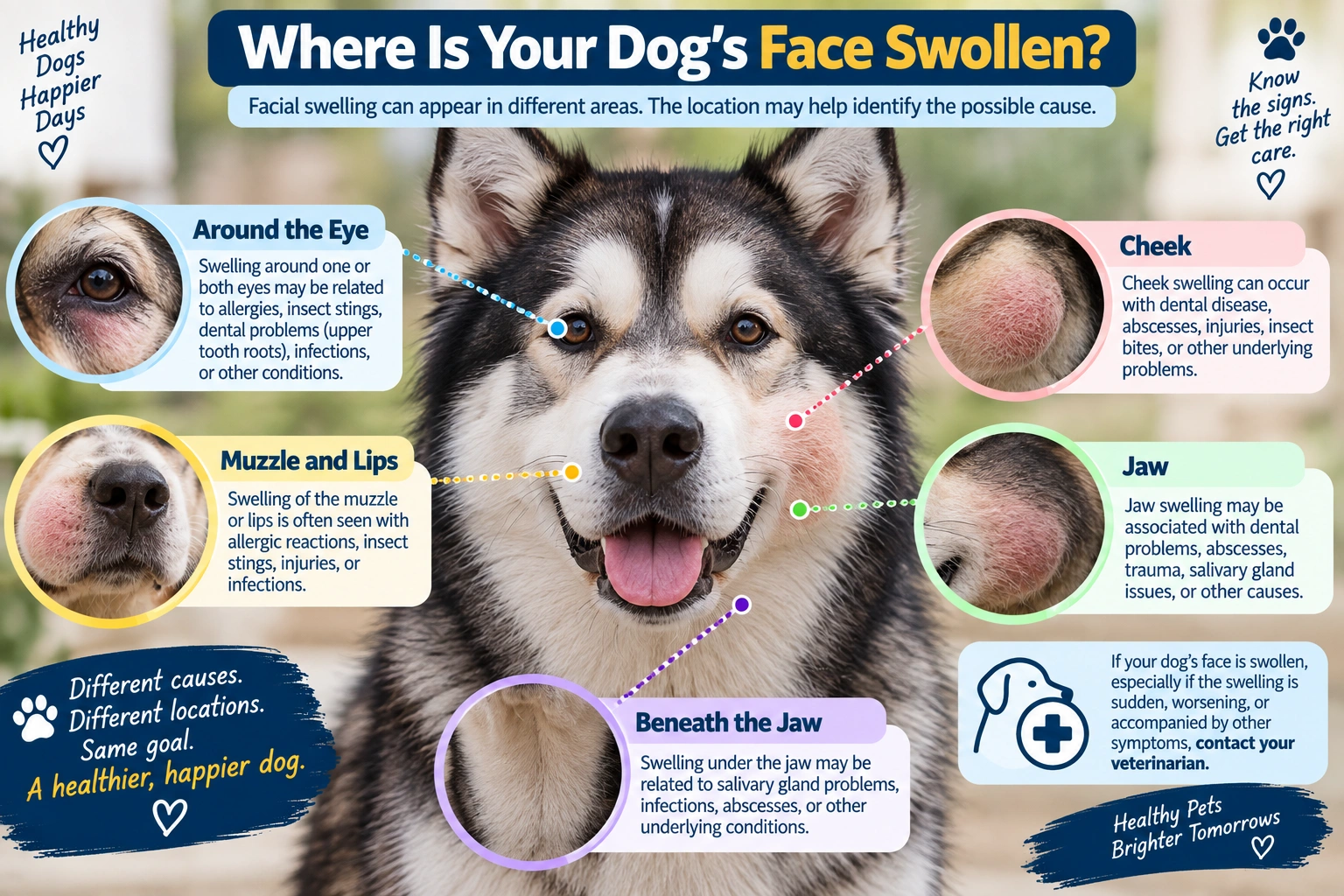
You may notice puffiness around the eyes, enlargement of the lips or muzzle, swelling of a cheek, or an uneven appearance in which one side of the face looks larger than the other.
In some dogs, the change is obvious. In others, you may first notice that the face looks slightly asymmetrical.
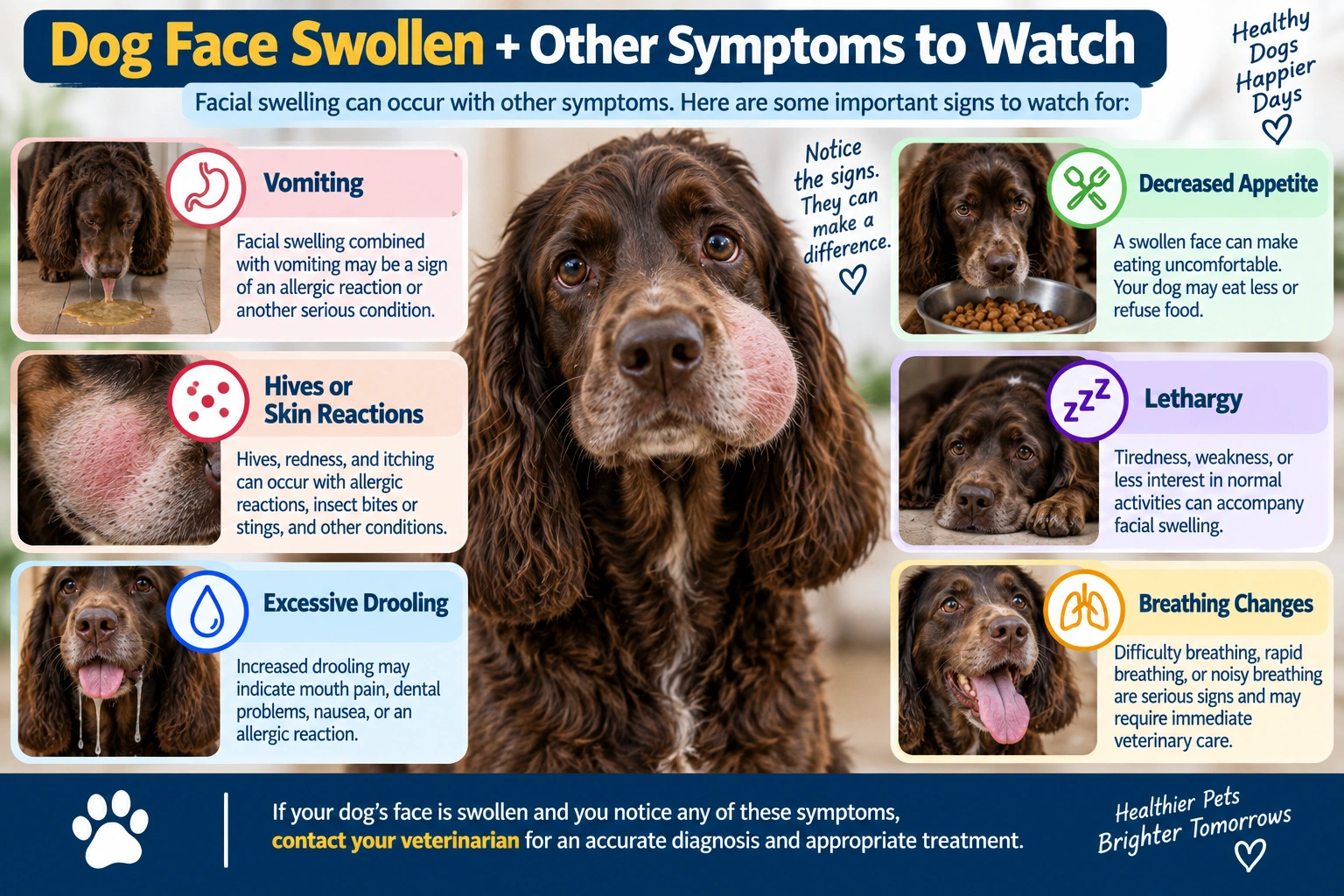
Check for other changes such as:
- Redness
- Hives or raised bumps
- Itching
- Drooling
- Difficulty eating
- Bad breath
- Mouth discomfort
- Vomiting
- Lethargy
- Difficulty breathing
The combination of facial swelling with other symptoms is often more informative than the swelling alone.
Why Is My Dog’s Face Swollen?
There is no single explanation for facial swelling in dogs.
Possible causes include:
- Allergic reactions
- Insect bites or stings
- Dental disease or tooth root problems
- Injuries or trauma
- Infections or abscesses
- Problems involving the mouth
- Salivary gland disorders
- Other growths or underlying conditions
How quickly the swelling developed can be important.
Sudden swelling may occur with an allergic reaction or insect sting, while localized swelling that develops differently may be associated with dental disease, infection, injury, or another problem.
Because appearance alone cannot reliably identify the cause, significant or unexplained facial swelling should be discussed with a veterinarian.
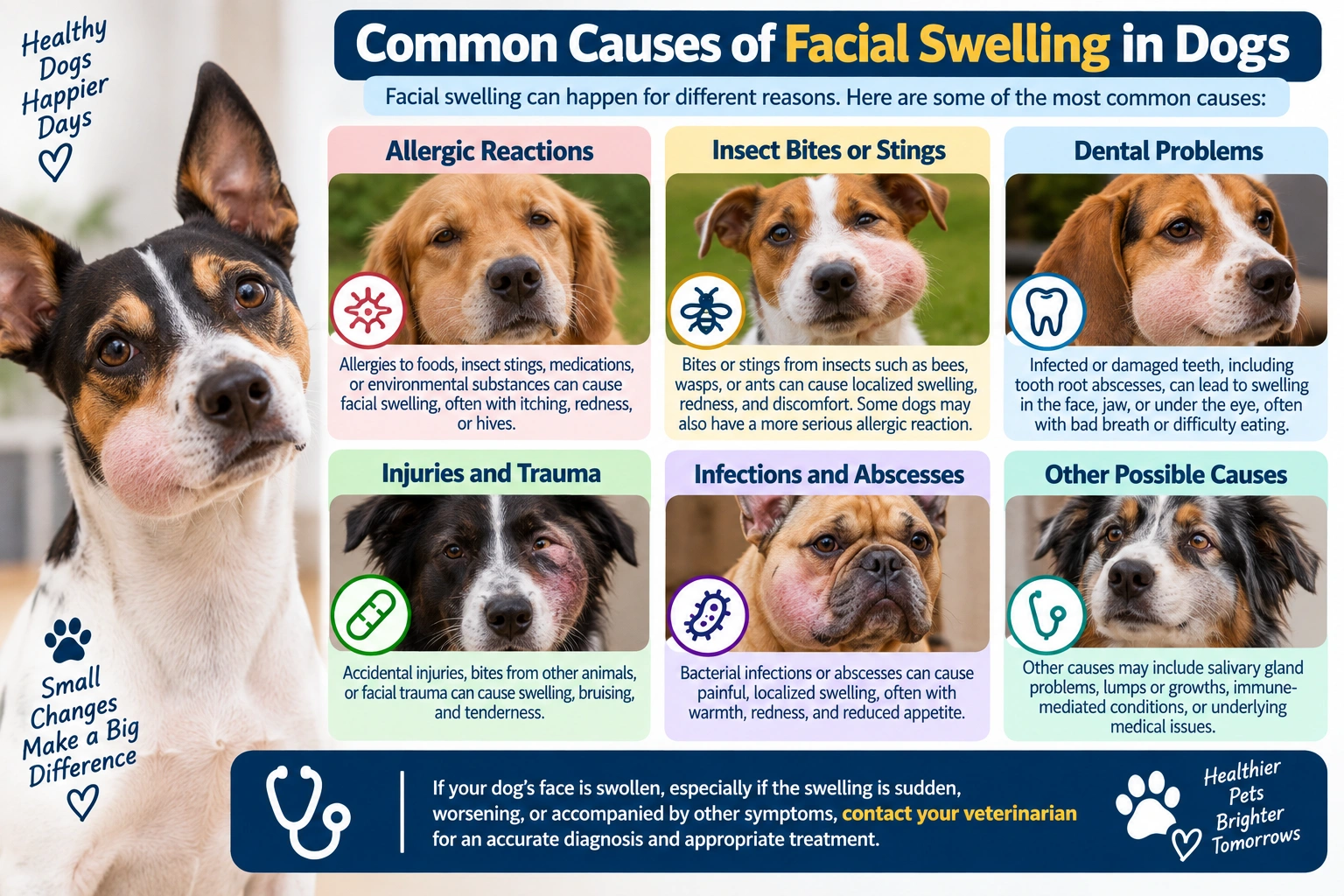
1. Allergic Reactions
An allergic reaction is an important possible cause of sudden facial swelling.
Swelling associated with an allergic reaction can occur around the muzzle, lips, face, and eyes. Hives and itching may also occur.
Potential triggers include insect stings or bites, medications, foods, and other substances.
The Merck Veterinary Manual explains that allergic reactions can produce hives and swelling that is often particularly noticeable around a dog’s face, lips, muzzle, and eyes.
The severity of allergic reactions varies considerably.
Facial swelling alone should be taken seriously, but swelling accompanied by difficulty breathing, collapse, repeated vomiting, or rapidly worsening symptoms requires immediate veterinary attention.
2. Insect Bites and Stings
Dogs investigate their environment with their noses and mouths, which can expose the face to insects.
A sting or bite may cause localized swelling, redness, itching, or discomfort.
The muzzle and areas around the eyes may become noticeably puffy.
An insect sting can also trigger a more generalized allergic reaction in a susceptible dog, so watch for symptoms beyond the immediate area of swelling.
Do not assume that every swollen muzzle is simply an insect bite, particularly if you did not see the event occur.
3. Dental Problems and Tooth Root Abscesses
Dental disease is another important possible explanation for a dog face swollen, particularly when the swelling is localized.
An infected or damaged tooth can affect tissues around the tooth root and may eventually produce visible swelling of the face.
Depending on which tooth is involved, swelling may appear beneath an eye or along the cheek or jaw.
The Merck Veterinary Manual notes that swelling beneath the inner area of the eye can be associated with a compromised upper tooth and recommends oral examination and dental imaging when appropriate.
Cornell University College of Veterinary Medicine also lists swelling of the jaw or face among signs that can occur with dental disease.
Other signs may include bad breath, drooling, difficulty eating, decreased appetite, bleeding from the mouth, or obvious mouth discomfort.
We discuss these dental warning signs in more detail here:
Why Does My Dog’s Breath Smell So Bad?
4. Injuries and Trauma
An injury to the face can cause swelling.
Possible examples include an accidental impact, a bite or scratch from another animal, or another form of facial trauma.
Swelling may occur together with tenderness, redness, bruising, or changes in how the dog eats or behaves.
Some injuries are not immediately obvious beneath a dog’s coat.
If swelling appears after known trauma or your dog seems painful, veterinary evaluation can help determine whether deeper tissues, teeth, or other facial structures have been affected.
5. Abscesses and Infections
An abscess is a localized pocket of infection that can cause swelling and discomfort.
Abscesses may develop following wounds, bites, dental infections, or other sources of infection.
Depending on the location, the affected area may become swollen, painful, or warm.
A dog may also become less active, eat less, or develop other signs of illness.
Avoid squeezing, puncturing, or attempting to drain an unexplained facial swelling yourself.
A veterinarian can determine whether the swelling is an abscess and what treatment is appropriate.
6. Salivary Gland Problems
Dogs have several salivary glands around the mouth, jaw, and head.
Problems affecting these glands or their ducts can sometimes create swelling around the jaw, neck, or facial region.
For example, a salivary mucocele occurs when saliva accumulates in surrounding tissues after damage to a salivary gland or duct.
The Merck Veterinary Manual notes that salivary gland disorders can produce swelling in different locations depending on which gland is affected.
Because these problems cannot usually be identified simply from appearance, persistent unexplained swelling needs veterinary evaluation.
Why Is My Dog’s Face Swollen on One Side?
One-sided facial swelling is a particularly common concern.
Possible explanations include a dental problem, localized infection or abscess, insect bite or sting, injury, or another localized condition.
Pay attention to exactly where the swelling appears.
Swelling beneath an eye, for example, may sometimes be associated with an upper tooth problem.
If your dog also has bad breath, difficulty chewing, drooling, reduced appetite, or mouth pain, make sure to tell your veterinarian.
Why Is My Dog’s Face Swollen Under One Eye?
Swelling beneath one eye deserves particular attention because some upper tooth roots are located relatively close to this area.
A diseased or damaged tooth can sometimes lead to swelling that appears to be an eye or facial problem rather than a dental problem.
Cornell notes that a chronically fractured tooth can eventually lead to an abscess with swelling and pain.
A veterinarian may need to examine both the mouth and the affected facial area to determine the source.
Why Is My Dog’s Face Swollen Suddenly?
Sudden facial swelling can occur with allergic reactions, insect bites or stings, trauma, and other acute problems.
Look at your dog’s overall condition rather than focusing only on the appearance of the face.
Ask yourself:
Did the swelling appear within minutes or hours?
Is it continuing to increase?
Is your dog itching?
Are there hives?
Has your dog vomited?
Is your dog breathing normally?
Is your dog alert and behaving normally?
Rapidly developing swelling combined with other significant symptoms requires more urgent attention.
Dog Face Swollen but Acting Normal
A dog may sometimes have visible facial swelling while continuing to eat, play, and behave normally.
That does not establish that the cause is harmless.
Dental problems, localized insect reactions, and other conditions can initially cause relatively few behavioral changes.
Take note of when the swelling began, whether it is increasing, and whether any additional symptoms develop.
Unexplained facial swelling should still be discussed with a veterinarian, even if your dog appears comfortable.
Dog Face Swollen and Vomiting
Facial swelling combined with vomiting deserves prompt attention because both can occur during a significant allergic reaction.
Severe allergic reactions can also produce diarrhea, excessive drooling, weakness, breathing difficulty, or collapse.
If vomiting is also a concern, you can learn more about its many possible causes here:
However, do not delay contacting a veterinarian when facial swelling and vomiting develop together, particularly when symptoms are sudden or worsening.
Dog Face Swollen and Drooling
Facial swelling accompanied by excessive drooling may occur when the mouth, teeth, or surrounding tissues are uncomfortable.
Drooling can also accompany nausea and some allergic reactions.
Because excessive salivation has numerous possible causes, consider whether your dog has additional signs such as vomiting, difficulty swallowing, mouth pain, decreased appetite, or breathing changes.
Our complete guide to excessive drooling is here:
Why Is My Dog Drooling So Much?
Dog Face Swollen and Not Eating
A dog with facial swelling may avoid food because chewing or opening the mouth is uncomfortable.
Dental disease, an injured tooth, an abscess, trauma, or another painful problem may contribute.
Cornell lists difficulty eating or decreased appetite, facial or jaw swelling, bad breath, bleeding from the mouth, and drooling among possible signs of dental disease.
Our detailed guide to appetite loss is here:
If your dog stops eating and has significant facial swelling or other symptoms, contact your veterinarian.
Is a Swollen Dog Face an Emergency?
The urgency depends on what is happening in addition to the swelling.
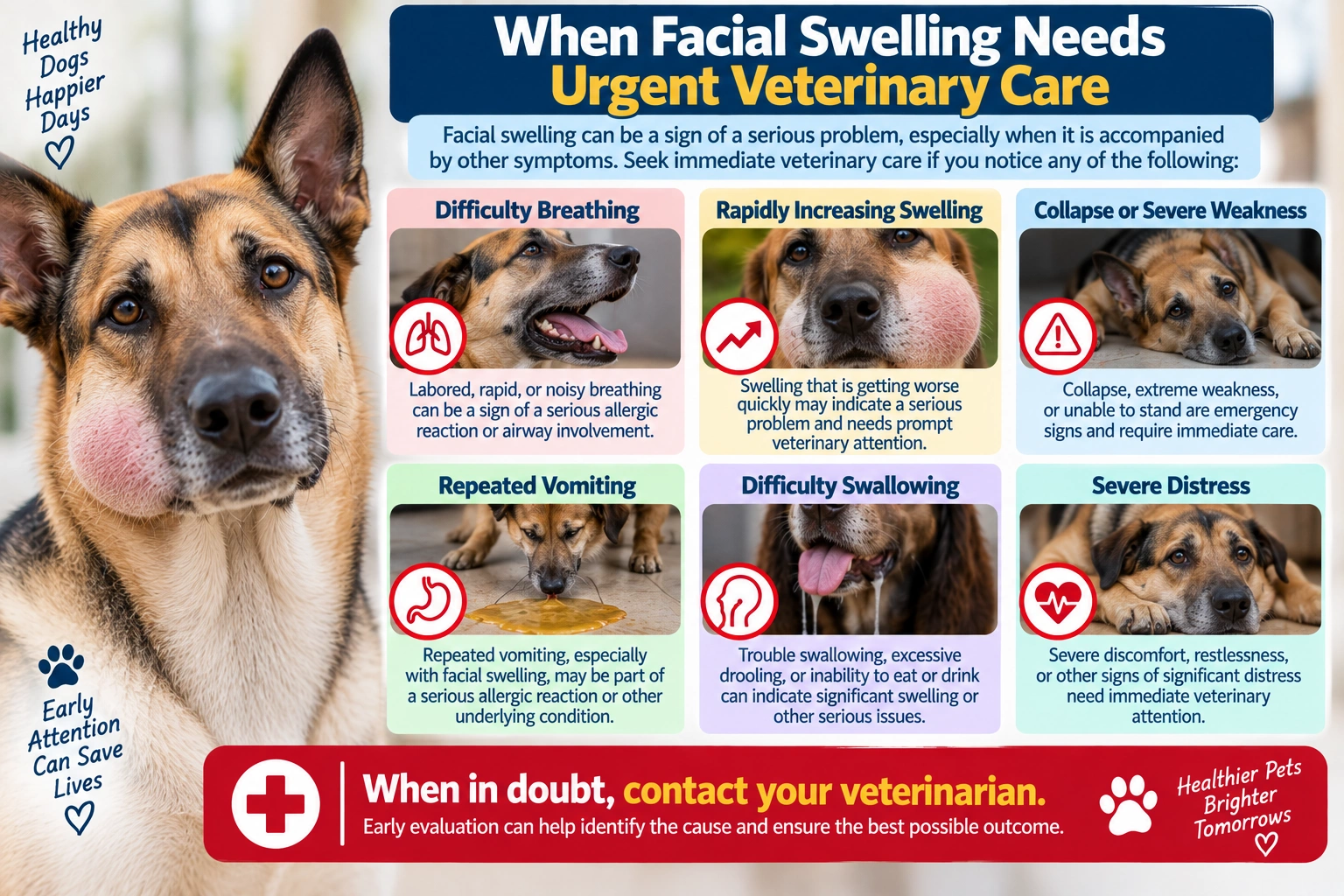
Seek immediate veterinary care if facial swelling occurs with:
- Difficulty breathing
- Collapse or severe weakness
- Rapidly worsening swelling
- Significant difficulty swallowing
- Repeated vomiting with worsening condition
- Severe lethargy or distress
- Other signs of a serious allergic reaction
Anaphylaxis is an emergency and can develop rapidly after exposure to a triggering substance. (Merck Veterinary Manual)
Even without these emergency signs, unexplained facial swelling deserves veterinary advice because its cause cannot reliably be determined from appearance alone.
What Should I Do If My Dog’s Face Is Swollen?
First, look at your dog’s overall condition.
Check whether your dog is breathing comfortably, swallowing normally, and remaining alert.
Notice where the swelling is located and whether it affects one side or both sides of the face.
If it is safe to observe your dog without causing discomfort, look for hives, obvious wounds, insect stings, dental problems, drooling, or other changes.
Do not squeeze or puncture the swollen area.
Do not reach deeply into a painful dog’s mouth.
And do not give human medication or leftover veterinary medication unless a veterinarian specifically instructs you to do so.
Because facial swelling has multiple possible causes, treatment depends on identifying the underlying problem.
What Will the Veterinarian Check?
Your veterinarian will usually want to know when the swelling began, how quickly it developed, and whether your dog could have encountered an insect, new food, medication, injury, or another potential trigger.
The examination may include the face, skin, mouth, teeth, gums, jaw, eyes, and surrounding tissues.
If a dental problem is suspected, dental examination and imaging may be needed because important abnormalities can exist below the gumline or around tooth roots. Cornell explains that definitive dental assessment may involve probing, charting, and full-mouth dental X-rays.
Other tests depend on what the veterinarian finds during the examination.
Frequently Asked Questions
Why did my dog’s face suddenly swell up?
Sudden facial swelling may occur with an allergic reaction, insect sting or bite, injury, or another acute problem. Rapidly worsening swelling or swelling accompanied by breathing difficulty, vomiting, weakness, or collapse requires urgent veterinary care.
Can a bad tooth make my dog’s face swell?
Yes. Dental disease, damaged teeth, and tooth-root problems can sometimes produce facial or jaw swelling. Swelling beneath an eye may sometimes originate from an upper tooth.
Can a bee sting make a dog’s face swell?
Yes. Insect stings can cause localized swelling and may also trigger an allergic reaction. Monitor for rapidly worsening swelling or additional symptoms.
Why is only one side of my dog’s face swollen?
Localized causes such as dental disease, an abscess, injury, or an insect bite or sting may affect one side. A veterinary examination is needed to determine the cause.
Can my dog have facial swelling without being in pain?
Yes. Some dogs may continue behaving relatively normally despite swelling. The absence of obvious pain does not identify the cause or guarantee that the condition is harmless.
Should I give my dog an antihistamine for facial swelling?
Do not give medication based only on the appearance of facial swelling. Different causes require different treatment, and appropriate medication and dosing depend on the individual dog and situation. Contact a veterinarian for guidance.
How long should I wait for my dog’s facial swelling to go away?
There is no single safe waiting period for all facial swelling because causes range from localized reactions to dental infections and serious allergic reactions. Rapidly worsening swelling or significant accompanying symptoms needs immediate veterinary attention; otherwise, unexplained facial swelling should still be discussed with a veterinarian.
Bottom Line
A dog face swollen around the muzzle, eyes, cheek, or jaw can have many possible causes.
Allergic reactions, insect bites or stings, dental problems, infections, injuries, abscesses, and salivary gland disorders are among the possibilities.
The location and speed of the dog face swelling up can provide useful clues, but they cannot confirm the cause.
Pay particular attention to breathing difficulty, vomiting, rapidly increasing swelling, weakness, difficulty swallowing, appetite changes, drooling, dental symptoms, and changes in behavior.
If the swelling is severe or rapidly worsening—or your dog develops breathing difficulty, collapse, or other serious symptoms—seek emergency veterinary care.
For other symptoms, you can also use our Pet Symptom Checker:

**Sidnir Vieira**
Founder of TechHavela
A passionate pet and tech content creator, helping dog owners across the U.S. make smarter decisions for their furry friends.