Why Does My Dog’s Breath Smell So Bad? Common Causes and What Helps
If your dog’s breath suddenly makes you turn your head away, you may wonder whether it is simply normal “dog breath” or a sign that something is wrong.
A mild odor after eating can happen, but persistent or unusually bad breath should not automatically be considered normal. In dogs, bad breath—also called halitosis—is commonly associated with problems involving the teeth, gums, or other structures inside the mouth.
Plaque and tartar buildup, gum inflammation, periodontal disease, damaged teeth, something trapped in the mouth, and other oral problems can all contribute to unpleasant breath.
Sometimes bad breath occurs along with other symptoms such as drooling, difficulty eating, decreased appetite, swollen or bleeding gums, or pawing at the mouth.
If your dog is showing several symptoms and you are unsure what they may mean, you can also use our Pet Symptom Checker to review common symptoms and warning signs.
Is Bad Breath Normal in Dogs?
Dogs do not normally have minty-fresh breath, but there is an important difference between a mild natural odor and breath that is persistently strong, foul, or noticeably different from usual.
An occasional odor may be related to something your dog recently ate.
Persistent bad breath is different.
The mouth contains bacteria, and plaque continually forms on the surfaces of the teeth. Without adequate dental care, plaque can accumulate and eventually contribute to gum inflammation and periodontal disease.
According to Cornell University College of Veterinary Medicine, halitosis is often one of the first things owners notice when a dog develops dental disease.
Why Does My Dog’s Breath Smell So Bad?
The most common explanations involve the mouth itself.
Bacteria associated with plaque, inflamed gums, periodontal disease, infected or damaged teeth, and other oral conditions can produce unpleasant odors.
Possible causes include:
- Plaque and tartar buildup
- Gingivitis
- Periodontal disease
- Damaged or infected teeth
- Something trapped between the teeth
- Mouth inflammation or injury
- Certain foods or things the dog has eaten
- Less commonly, other underlying health conditions
Bad breath is therefore better viewed as a symptom rather than a diagnosis.
The odor alone usually cannot tell you exactly what is causing the problem.
1. Plaque and Tartar Buildup
Plaque is a sticky film containing bacteria that develops on the teeth.
If plaque is not regularly removed, minerals in saliva can harden it into dental calculus, commonly called tartar.
Tartar is usually easier to see than plaque and may appear as yellowish or brown material attached to the tooth surface.
However, the visible tartar is only part of the picture. Problems can also develop beneath the gumline, where they may not be obvious simply by looking inside your dog’s mouth.
This is one reason persistent bad breath deserves attention even when the visible teeth do not initially look severely affected.
2. Gingivitis
Gingivitis means inflammation of the gums.
Plaque bacteria can irritate the gums, causing them to become red, swollen, or more likely to bleed.
Bad breath is also common.
Gingivitis represents an earlier stage of gum disease and can progress if the underlying plaque accumulation is not controlled.
The Merck Veterinary Manual notes that gingivitis can be reversed with appropriate tooth cleaning, whereas untreated gum disease may progress to periodontitis.
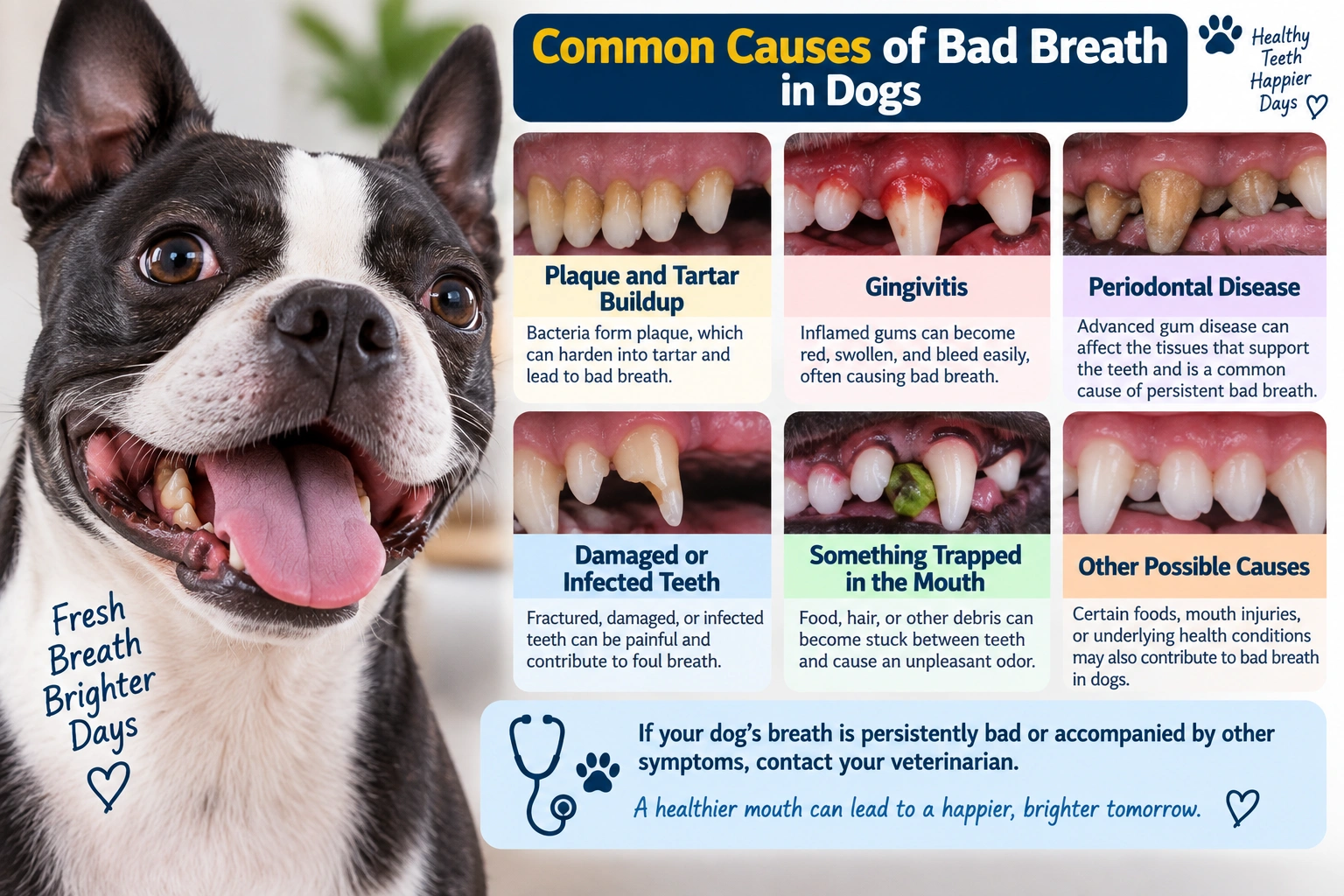
Show plaque/tartar, gingivitis, periodontal disease, damaged teeth, trapped material, and other oral problems.
This gives us a good amount of text between the featured image and the first in-content infographic.
3. Periodontal Disease
Periodontal disease affects the tissues that surround and support a dog’s teeth.
It begins with bacterial plaque and inflammation. As disease progresses, deeper structures supporting the teeth can become affected.
Signs can include:
- Persistent bad breath
- Red or bleeding gums
- Visible plaque or tartar
- Difficulty chewing
- Drooling
- Decreased appetite
- Loose teeth
- Pawing or rubbing at the mouth
Dental disease can also be painful even when a dog does not clearly show discomfort.
Cornell notes that periodontal disease is extremely common in dogs and can sometimes be difficult to recognize in its earlier stages because important changes can occur below the gumline.
4. A Damaged or Infected Tooth
A fractured, damaged, or infected tooth can also contribute to foul breath.
Dogs can damage teeth by chewing very hard objects, through trauma, or because of existing dental disease.
Depending on the problem, you might notice reluctance to chew, food falling from the mouth, chewing predominantly on one side, facial swelling, or sensitivity around the mouth.
A dog may continue eating despite dental pain, so appetite alone cannot tell you whether the teeth are healthy.
5. Something Stuck in the Mouth
Food, hair, pieces of plant material, or other debris can sometimes become trapped between teeth or elsewhere in the mouth.
This can irritate surrounding tissues and create an unpleasant odor.
You may notice your dog licking repeatedly, pawing at the face, chewing unusually, drooling, or appearing uncomfortable.
Avoid reaching deeply into the mouth or throat to remove an object that is difficult to see or reach safely.
If you suspect something is lodged in your dog’s mouth, veterinary evaluation may be safer.
Why Does My Dog Have Bad Breath and Drool?
Bad breath and excessive drooling can occur together when a problem affects the teeth, gums, tongue, or other tissues in the mouth.
Mouth inflammation and dental disease are possible explanations.
Because drooling has many other potential causes, it is important to consider the complete pattern of symptoms.
We explain excessive salivation in detail in our guide:
Why Is My Dog Drooling So Much?
The Merck Veterinary Manual identifies bad breath and drooling among signs that can occur with inflammation of the mouth and related oral conditions.
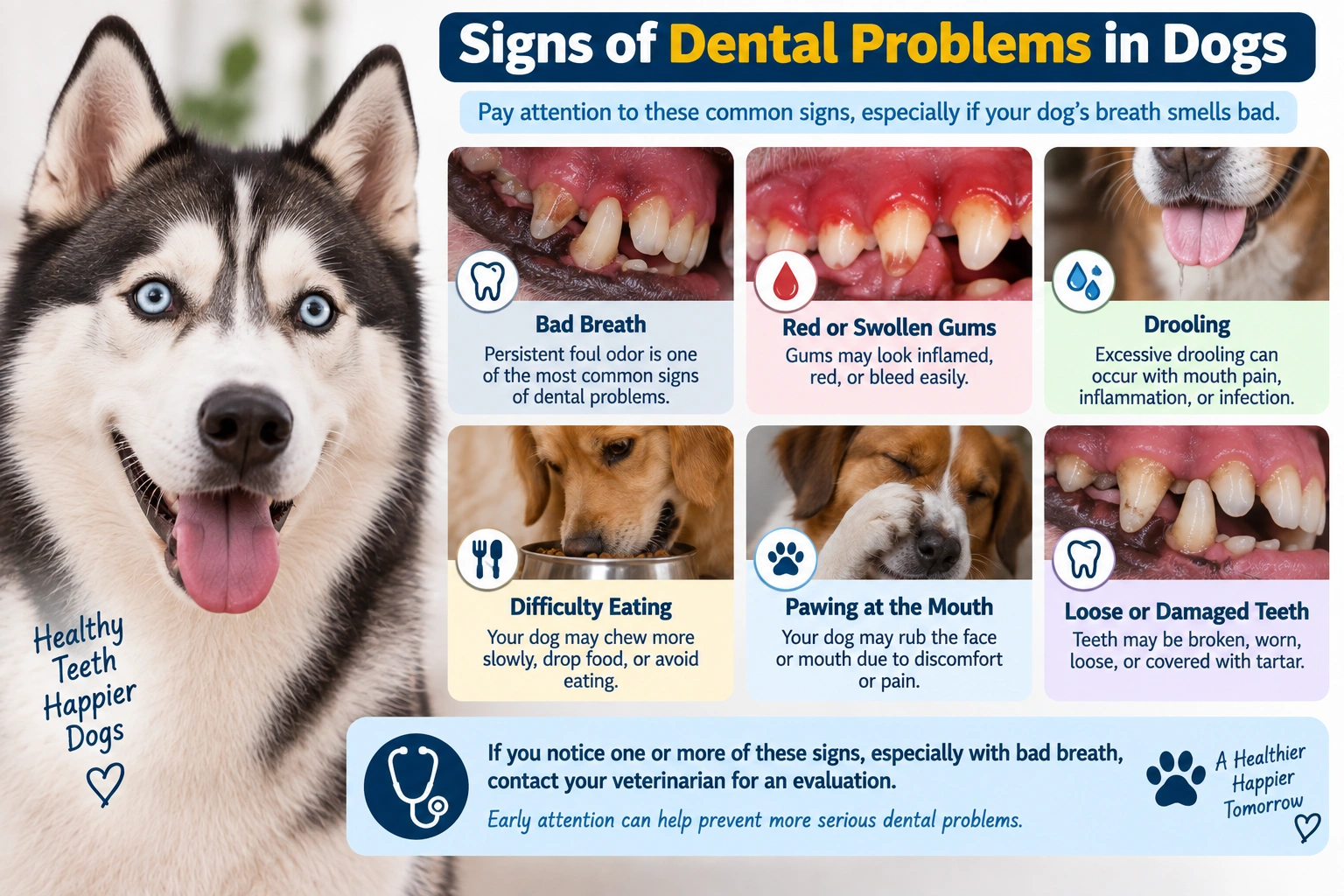
Show bad breath, red/swollen gums, drooling, difficulty eating, pawing at the mouth, loose or damaged teeth, and facial swelling.
Why Does My Dog’s Breath Smell So Bad All of a Sudden?
A sudden change is worth noticing.
If your dog’s breath was previously mild and becomes strongly unpleasant over a short period, consider whether anything else has changed.
Look for problems such as a damaged tooth, something trapped in the mouth, gum inflammation, unusual eating behavior, increased drooling, facial swelling, or appetite changes.
A sudden odor does not identify the cause by itself, but a noticeable change from your dog’s normal breath can provide useful information for your veterinarian.
Why Does My Puppy Have Bad Breath?
Puppies can occasionally have changes in breath odor as their mouths and teeth develop.
However, persistent foul breath should not simply be dismissed because the dog is young.
Look for accompanying signs such as swollen gums, excessive drooling, difficulty eating, mouth discomfort, or something caught around the teeth.
If the odor persists or you notice other changes, ask your veterinarian to examine your puppy’s mouth.
Why Does My Dog Have Bad Breath and Not Want to Eat?
Bad breath combined with decreased appetite deserves closer attention.
Dental or oral pain can make chewing uncomfortable, while other illnesses may also affect appetite.
Cornell lists difficulty eating or decreased appetite alongside bad breath, drooling, mouth bleeding, and facial or jaw swelling among signs associated with dental disease.
We cover appetite changes separately here:
If your dog refuses food, seems painful, becomes weak, or develops other significant symptoms, contact your veterinarian.
Can Bad Breath Be Related to Problems Outside the Mouth?
Most persistent bad breath deserves an examination of the mouth and teeth first, but oral odor is not exclusively a dental symptom.
Certain underlying illnesses can sometimes affect breath or cause oral changes.
For that reason, persistent bad breath should not be treated only by attempting to cover up the odor.
A veterinarian can evaluate your dog’s mouth and decide whether the findings suggest a dental problem or whether additional investigation is appropriate.
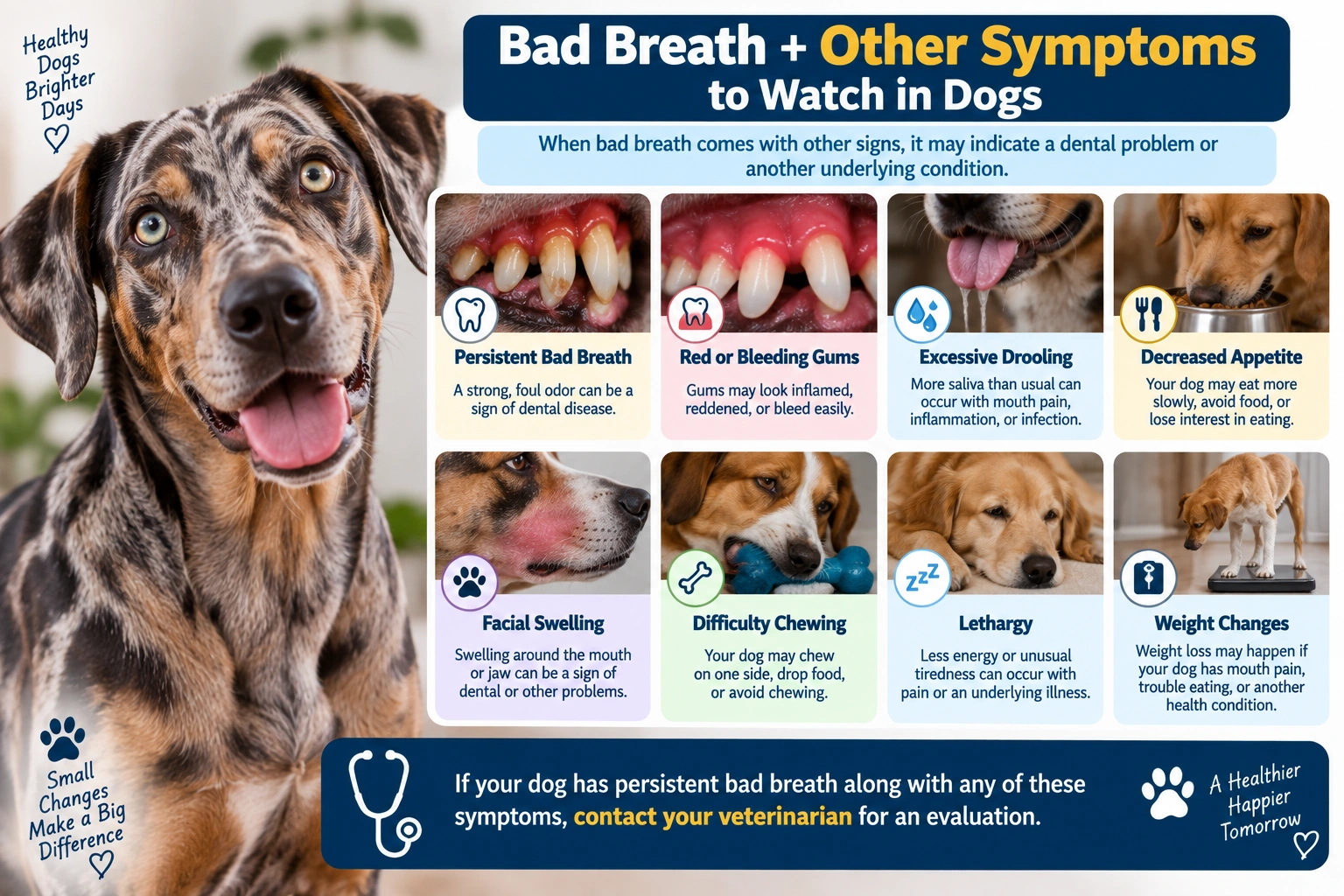
Show bad breath combined with decreased appetite, drooling, facial swelling, bleeding gums, difficulty chewing, lethargy, and weight changes.
What Helps With Bad Breath in Dogs?
The best approach depends on why your dog’s breath smells bad.
If dental disease is responsible, simply masking the odor does not address the underlying problem.
Good oral care focuses on reducing plaque and keeping the teeth and gums healthy.
Brush Your Dog’s Teeth
Regular tooth brushing is one of the most useful forms of home dental care.
Cornell describes tooth brushing as the most effective home-care method for preventing dental disease.
Use products designed specifically for dogs and follow your veterinarian’s recommendations about introducing brushing.
Do not use human toothpaste unless a veterinarian specifically tells you a particular product is safe for your dog.
Schedule Regular Veterinary Dental Checks
Your veterinarian can examine the visible teeth and gums during routine visits.
If dental disease is suspected, a more complete dental evaluation may be recommended.
Problems below the gumline cannot always be identified from what owners see at home.
Professional veterinary dental care may include a more detailed examination, dental imaging, cleaning, or treatment of diseased teeth depending on what is found.
What About Dental Chews and Other Dental Products?
Dental chews, dental diets, and certain oral-care products may form part of a dental-care routine.
They should complement rather than automatically replace tooth brushing and veterinary dental evaluation.
Cornell notes that options such as dental diets, chews, treats, water additives, oral gels, and sprays may help reduce plaque or tartar, while brushing remains the most effective home-care approach.
Can I Use Human Toothpaste on My Dog?
Do not assume that a dental product intended for people is appropriate for dogs.
Dogs swallow much of what is placed in their mouths rather than rinsing and spitting it out.
Use dog-specific dental products and ask your veterinarian if you are uncertain about a product.
Can I Just Use Something to Freshen My Dog’s Breath?
A product that temporarily changes the smell of your dog’s breath does not necessarily address the cause.
If plaque, gum disease, a damaged tooth, oral inflammation, or another medical problem is responsible, covering the odor may only hide an important symptom.
Persistent bad breath should prompt you to think about oral health rather than simply odor control.
When Should I Take My Dog to the Veterinarian for Bad Breath?
Contact your veterinarian when bad breath is persistent, becomes suddenly much worse, or occurs with other concerning signs.
These can include:
- Difficulty eating
- Reduced appetite
- Excessive drooling
- Bleeding or markedly inflamed gums
- Loose or damaged teeth
- Facial or jaw swelling
- Difficulty swallowing
- Significant mouth pain
- Unexplained weight loss
- Other substantial changes in health or behavior
Cornell identifies bad breath, excessive drooling, difficulty eating, bleeding or receding gums, and tooth loss as possible signs of dental disease.
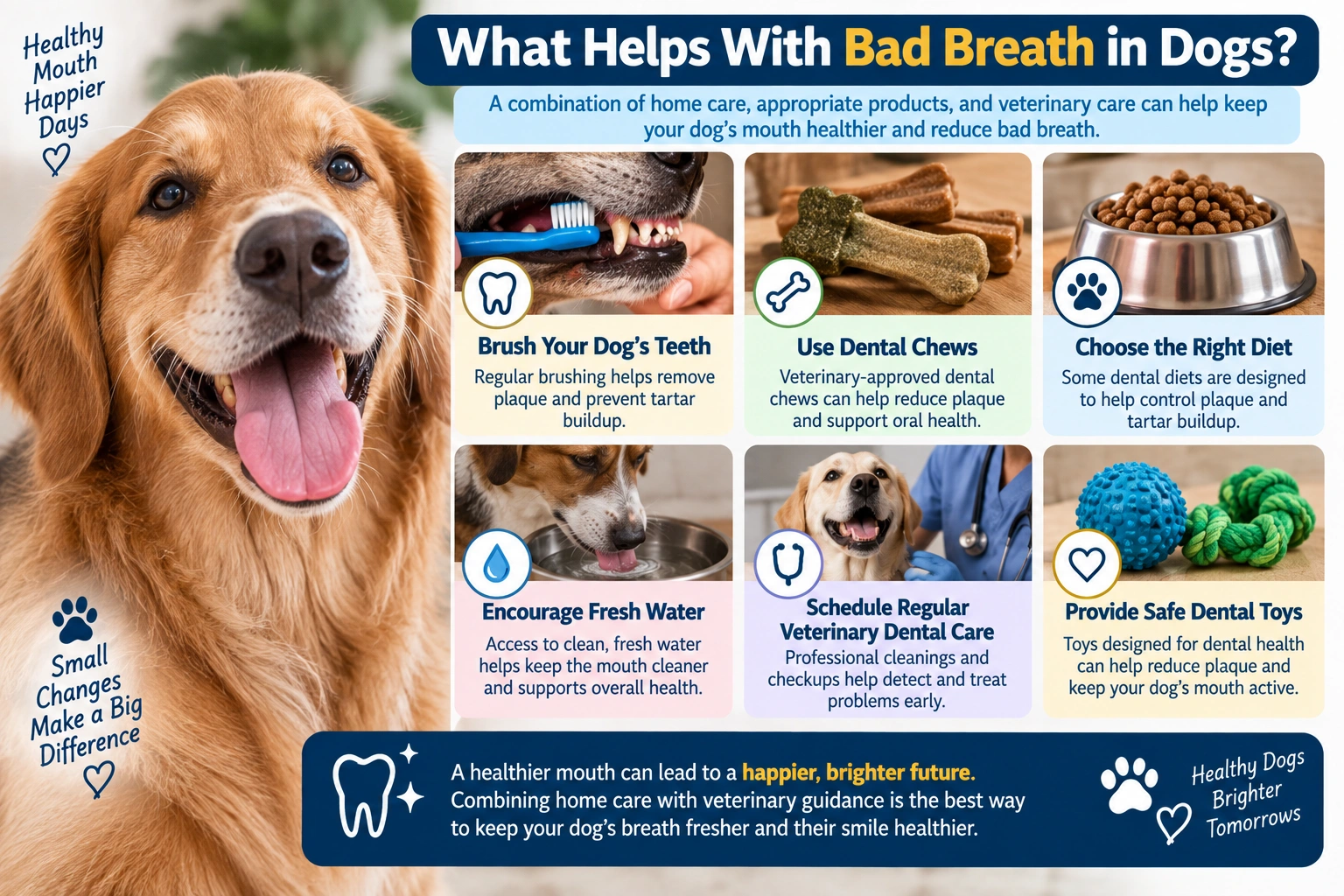
Show persistent foul breath plus dental pain, bleeding/swollen gums, difficulty eating, excessive drooling, loose teeth, and facial swelling.
Now the fifth image appears toward the end of the article rather than being grouped with the first images.
What Should I Observe Before the Veterinary Visit?
Before the appointment, note when you first noticed the odor and whether it appeared suddenly or gradually.
Observe whether your dog is eating and drinking normally.
Watch how your dog chews and whether food falls from the mouth.
Also look for drooling, pawing at the face, swollen gums, visible tartar, bleeding, facial swelling, or changes in behavior.
If your dog also has changes in water consumption, that is useful information to mention.
You can learn more about increased thirst here:
Why Is My Dog Drinking So Much Water?
Do not force your dog’s mouth open if your dog appears painful or resists being examined.
Frequently Asked Questions
Why does my dog’s breath smell so bad even after eating normally?
Persistent bad breath can occur even when appetite remains normal. Dental problems may develop gradually, and some dogs continue eating despite oral discomfort.
Why does my dog’s breath suddenly smell bad?
A sudden change may be associated with an oral problem such as inflammation, a damaged tooth, or material trapped in the mouth. Look for additional symptoms and contact your veterinarian if the change persists.
Does tartar cause bad breath in dogs?
Plaque and tartar are associated with bacterial accumulation and dental disease. Bad breath is a common sign of periodontal problems.
Can gum disease cause really bad dog breath?
Yes. Bad breath is one of the common signs associated with gingivitis and periodontal disease. (Manual Merck de Veterinária)
Why does my dog have bad breath and excessive drooling?
Problems affecting the teeth, gums, or other oral tissues can cause both signs. Because excessive drooling has several other possible causes, persistent symptoms should be evaluated in context.
Does brushing a dog’s teeth help with bad breath?
Regular brushing helps remove plaque and is an important part of preventive dental care. Persistent bad breath despite oral care may indicate a problem that requires veterinary evaluation.
Should an older dog’s bad breath be considered normal?
Age alone does not make persistent foul breath normal. Dental disease becomes more common with age, so changes in an older dog’s breath should still be evaluated rather than dismissed as simply part of aging.
Bottom Line
If you are asking “Why does my dog’s breath smell so bad?”, start by looking at the bigger picture rather than trying only to eliminate the odor.
Persistent bad breath can be associated with plaque and tartar buildup, gingivitis, periodontal disease, damaged teeth, mouth irritation, or other oral problems.
Watch for accompanying signs such as drooling, difficulty chewing, decreased appetite, bleeding or swollen gums, facial swelling, loose teeth, or significant changes in behavior.
Good dental care—including regular veterinary examinations and appropriate home oral care—can help protect your dog’s teeth and gums.
If bad breath is persistent, suddenly becomes much worse, or appears with other concerning symptoms, contact your veterinarian.
You can also review other symptoms with our Pet Symptom Checker:

**Sidnir Vieira**
Founder of TechHavela
A passionate pet and tech content creator, helping dog owners across the U.S. make smarter decisions for their furry friends.