Why Is My Dog Whining? Common Reasons for This Behavior
Dogs communicate in many different ways. They bark, growl, use body language, and sometimes whine.
An occasional whine may simply mean your dog is excited, wants your attention, needs to go outside, or is trying to communicate something specific. But frequent, sudden, or unexplained whining deserves a closer look.
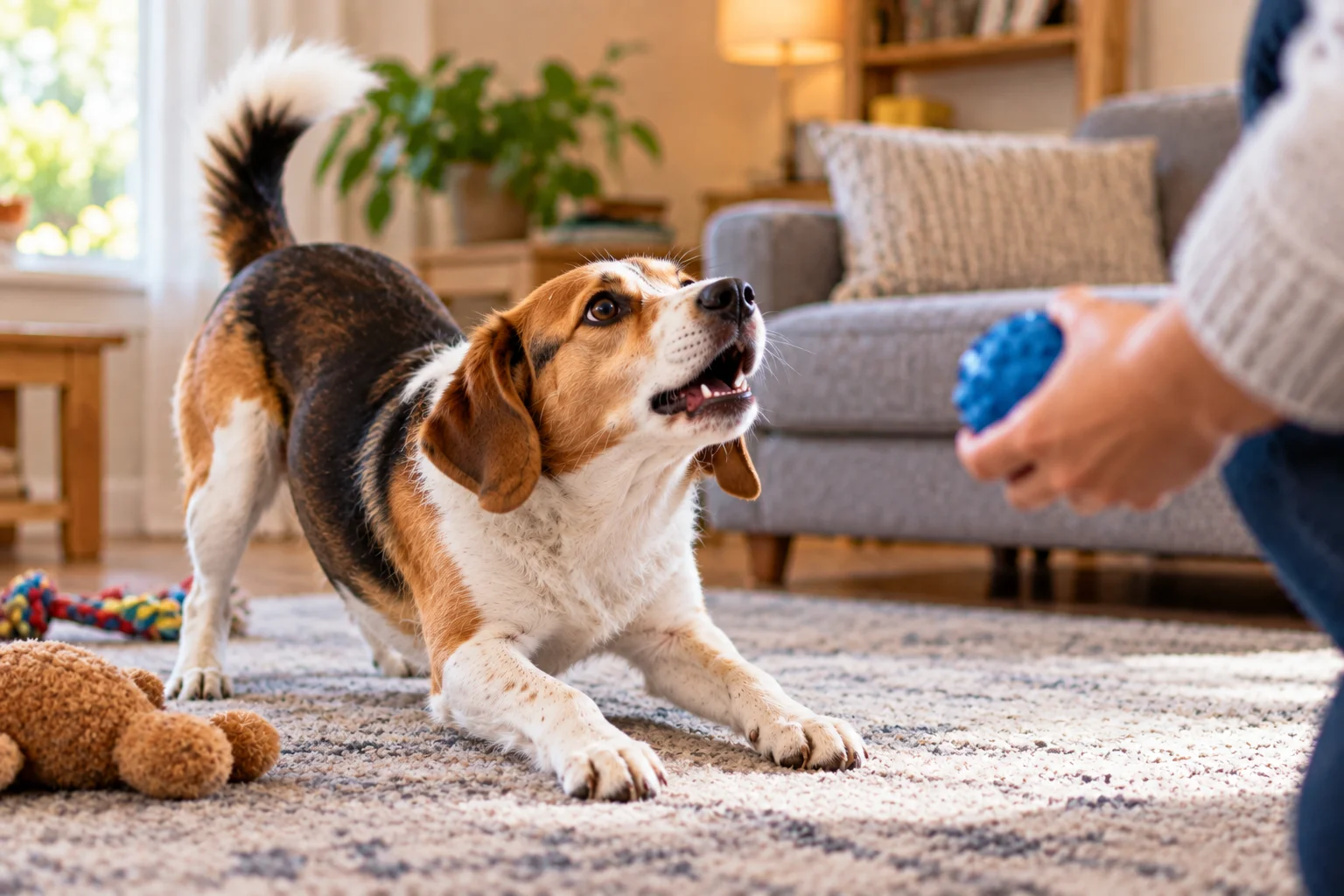
If you are wondering “why is my dog whining?”, the answer depends on what is happening when the whining starts and whether your dog is showing any other changes.
According to the ASPCA, dogs commonly whine when seeking attention, feeling excited or anxious, or displaying appeasement behavior. Whining can also occur because of pain or a medical problem.
The key is to look at the entire situation rather than the sound alone.
If your dog is showing whining along with other symptoms, the TechHavela Pet Symptom Checker can help you organize the signs you are noticing before speaking with your veterinarian.
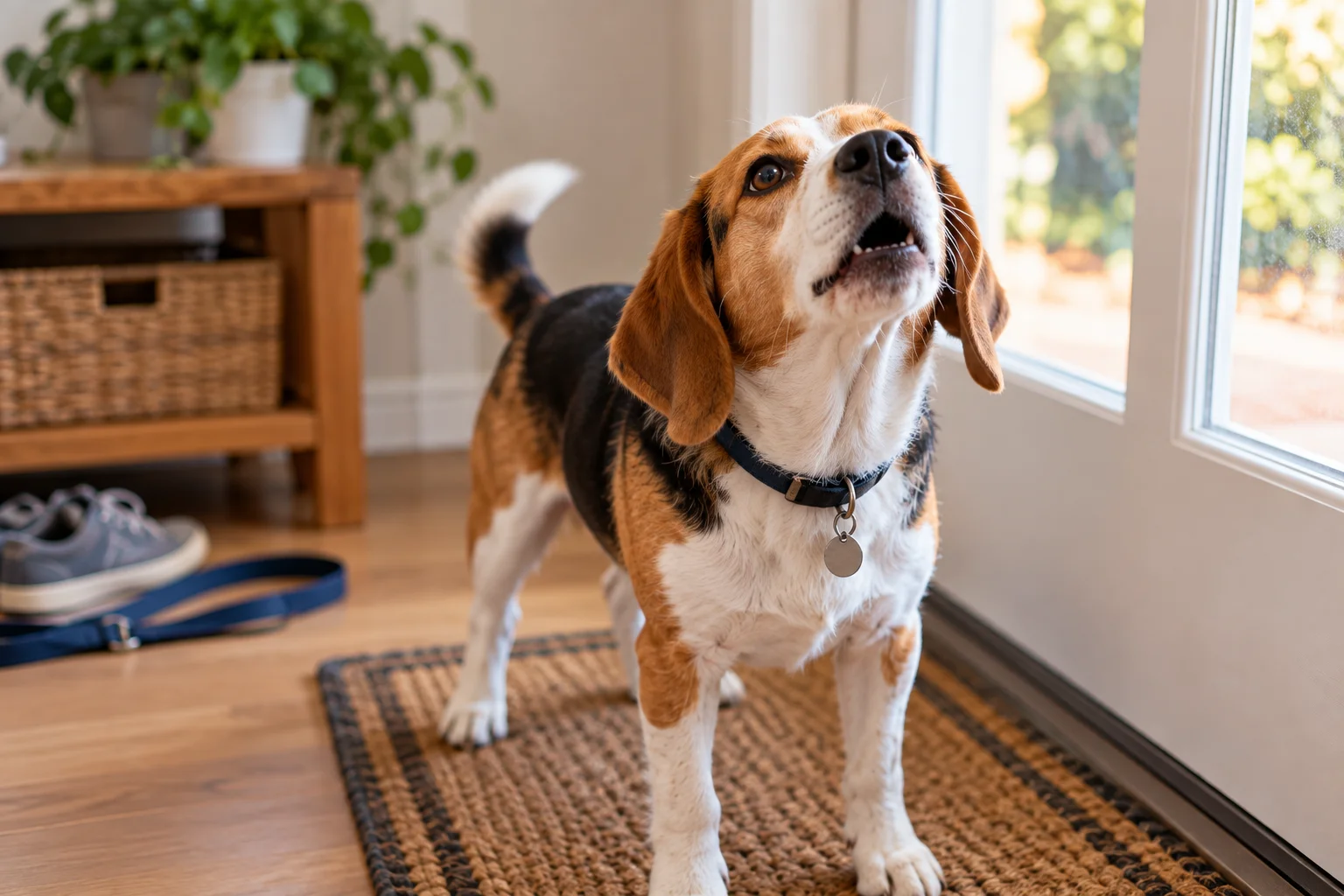
What Does It Mean When a Dog Whines?
Whining is a form of canine vocal communication.
Your dog cannot explain in words that they are excited, frightened, uncomfortable, frustrated, or hoping you will open the door. Vocalizations are one way dogs communicate those needs and emotional states.
The meaning often becomes clearer when you consider what happens immediately before and after the whining.
For example, does your dog whine:
- When you arrive home?
- When you prepare food?
- At the door?
- When you stop petting them?
- During thunderstorms?
- When you prepare to leave?
- When lying down or standing up?
- During the night?
- When you touch a particular area of the body?
Those circumstances can provide important clues.
A dog whining beside the door may be communicating something very different from a dog that suddenly whines every time they try to stand.
Why Is My Dog Whining? 8 Common Reasons
There isn’t one explanation for every whining dog.
Some causes are behavioral and relatively harmless, while others deserve veterinary attention.
1. Your Dog Wants Something
Sometimes the explanation is simple.
Your dog may need to go outside, want access to water, be waiting for a meal, want a toy, or be asking you to interact.
Dogs quickly learn which behaviors get responses from people.
If whining repeatedly results in the door opening, a toy appearing, or someone providing attention, a dog may learn that whining is an effective communication strategy.
Before assuming the behavior is attention-seeking, however, make sure your dog’s basic needs are being met.
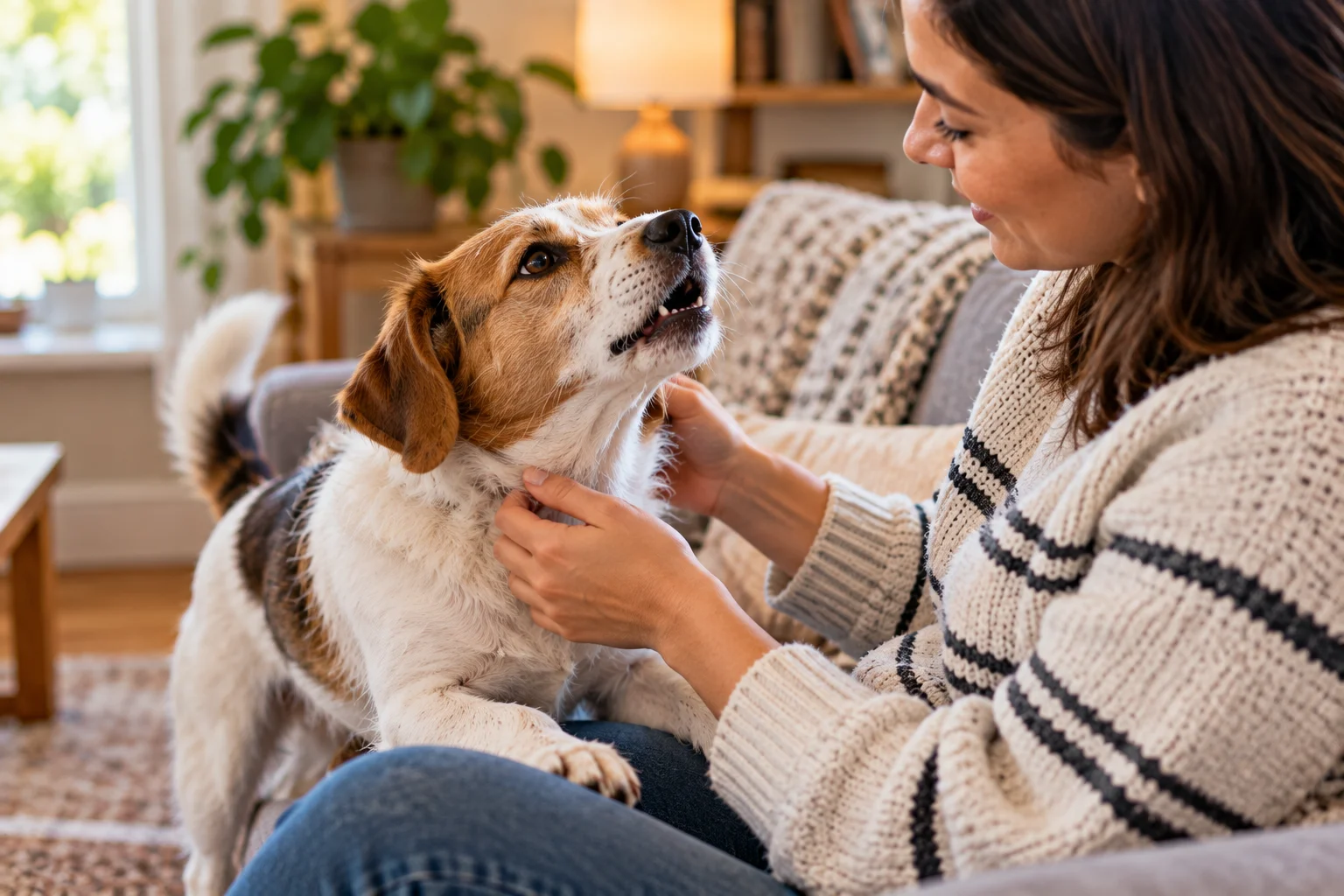
2. Your Dog Wants Attention
Some dogs discover that whining gets an immediate reaction.
You look at them.
You speak to them.
You pet them.
Even telling a dog to stop can provide the attention they were seeking.
The ASPCA explains that eye contact, touching, and talking can unintentionally reinforce attention-seeking whining.
That does not mean every whining dog should simply be ignored.
First determine whether your dog needs something or may be uncomfortable. If the behavior appears to be attention-seeking, rewarding calm and quiet behavior can be more useful than repeatedly responding to the whining.
3. Excitement
Whining does not always mean something is wrong.
Some dogs vocalize when they become excited.
You might notice whining when:
- You arrive home
- A favorite person visits
- Your dog sees another dog
- You pick up the leash
- You prepare for a car ride
- Play is about to begin
Look at the rest of your dog’s body language.
A dog whining during an enthusiastic greeting may behave very differently from a dog whining because they are frightened or uncomfortable.
4. Stress, Fear, or Anxiety
Whining can occur when a dog feels stressed or anxious.
You may also notice:
- Pacing
- Panting
- Shaking
- Drooling
- Hiding
- Lip licking
- Difficulty settling
- Increased alertness
- Following you around
- Changes in sleep
Cornell University College of Veterinary Medicine includes whining among the possible signs associated with canine anxiety.
If these behaviors sound familiar, read our related guide Why Is My Dog Anxious All of a Sudden? Possible Causes and What to Do.
Pay particular attention when the whining begins suddenly in situations that previously caused no problem.
A new noise, unfamiliar visitor, construction nearby, a frightening experience, or another change in the environment may be involved.

5. Separation-Related Distress
Timing is particularly useful here.
Does your dog begin whining when you pick up your keys, put on your shoes, or prepare to leave?
Does the whining occur mainly after you leave the house?
Whining can be one sign of separation-related distress, but it usually should not be evaluated in isolation.
The ASPCA’s guidance on separation anxiety describes other possible signs, including distress around departures, pacing, panting, drooling, barking, howling, destructive behavior, and house-soiling.
If whining consistently occurs around departures, record when it begins and what else your dog does.
That information can help your veterinarian or qualified behavior professional understand the pattern.
6. Boredom or Frustration
A dog may vocalize when frustrated or when trying to obtain access to something.
For example, your dog might see another dog through a window, want to reach a toy, want someone to play, or become frustrated by a barrier.
Physical activity, opportunities to sniff and explore, appropriate play, training, and other forms of enrichment can be important parts of a dog’s daily routine.
But avoid assuming that persistent whining is simply boredom when the behavior is new or accompanied by physical changes.
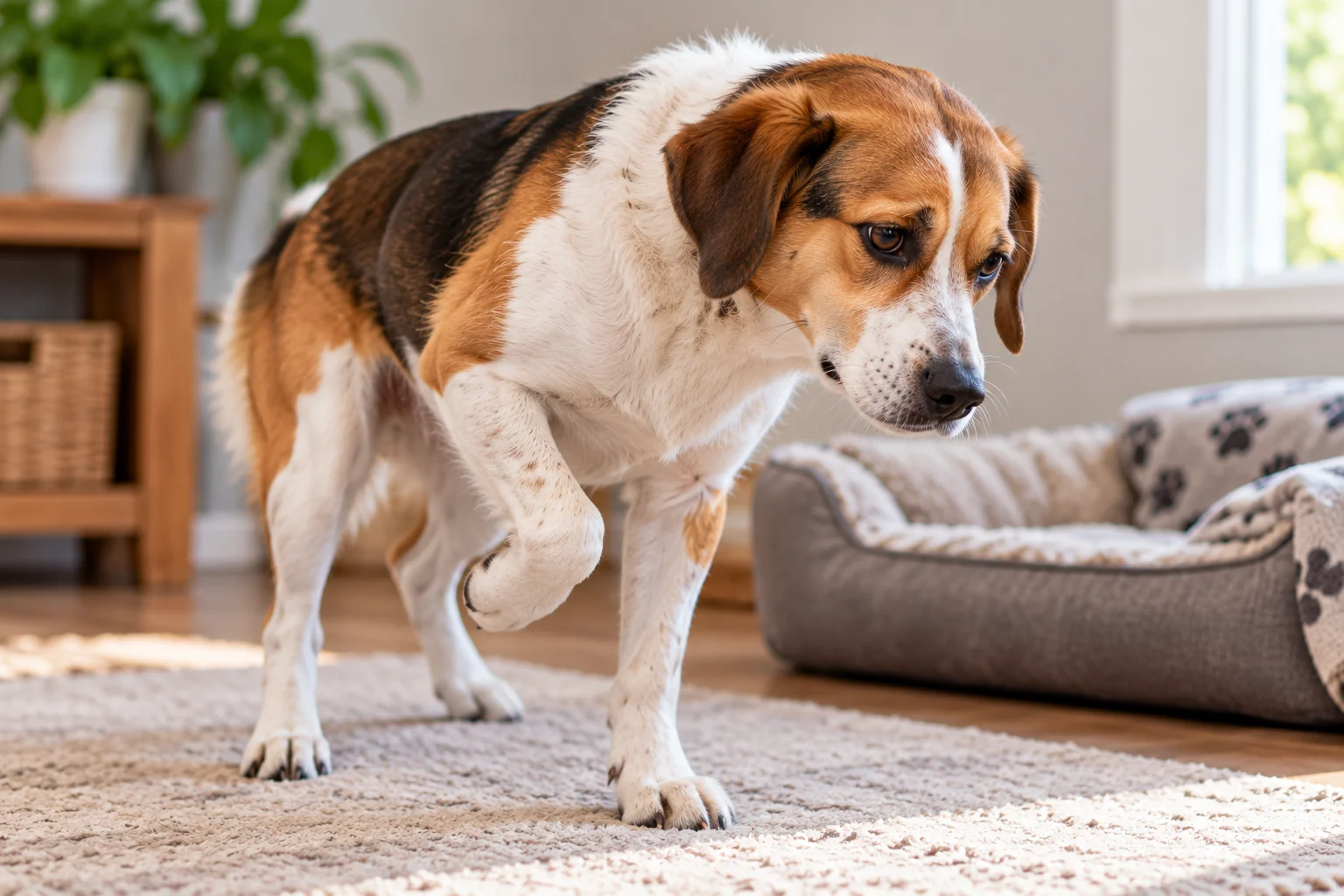
7. Pain or Physical Discomfort
This is one of the most important possibilities to consider, particularly when whining starts suddenly.
Dogs cannot tell us exactly where something hurts.
Instead, discomfort may show up through changes in behavior.
The Merck Veterinary Manual notes that dogs experiencing pain may cry or whimper and may also show behavioral changes such as restlessness, difficulty getting comfortable, reduced appetite, withdrawal, or changes in personality.
VCA Animal Hospitals also identifies whining or whimpering while trying to get comfortable as a possible sign of pain.
Look for accompanying changes such as:
- Limping
- Difficulty standing
- Reluctance to jump
- Trouble using stairs
- Trembling
- Restlessness
- Reduced appetite
- Changes in sleep
- Avoiding touch
- Reduced activity
- Unusual posture
If weakness is also present, see Why Is My Dog Weak? Common Causes and Warning Signs for additional signs to watch.
8. Age-Related Changes
Senior dogs may develop new vocal behaviors.
Changes in vision, hearing, mobility, comfort, sleep, or cognitive function can affect how an older dog behaves.
Nighttime behavior deserves particular attention.
Cornell University College of Veterinary Medicine notes that cognitive dysfunction syndrome in senior dogs can involve pacing, panting, nighttime restlessness, difficulty settling, and disorientation.
New or increasing whining in an older dog should not automatically be dismissed as normal aging.
A veterinary examination can help determine whether pain, sensory changes, cognitive changes, or another health issue could be contributing.
Why Does My Dog Whine So Much?
If your dog whines frequently, start by looking for patterns rather than trying to stop the sound immediately.
Ask:
When does it happen?
Before meals? During the night? When someone leaves? During car rides?
Where does it happen?
Near the door? In bed? In the car? In a crate? Near another animal?
What happens immediately before it?
A sound? Movement? Someone leaving? Touching a particular area?
What happens afterward?
Does the dog receive attention, food, access to another room, or relief from something uncomfortable?
Also look for physical symptoms.
Frequent whining accompanied by vomiting, diarrhea, limping, weakness, unusual panting, appetite changes, or difficulty moving deserves more attention than whining that predictably occurs when your dog sees you holding the leash.
Why Does My Dog Whine for No Reason?
It may seem as though there is no reason, but the trigger may simply be difficult to identify.
Dogs can react to things people overlook, including distant noises, smells, environmental changes, physical discomfort, or subtle changes in routine.
Instead of assuming the behavior is random, keep track of:
- Time of day
- Location
- People present
- Other animals present
- Sounds
- Activities immediately beforehand
- Eating and drinking
- Bathroom habits
- Other physical symptoms
A pattern may become apparent after several episodes.
If the whining is new, frequent, or unexplained, veterinary evaluation can help rule out pain or illness.
Why Does My Dog Whine at Night?
Nighttime whining deserves its own investigation because several different factors may be involved.
First check practical needs.
Does your dog need to go outside? Is the sleeping environment comfortable? Has the normal routine changed?
Next, consider environmental triggers.
Outdoor animals, traffic, storms, unfamiliar noises, neighbors, alarms, or other sounds may be more noticeable when the house becomes quiet.
Physical discomfort should also be considered, particularly if your dog repeatedly gets up, changes position, pants, or seems unable to settle.
If panting occurs along with the whining, our guide Why Is My Dog Panting So Much? Common Causes and Warning Signs explains several reasons dogs may pant excessively.
New nighttime vocalization in senior dogs is particularly worth discussing with your veterinarian.
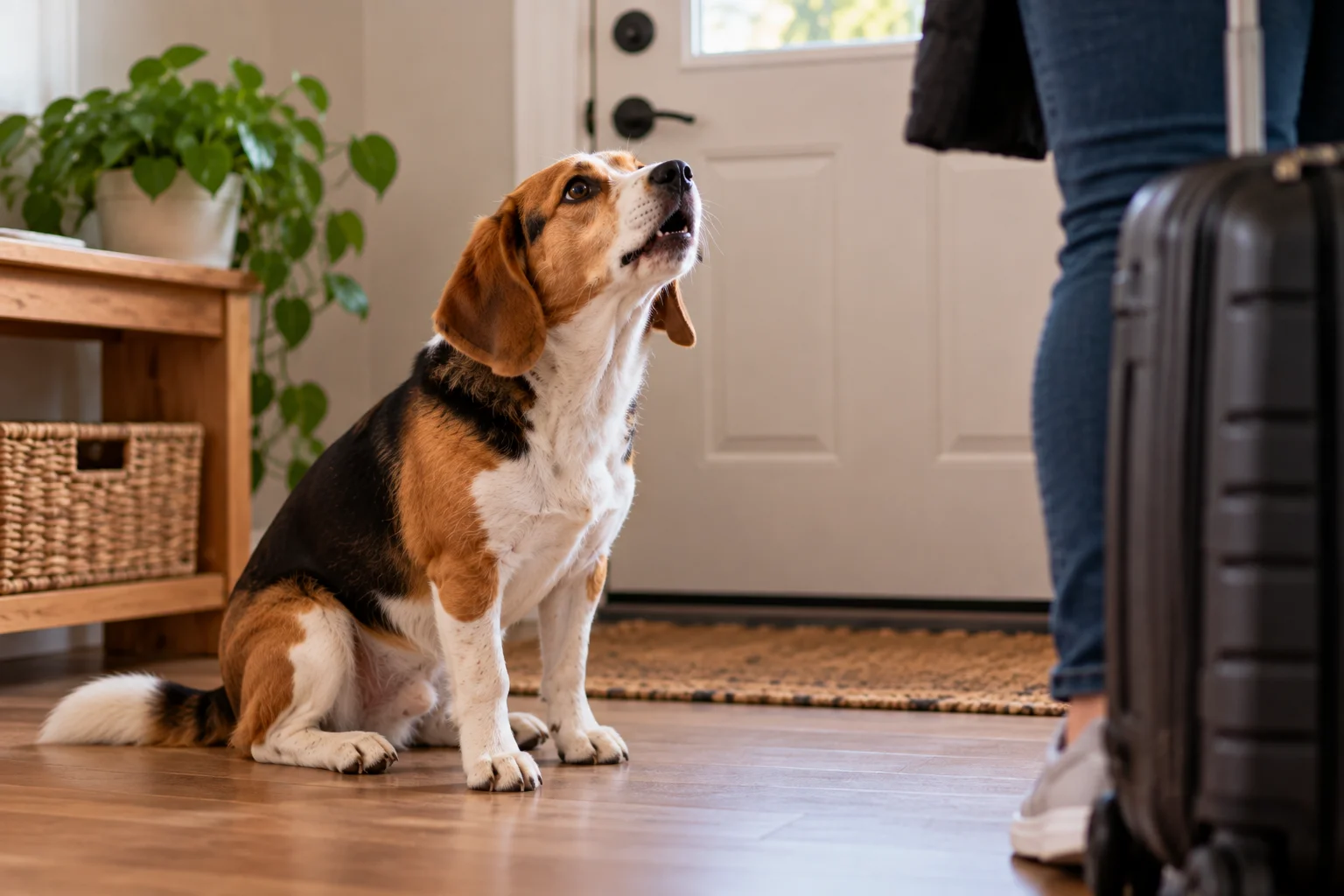
Why Does My Dog Whine at Me?
Your dog may have learned that you are the person who makes things happen.
You provide food.
You open doors.
You initiate walks.
You give attention.
You retrieve toys.
Whining directed specifically at you may therefore be a request.
But context still matters.
A dog standing beside the door and whining may need to go outside.
A dog staring at a toy may want to play.
A dog pacing, panting, and whining may be communicating something entirely different.
Before treating the behavior as attention-seeking, look at what your dog is doing with the rest of their body.
Why Does My Dog Whine When I Pet Them?
Some dogs vocalize during enjoyable social interaction, particularly when excited.
However, whining during touch can also indicate discomfort.
Pay attention to whether the behavior occurs only when you touch a particular area.
Does your dog:
- Move away?
- Flinch?
- Turn toward your hand?
- Become tense?
- Avoid being touched?
- Protect one part of the body?
- Have difficulty moving afterward?
Cornell University’s guidance on recognizing pain in dogs recommends watching for behavioral changes and documenting unusual behavior for your veterinarian.
If whining during touch is new or consistently associated with one part of the body, contact your veterinarian rather than repeatedly testing the area yourself.
Why Does My Dog Whine in the Car?
Dogs can whine in cars for different reasons.
Some dogs associate the car with something exciting, such as a walk or visit to a favorite place.
Others may become stressed during travel.
Watch for other signs such as:
- Panting
- Pacing
- Drooling
- Shaking
- Difficulty settling
- Trying to move around the vehicle
- Vomiting
Those additional signs may help distinguish excitement from stress, discomfort, or motion-related problems.
Why Does My Dog Whine in Their Sleep?
Dogs can make sounds while sleeping.
An occasional brief vocalization during sleep does not necessarily indicate a problem.
Pay more attention if your dog wakes distressed, has difficulty settling afterward, or also shows unusual behavior while awake.
Repeated nighttime whining in an older dog or a dog showing other behavioral or physical changes should be discussed with your veterinarian.
Why Is My Dog Suddenly Whining All the Time?
A sudden change deserves more attention than a behavior your dog has displayed consistently for years.
Start by asking what changed.
It might be:
- A different household routine
- A new person or pet
- A stressful experience
- Construction or unfamiliar noise
- A change in sleeping arrangements
- Physical discomfort
- An injury or illness
- Age-related changes
Do not assume that sudden persistent whining is simply your dog wanting attention.
Pain can be surprisingly subtle.
The Merck Veterinary Manual emphasizes that behavioral changes can provide important clues when evaluating pain.
If the whining is accompanied by lethargy or unusually low activity, see What Is Dog Lethargy? Why Is My Dog Lethargic?
How Can I Tell Whether My Dog Is Whining Because of Pain?
Whining alone cannot tell you whether your dog is in pain.
Look for combinations of signs.
Possible clues include:
| Whining with… | What to notice |
|---|---|
| Limping | Reluctance to use a leg or abnormal walking |
| Difficulty standing | Stiffness or repeated attempts to get comfortable |
| Reduced appetite | Eating less than usual |
| Panting at rest | Especially when unexplained by heat or exercise |
| Trembling | Look for other physical or behavioral changes |
| Avoiding touch | Especially if one area seems sensitive |
| Restlessness | Repeatedly standing, lying down, or changing position |
| Lethargy | Reduced interest in normal activities |
| Hiding | A new change from normal behavior |
| Sleep changes | Difficulty settling or sleeping comfortably |
Remember that dogs do not always show obvious pain.
VCA notes that dogs can instinctively mask pain, making changes in normal behavior especially valuable clues.
What Should I Do When My Dog Is Whining?
Do not begin by punishing the whining.
Instead, determine what the dog may be communicating.
First, check basic needs.
Make sure your dog has access to water, appropriate bathroom opportunities, a comfortable environment, and normal care.
Next, observe the context.
If the whining happens predictably during excitement or because the dog wants attention, work on reinforcing calm behavior.
If anxiety appears to be involved, identify possible triggers and avoid forcing your dog into frightening situations.
If the behavior is sudden, persistent, unusual, or accompanied by physical symptoms, contact your veterinarian.
Recording a short video can also be useful when the behavior does not happen during the veterinary appointment.

When Should I Contact a Veterinarian About Whining?
Contact your veterinarian when whining:
- Starts suddenly without an obvious explanation
- Happens frequently or persistently
- Occurs when your dog moves or is touched
- Is accompanied by limping or difficulty walking
- Occurs with significant appetite changes
- Is accompanied by vomiting or diarrhea
- Occurs with unusual panting or breathing changes
- Is accompanied by weakness or marked lethargy
- Occurs with disorientation or major behavioral changes
- Is increasing in a senior dog
Whining combined with serious physical symptoms should not be treated simply as a training issue.
If several symptoms are occurring at once, use the TechHavela Pet Symptom Checker to organize what you are seeing and then contact your veterinarian when appropriate.
Frequently Asked Questions About Dog Whining
Why is my dog whining?
Dogs may whine because they want something, are seeking attention, are excited, stressed or anxious, frustrated, uncomfortable, or experiencing pain. The situation in which the whining occurs and any accompanying symptoms can help identify the most likely explanation.
Why does my dog whine so much?
Frequent whining can develop for behavioral reasons, but persistent vocalization can also occur with anxiety or physical discomfort. Look for patterns and accompanying symptoms rather than evaluating the whining alone.
Why does my dog whine for no reason?
There is usually some trigger, even when it is not immediately obvious. Your dog may be responding to a sound, environmental change, learned expectation, stress, or physical discomfort.
Why does my dog whine at night?
Nighttime whining can be associated with bathroom needs, environmental noises, stress, discomfort, routine changes, or age-related changes. New nighttime whining in a senior dog deserves particular attention.
Why does my dog whine at me?
Your dog may be asking for attention, food, play, access to something, or help with a need. Body language and the situation surrounding the whining can provide useful clues.
Why does my dog whine when I pet them?
Some dogs vocalize because they are excited during interaction. However, if whining consistently occurs when a particular area is touched or is accompanied by flinching, tension, or avoidance, discomfort should be considered.
Can anxiety cause a dog to whine?
Yes. Whining can occur with anxiety, especially when accompanied by signs such as pacing, panting, shaking, drooling, hiding, or difficulty settling. Identifying the trigger is important.
Can pain cause whining in dogs?
Yes. Pain or physical discomfort can cause whining or whimpering, although some dogs experiencing pain do not vocalize. Changes in movement, appetite, sleep, activity, posture, or social behavior may provide additional clues.
Should I ignore my dog when they whine?
Not automatically. First determine whether your dog has a genuine need, is frightened, or may be physically uncomfortable. If the behavior is clearly attention-seeking and medical or welfare needs have been ruled out, consistently rewarding calm behavior rather than whining may help.
Final Thoughts
If you’re asking “why is my dog whining?”, start with the context.
Whining can be completely ordinary communication. Your dog might be excited, asking for something, seeking attention, or responding to a frustrating situation.
But whining can also accompany fear, anxiety, pain, or another physical problem.
Pay particular attention to behavior that starts suddenly, becomes persistent, occurs during movement or touch, or appears alongside other symptoms.
Rather than focusing only on stopping the sound, try to understand what your dog is communicating.
When several symptoms occur together, the TechHavela Pet Symptom Checker can help you organize what you have observed before discussing the situation with your veterinarian.

**Sidnir Vieira**
Founder of TechHavela
A passionate pet and tech content creator, helping dog owners across the U.S. make smarter decisions for their furry friends.