Why Is My Dog Anxious All of a Sudden? Possible Causes and What to Do
Your dog has always seemed relaxed and confident, but suddenly something feels different. Maybe your dog is pacing around the house, following you everywhere, panting for no obvious reason, shaking, hiding, whining, or acting frightened by things that never seemed to bother them before.
Naturally, you may be wondering: why is my dog anxious all of a sudden?
A sudden change in behavior deserves attention. Dogs can become anxious because of changes in their environment, unfamiliar sounds, stressful experiences, separation from family members, fear, pain, or other medical and behavioral factors.
According to Cornell University College of Veterinary Medicine, signs associated with anxiety can include panting, shaking, whining, excessive barking, drooling, lip licking, and changes in body posture. Veterinária Cornell
The most important step is not simply labeling the behavior as anxiety. Instead, look at what changed, when it started, what seems to trigger it, and whether other physical or behavioral symptoms are present.
If your dog is showing several symptoms at the same time, our Pet Symptom Checker can help you organize the signs you are noticing before discussing them with your veterinarian.
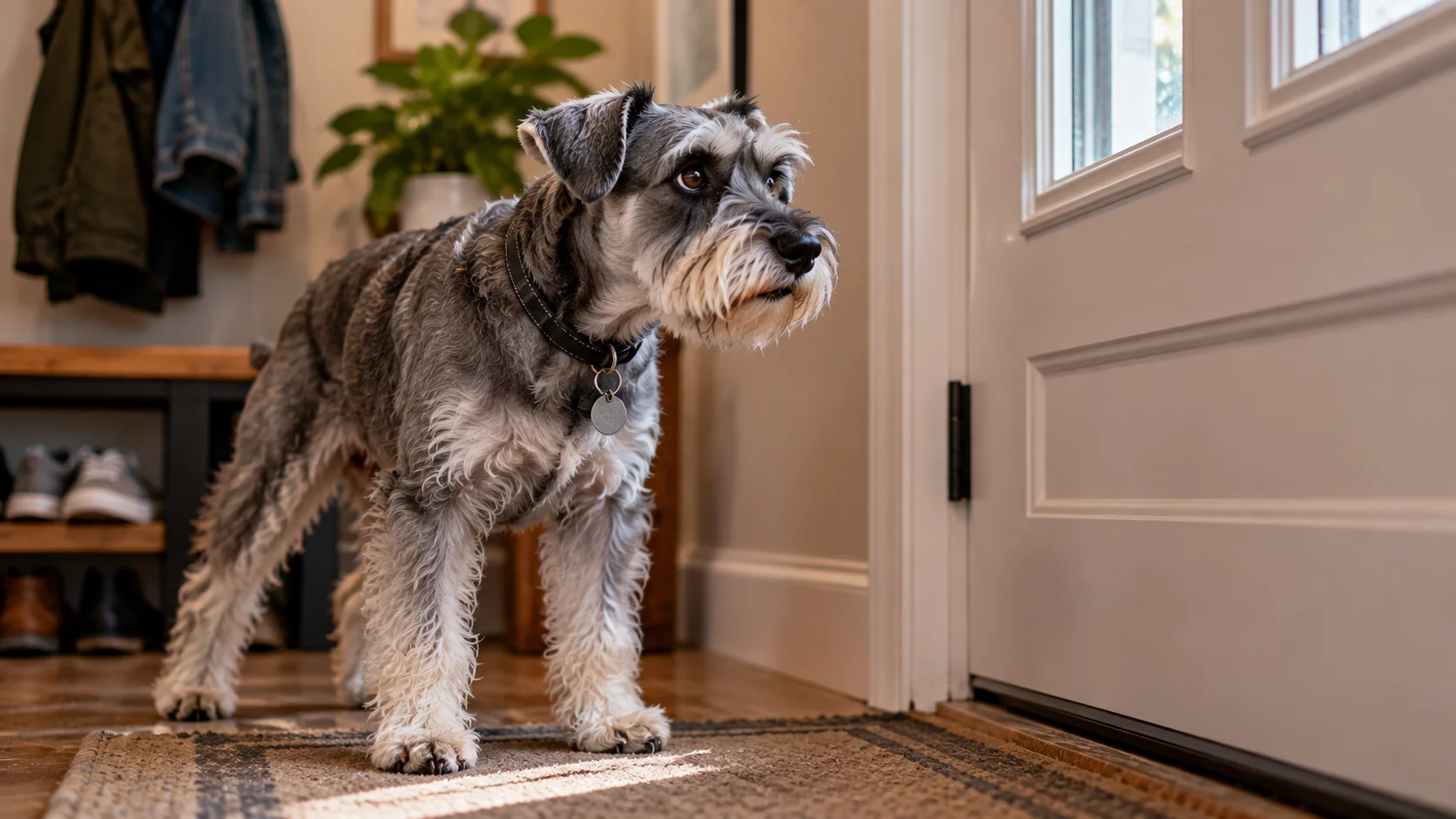
What Does Anxiety Look Like in Dogs?
Anxiety does not look exactly the same in every dog.
Some dogs become restless and unable to settle. Others become unusually quiet, hide, or stay close to their owner.
Common behavioral changes may include:
- Pacing
- Panting
- Shaking or trembling
- Whining
- Excessive barking
- Hiding
- Following family members constantly
- Becoming unusually clingy
- Difficulty settling down
- Changes in sleep
- Increased alertness
- Lip licking
- Drooling
- Trying to escape
- Changes in appetite
- Destructive behavior
- House-soiling
Cornell notes that anxious behavior can have many different underlying explanations rather than being one simple diagnosis. Veterinária Cornell
This is particularly important when the behavior appears suddenly in a dog that was previously comfortable in the same environment.
Fear vs. Anxiety: What’s the Difference?
Fear and anxiety are closely related, but they are not exactly the same.
The Merck Veterinary Manual describes fear as a response associated with an immediate or nearby perceived threat, while anxiety involves anticipation of a possible threat or danger. Merck Veterinary Manual
For example, a dog that hears thunder and immediately becomes frightened may be experiencing fear.
A dog that becomes restless as the sky darkens because they anticipate a storm may be experiencing anxiety related to what they expect will happen.
In everyday life, the signs can overlap considerably.
What matters most for a dog owner is identifying when the behavior occurs and what seems to trigger it.
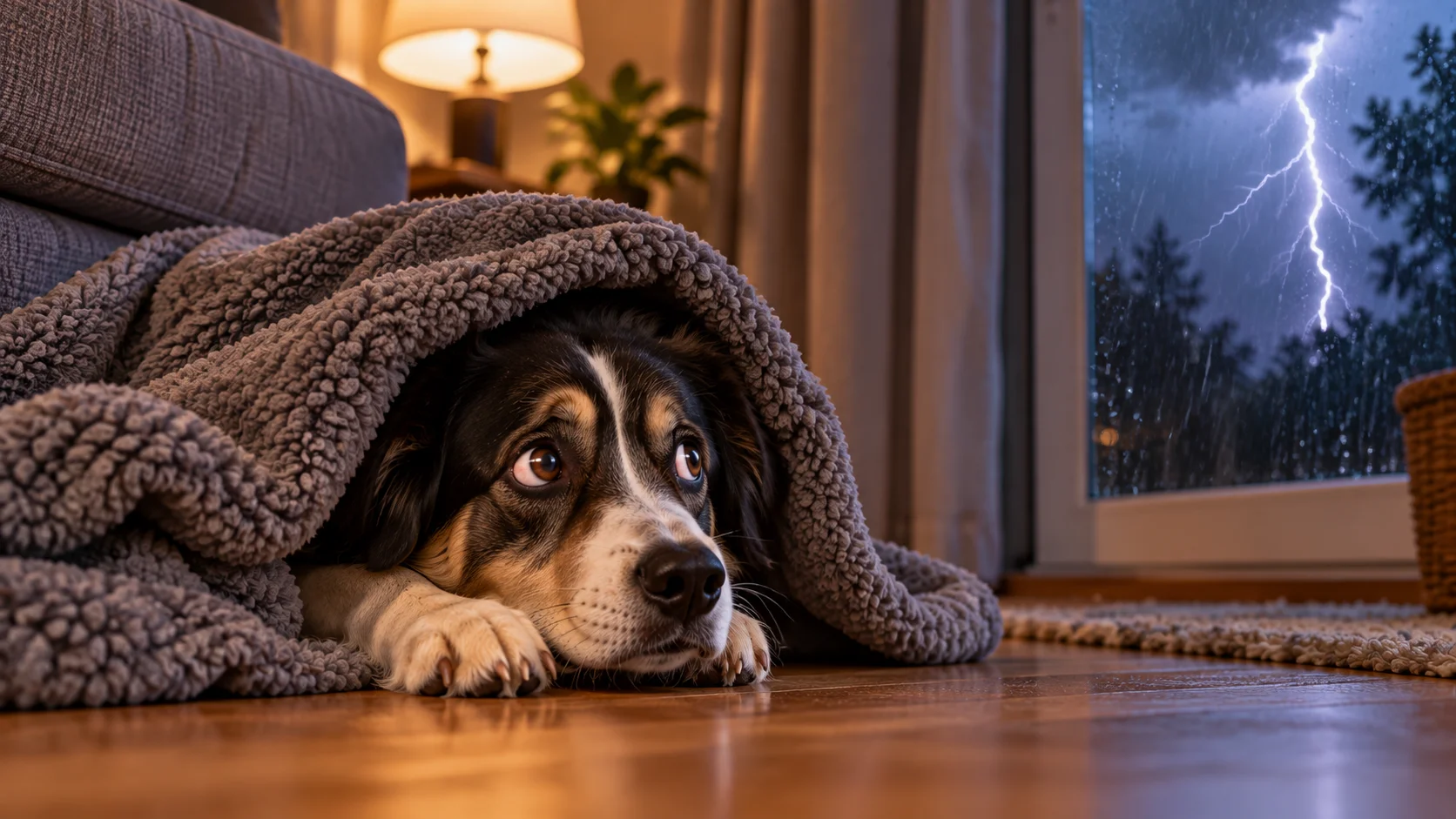
Why Is My Dog Anxious All of a Sudden? Common Possible Causes
Sudden anxious behavior can have environmental, behavioral, and medical explanations.
1. A Change in the Environment
Dogs often depend on familiar routines.
Changes that seem minor to people may feel significant to a dog.
Possible changes include:
- Moving to a new home
- Rearranging furniture
- Construction nearby
- New neighbors
- A new pet
- A new family member
- Visitors staying in the home
- Changes in work or school schedules
- A family member leaving
- Changes in walking or feeding routines
A predictable routine can help some anxious dogs feel more secure.
Cornell specifically emphasizes consistency and predictability when helping dogs cope with unsettling situations. Veterinária Cornell
2. Loud or Unfamiliar Sounds
Dogs can hear sounds that people may barely notice.
Construction, alarms, fireworks, thunder, appliances, traffic, or other unfamiliar noises may trigger fear.
Sometimes the connection is obvious.
At other times, your dog may suddenly appear frightened while you cannot identify anything unusual.
VCA Animal Hospitals notes that thunderstorms, fireworks, travel, unfamiliar environments, and other stimuli can trigger fear or anxiety responses in dogs.
A dog can also form an association between a frightening event and something that happened around the same time.
3. A Frightening Experience
A single unpleasant experience can sometimes change how a dog reacts to a particular place, person, sound, or situation.
For example, a dog frightened by a loud noise during a walk may later become hesitant about returning to the same area.
VCA explains that fear responses may develop after one frightening exposure or become stronger through repeated experiences. This can make the behavior appear mysterious when the original event was not obvious to the owner.
4. Separation-Related Anxiety
If your dog’s behavior primarily occurs when you prepare to leave or when the dog is left alone, separation-related distress may be involved.
Signs may include pacing, whining, barking, destructive behavior, house-soiling, or becoming distressed when the owner prepares to leave.
Cornell describes these behaviors as possible signs associated with separation anxiety. Veterinária Cornell
A useful clue is timing.
If the behavior consistently begins around departures and improves when someone returns, tell your veterinarian or qualified behavior professional.
5. Pain or Physical Discomfort
One of the most important possibilities to consider when behavior changes suddenly is physical discomfort.
A dog cannot tell you that something hurts.
Instead, pain may appear as restlessness, reluctance to move, difficulty sleeping, hiding, appetite changes, unusual vocalization, or simply acting differently.
This is why sudden behavioral changes should not automatically be assumed to be purely emotional.
The Merck Veterinary Manual recommends ruling out medical problems that could cause or contribute to behavioral signs during the evaluation of behavior problems. Merck Veterinary Manual
If your dog also seems physically weak, see Why Is My Dog Weak? Common Causes and Warning Signs for additional symptoms to watch.
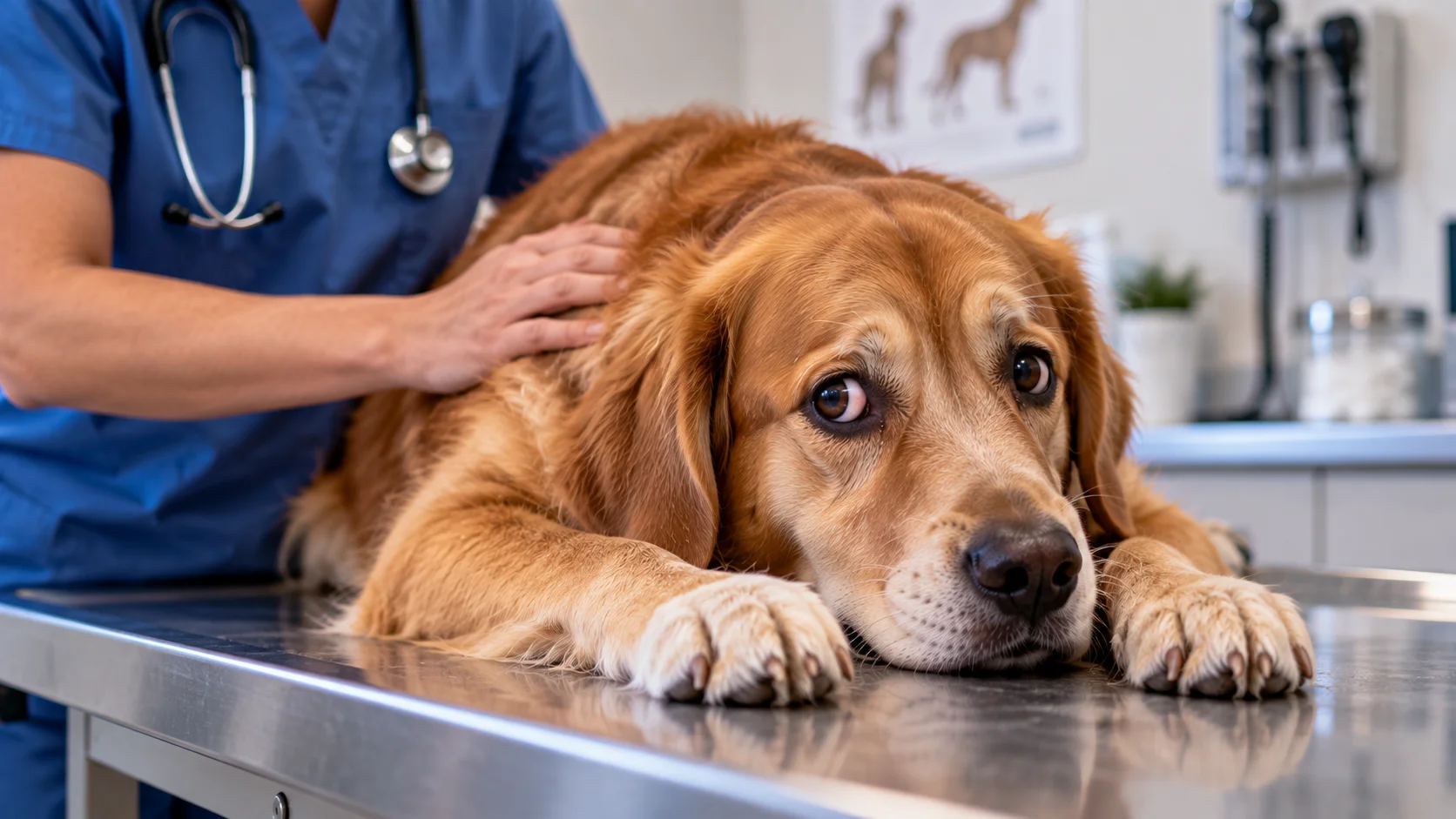
6. Changes Associated With Aging
If an older dog suddenly becomes anxious, age-related changes deserve consideration.
Senior dogs may develop changes in hearing, vision, mobility, sleep patterns, or cognitive function.
Cornell notes that cognitive dysfunction syndrome can occur in senior dogs and may involve pacing, panting, nighttime restlessness, difficulty settling, and disorientation. Veterinária Cornell
Do not automatically assume these changes are simply part of getting older.
A veterinarian can evaluate whether a medical, sensory, cognitive, or behavioral problem may be contributing.
7. Changes in Routine
Dogs often learn what happens throughout their day.
Breakfast arrives at a certain time. Someone leaves for work. Walks occur at predictable times. Family members return home.
When that pattern suddenly changes, some dogs adapt immediately while others become unsettled.
Try to identify whether your dog’s anxiety began around the same time as a major change in the household schedule.
8. New People or Animals
The arrival of another animal or person can change the social environment inside the home.
Even a friendly dog may need time to adjust.
Do not force interactions when your dog is showing fear.
Cornell advises against forcing fearful dogs to confront frightening situations directly and recommends allowing voluntary approaches rather than pushing interaction. Veterinária Cornell
9. Medical Conditions
Behavior and physical health are connected.
A dog that suddenly acts anxious may actually be responding to discomfort or another physical change.
That is why a new and unexplained behavioral change—particularly one accompanied by physical symptoms—deserves veterinary attention.
The Merck Veterinary Manual notes that medical problems should be excluded when evaluating undesirable or abnormal behavior. Merck Veterinary Manual
Why Is My Dog Suddenly Scared of Everything?
Sometimes anxiety appears broader than one specific trigger.
Your dog may suddenly seem frightened by noises, people, objects, rooms, walks, or everyday situations that previously caused no problem.
First, consider whether there has actually been a change in the environment.
New construction nearby, an unfamiliar appliance, alarms, neighborhood noises, or changes in the household can be easy for humans to overlook.
Next, consider whether your dog recently experienced something frightening.
Fear can become associated with surrounding sights, sounds, locations, or situations.
If the fear appears suddenly across many situations, however, especially in a mature or older dog, discuss the change with your veterinarian.
A physical or sensory change can sometimes alter the way a dog experiences familiar surroundings.
If your dog’s entire behavior seems unusual rather than simply fearful, our related guide Why Is My Dog Acting Strange All of a Sudden? can help you evaluate the broader pattern of changes.

Why Is My Dog Suddenly Anxious at Night?
Nighttime anxiety can be especially confusing.
Your dog may pace through the house, pant, wake repeatedly, follow you, whine, or appear unable to find a comfortable place to sleep.
Begin with the environment.
Has anything changed at night?
Listen for outside noises, neighboring animals, appliances, alarms, construction, or other sounds.
Also consider whether your dog appears physically uncomfortable.
For senior dogs, new nighttime behavior is particularly worth discussing with a veterinarian because age-related cognitive or sensory changes may be involved.
If panting is one of the main nighttime symptoms, see Why Is My Dog Panting So Much? Common Causes and Warning Signs for additional information.
Why Is My Dog Suddenly Acting Scared and Shaking?
Shaking can accompany fear and anxiety.
A dog frightened by thunder, fireworks, unfamiliar people, travel, or another stressful event may tremble or shake.
But shaking is not specific to anxiety.
Physical problems can also produce shaking.
That distinction becomes especially important when there is no obvious frightening event.
Look for additional changes such as weakness, vomiting, appetite loss, unusual walking, pain, panting, lethargy, or changes in responsiveness.
If shaking is prominent, read Why Is My Dog Shaking? 7 Possible Reasons for a closer look at this symptom.
Why Is My Dog Suddenly Scared of Me?
A dog that suddenly appears afraid of a familiar person can be upsetting and confusing.
Before assuming that the relationship itself has changed, look carefully at the circumstances.
Did something frightening happen while you were nearby?
Are you wearing or carrying something unusual?
Is your dog reacting to a particular movement, sound, or situation rather than to you personally?
Dogs can associate frightening experiences with other things present at the same time.
Also consider physical discomfort.
A dog experiencing pain may avoid being touched or approached because contact has become uncomfortable.
Give the dog space rather than forcing physical interaction.
If the change is persistent or unexplained, a veterinary examination can help rule out physical causes.
Why Is My Dog Suddenly Scared to Go Outside?
A previously enthusiastic dog may suddenly refuse to walk through the door or become nervous once outside.
Possible triggers can include:
- Construction noise
- Thunder
- Fireworks
- Traffic
- An encounter with another dog
- Slippery surfaces
- An unfamiliar person
- Changes in the neighborhood
- A previous frightening experience
Avoid dragging or forcing a frightened dog toward the feared situation.
Cornell recommends minimizing stressful situations and allowing fearful dogs to approach challenging situations voluntarily rather than forcing them. Veterinária Cornell
If your dog also seems reluctant to walk because of weakness, limping, stiffness, or pain, the problem may not be primarily behavioral.
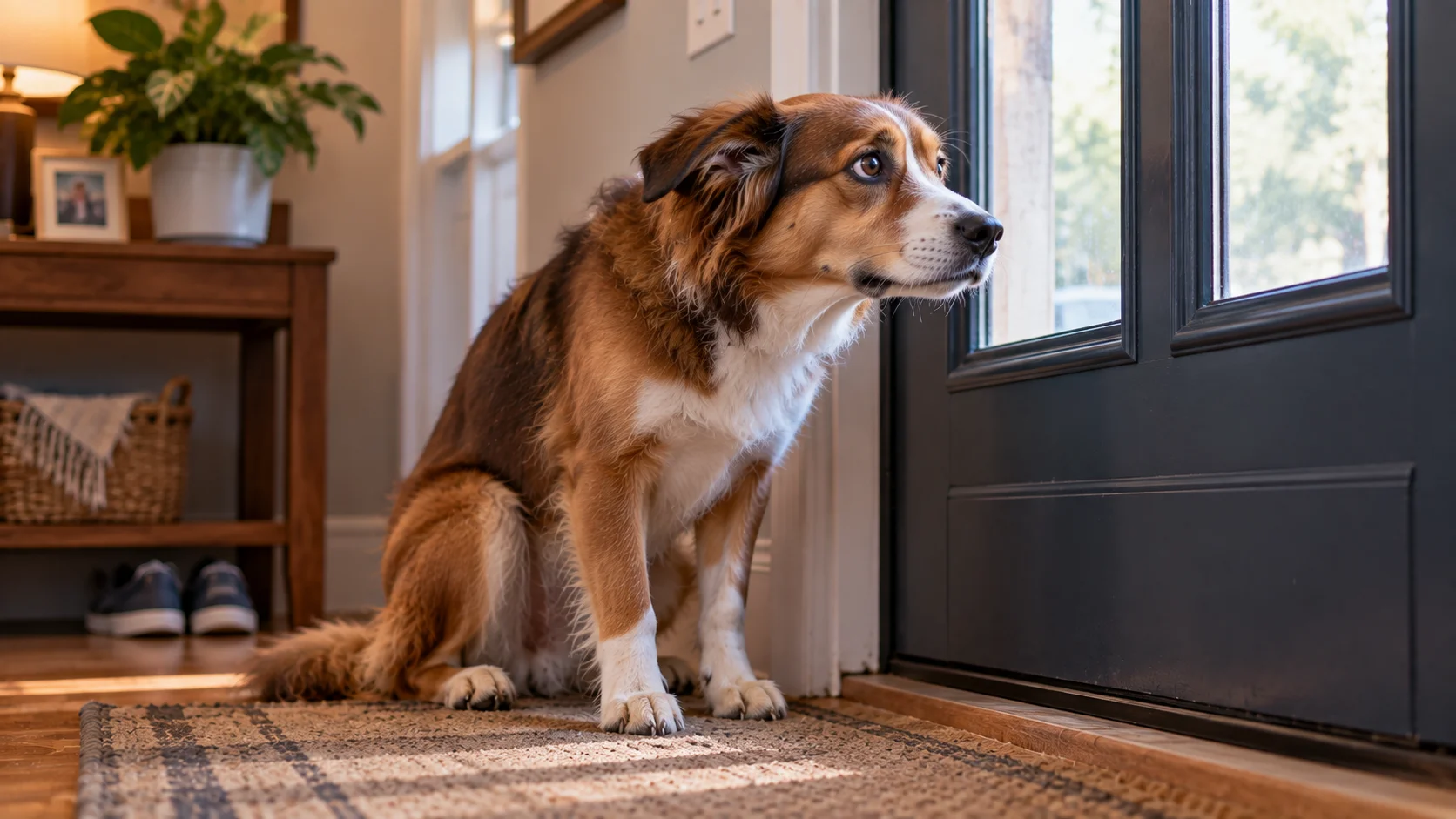
Why Is My Dog Following Me Everywhere All of a Sudden?
Some anxious dogs seek increased contact with a familiar person.
Your dog may follow you from room to room, stay unusually close, or have difficulty settling unless you are nearby.
But increased attachment alone does not prove that a dog has anxiety.
Look at the entire pattern.
Is your dog also panting?
Pacing?
Shaking?
Whining?
Not sleeping?
Eating differently?
Acting uncomfortable?
The combination of symptoms provides much more useful information than any single behavior.
Can Panting Be a Sign of Anxiety in Dogs?
Yes. Panting can occur during anxiety and stressful situations.
Cornell includes panting among possible signs associated with anxiety. Veterinária Cornell
However, panting also has many nonbehavioral explanations.
Dogs normally pant to regulate body temperature, particularly after exercise or in warm conditions.
Therefore, unexplained panting should not automatically be labeled anxiety.
If your dog is panting heavily while resting, panting at night, or showing other symptoms, consider the entire situation.
Can Lethargy and Anxiety Occur Together?
Behavioral changes can overlap.
A dog might appear restless at one point and unusually quiet later.
However, true lethargy is different from fear or anxiety.
If your dog seems primarily tired, uninterested in normal activities, or unusually inactive, read What Is Dog Lethargy? Why Is My Dog Lethargic? to help distinguish low energy from anxious behavior.
Sudden lethargy accompanied by other physical symptoms deserves veterinary attention.
What Should I Do If My Dog Suddenly Becomes Anxious?
Start by observing rather than forcing your dog to confront whatever seems frightening.
Try to identify what happened immediately before the behavior began.
Ask yourself:
Did a loud noise occur?
Did someone enter or leave the home?
Did your routine change?
Did your dog encounter another animal?
Did the behavior begin after a walk or other event?
Is your dog showing any physical symptoms?
Keep the environment as calm and predictable as possible.
Cornell recommends consistency and predictability for anxious dogs and advises against harsh or punitive training approaches. Veterinária Cornell
Punishment can make fear-related behavior worse rather than teaching the dog that the situation is safe. The Merck Veterinary Manual similarly describes reinforcement-based behavior modification and warns that aversive approaches can create or worsen fear associations.
Should I Comfort an Anxious Dog?
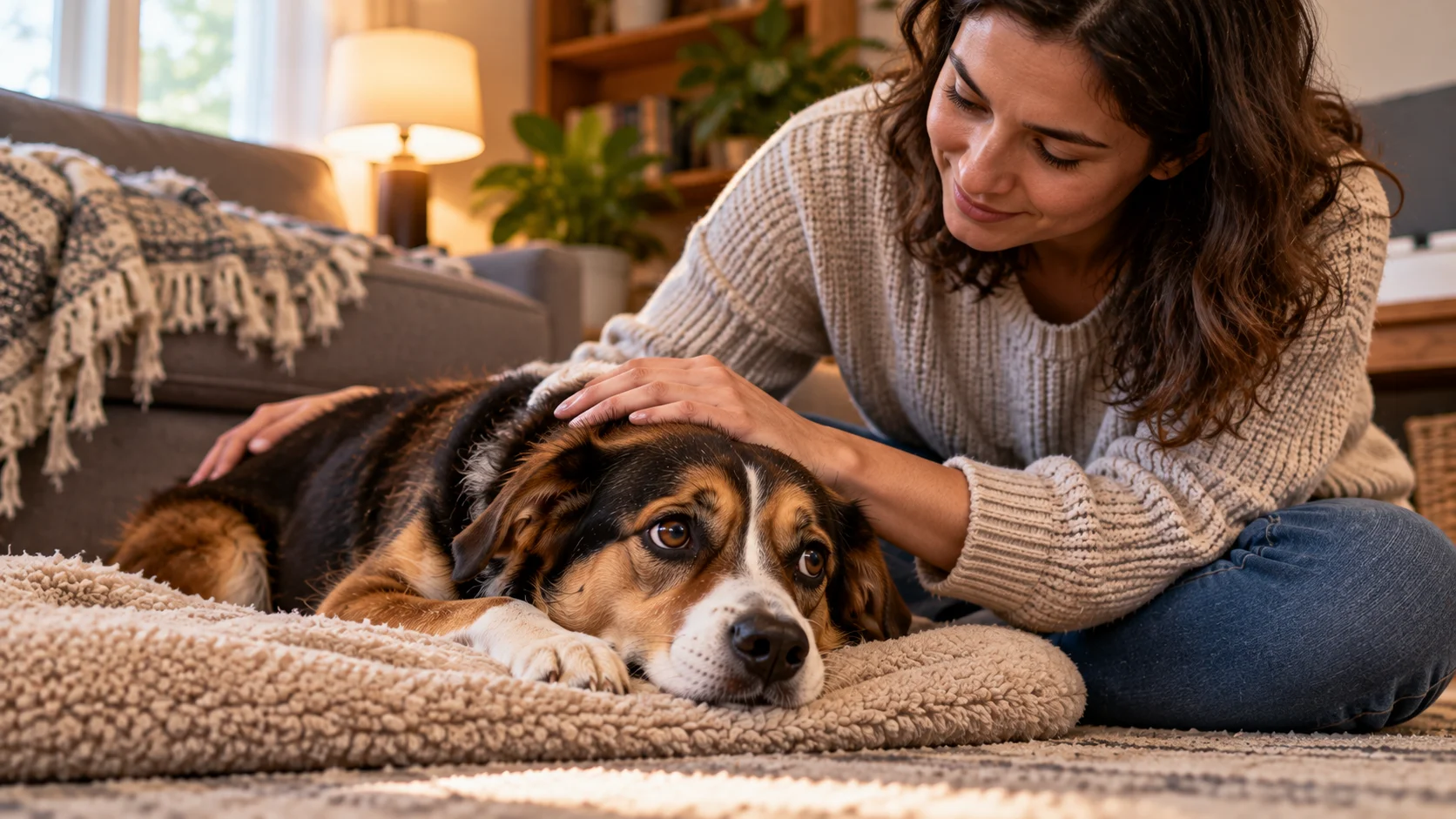
You can provide a calm and safe environment.
The goal is not to force interaction but to allow your dog to feel secure.
Some dogs want to remain near their owner. Others prefer a quiet resting area.
Let your dog’s behavior guide you.
Avoid yelling, physical punishment, or forcing the dog to approach something frightening.
Predictability can be particularly helpful.
Meals, walks, rest periods, and normal household activities can remain as consistent as practical.
When Should I Contact a Veterinarian?
A sudden unexplained change in behavior is worth discussing with your veterinarian, particularly when it persists, becomes severe, or occurs together with physical symptoms.
Contact your veterinarian if anxiety-like behavior is accompanied by changes such as:
- Significant weakness
- Persistent vomiting or diarrhea
- Difficulty walking
- Apparent pain
- Major appetite changes
- Breathing difficulty
- Disorientation
- Collapse
- Significant changes in drinking or urination
- A sudden major personality or behavior change
Seek prompt veterinary attention for severe physical symptoms such as breathing difficulty or collapse.
A veterinarian can evaluate whether pain, illness, sensory changes, cognitive changes, or another medical issue could be contributing to the behavior.
If medical causes have been addressed but significant anxiety continues, your veterinarian may recommend a qualified behavior professional or veterinary behaviorist.
How Are Anxiety Problems in Dogs Treated?
Treatment depends on the cause.
There is no single approach that is appropriate for every anxious dog.
Environmental management, predictable routines, identifying and reducing triggers, and behavior modification may all be involved.
The Merck Veterinary Manual describes techniques such as desensitization and counterconditioning as approaches used in behavior modification for fear and anxiety.
Cornell also emphasizes positive reinforcement rather than harsh or punitive methods.
In some cases, a veterinarian may determine that prescription medication is appropriate alongside behavioral and environmental changes.
Do not give your dog medication intended for people or another pet unless your veterinarian specifically instructs you to do so.
How Can I Help Prevent Future Anxiety Episodes?
Not every episode can be prevented, but understanding your dog’s triggers can make future situations easier to manage.
Keep notes about when unusual behavior occurs.
Record:
- Time of day
- Location
- Sounds or events occurring nearby
- People or animals present
- How long the behavior lasts
- What your dog does
- Other physical symptoms
- What happened immediately beforehand
Patterns may become obvious over time.
For example, what initially appears to be random nighttime anxiety may consistently happen during storms or after a particular neighborhood noise.
A short video of the behavior may also provide useful information for your veterinarian when the episode does not occur during the appointment.
Frequently Asked Questions About Sudden Anxiety in Dogs
Why is my dog anxious all of a sudden?
A dog may suddenly appear anxious because of an environmental change, unfamiliar noise, frightening experience, separation-related distress, pain, physical discomfort, age-related changes, or another behavioral or medical issue. The timing and accompanying symptoms can provide important clues.
Why is my dog suddenly anxious for no reason?
The trigger may simply not be obvious. Dogs may react to sounds, smells, environmental changes, physical discomfort, or experiences that people do not immediately notice. Persistent unexplained behavioral changes should be discussed with a veterinarian.
Why is my dog suddenly scared of everything?
A frightening experience can sometimes cause broader fear responses. Environmental, sensory, behavioral, and medical changes should also be considered, particularly when the fear develops suddenly.
Why is my dog suddenly anxious at night?
Nighttime anxiety may be associated with noises, environmental changes, discomfort, changes in routine, or age-related changes. Repeated new nighttime anxiety in a senior dog deserves veterinary attention.
Why is my dog suddenly acting scared and shaking?
Fear and anxiety can cause shaking, but shaking may also occur with physical problems. Look for other symptoms such as weakness, vomiting, pain, appetite changes, or unusual movement.
Why is my dog suddenly following me everywhere?
An anxious or frightened dog may seek proximity to a familiar person. However, sudden clinginess can also accompany other behavioral or physical changes, so consider your dog’s overall condition.
Can pain make a dog suddenly anxious?
Physical discomfort can cause behavioral changes that may look like anxiety, including restlessness, difficulty settling, avoidance, or changes in normal interactions. Sudden unexplained behavior changes are one reason veterinary evaluation may be appropriate.
Should I force my dog to face something they are afraid of?
No. Forcing a frightened dog into an overwhelming situation can intensify fear. Cornell and Merck veterinary behavior guidance supports gradual, controlled approaches and positive reinforcement rather than forced exposure or punishment. Veterinária Cornell
Final Thoughts
If you’re asking “why is my dog anxious all of a sudden?”, start by looking for what has changed.
The explanation may be relatively simple—a new sound, altered routine, unfamiliar visitor, stressful experience, or environmental change.
But sudden anxiety-like behavior can also accompany pain, illness, sensory changes, or age-related problems.
Pay attention to when the behavior started, what triggers it, how long it lasts, and what other symptoms occur at the same time.
Do not punish a frightened dog or force them into situations they are trying to avoid.
Instead, provide a calm and predictable environment, observe the pattern, and contact your veterinarian when the behavior is new, persistent, severe, or accompanied by physical symptoms.
When several symptoms appear together, the TechHavela Pet Symptom Checker can help you organize what you are seeing before speaking with your veterinarian.

**Sidnir Vieira**
Founder of TechHavela
A passionate pet and tech content creator, helping dog owners across the U.S. make smarter decisions for their furry friends.