Dog Bloody Stool: Common Causes and Warning Signs
Seeing blood in your dog’s stool can be alarming. If you are searching for information about dog bloody stool, the first thing to know is that blood can appear in different ways, and there are many possible causes.
Sometimes you may notice a small amount of bright red blood on otherwise normal stool. In other cases, a dog may develop bloody diarrhea, mucus, vomiting, loss of appetite, or dark stool that looks almost black.
The appearance of the blood can provide useful clues, but it cannot identify the cause by itself.
Problems ranging from irritation of the lower digestive tract to parasites, inflammation, infections, dietary problems, or gastrointestinal bleeding may cause blood to appear in a dog’s stool.
The dog’s overall condition matters too. Blood accompanied by repeated vomiting, weakness, significant diarrhea, pain, or other concerning symptoms deserves prompt veterinary attention.
If your dog has additional symptoms, our Pet Symptom Checker can help you explore common signs and understand which warning signs may need veterinary care.
What Does Blood in a Dog’s Stool Look Like?
Blood in dog stool does not always look the same.
According to the Merck Veterinary Manual, melena refers to black, tarry stool associated with digested blood.
One of the most useful distinctions is whether the blood appears bright red or the stool looks very dark or black.
Bright red blood is commonly called hematochezia. It generally indicates fresh blood and is often associated with bleeding closer to the lower gastrointestinal tract, such as the colon, rectum, or anus.
Dark, black, tar-like stool is called melena. The dark appearance can occur when blood has been digested as it passes through the gastrointestinal tract.
This distinction can help veterinarians determine where bleeding may be occurring.
However, stool color alone is not enough to diagnose the underlying problem.
If possible, note the color, consistency, frequency, amount of blood, and any other symptoms your dog is experiencing.
Bright Red Blood vs. Black Stool
Understanding this difference is particularly important.
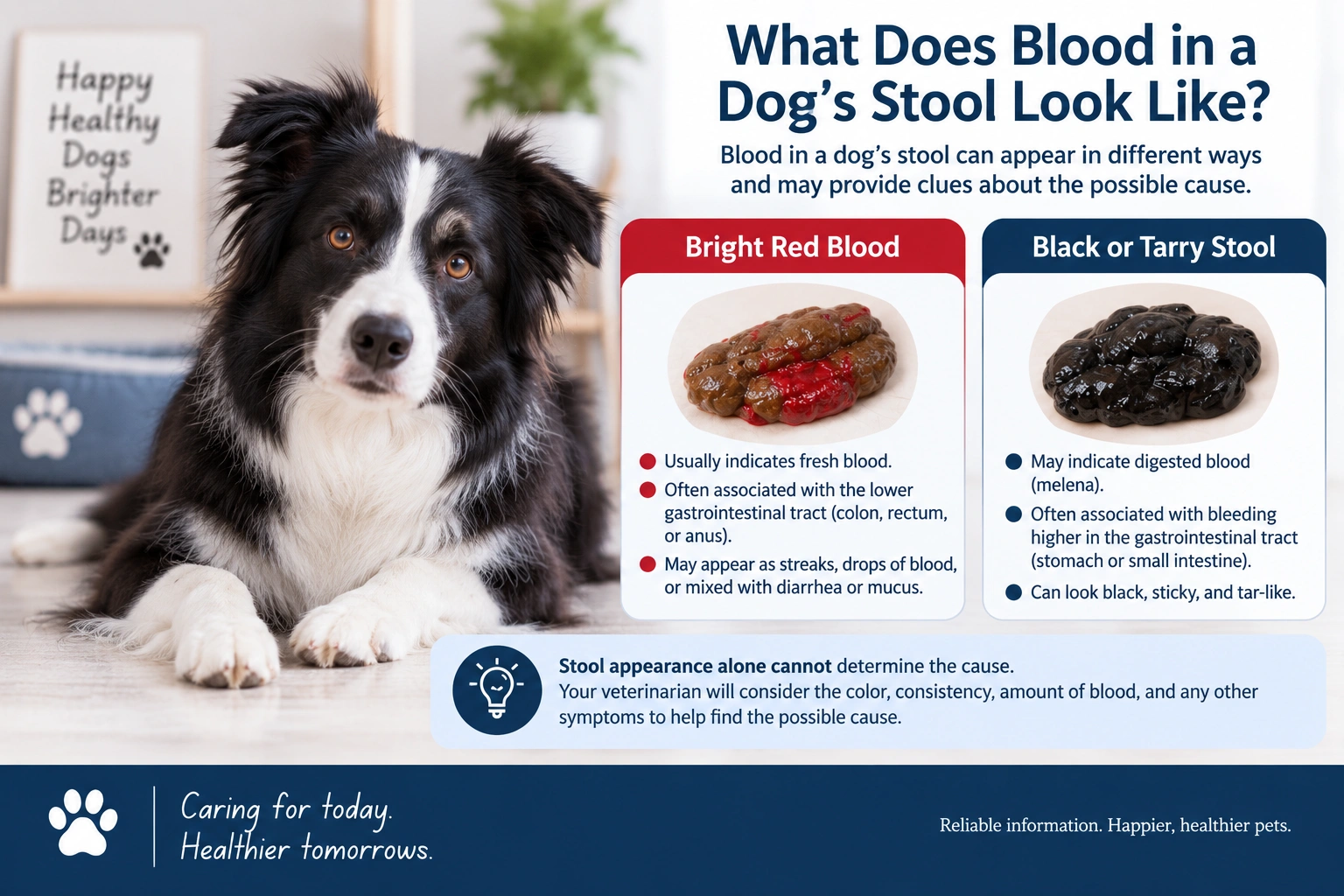
Bright Red Blood
Fresh red blood may appear as streaks on the outside of the stool, drops of blood, or blood mixed with diarrhea or mucus.
Possible causes can include irritation or inflammation of the lower gastrointestinal tract, colitis, parasites, straining, and other problems.
A small amount does not automatically identify a serious condition, but repeated bleeding should not be ignored.
Black or Tarry Stool
Black, sticky, or tar-like stool may indicate digested blood.
Because melena can be associated with bleeding higher in the gastrointestinal tract, it deserves veterinary evaluation.
Do not rely only on color to determine whether your dog is safe. Certain foods, supplements, or medications can also affect stool appearance, which is another reason a veterinarian should evaluate unusual persistent changes.
Dog Bloody Stool Causes
There is no single cause of blood in a dog’s stool.
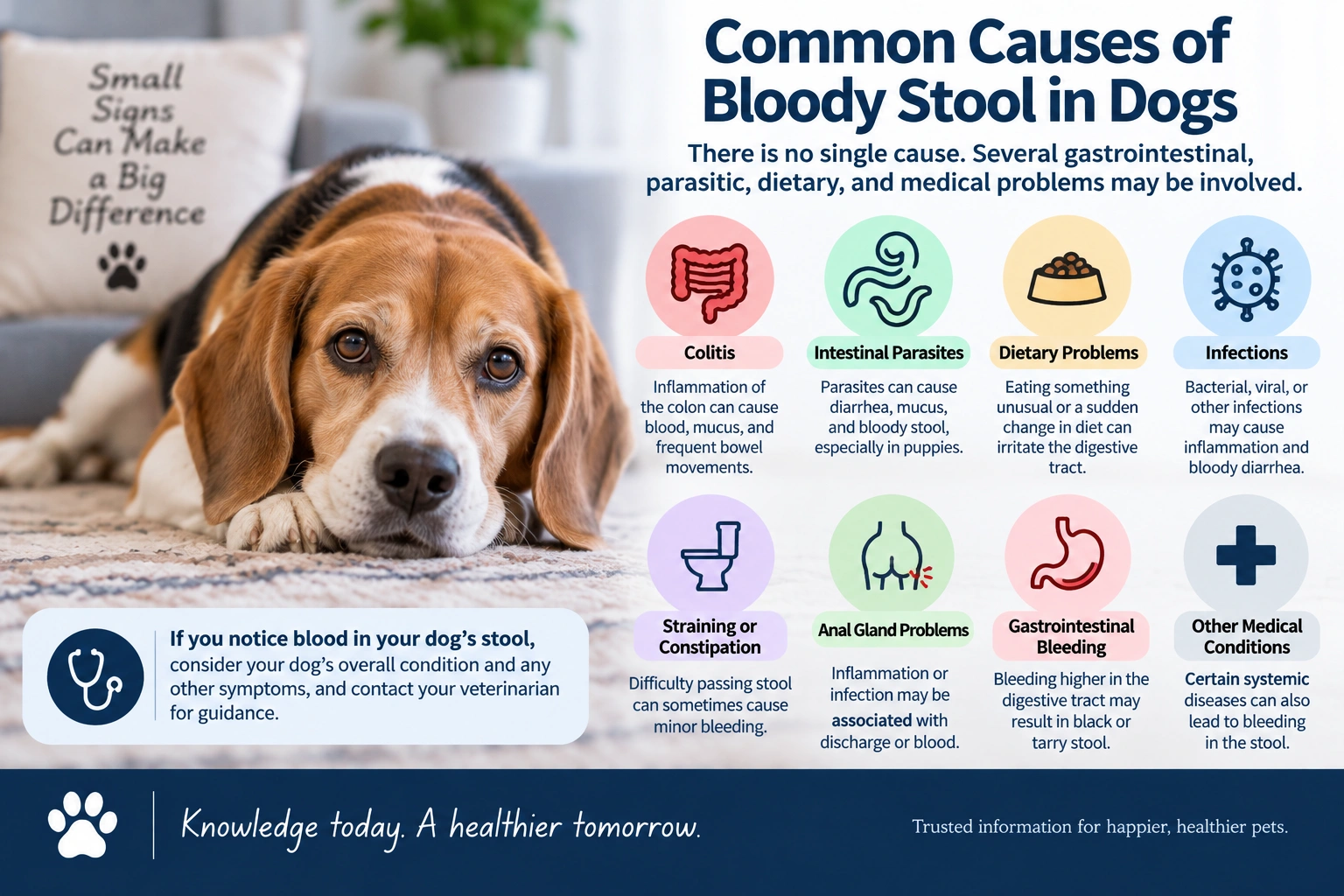
Some problems originate directly in the gastrointestinal tract, while others may involve parasites, infections, diet, inflammation, foreign material, or medical conditions affecting the body’s ability to clot blood normally.
The circumstances surrounding the episode are therefore important.
Think about when the blood first appeared, whether diarrhea occurred first, what your dog recently ate, and whether vomiting, appetite changes, weakness, or behavioral changes are also present.
Let’s look at some of the possibilities veterinarians may consider.
1. Colitis and Large-Intestinal Irritation
Colitis means inflammation of the colon.
Dogs with large-intestinal irritation may have frequent bowel movements, urgency, straining, mucus, and sometimes fresh red blood in the stool.
The amount of stool produced at each bowel movement may be relatively small.
Colitis itself can have several causes, so noticing these signs does not establish a diagnosis.
Dietary changes, stress, parasites, infections, and other gastrointestinal problems may all play a role.
When the symptoms continue or repeatedly return, veterinary evaluation can help determine what is causing the inflammation.
2. Intestinal Parasites
Parasites are another possible reason a dog may develop diarrhea or blood in the stool.
Different intestinal parasites affect dogs in different ways.
Some dogs may show few signs, while others develop diarrhea, mucus, appetite changes, weight loss, or bloody stool.
Young dogs can be particularly vulnerable to some parasitic infections.
Veterinarians may recommend fecal testing when parasites are suspected because stool appearance alone cannot determine which parasite, if any, is present.
If you are taking your dog to the veterinarian for bloody stool, ask whether bringing a fresh stool sample would be useful.
3. Dietary Changes and Eating Something Unusual
Dogs sometimes develop gastrointestinal problems after eating unfamiliar foods, table scraps, spoiled food, garbage, or other inappropriate material.
An abrupt change in regular dog food can also disturb digestion.
Mild gastrointestinal irritation may result in loose stool or diarrhea. More significant irritation can sometimes involve mucus or fresh blood.
However, blood in the stool should not automatically be blamed on food.
If you think your dog swallowed a foreign object, medication, toxic substance, or something else potentially dangerous, contact a veterinarian promptly.
4. Infections
Some infections can cause gastrointestinal inflammation, diarrhea, and blood in the stool.
The severity can vary considerably.
Age, vaccination status, general health, and the presence of other symptoms all influence how concerning the situation may be.
Puppies with significant diarrhea, vomiting, weakness, or bloody stool deserve particular attention because they can become ill and dehydrated quickly.
A veterinarian can determine whether testing for an infectious cause is appropriate.
Dog Bloody Stool and Diarrhea
Bloody stool and diarrhea can occur together when a dog’s gastrointestinal tract is irritated or inflamed.
Cornell University College of Veterinary Medicine notes that fresh blood or black, tarry stool accompanying diarrhea are reasons to seek veterinary care.
Blood may appear as streaks mixed with loose stool, small amounts of bright red blood, or more noticeable bloody diarrhea.
Diarrhea indicates that the gastrointestinal tract is already disturbed, while blood suggests irritation, inflammation, or bleeding somewhere along the digestive tract.
Possible causes range from relatively limited lower-intestinal irritation to conditions requiring veterinary treatment.
Frequency matters as well.
One episode of loose stool containing a small streak of red blood in an otherwise normal dog is different from repeated watery or bloody diarrhea in a dog that is weak or vomiting.
For a more detailed explanation of diarrhea itself, see our guide Why Does My Dog Have Diarrhea?
Dog Bloody Stool With Mucus
Another important variation is dog bloody stool mucus, which had particularly strong search volume in our keyword research.
Mucus often appears when the large intestine is irritated.
A dog with colitis, for example, may produce frequent small amounts of stool containing mucus and fresh red blood.
You may also notice urgency or straining.
However, mucus and blood are signs rather than diagnoses.
Parasites, dietary problems, stress, infections, inflammatory conditions, and other gastrointestinal problems may produce similar changes.
If mucus and blood continue appearing, veterinary evaluation is appropriate.
Dog Bloody Stool and Vomiting
When bloody stool occurs together with vomiting, pay closer attention to your dog’s overall condition.
Both diarrhea and vomiting can contribute to fluid loss, and the combination may increase the risk of dehydration.
Vomiting plus bloody stool can occur with several gastrointestinal and systemic problems, so the combination should not be diagnosed based on appearance alone.
Watch for repeated vomiting, inability to keep water down, weakness, abdominal discomfort, loss of appetite, or changes in behavior.
Persistent or severe symptoms deserve veterinary attention.
You can also read our separate guide Why Is My Dog Vomiting?
For more information about vomiting and its warning signs.
Dog Bloody Stool but Acting Normal
What if you notice blood, but your dog is eating, drinking, playing, and behaving normally?
This situation can occur.
A dog with mild lower-intestinal irritation may still appear completely normal otherwise.
That is reassuring, but it does not mean repeated bleeding should be ignored.
Monitor what happens during the next bowel movements and watch for changes in appetite, drinking, energy, vomiting, diarrhea, or behavior.
Also pay attention to whether the amount of blood increases.
If blood continues appearing, returns repeatedly, or new symptoms develop, contact your veterinarian.
Can Stress Cause Bloody Stool in Dogs?
Stress can affect a dog’s gastrointestinal tract.
Travel, boarding, major routine changes, unfamiliar environments, or other stressful events can sometimes contribute to diarrhea or colitis.
Because colitis may involve mucus and fresh red blood, stress can sometimes be part of the history when these symptoms develop.
But stress should not automatically be assumed to be the explanation for bloody stool.
Blood can have many other causes.
If the bleeding persists or your dog has other symptoms, veterinary evaluation is important even if a stressful event recently occurred.
Can Constipation or Straining Cause Blood?
Straining to pass stool may sometimes cause minor irritation around the rectum or anus.
This can result in a small amount of bright red blood on the surface of the stool.
However, repeated straining can also be associated with other gastrointestinal or rectal problems.
Observe whether your dog is actually producing stool, how hard the stool appears, and whether there is pain or repeated unsuccessful attempts to defecate.
Persistent straining should be discussed with a veterinarian.
Can Anal Gland Problems Cause Blood?
Dogs have small anal sacs located near the anus.
Problems involving these glands can cause discomfort, licking around the rear, scooting, swelling, or difficulty during bowel movements.
In some cases, irritation or infection in this area may also be associated with discharge or blood.
If you notice swelling, significant discomfort, persistent licking, or bleeding around the anus, veterinary examination is appropriate.
Do not try to determine the source of bleeding based only on what appears on the stool.
Why Is My Dog Not Eating and Has Bloody Stool?
Loss of appetite changes the picture.
A dog with a small amount of fresh blood who otherwise feels well is different from a dog that has bloody stool and refuses food.
Loss of appetite may occur with gastrointestinal discomfort, nausea, infection, inflammation, or many other health problems.
If your dog is not eating, monitor for vomiting, weakness, abdominal discomfort, diarrhea, changes in drinking, or other unusual behavior.
Our guide Why Is My Dog Not Eating? explains this symptom in more detail.
When loss of appetite occurs with significant gastrointestinal bleeding or other concerning symptoms, veterinary evaluation becomes more important.
Why Puppies With Bloody Stool Need Special Attention
Bloody stool in a puppy should be taken seriously.
Young dogs have less reserve than healthy adult dogs and may become dehydrated more quickly when significant vomiting or diarrhea occurs.
Parasites and certain infectious diseases can also be especially important considerations in puppies.
Vaccination history, age, recent exposure to other dogs, appetite, energy level, vomiting, and diarrhea are all useful information for a veterinarian.
If a puppy has repeated bloody diarrhea, vomiting, weakness, or appears seriously unwell, seek veterinary care promptly.
When Is Dog Bloody Stool an Emergency?
Not every small streak of fresh blood means the same thing, but certain combinations of symptoms are more concerning.

Seek prompt veterinary advice when bloody stool is accompanied by repeated vomiting, significant weakness or lethargy, collapse, severe or repeated diarrhea, abdominal pain, refusal to eat or drink, suspected toxin or foreign-object ingestion, or large amounts of blood.
Black, tar-like stool also deserves veterinary attention because it may represent digested blood.
Puppies, older dogs, and dogs with existing health problems may need earlier assessment.
If your dog’s condition appears to be worsening quickly, do not wait for an online symptom guide to determine the cause.
Why Dehydration Matters
Bloody diarrhea may involve significant fluid loss.
When vomiting occurs at the same time, dehydration can develop even more quickly.
Watch your dog’s overall condition rather than focusing only on the stool.
Reduced energy, difficulty keeping water down, or ongoing frequent watery diarrhea are reasons to contact a veterinarian.
Fresh drinking water should remain available unless your veterinarian has given you different instructions.
How Do Veterinarians Investigate Bloody Stool?
Veterinary evaluation begins with your dog’s history and physical examination.
Your veterinarian may ask when the bleeding started, whether the blood is bright red or dark, whether diarrhea or vomiting is present, what your dog recently ate, and whether appetite or behavior has changed.
A stool sample may be useful when parasites or gastrointestinal infections are being considered.
Depending on the dog’s condition and history, a veterinarian may also recommend blood tests, imaging, or other diagnostic procedures.
Not every dog needs every test.
The purpose is to narrow down the possible cause and determine whether treatment is necessary.
Should I Take a Picture of My Dog’s Stool?
Yes, a photograph can sometimes be useful for your veterinarian.
Stool may change before the appointment, and a picture can document its original appearance.
If practical, note whether the blood was bright red, dark, mixed throughout the stool, or only on the surface.
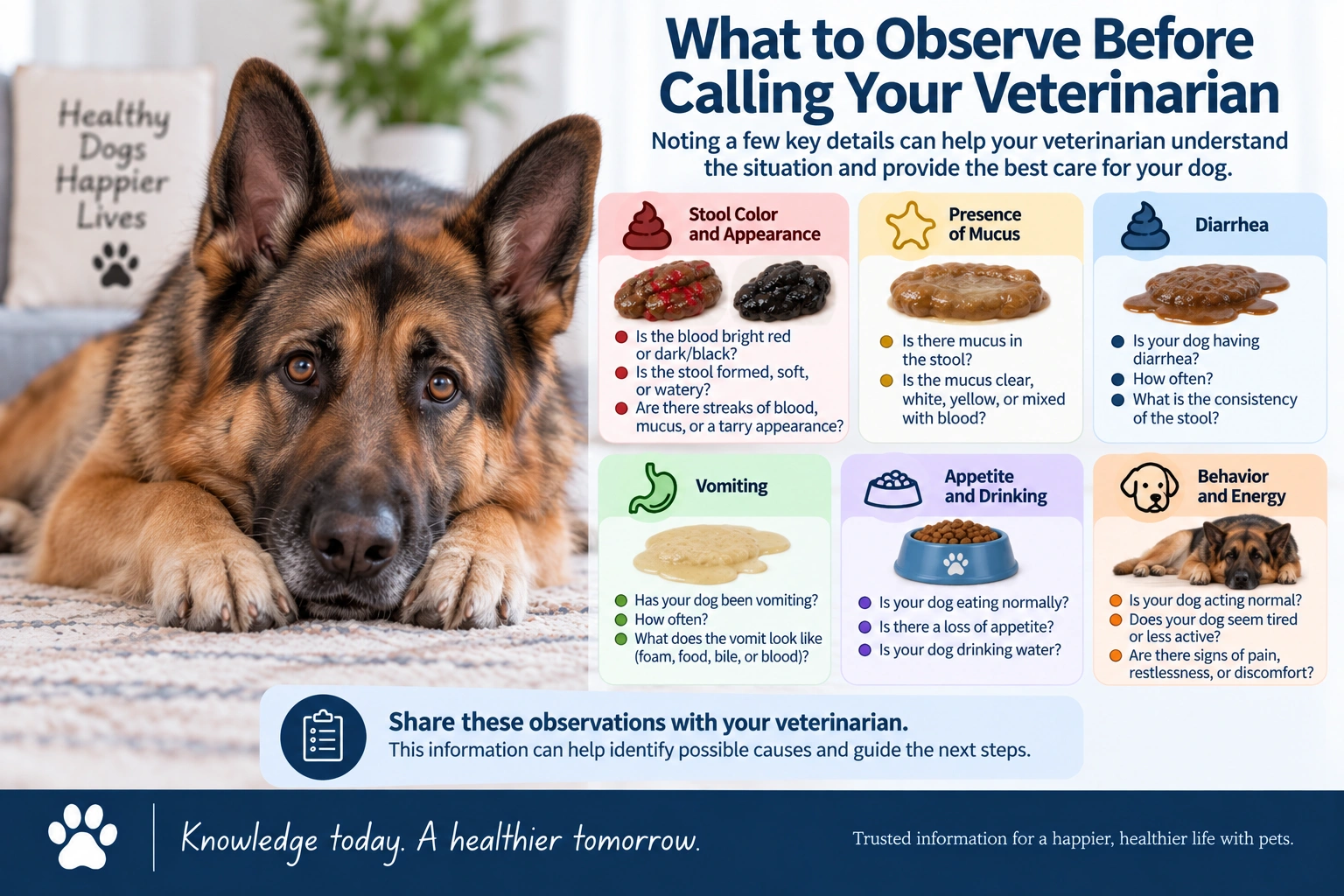
Also note whether mucus or diarrhea was present.
A photograph cannot replace veterinary examination, but it may provide useful information about what you observed at home.
Should I Give My Dog Human Medication?
Do not give your dog human gastrointestinal, pain, or anti-diarrhea medication unless a veterinarian specifically recommends it for your dog.
The appropriate treatment depends on what is causing the bleeding.
A medication that seems logical for one gastrointestinal problem may be inappropriate for another.
Bloody stool is a symptom, so treating it effectively depends on identifying or narrowing down the underlying cause.
What Can I Do While Monitoring My Dog?
If your dog has only a very small amount of fresh blood and otherwise appears normal, carefully observe what happens next.
Keep fresh water available and monitor bowel movements, appetite, drinking, energy, vomiting, and behavior.
Write down recent changes in food, treats, medications, environment, travel, or anything unusual your dog may have eaten.
Avoid giving human medications without veterinary guidance.
If the blood continues, increases, becomes dark or tar-like, or your dog’s overall condition changes, contact a veterinarian.
Check for Other Symptoms
Blood in the stool becomes much more informative when considered alongside other symptoms.
Is your dog also experiencing diarrhea, vomiting, loss of appetite, shaking, increased thirst, weakness, or behavioral changes?
These combinations can help veterinarians narrow down possible causes.
Our Pet Symptom Checker covers around 200 common symptoms in dogs and cats and can help you explore other signs you have noticed.
The checker is educational and does not provide a veterinary diagnosis. If your dog appears seriously ill, seek veterinary care.
Frequently Asked Questions
Why does my dog have bright red blood in his stool?
Bright red blood usually indicates fresh bleeding and is often associated with the lower gastrointestinal tract. Colitis, irritation, parasites, straining, and other problems are among the possibilities. Persistent or increasing bleeding should be evaluated by a veterinarian.
What does black dog stool mean?
Very dark, black, tar-like stool may represent digested blood, known as melena. Because this can be associated with gastrointestinal bleeding, veterinary evaluation is appropriate.
Why does my dog have bloody diarrhea?
Bloody diarrhea can occur with intestinal inflammation, parasites, infections, dietary problems, and other gastrointestinal conditions. The amount of blood and the dog’s overall condition are important when determining urgency.
Why does my dog have bloody stool with mucus?
Mucus and fresh blood can occur when the large intestine is irritated, including with colitis. Several different conditions can cause this pattern, so persistent symptoms should be evaluated.
Can a dog have bloody stool and still act normal?
Yes. Some dogs with mild lower-intestinal irritation continue eating, drinking, and behaving normally. Continued or recurring bleeding still deserves attention.
Can changing dog food cause bloody stool?
An abrupt dietary change can sometimes cause gastrointestinal upset and diarrhea. Significant or persistent blood should not automatically be blamed on food, because other causes may need investigation.
Is blood in dog stool always an emergency?
Not every small streak of fresh blood represents the same level of urgency. However, large amounts of blood, black tar-like stool, repeated bloody diarrhea, vomiting, weakness, pain, refusal to eat or drink, or rapid worsening deserve prompt veterinary attention.
Should I save a stool sample for the veterinarian?
A fresh stool sample can sometimes help with diagnostic testing, particularly when intestinal parasites are suspected. Ask your veterinary clinic how they would like the sample collected and stored.
Bottom Line
Dog bloody stool can have many possible causes, and the appearance of the blood provides only part of the picture.
Bright red blood may originate closer to the lower digestive tract, while black, tar-like stool can indicate digested blood.
Colitis, parasites, dietary problems, infections, gastrointestinal irritation, and other medical conditions are among the possibilities veterinarians may investigate.
Pay attention to the entire dog, not only the stool.
Diarrhea, mucus, vomiting, appetite changes, weakness, pain, dehydration, and behavioral changes can all provide important additional clues.
If bleeding persists, increases, occurs with concerning symptoms, or your dog appears seriously unwell, contact a veterinarian.
And if you have noticed other changes in your dog, use our Pet Symptom Checker to explore additional symptoms and learn which warning signs may need veterinary attention.

**Sidnir Vieira**
Founder of TechHavela
A passionate pet and tech content creator, helping dog owners across the U.S. make smarter decisions for their furry friends.